Get the App
Better experience on mobile
Our research team evaluated the most recommended shoes for plantar fasciitis, spanning budget finds to premium picks.
Plantar fasciitis doesn't just hurt in the morning—it can turn an ordinary walk across the kitchen into a wince-worthy shuffle. The right shoe becomes a piece of daily physical therapy: a cushioning system that absorbs shock at the heel, a supportive arch that offloads the plantar fascia, and a stable base that prevents overpronation from tugging at that inflamed band. But no single shoe works for everyone, which is why we've dug through podiatrist recommendations, hundreds of thousands of customer reviews, and our own reading of biomechanics.
Our team pored over research from orthopedic journals, found footage from running form clinics, and compared the specs that matter most—stack height, drop, arch height, and durability. We prioritized models that provide a deep heel cup, a supportive midsole (not just soft), and a rocker or stabilizer to ease the strain on your plantar fascia. We also kept a sharp eye on how shoes actually hold up over 300+ miles, since a worn-out shoe is often the cause of the problem.
From the high-cushion Hoka Bondi 9 to the budget-friendly Skechers Arch Fit, these picks span every price point and cover use cases from all-day standing to hardcore training. We've included overpronation support, firm orthotic-like options, and even recovery-friendly designs, so you can choose based on your foot shape and lifestyle.
Remember, the best shoe is the one that feels good on your feet and lets you move without pain. If you're between sizes, we always suggest sizing up half a size—especially when you're dealing with swelling or thicker orthotics. Here's our complete list.
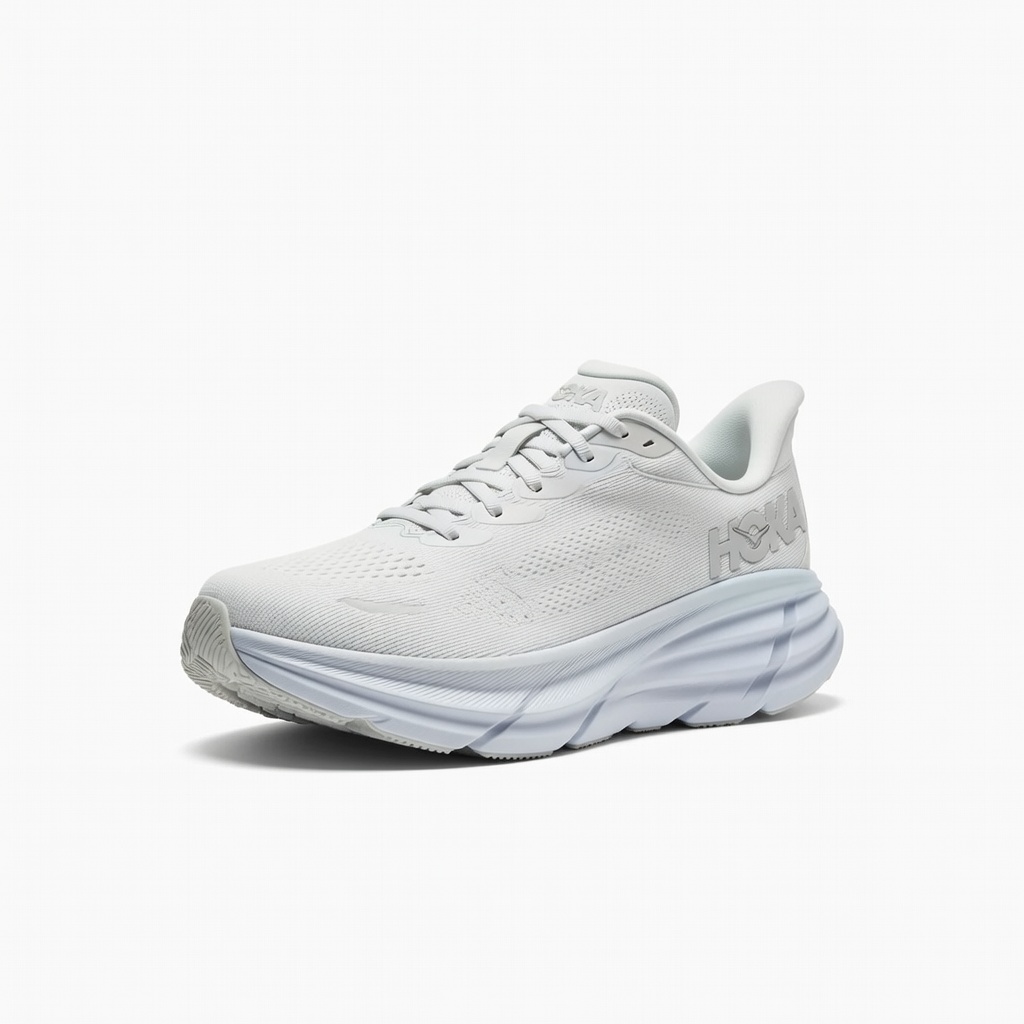
The Hoka Bondi 9 delivers the plush, maximal cushioning that has made the franchise a favorite among podiatrists, with a late-stage meta-rocker that smooths your gait. Its broad base and deep heel cup provide excellent stability for everyday walking and standing. The trade-off: it's a heavy shoe at over 10.5 ounces, and the thick sole can feel clunky for some runners.
Main limitation: The Bondi 9's bulky midsole sheds stability on uneven terrain, and it runs narrow in the midfoot for wide-footed wearers.
Skip if: Runners seeking a lightweight tempo trainer will find the Bondi 9 too heavy and tall; consider the Hoka Clifton instead.
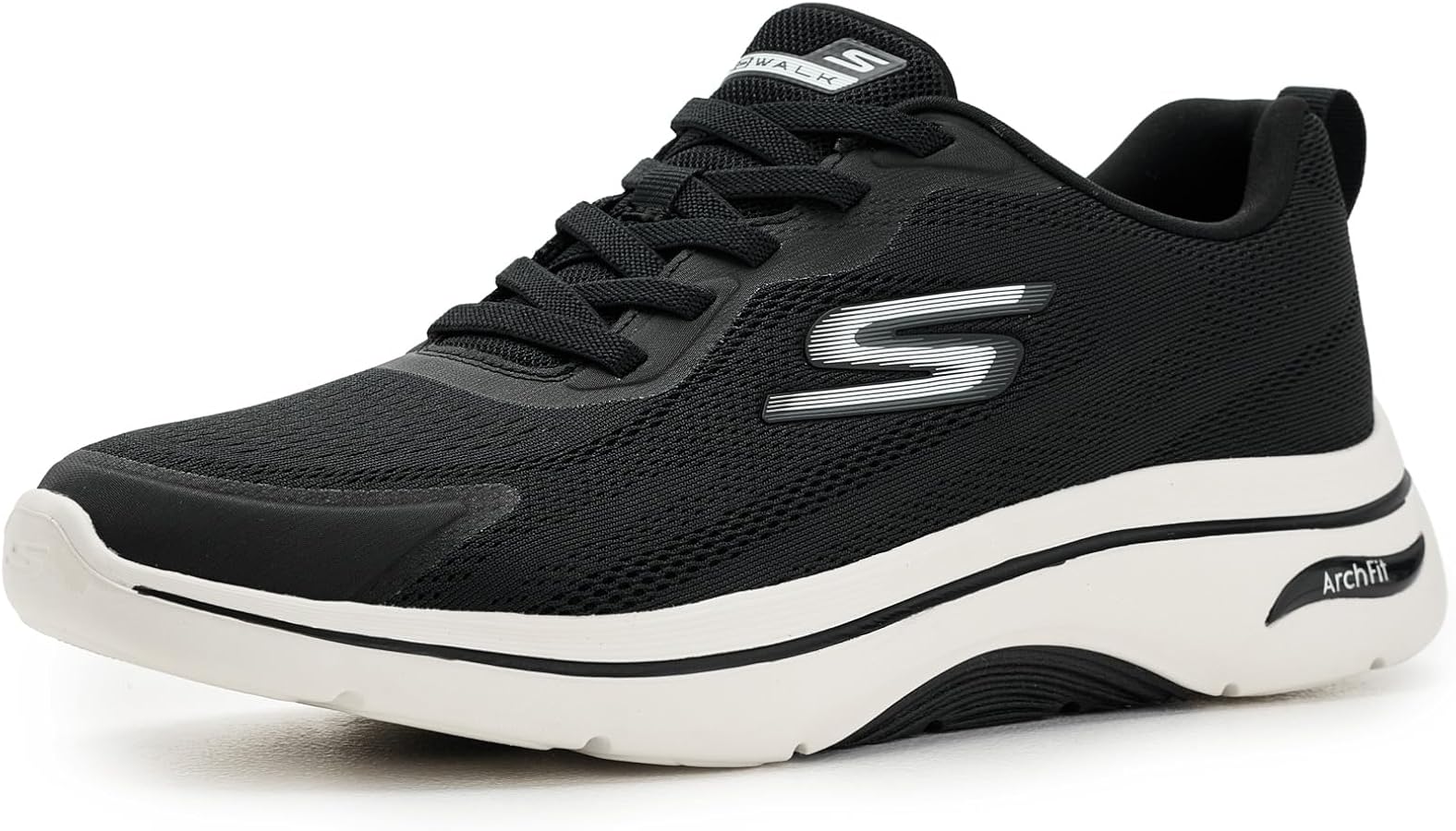
For under $100, the Skechers Arch Fit 2.0 line punches far above its price point, with a podiatrist-designed arch support insole and a responsive foam midsole. It's an excellent value for anyone who needs immediate relief without a heavy upfront investment. The main trade-off is durability: cushioning breaks down after 300–400 miles, and the knit upper lacks the premium feel of pricier options.
Main limitation: The insole's arch support can feel overly aggressive for flat-footed users, and the outsole wears quickly on concrete.
Skip if: If you need maximum stability or have a history of ankle rolling, the higher-cut midsole of a stability shoe will serve you better.
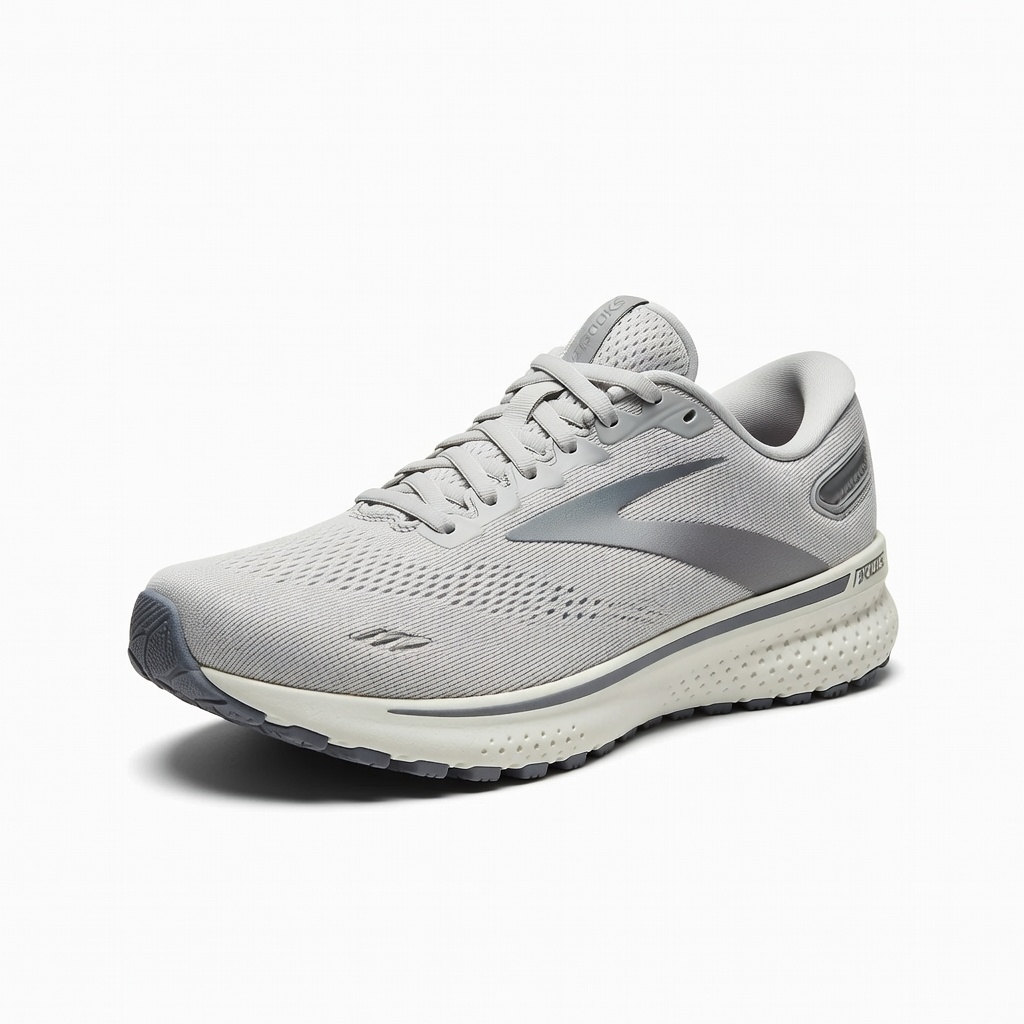
Brooks has refined its beloved Ghost silhouette to be softer and more cushioned, making the Ghost 16 a standout for walkers and runners alike. The DNA LOFT v3 midsole absorbs shock without sacrificing responsiveness, and the engineered mesh upper adapts to your foot's shape. The trade-off: the neutral platform offers minimal arch support for severe overpronation.
Main limitation: The toe box is slightly narrow, and the outsole grip can be slick on wet polished floors.
Skip if: Flat-footed walkers who need motion control should look to the Brooks Addiction GTS or Asics Kayano instead.
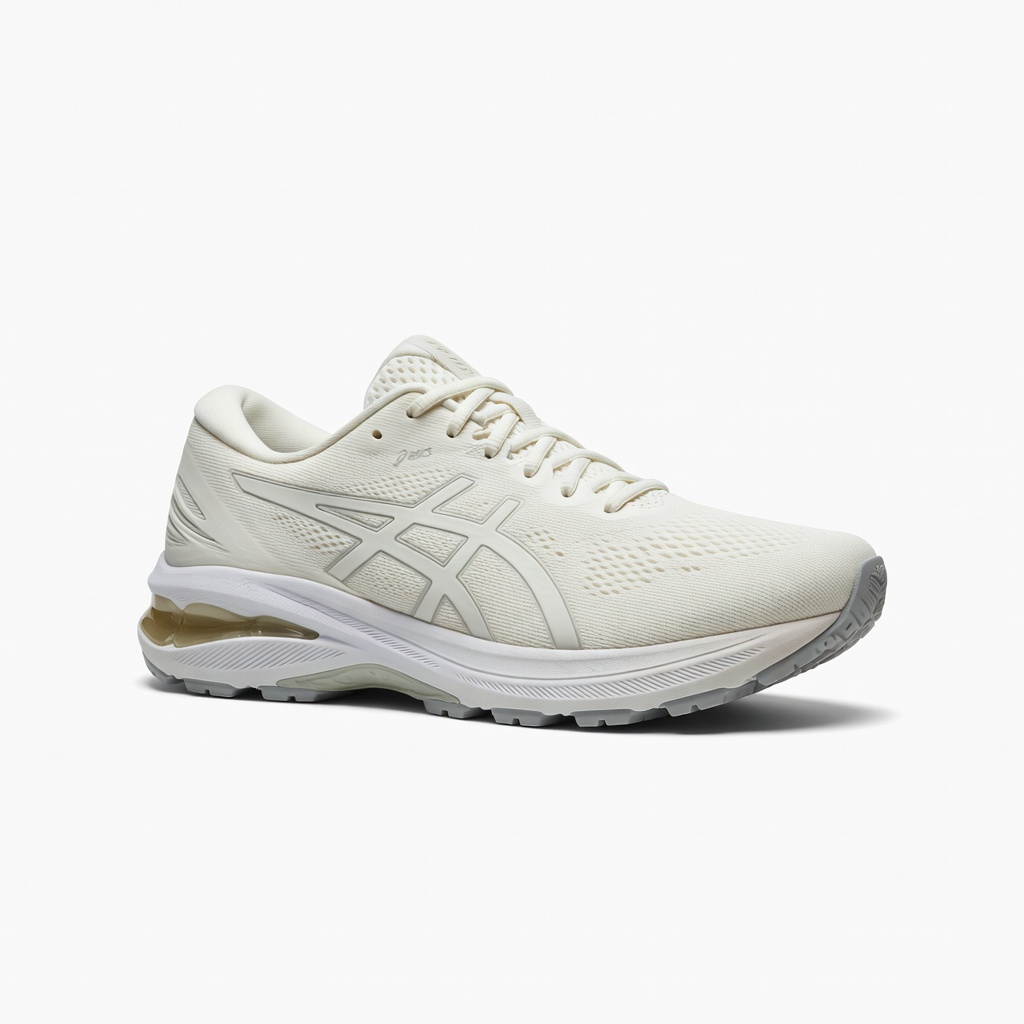
The Gel-Kayano 31 is the gold standard for runners who overpronate, with a medial post and dynamic duomax system that guide the foot into a more natural alignment. Its rearfoot GEL technology cushions the heel strike, a critical area for plantar fasciitis suffers. The trade-off: it's a firmer, less plush ride than maximalist shoes like the Bondi, and some users find the arch support too rigid.
Main limitation: The Kayano's higher drop (about 13mm) can load the arch more than lower-drop alternatives, and the weight (10 oz) is noticeable for speed work.
Skip if: Neutral runners who don't need stability should choose the Asics Cumulus or a lighter cushioned trainer; the Kayano is overbuilt for them.
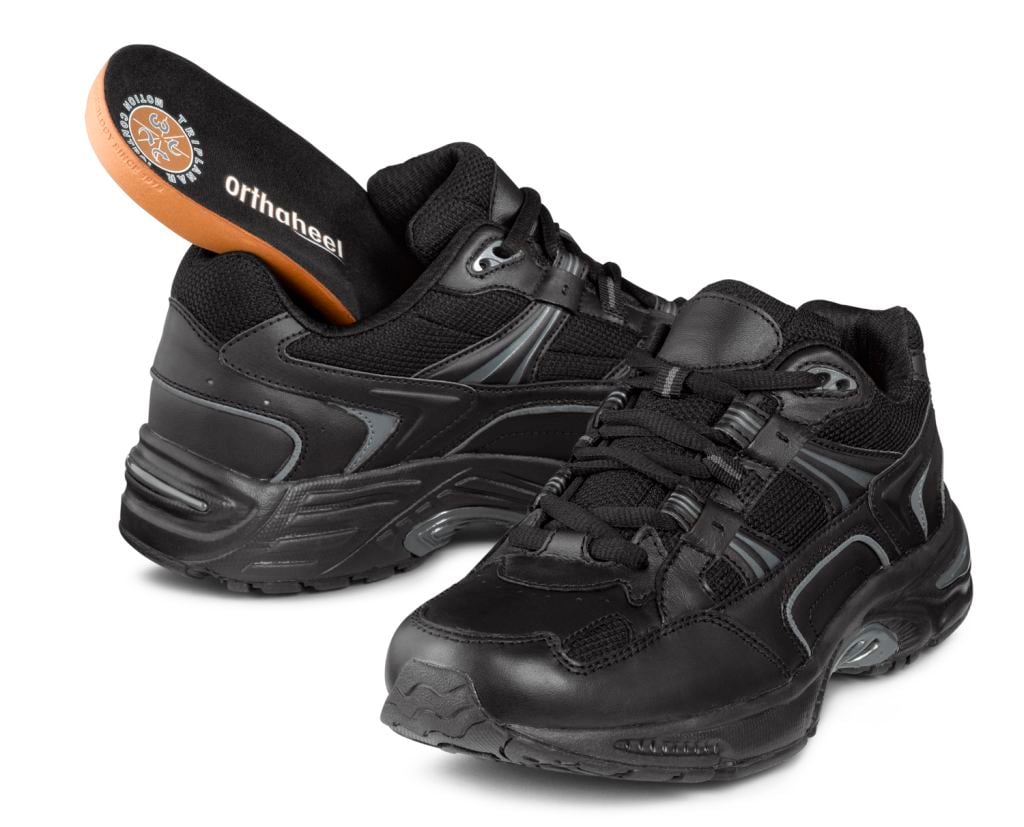
Vionic's Orthaheel line is built around a podiatrist-designed orthotic footbed with a deep heel cradle and firm medial support. The Walker model is a classic lace-up walker that feels like an orthotic shoe from day one, providing immediate relief for stubborn plantar fasciitis. The trade-off: the styling is distinctly orthopedic, and the firm EVA midsole may feel harsh to runners.
Main limitation: The firm arch support can cause discomfort for people with typically high arches, and the shoe is not intended for high-impact activities.
Skip if: If you want a shoe that doubles as a running trainer, the Vionic Walker is not suitable—it's strictly for walking and everyday wear.
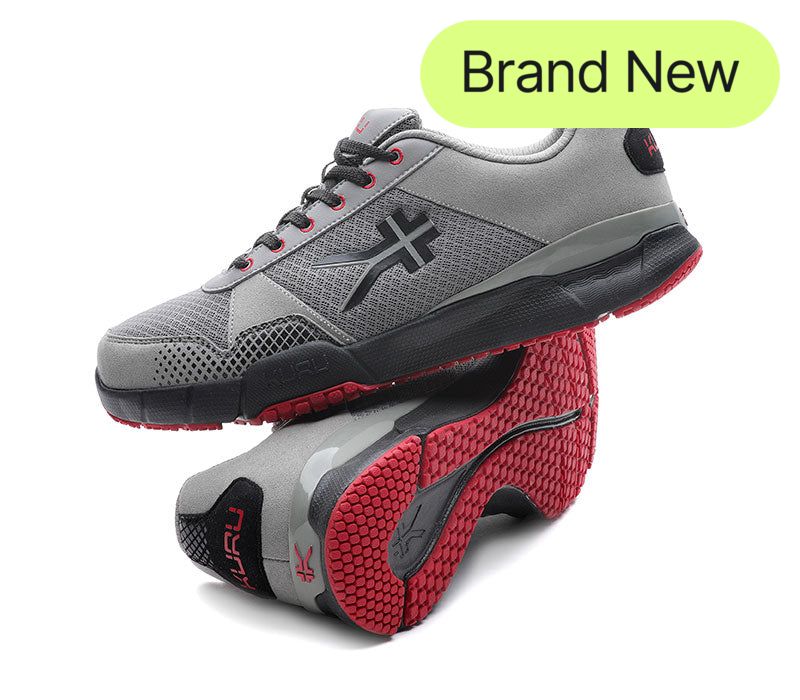
Kuru's Quantum model is specifically engineered for plantar fasciitis, with its patented KuruFoot technology that collapses to absorb shock and then expands to lock the heel in place. The flexible forefoot and sculpted midsole reduce pressure on the plantar fascia with every step. The trade-off: the upper's leather-like material can stretch over time, and the price reflects its specialized design.
Main limitation: The Quantum's stiff shank and moderate arch support may not suit those with very rigid high arches, and the breathability is average on hot days.
Skip if: If you prefer a soft, plush ride, the Kuru's responsive—but not maximal—cushioning might feel too firm.
Compare key specs and features of all our recommendations side-by-side
| Product | Recommendation | Rating | Price |
|---|---|---|---|
HOKA Bondi 9 Rank #1 | 🏆 Top Pick | 9.2/10 | $170–$180 Check current price → |
Skechers Arch Fit 2.0 - Glide Rank #2 | 💰 Budget Pick | 8.0/10 | $70–$90 Check current price → |
Brooks Ghost 16 Rank #3 | ⭐ Editor's Choice | 8.7/10 | $140–$160 Check current price → |
ASICS Gel-Kayano 31 Rank #4 | — | 8.8/10 | $160–$180 Check current price → |
Vionic Orthaheel Walker Rank #5 | — | 8.4/10 | $160–$180 Check current price → |
KURU Quantum Rank #6 | — | 8.6/10 | $150–$190 Check current price → |
Common questions buyers have about this category.
No shoe can 'cure' plantar fasciitis, but the right ones can dramatically reduce pain and allow the fascia to heal. Shoes that provide arch support and heel cushioning offload the strain on the plantar fascia, which helps the tissue recover between activities. Combine them with stretching, proper rest, and orthotic inserts if needed.
There's no one-size-fits-all answer, but many people with plantar fasciitis do well with a drop between 8mm and 13mm, as it shifts pressure forward and reduces calf strain. A higher drop may be more comfortable for those with tight Achilles tendons. Conversely, a lower drop (4-6mm) can encourage a more natural gait, but it may exacerbate tight calves for some individuals.
Not necessarily. While many pricier shoes use premium foams and construction, the most expensive pair isn't always the right one for your foot structure. The budget-friendly Skechers Arch Fit provides excellent arch support for under $100, showing that effective support doesn't require a $180 price tag. Focus on fit and biomechanics rather than price.
Most shoes lose their cushioning and support after 300 to 500 miles, or roughly every 6 months of regular use—whichever comes first. If you notice increased foot pain or visible compression in the foam, it's time to replace them. Rotating between two pairs can extend their life and give your feet varied support.
Yes, heavily worn shoes are a common cause or aggravator of plantar fasciitis. As the midsole compresses and the outsole wears unevenly, your foot loses its support and shock absorption, forcing the fascia to take on extra stress. Check the heel area for uneven wear—if the sole is significantly lower, it's time for new shoes.
Neutral shoes like the Brooks Ghost have a soft, even midsole with minimal motion control, making them best for people with neutral gait who just need cushioning. Stability shoes like the Asics Gel-Kayano include a medial post or support frame to correct overpronation, which can help if your feet roll inward excessively. If you have flat feet or a history of ankle injuries, a stability shoe may be more appropriate.
Most running and walking shoes on our list have removable insoles, allowing you to insert custom orthotics. However, if a shoe has a built-in deep arch support (like the Vionic Orthaheel), adding a rigid orthotic might create an uncomfortable double support. In that case, try the shoe on with your orthotic and gauge how it feels—you may need to remove the stock insole to fit your orthotic.
Products we evaluated but did not recommend — and why.
