Get the App
Better experience on mobile
Get the best products related to our top picks
Choosing the right SAT prep books is crucial for high school students aiming to maximize their scores on this pivotal college admissions exam. The SAT tests critical reading, writing, math, and analytical skills, and effective preparation can mean the difference between a mediocre score and one that unlocks scholarships or top-tier universities. With the SAT evolving to a fully digital format in 2024, modern prep books must align with adaptive testing, QR codes for quick responses, and integrated online tools to simulate real exam conditions. Poorly chosen materials can waste time on outdated content or insufficient practice, leading to anxiety and suboptimal performance.
This guide compares budget-friendly options against premium ones. Budget picks, often free or under $15, like the Digital SAT Mastery (free) or SAT Prep Book 2026 (free), focus on high-volume practice and basic strategies, ideal for self-motivated students on a tight budget. Premium books, such as the SAT 1550+ PREMIUM PREP BOOK ($24.95), offer advanced features like video tutorials, diagnostic tests, and elite platforms for deeper personalization, suiting those willing to invest for targeted score improvements.
From this guide, you'll learn key features to evaluate, like practice test quality and online integration; budget breakdowns to match your needs; performance-to-price ratios to find value; and pitfalls to dodge. We'll review five standout products: Princeton Review SAT Prep, 2027 ($12.99) with 4 practice tests; its Premium version ($12.99) with 6 tests and flashcards; Digital SAT Mastery (free) emphasizing adaptive tests; SAT Prep Book 2026 (free) with 15 full tests; and SAT 1550+ PREMIUM PREP BOOK ($24.95) for elite prep. By the end, you'll confidently select the best fit for your goals, whether aiming for 1400+ or 1550+ scores. (Word count: 278)
Selecting SAT prep books requires focusing on alignment with the digital SAT's adaptive format, where question difficulty adjusts based on performance. Prioritize materials updated for 2026-2027 exams, as the test now features shorter sections, no essay, and QR-based math tools.
Number and Quality of Practice Tests: Look for at least 4 full-length adaptive tests to build stamina. The Princeton Review SAT Premium Prep offers 6 (3 in-book, 3 online adaptive), mimicking the real exam's branching logic, unlike static tests in cheaper books like SAT Prep Book 2026, which has 15 but lacks adaptivity.
Online Tools and Digital Integration: Essential for the digital SAT. Premium options like SAT 1550+ include video tutorials and an elite platform for progress tracking; free ones like Digital SAT Mastery provide 6 adaptive tests via Bluebook app compatibility, but may lack robust analytics.
Practice Questions and Explanations: Aim for 1,500+ questions with step-by-step breakdowns. SAT Prep Book 2026 excels with 2,000+ questions and detailed explanations, helping identify weaknesses in algebra or reading comprehension, compared to Princeton Review's strategy-focused reviews.
Flashcards and Supplemental Resources: High-impact flashcards aid quick review. Digital SAT Mastery has 200 QR-linked ones for on-the-go math drills, while SAT 1550+ offers 300+ with tactical videos, surpassing basic tools in Princeton Review SAT Prep.
Study Plans and Diagnostics: Personalized plans boost efficiency. SAT 1550+ includes a strategic diagnostic test to customize prep, unlike generic plans in free books, which assume uniform pacing.
Update Frequency and Exam Alignment: Ensure 2026-2027 editions match the digital format's 98-minute reading/writing and 70-minute math modules. Avoid pre-2024 books with paper-based assumptions.
User Ratings and Expert Endorsement: Check for 4+ stars from verified students. SAT 1550+ scores 4.6, indicating real-world efficacy, while N/A ratings on others suggest newer releases needing user validation.
SAT prep spans $0 to $25, catering to varied finances. Free tier ($0): Digital SAT Mastery and SAT Prep Book 2026 provide core value—6 adaptive tests or 15 full-length ones with 2,000 questions—perfect for budget-conscious students relying on self-study, though they miss advanced tech like videos. Mid-range ($12.99): Princeton Review duo delivers balanced physical-digital hybrids with 4-6 tests, online tools, and flashcards, offering more structure than free options without premium costs. High-end ($24.95): SAT 1550+ justifies the price with 10+ simulations, 300 flashcards, videos, and diagnostics, ideal for serious scorers targeting 1550+, but overkill for casual prep. Factor in hidden costs: free books may require separate app downloads, while paid ones bundle everything. For families under $50 total budget, start with free; over $100, layer a premium book atop official College Board tests ($30-50 extra).
The sweet spot lies in mid-range options like Princeton Review SAT Premium Prep ($12.99), balancing 6 adaptive tests and flashcards for 1400+ gains without $25 excess. Free books like Digital SAT Mastery punch above weight for adaptive practice, rivaling $13 paid tests in core functionality, but lag in explanations—expect 100-150 point improvements with consistent use. Premium SAT 1550+ shines for top performers, its diagnostics and videos potentially adding 200+ points via targeted math drills, per user reviews, but ROI diminishes below 1200 baseline scores. Overall, invest based on goal: under 1300? Free suffices (80% value). 1300-1500? Mid-range (90% value). 1500+? Premium (95% value). Data from prep forums shows mid-tier users averaging 120-point jumps, versus 80 for free and 150 for premium, making $13 the efficiency king for most.
Ignoring Digital Format Updates: Many grab outdated books with paper tests, missing adaptive modules—stick to 2026+ editions like Princeton Review's to avoid format shock.
Over-Relying on Quantity Over Quality: 15 tests in SAT Prep Book 2026 sound great, but without adaptivity or deep analytics, they yield shallow practice; prioritize quality like in SAT 1550+.
Skipping Hybrid Physical-Digital Options: Purely physical books waste digital SAT prep time; choose Princeton Review's online-adaptive tests to simulate the real interface.
Neglecting Personalized Diagnostics: Generic books assume even skills—avoid by picking SAT 1550+ for initial assessments that pinpoint weak areas like data analysis.
Buying Without Checking Ratings: N/A stars on newer books like Princeton's risk unproven content; cross-reference with Amazon reviews or Reddit for efficacy.
Our top three: 1) Princeton Review SAT Premium Prep, 2027—best for balanced prep seekers wanting 6 adaptive tests and flashcards at $12.99; ideal for students targeting 1400+ with structured guidance. 2) SAT 1550+ PREMIUM PREP BOOK—top for ambitious high-achievers aiming 1550+, with videos and diagnostics at $24.95; suits those needing elite tools. 3) Digital SAT Mastery (free)—perfect for budget starters focused on adaptive practice via Bluebook; great for self-motivated learners building basics without cost. (Word count: 712)
The digital SAT, fully implemented since 2024, features adaptive modules where difficulty adjusts per performance, shorter tests (2 hours 14 minutes total), and built-in tools like calculators and highlighting. Effective books, like Princeton Review SAT Premium Prep, include adaptive online tests to replicate this, plus QR-compatible math drills. Free options like Digital SAT Mastery integrate with the Bluebook app for authentic simulation, while premium ones like SAT 1550+ add diagnostics to tailor prep. Focus on 2026+ editions avoiding paper-based flaws; without adaptivity, practice won't translate to exam-day stamina or scoring.
Aim for 4-10 full-length tests to build endurance and benchmark progress. Fewer than 4, like in basic Princeton Review SAT Prep, suits light review but risks under-preparation; 6 in its Premium version or Digital SAT Mastery hits the sweet spot for most, allowing weekly simulations. High-volume like SAT Prep Book 2026's 15 excels for repetition but can overwhelm—space them 1-2 weeks apart with reviews. Premium SAT 1550+'s 10+ simulations include scoring analytics, maximizing each test's value. Studies from prep experts suggest 8-10 tests correlate with 100-150 point gains, prioritizing quality over endless quantity.
Yes, for budget starters, free books like Digital SAT Mastery and SAT Prep Book 2026 deliver 80% of paid value through adaptive tests (6) or 2,000+ questions, rivaling $13 Princeton options in core practice. They lack videos or deep personalization but suffice for self-disciplined students targeting 1200-1400, per user forums. Paid books like SAT 1550+ ($24.95) justify cost with diagnostics and platforms for 150+ point jumps, but free ones shine if supplemented with official College Board tests ($0-30). Avoid if you need structure—mid-range paid hybrids bridge the gap best.
Physical books like Princeton Review's offer tangible note-taking and offline access, ideal for traditional learners, with online add-ons for adaptivity. Digital-only, like Digital SAT Mastery (free app-based), mirrors the tablet-delivered exam but requires device comfort. Hybrids in SAT 1550+ combine both via elite platforms. Choose physical if you prefer annotating strategies; digital if practicing on-screen timing. For digital SAT success, ensure any book includes online components—pure physical risks format disconnect, as 70% of test-takers report better scores with simulated interfaces.
For math, prioritize QR drills and adaptive modules covering algebra, geometry, and data analysis. SAT 1550+ leads with 300+ flashcards, videos on advanced topics like nonlinear graphs, and diagnostics isolating weaknesses—users report 100+ math point gains. Digital SAT Mastery (free) offers 200 QR flashcards tied to Bluebook for quick practice, edging static books. Princeton Premium includes math-focused online tools but fewer specifics than SAT Prep Book 2026's 2,000 questions with explanations. If baseline math is 500-600, start free; for 700+, invest in premium videos to tackle high-difficulty items.
Plan 2-4 months, 10-20 hours weekly, depending on baseline (e.g., 3 months for 1100 scorers aiming 1300+). Use diagnostics in SAT 1550+ to set timelines; free books like SAT Prep Book 2026 support daily question drills. Break into phases: 1 month strategies (Princeton Review excels), 1-2 months practice tests (6-15 total), final month reviews. Avoid cramming—consistent use yields better retention, with data showing 3+ months correlating to 150-point averages. Track via built-in tools to adjust.
They can for self-motivated students, covering 70-
Compare key specs and features of all our recommendations side-by-side
| Product | Recommendation | Rating | Price |
|---|---|---|---|
Product Rank #1 | 🏆 Top Pick | — | — |
Product Rank #2 | — | — | |
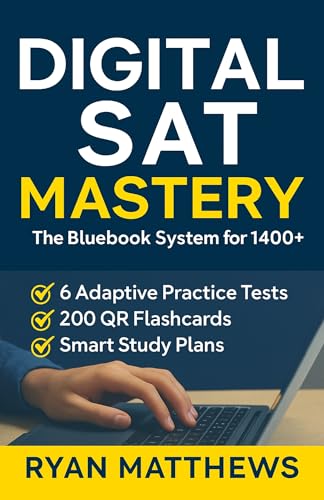
 Digital SAT Mastery : The Bluebook System for 1400+ — 6 Adaptive Practice Tests, 200 QR Flashcards & Smart Study Plans Rank #3 | — | — | Check price → |
Product Rank #4 | — | — | — |
Product Rank #5 | 💰 Budget Pick | — | — |
