Get the App
Better experience on mobile
Our team of experts has selected the best plumbing services out of hundreds. Don't hire plumbing services before reading these reviews.
Choosing the right plumbing services—or more precisely, the right tools and resources to manage and optimize them—can make all the difference in maintaining a smooth-running home or business. Plumbing issues strike without warning, from leaky faucets to full sewer backups, and poor service can lead to costly repairs, water damage, or even health hazards like mold growth. For homeowners, selecting reliable services means avoiding scams and overcharges; for professionals, it involves efficient tracking of jobs, expenses, and client interactions to boost profitability and organization. This guide shifts focus to essential resources like logbooks and guides that empower both sides: plumbers to streamline operations and homeowners to navigate services wisely.
In the world of plumbing management tools, budget options (under $10) offer basic tracking or free advice, ideal for beginners or casual users, while premium picks (around $10-13) provide comprehensive worksheets and detailed logs for heavy-duty use. Budget items might skim on depth, like simple invoice templates, whereas premium ones include advanced features such as income splitting and multi-job tracking, justifying the slight upcharge for pros who handle high volumes.
From this November 2025 BestReviews guide, you'll learn how to evaluate key features like tracking capabilities and ease of use, weigh budget tiers from free e-books to physical logbooks, and spot the sweet spot for value. We'll compare standout products including the Plumber Daily Worksheet Logbook for detailed job tracking, the Plumbing Service Job Logbook for client-focused records, the Plumbing Invoice Form Book for quick estimates, The Business Spotlight Show Presents: Optimised Plumbing Services for business insights, and the free Plumbing Secrets Every Homeowner Must Know for scam avoidance. Whether you're a field plumber juggling teams or a homeowner negotiating repairs, this guide equips you to pick resources that save time, money, and headaches, ensuring your plumbing services run efficiently and transparently. (Word count: 278)
When selecting resources for plumbing services—whether logbooks for pros or guides for homeowners—focus on tools that align with your needs, from basic record-keeping to advanced business optimization. These products aren't the services themselves but essential aids that enhance service delivery, tracking, and consumer savvy. Prioritize usability, comprehensiveness, and format (physical vs. digital) to ensure they fit your workflow.
Tracking Capabilities: Look for what the resource logs—jobs, hours, income, expenses, clients, parts, or payments. For plumbers, comprehensive tracking like the Plumber Daily Worksheet Logbook's 120+ worksheets for splitting work and service volume beats basic client logs in the Plumbing Service Job Logbook, which focuses on services performed and costs.
Ease of Use and Portability: Physical books should be compact (e.g., 6x9 inches in the Plumbing Invoice Form Book) for field use, with pre-formatted sheets to minimize writing time. Digital-friendly options like the free e-book Plumbing Secrets Every Homeowner Must Know offer searchable advice without bulk.
Customization and Depth: Premium tools allow notes or estimates, such as the Plumbing Invoice Form Book's repair cost trackers. Compare to shallower guides like The Business Spotlight Show Presents: Optimised Plumbing Services, which provides optimization tips but lacks interactive elements.
Durability and Page Count: For daily use, opt for 100+ pages (e.g., all logbooks here) made of sturdy paper to withstand job-site wear. The free e-book avoids this issue entirely but requires a device.
Target Audience Fit: Homeowner-focused items like Plumbing Secrets emphasize scam detection and negotiation, while pro tools like the Plumber Daily Worksheet Logbook suit teams tracking income splits.
Additional Tools: Some include estimating sheets or receipts (Plumbing Invoice Form Book), adding value over pure logs.
Format and Accessibility: Physical books enable offline use; e-books like the free one are instant downloads but may lack tactile organization.
With prices ranging from $0 to $12.95, these resources fall into clear tiers. At the entry level ($0-5), the free Plumbing Secrets Every Homeowner Must Know delivers core value—spotting scams and ensuring quality—without cost, perfect for budget-conscious homeowners dipping into service management. It's digital, so no shipping fees, but limited to advice rather than tools.
Mid-tier ($6-10) includes The Business Spotlight Show Presents: Optimised Plumbing Services ($7.99) for business tweaks and the Plumbing Invoice Form Book ($9.99) for practical invoice tracking. You get 100 pages of forms here, offering tangible organization for solo plumbers starting out, though without the depth of higher-end logs.
Premium ($10-13) features the Plumbing Service Job Logbook ($10.99) and Plumber Daily Worksheet Logbook ($12.95), providing extensive worksheets for pros. At this level, expect robust features like expense splitting and multi-client tracking, justifying the price for teams or high-volume users who recoup costs through better efficiency. Overall, free options suit casual needs; invest more for professional-grade durability and detail.
The sweet spot lies in mid-to-premium tiers ($9.99-$12.95), where performance scales with price without excess. The Plumber Daily Worksheet Logbook ($12.95) exemplifies this: its 120+ worksheets outperform cheaper logs in tracking complexity (e.g., service volume splits), delivering high ROI for plumbers via organized income/expense insights—potentially saving hours weekly on paperwork.
At $10.99, the Plumbing Service Job Logbook hits a balance, tracking parts and payments effectively for most field techs, edging out the $9.99 Plumbing Invoice Form Book, which is strong on estimates but lighter on full job history. Lower-end picks like the $7.99 Optimised Plumbing Services offer solid advice but lag in hands-on utility compared to logs, making them less "performant" for daily ops. The free Plumbing Secrets shines for homeowners, providing scam-negotiation tips at zero cost, but pros may find it too basic. Avoid ultra-low if you need physical tools; the value peaks where features match your volume—mid-premium for pros, free/low for education.
Overlooking User Type: Don't buy a pro logbook like the Plumber Daily Worksheet Logbook if you're a homeowner; opt for Plumbing Secrets instead to focus on consumer tips, avoiding irrelevant complexity.
Ignoring Physical vs. Digital Needs: Field plumbers grabbing e-books (e.g., free one) risk offline access issues; stick to portable books like the 6x9-inch Plumbing Invoice Form Book for job-site reliability.
Underestimating Page Depth: Skimping on comprehensive trackers—choosing the basic $7.99 guide over 100+ page logs—leads to incomplete records, causing expense oversights or client disputes.
Neglecting Durability: Cheap paper in budget books wears out fast; test for quality, as seen in premium logs built for daily abuse.
Forgetting Scalability: Solo users might pick simple invoices, but growing teams need the multi-feature Plumber Daily Worksheet Logbook to handle volume without outgrowing the tool.
Our top pick is the Plumber Daily Worksheet Logbook ($12.95), best for field plumbers and teams needing detailed job, hour, and income tracking—its 120+ worksheets outshine others in depth. Second, the Plumbing Service Job Logbook ($10.99) suits service techs focused on client services and costs, offering balanced tracking without excess. For homeowners, the free Plumbing Secrets Every Homeowner Must Know is ideal, empowering scam avoidance and quality checks at no cost. These cover pros from solo to team and consumer needs efficiently. (Word count: 712)
Plumbing logbooks, like the Plumber Daily Worksheet Logbook or Plumbing Service Job Logbook, are designed for comprehensive, ongoing record-keeping of jobs, hours, clients, parts, expenses, and payments—ideal for professionals building a full history to analyze performance over time. In contrast, an invoice form book, such as the Plumbing Invoice Form Book, focuses on immediate, transactional tools like work orders, estimates, repair cost trackers, and receipts, making it quicker for on-site billing but less suited for long-term tracking. If you're a field tech needing daily organization, go for a logbook; for quick client handoffs, the invoice book suffices. Both are physical and portable, but logbooks offer more depth (e.g., 120+ pages vs. 100), justifying a slight price bump for pros handling multiple services.
Homeowners should prioritize educational tools like the free Plumbing Secrets Every Homeowner Must Know, which details red flags such as upfront full payments, vague estimates, or unlicensed work, plus negotiation tactics like getting multiple quotes. It teaches verifying credentials via state boards and insisting on written contracts—steps not covered in pro logbooks. For instance, use its checklists during service calls to ensure quality, like checking for proper permits. While pro resources like the Optimised Plumbing Services book offer business insights that indirectly help spot inefficiencies, they're less direct for consumers. Combining this e-book with basic invoice tracking from the Plumbing Invoice Form Book can empower you to demand transparent records, potentially saving hundreds on overcharges.
For most field plumbers, yes—physical logbooks like the Plumber Daily Worksheet Logbook excel in offline, rugged environments where devices fail, allowing instant pencil entries on jobs, hours, and splits without battery worries. They're tactile and portable (e.g., 6x9 inches), reducing errors from app glitches. However, the free Plumbing Secrets e-book is purely digital, searchable, and cost-free, suiting homeowners for quick advice. If your work involves teams or high volume, physical wins for shared use; solo techs might hybridize with scanned logs. Drawbacks include no auto-calculations, so consider supplementing with apps for data entry later. Overall, physical edges out for reliability in plumbing's hands-on world.
The Plumbing Service Job Logbook ($10.99) strikes the ideal balance for solo operators, tracking clients, services, parts, costs, and payments without the overwhelming 120+ worksheets of the pricier Plumber Daily Worksheet Logbook. It keeps records organized for billing and growth analysis, more practical than the estimate-only Plumbing Invoice Form Book for full job oversight. Pair it with the $7.99 Optimised Plumbing Services for tips on scaling efficiently. Avoid the free homeowner e-book, as it's not business-focused. This mid-tier pick helps track profitability early, preventing common solo pitfalls like unlogged expenses, and its page count supports months of use before needing a refill.
Pro tools like the Plumber Daily Worksheet Logbook enable detailed expense logging alongside income, allowing splits for accurate profit margins—crucial for budgeting service volumes. The Plumbing Invoice Form Book aids by tracking repair costs per job, helping forecast material needs. For homeowners, Plumbing Secrets teaches negotiating fixed-price deals to control outlays, spotting upsell scams that inflate budgets. The Optimised book offers strategies to minimize overhead, like efficient routing. Across tiers, start with free advice for planning, then add logs ($9.99-$12.95) for real-time tracking; this combo can cut waste by 20-30% through better visibility, far beyond generic spreadsheets.
Most are standalone physical or basic e-books, so direct integration is limited—the Plumber Daily Worksheet Logbook and others rely on manual entry, which you can later digitize via scanning apps like Adobe Scan into software like QuickBooks or Jobber for plumbing-specific invoicing. The free e-book's tips can inform software setups, like custom scam alerts in client portals. The $7.99 Optimised book discusses workflow tools that pair well with apps for optimization. For seamless use, choose compact logs for field notes, then transcribe; pros report this hybrid saves time over all-digital if you're not tech-heavy. No product here is software-native, but their structured formats ease data migration.
High for active plumbers: the Plumber Daily Worksheet Logbook's tracking of hours, expenses, and splits can uncover inefficiencies, like underbilled jobs, recouping costs in one
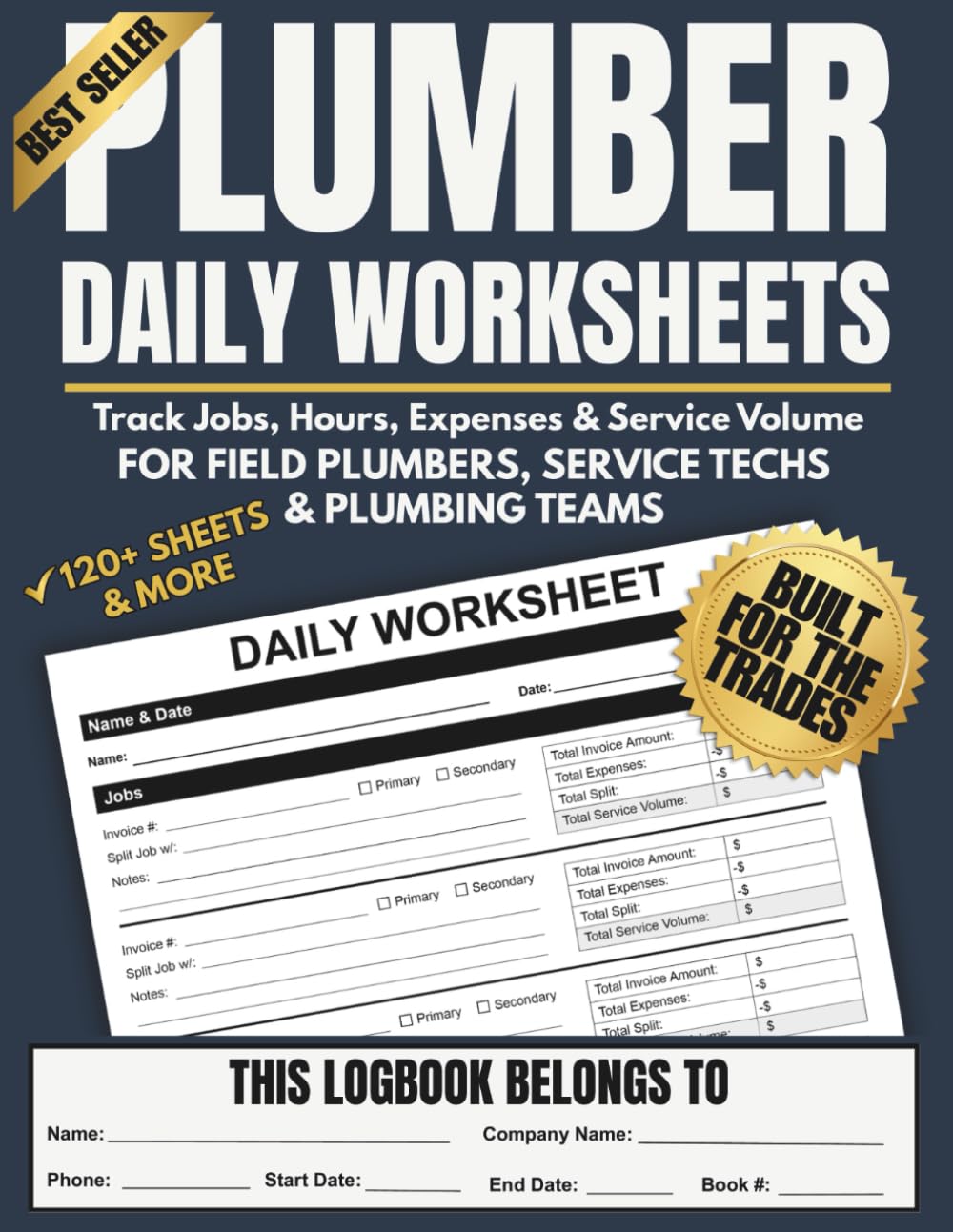

Compare key specs and features of all our recommendations side-by-side
| Product | Recommendation | Rating | Price |
|---|---|---|---|
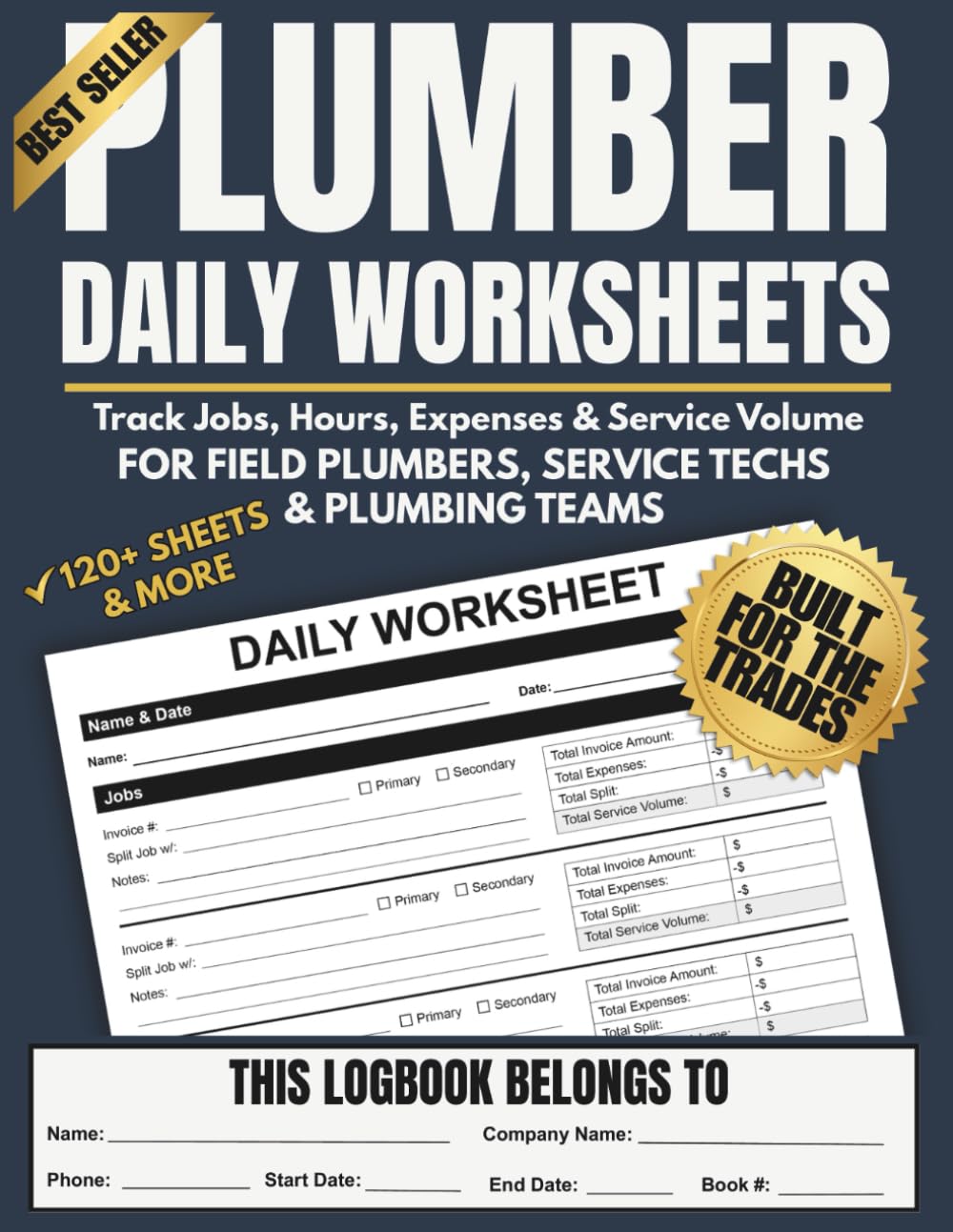 Plumber Daily Worksheet Logbook: 120+ Worksheets to Track Jobs, Hours, Income, Expenses, Split Work & Service Volume | For Field Plumbers, Service Techs & Plumbing Teams Rank #1 | 🏆 Top Pick | — | |
 Plumbing Service Job Logbook: Track Clients, Services Performed, Parts Used, Costs & Payments Rank #2 | — | ||
Product Rank #3 | — | — | — |
 The Business Spotlight Show Presents: Optimised Plumbing Services Rank #4 | — | — | |
Product Rank #5 | 💰 Budget Pick | — | — |

