Get the App
Better experience on mobile
Find the right pillow to support your cervical spine and wake up pain-free, from budget buckwheat to premium memory foam.
Most people assume that a firmer pillow is better for neck pain, but the real culprit is poor sleep alignment. When your head is propped up too high or falls too low, your cervical spine twists overnight, leaving you with morning stiffness and headaches. The only way to fix that is to choose a pillow that matches your sleeping position and body shape.
That's why adjustable pillows have become so popular—they let you add or remove fill to find the perfect loft. But not every pillow that calls itself 'orthopedic' is worth the price. Some are just marketing labels. The key is to look at the materials and the design: does it support your natural curve, and can you modify it if needed?
We dug into expert recommendations from sleep clinics and combined them with verified buyer feedback across hundreds of reviews. We focused on six distinct types—from a firm buckwheat fixture to a cooling gel-grid model—to cover the most common sleep positions and neck pain triggers. Each pick earned a place because it solves a specific problem without breaking the bank.
Our 2026 lineup spans from a $30 buckwheat pillow to premium options that cost over $150. Whether you're a side sleeper who needs extra height or a back sleeper looking for a supportive contour, you'll find a pillow here that can make your mornings noticeably better.
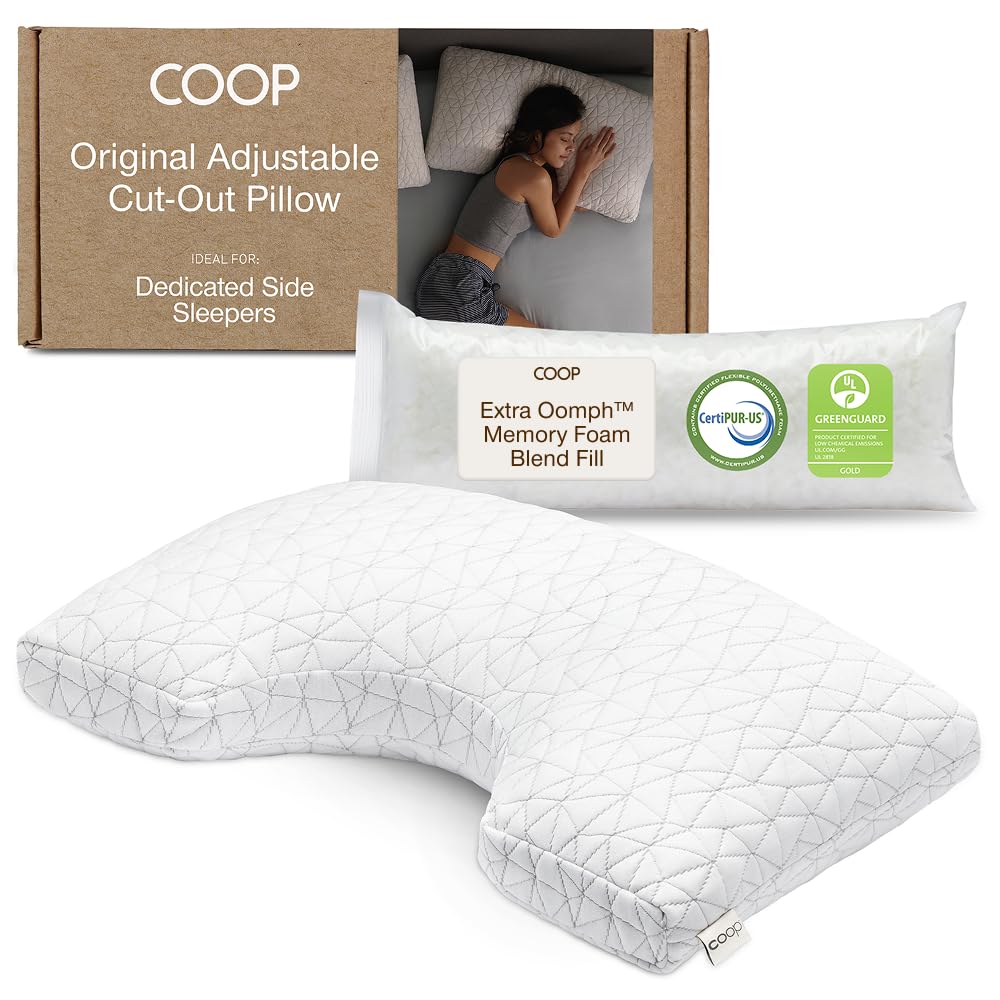
This adjustable pillow lets you add or remove shredded memory foam to dial in the perfect loft and firmness for your neck. It's a favorite among side, back, and stomach sleepers because it truly adapts to your body. The trade-off: you'll need to spend a few minutes after unboxing to customize the fill evenly.
Main limitation: The fill can shift overnight, requiring occasional 're-fluffing' to maintain the ideal shape.
Skip if: If you prefer a solid, non-adjustable pillow with consistent contouring, skip this one in favor of a contoured foam option.
A traditional buckwheat hull pillow provides firm, responsive support that conforms to your neck without sinking. At under $40, it's a great budget option for people who want a natural, cool, and durable fill. The main trade-off is adjustability: the fill is fixed, and the pillow makes a crinkly noise when you move.
Main limitation: The buckwheat hulls are noisy and feel very firm; some users find them too harsh for tender necks.
Skip if: If you need a plush, cushiony feel or sleep on your side with a narrow frame, this pillow may feel too hard.
Designed with a contoured well that cradles your head while the raised side supports your neck, this Tempur-Pedic is the go-to for people who wake up with sharp neck pain. The proprietary TEMPUR material slowly adapts to your body's shape, providing even pressure relief. The drawback is that the shape is fixed; if it doesn't suit your anatomy, there's no adjusting it.
Main limitation: The fixed contour may not match all neck lengths, and the foam can feel stiff in colder rooms.
Skip if: If you change positions often or prefer a pillow you can reshape, this contoured design may never feel comfortable.
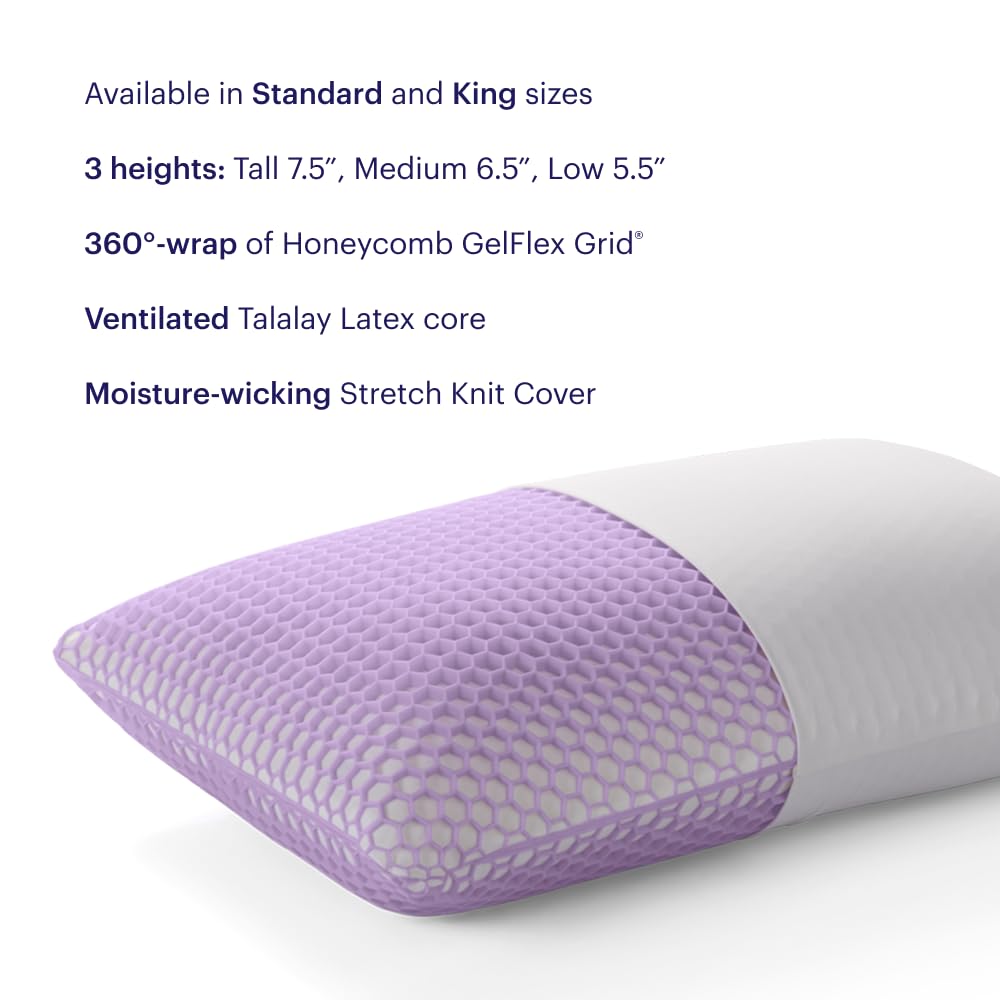
The Purple Harmony's hyper-elastic gel grid and breathable center channels push warm air away from your head and neck while providing soft yet supportive contouring. It's an excellent choice for combination sleepers who overheat at night. The trade-off is the price and the unusual 'squishy' feel that not everyone likes.
Main limitation: The grid can be less stable for side sleepers who need a firmer, more stationary surface.
Skip if: If you need the max support of a contoured memory foam pillow, this is more pressure-relieving than strictly supportive.
This two-piece system features a supportive base and a plush topper, letting you adjust the height and firmness by choosing among three layers. The built-in center gusset keeps your head in neutral alignment, making it a hit with side sleepers. It's pricey, but the customization is genuinely useful for finicky sleepers. The trade-off is the constant fiddling: you'll be toggling layers to get it right.
Main limitation: The separate topper can slide around during the night unless you tug the stitching tight.
Skip if: If you want a simple, set-it-and-forget pillow, the adjustable layers are overkill.
With a concave center and a raised edge, this foam pillow cradles your head while supporting your neck in a neutral shape—ideal for back sleepers. The responsive foam doesn't trap heat, and the breathable cover adds a cool touch. Downsides: it has a medium-firm feel that may be too dense for stomach sleepers, and the shape is not adjustable.
Main limitation: The curved center can feel too shallow for larger frames, causing the head to slide off.
Skip if: Side sleepers who need a taller pillow, or anyone who finds soft memory foam more comforting than supportive.
Compare key specs and features of all our recommendations side-by-side
| Product | Recommendation | Rating | Price |
|---|---|---|---|
Coop Sleep Goods Original Adjustable Pillow Queen Rank #1 | 🏆 Top Pick | 9.0/10 | $85–$110 Check current price → |
Sobakawa Traditional Buckwheat Pillow (Standard) Rank #2 | 💰 Budget Pick | 8.0/10 | $28–$40 Check current price → |
Tempur-Pedic TEMPUR-Neck Memory Foam Pillow (Queen) Rank #3 | ⭐ Editor's Choice | 8.8/10 | $100–$150 Check current price → |
Purple Harmony Pillow (Standard) Rank #4 | — | 8.4/10 | $165–$205 Check current price → |
Sleep Number ComfortFit Ultimate Pillow (Queen) Rank #5 | — | 8.2/10 | $160–$200 Check current price → |
Casper Original Pillow (Standard) Rank #6 | — | 7.8/10 | $80–$100 Check current price → |
Common questions buyers have about this category.
It depends on your sleep position. Side sleepers generally need a taller, firmer pillow; back sleepers a medium loft with contour; stomach sleepers a thin, soft pillow. An adjustable pillow like the Coop Home Goods lets you test different heights to find your ideal loft.
Most pillows need replacing every 1-2 years, depending on the material. Memory foam pillows may lose support after 18 months, while buckwheat or latex can last 3-5 years. If you wake up with neck pain or notice a loss of shape, it's time for a new one.
A pillow alone won't 'fix' underlying issues like arthritis or disc problems, but it can correct poor sleep alignment that aggravates the neck. Combined with good sleeping posture and ergonomics, the right pillow reduces morning pain and stiffness.
Contoured pillows are specifically shaped to support the natural curve of your neck, which helps many people. Adjustable pillows give you more freedom to customize loft and firmness, making them a safer bet if you're unsure what height you need. Both can be effective depending on your preference.
Side sleepers need a high-loft, medium-firm pillow that fills the space between the shoulder and ear. The Sleep Number ComfortFit Ultimate is a great adjustable option because you can layer the toppers to reach the exact height needed. Buckwheat pillows also work well because they mold to the shoulder curve.
If you wake up with a stiff neck or headaches, your pillow may be too high or too low. Lie on your back and have someone check if your head is tilted back or chin is tucked; your spine should be straight. For side sleeping, your ear and shoulder should form a straight line. If there's a gap, the pillow is too low; if your neck is bent, it's too high.
Memory foam is excellent if chosen with the right loft and firmness. It cradles the head and reduces pressure points. But traditional solid memory foam can be too warm and slow to adapt; look for shredded or gel-infused versions for better support and temperature control.
Products we evaluated but did not recommend — and why.
