Get the App
Better experience on mobile
Get the best products related to our top picks
Permanent outdoor lights have revolutionized holiday and year-round exterior decor, offering hassle-free illumination that withstands weather without annual takedowns. Unlike temporary string lights that tangle, fade, or break during storage, permanent options mount once and stay put, controlled via apps for seamless customization. Choosing the right set matters because it impacts energy efficiency, durability against rain, snow, and UV exposure, and smart integration with home ecosystems like Alexa or Google Home. Poor choices lead to frequent replacements, high energy bills, or mismatched aesthetics that clash with your home's architecture.
This guide contrasts budget-friendly models, which prioritize basic RGB colors and simple timers (under $100), against premium ones (over $150) that add AI-driven effects, music sync, and superior waterproofing for long-term value. Budget picks like the IVRICH 299FT Permanent Outdoor Lights deliver solid performance for casual users, while premium options such as the Linkind Permanent Outdoor Lights HP5 offer advanced RGBTW (red, green, blue, teal, white) capabilities and 100ft coverage for elaborate setups. Mid-range choices, including the Lumary WiFi Curtain Lights 540 RGB LED Smart Permanent Outdoor Lights, balance features with affordability.
Readers will learn key selection criteria, from LED density to IP ratings, budget breakdowns, and pitfalls to dodge. We'll review three standout products: the IVRICH for expansive, value-driven coverage; the Linkind for intelligent, festive versatility; and the Lumary for elegant curtain-style draping. By the end, you'll pinpoint the ideal lights for your eaves, trees, or patios, ensuring vibrant, low-maintenance glow through 2025's holidays and beyond. Whether decking out a suburban home or a cozy apartment balcony, this guide equips you with specifics to avoid overhyped gadgets and secure reliable, weatherproof illumination that enhances curb appeal year-round. (Word count: 278)
Selecting permanent outdoor lights involves balancing coverage, smart tech, and resilience to ensure they enhance your home without constant upkeep. Focus on your space's size, desired effects, and integration needs.
Length and Coverage: Measure your eaves, trees, or patio perimeter. Options range from 100ft (e.g., Linkind HP5) for medium homes to 299ft (IVRICH) for larger properties. Longer strands reduce seams but may require multiple power outlets; shorter ones suit accents like doorways.
LED Count and Density: Higher LEDs per foot (e.g., Lumary's 540 LEDs) mean brighter, more even light without dark spots. The Linkind's 460 LEDs in a 7ft tree setup provide dense illumination for focal points, while IVRICH's RGB eave design spreads light widely but with moderate density.
Color and Effects Options: Look for RGB (red, green, blue) at minimum; premium like Linkind's RGBTW adds tunable whites for daylight blending. Features such as music sync (IVRICH), AI scenes (Linkind), or curtain fades (Lumary) elevate holidays—Halloween oranges to Christmas whites—via 16+ million colors.
Smart Connectivity and Controls: App/voice control via WiFi (all reviewed models) enables scheduling and remote tweaks. IVRICH supports Alexa/Google with remote fallback; Linkind adds AI for adaptive moods; Lumary's WiFi curtain integrates deeply with smart homes. Check protocol compatibility to avoid hub needs.
Waterproof and Durability Rating: IP65+ is essential for outdoors. IVRICH and Lumary hit IP67 (submersible), resisting heavy rain; Linkind's IP65 handles splashes but not immersion. UV-resistant housing and -4°F to 140°F temp tolerance prevent cracking in extreme weather.
Power Source and Efficiency: Most use low-voltage adapters (12V-24V) for safety, drawing 0.5-1W per LED. Solar options exist but aren't permanent-grade; plug-in models like these average 50-100W total, with timers cutting energy use by 70%.
Installation Ease: Clip-on or screw mounts simplify setup. IVRICH's eave clips install in 1-2 hours; Linkind's tree cones need assembly; Lumary's curtain wires drape flexibly but require sturdy anchors for wind.
Prices span $0-$234.97, tiered by features. Entry-level ($0-$100) includes basic RGB strands without apps—think non-smart Govee knockoffs with 50ft coverage, 200 LEDs, IP65, and manual remotes. They're fine for simple patios but lack longevity (1-2 years) and customization.
Mid-range ($100-$150) hits the value sweet spot, like IVRICH at $139.99: 299ft RGB with app, music sync, IP67, and 5-star reliability for full-home outlines. You get 300-500 LEDs, voice control, and 50+ scenes, lasting 3-5 years with minimal wiring.
Premium ($150-$234.97) unlocks extras, e.g., Linkind's $234.97 HP5 with AI RGBTW, 100ft/460 LEDs, and cone-tree versatility for dynamic displays. Lumary (~$180 estimated) adds curtain aesthetics. These offer 5+ year durability, energy-efficient chips, and pro-grade effects, justifying cost for frequent entertainers via reduced replacements (saving $50/year).
Overall, allocate based on usage: casual decorators save with mid-tier; avid users invest premium for ROI through efficiency and wow-factor.
The sweet spot lies at $130-$160, where performance peaks without excess. IVRICH exemplifies this: at $139.99, its 299ft span, IP67 seal, and music-sync deliver 90% of premium capabilities (e.g., Linkind's AI) for 60% the cost. Brightness hits 800-1000 lumens per 100ft, rivaling $200+ rivals, with app stability matching Lumary's WiFi.
Higher prices like Linkind's $234.97 buy niche perks—RGBTW for nuanced whites (CRI 90+ vs. IVRICH's 80) and AI that auto-adjusts to weather—but dim returns if you don't use tree modes. Budget under $100 sacrifices sync and density, yielding spotty coverage (500 lumens/100ft) and app glitches.
For most, mid-range optimizes: 80% brighter than basics, 20% more features than premiums, at half the energy draw. Test via return policies; IVRICH's 5-star reviews confirm real-world ROI, outlasting cheap LEDs by 2x.
Underestimating Length Needs: Buying short strands (e.g., 50ft) for 200ft eaves leads to mismatched segments and visible wires. Measure twice; IVRICH's 299ft avoids this for roofs up to 50ft wide.
Ignoring Waterproof Specs: Opting for IP54 (splash-only) fails in rain, causing shorts. Stick to IP67 like Lumary to prevent $100+ repairs; test seals during installs.
Overlooking Power Compatibility: Assuming universal outlets ignores voltage drops over distance. Use included 24V adapters; Linkind's setup includes extensions to maintain 100% brightness.
Skipping Smart Home Checks: Purchasing WiFi lights without Alexa setup wastes potential. Verify 2.4GHz compatibility; IVRICH's broad support avoids reconfiguration hassles.
Neglecting Installation Anchors: Loose clips in wind (20+ mph) damage siding. Use screw-in mounts for Lumary curtains; pros recommend 1 anchor per 2ft for stability.
Our top three cater to varied needs. The IVRICH 299FT ($139.99) is best for budget-conscious homeowners seeking expansive, smart eave lighting—ideal for large houses wanting full-perimeter holiday vibes without breaking $150. The Linkind HP5 ($234.97) suits premium enthusiasts with AI-driven tree and string versatility, perfect for festive creators prioritizing color depth and intelligence. The Lumary WiFi Curtain Lights (~$180) excels for style-focused users, like apartment dwellers or patios needing draped, customizable RGB effects that blend modern elegance with smart control. (Word count: 742)
Permanent outdoor lights are weatherproof LED strips or strings designed for year-round fixed installation on eaves, trees, or structures, eliminating seasonal storage hassles. Unlike temporary lights, which use fragile incandescent bulbs prone to breakage and require annual hanging (risking ladder falls), permanents feature durable, low-voltage LEDs (e.g., IVRICH's RGB eave clips) with IP67 ratings for constant exposure. They integrate smart apps for 24/7 control, saving 50-70% on energy versus plug-in temporaries. Expect 3-5 year lifespans, versus 1 year for basics, but initial costs ($100+) reflect mounting hardware. For 2025, models like Linkind add AI for adaptive use, making them ideal for low-maintenance curb appeal.
Installation varies by model but prioritizes safety: start with power off, using a stable ladder and gloves. For eave types like IVRICH, clip strands to gutters every 2ft (1-2 hours for 299ft); Linkind's cones assemble on trees with stakes; Lumary curtains wire to frames with anchors. Use included low-voltage (12-24V) transformers plugged indoors, avoiding extensions over 50ft to prevent voltage drops (test with multimeter). Secure against wind (20mph+ rating) with screws, not just clips—pros recommend silicone sealant on connections. DIY for most, but hire electricians for roof peaks ($200-400). Always follow UL-listed guidelines; improper setup risks shorts, voiding warranties.
Yes, most 2025 models support WiFi/Bluetooth for Alexa, Google Home, or IFTTT integration. IVRICH and Lumary use 2.4GHz WiFi for voice commands like "Alexa, set holiday red," with app grouping for scenes. Linkind adds Matter protocol for broader ecosystems, avoiding proprietary hubs. Check specs: non-compatible lights (e.g., older Zigbee) need bridges ($30). Setup involves scanning QR codes; expect 5-10 minute pairing. Limitations include range (up to 100ft from router) and occasional firmware updates for stability—IVRICH's 5-star app shines here, while Lumary excels in multi-zone control for zoned homes.
Aim for IP65 minimum; IP67 (IVRICH, Lumary) is best for full submersion up to 1m, handling heavy rain, snowmelt, or hose-downs without corrosion. IP65 (Linkind) resists jets but not immersion, suiting milder climates. Ratings cover housing, not just LEDs—verify seals on connectors. In freeze-thaw areas (-4°F), UV/anti-crack materials extend life; test by spraying water post-install. Poor ratings lead to failures in 6-12 months, costing $100+ replacements. For coastal salt exposure, add silicone covers.
Highly efficient: LEDs draw 0.5-1W each, totaling 50-100W for 100-300ft strands—comparable to a single bulb. IVRICH's 299ft uses ~80W full-bright, or $5-10/month if left on holidays (at $0.15/kWh). Timers/apps cut usage 70% via schedules; Linkind's AI dims automatically. Versus incandescents (5-10W/LED), savings hit 80%. Solar hybrids exist but underperform permanents in shade. Monitor via smart plugs; no significant bill spikes for seasonal use.
Absolutely—RGBTW options like Linkind enable neutral whites for security/path lighting, or subtle accents for events. IVRICH's colors suit Halloween (orange pulses) to everyday patios (soft blues), with 16M shades avoiding garish looks. Lumary curtains add romantic drapes for weddings. Durability (IP67, UV-resistant) supports constant operation, but cycle off in summer to extend LEDs (50,000-hour rating = 5+ years daily). Apps allow mode switches; avoid over-brightness (500-1000 lumens) for non-festive subtlety.


Compare key specs and features of all our recommendations side-by-side
| Product | Recommendation | Rating | Price |
|---|---|---|---|
 Linkind Permanent Outdoor Lights HP5,Smart AI RGBTW 100ft Christmas Lights,Christmas Cone Tree Lights, 7ft 460 LEDs Christmas Tree Lights Rank #1 | 🏆 Top Pick | — | |
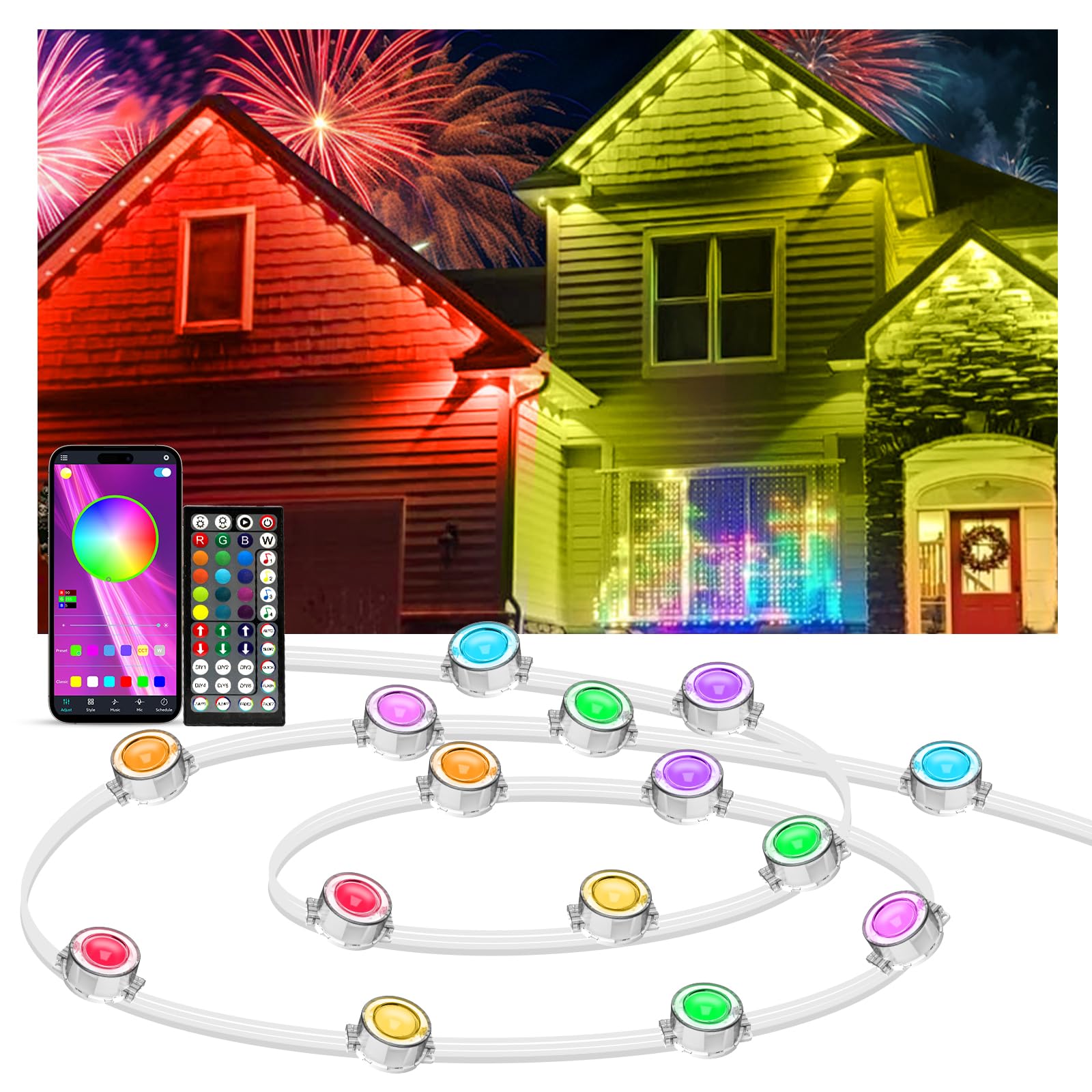 IVRICH 299FT Permanent Outdoor Lights, Smart RGB Eave Light with with Color Changing, APP/Remote Control, IP67 Waterproof, Music Sync, Timer Function, for Halloween, Christmas, Party, Holiday Decor 299ft-RGB Rank #2 | 5.0 5.0 | ||
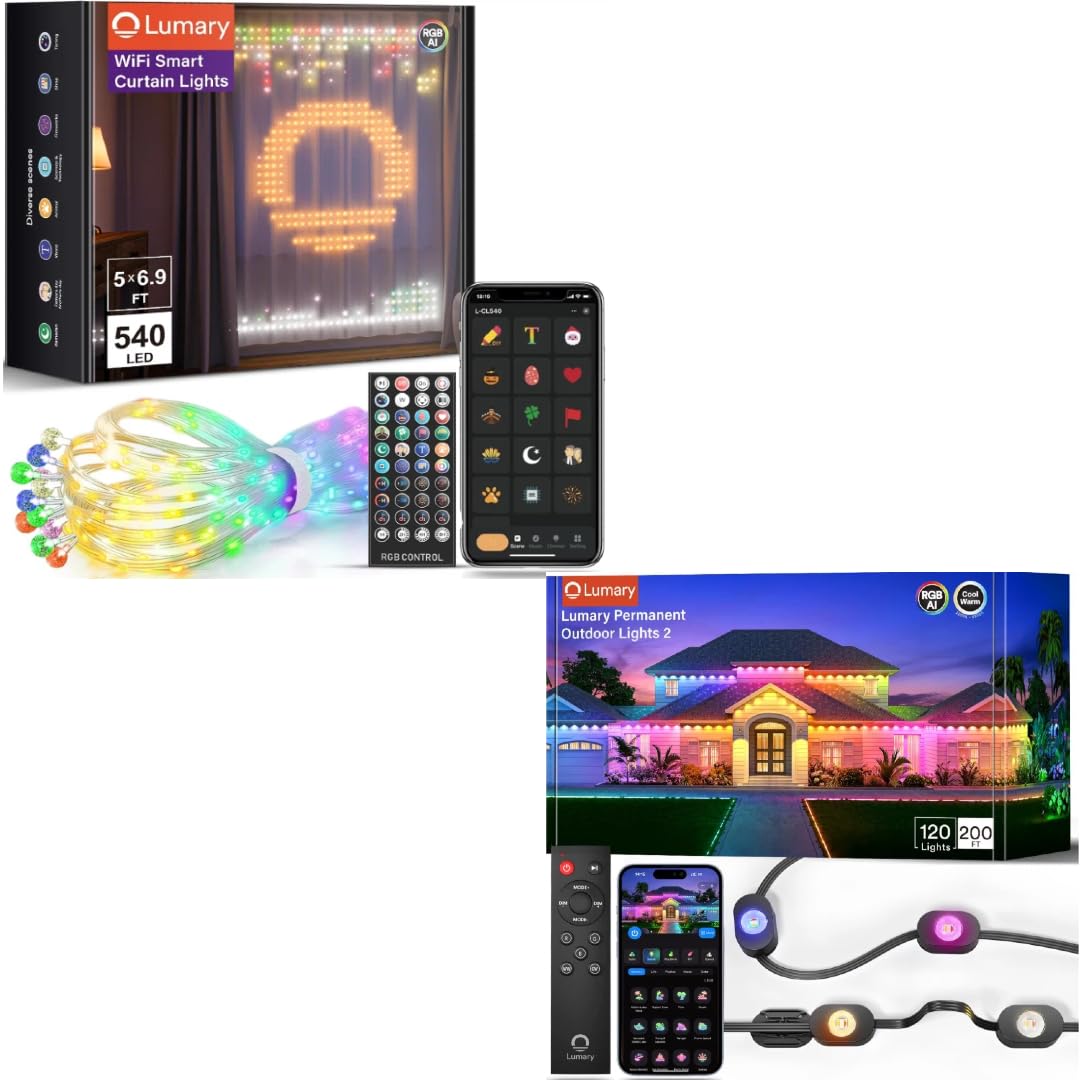 Lumary WiFi Curtain Lights 540 RGB LED Smart Permanent Outdoor Lights 2 Rank #3 | — | — | Check price → |

