Get the App
Better experience on mobile
You may be able to find relief at home with the use of a percussion massager. To treat soft tissue pain, choose the best percussion massager.
Percussion massagers, also known as massage guns, have surged in popularity as a go-to tool for at-home muscle recovery, pain relief, and relaxation. These handheld devices deliver rapid pulses to the muscle tissue, mimicking the effects of professional deep-tissue massage without the need for a therapist. Choosing the right one matters because not all models deliver the same level of effectiveness—poorly designed ones can cause discomfort or fail to penetrate deep enough, leading to wasted money or even injury. Factors like amplitude (depth of percussion), speed settings, battery life, and attachments determine how well a massager targets specific areas like the back, legs, or shoulders, making it essential for athletes, office workers with chronic tension, or anyone seeking post-workout relief.
In this guide, we'll compare budget-friendly options, which prioritize portability and affordability, against more premium models that offer greater power and versatility. Budget massagers, often under $30, are compact and quiet but may lack the intensity for serious deep-tissue work. Premium ones, around $60-$70, provide higher amplitudes, more attachments, and longer run times, justifying the extra cost for frequent users. Readers will learn key features to evaluate, how to balance price with performance, common pitfalls to avoid, and detailed breakdowns of five specific products: the AYURA Massage Gun Deep Tissue ($59.99), the Type-C Charging Mini Massage Gun Quiet ($19.99, Pink), the Type-C Charging Mini Massage Gun Quiet 6 Speeds ($19.99, Pink), the Type-C Charging Mini Massage Gun Handheld ($19.99, Pink), and the Morgela Deep Tissue Massager ($69.99). By the end, you'll have the insights to select a massager that fits your needs, whether you're a beginner on a tight budget or a dedicated athlete wanting robust recovery tools. This guide draws on product specs, user trends, and expert analysis to help you make an informed purchase in the $19.99 to $69.99 range. (Word count: 278)
Selecting a percussion massager involves evaluating your usage—daily relaxation, sports recovery, or targeted pain relief—and matching it to device capabilities. Focus on build quality, as lightweight plastics can vibrate excessively, while ergonomic designs reduce hand fatigue during extended sessions.
Amplitude (Percussion Depth): Measured in millimeters (mm), this indicates how deep the massager penetrates muscles. Budget minis like the Type-C Charging models offer 4-6mm, suitable for surface-level relief on arms or neck. Higher-end options, such as the AYURA or Morgela, reach 10-12mm, ideal for deep-tissue work on larger muscles like the back or glutes. Deeper amplitude provides better results for chronic tightness but can feel intense for beginners.
Speed Settings and Intensity Levels: More options allow customization. The AYURA boasts 30 speeds for fine-tuned control, while the budget Type-C minis stick to 6 speeds. The Morgela combines 6 modes with 9 intensities, offering 54 variations—great for switching between gentle warm-ups and aggressive therapy. Look for brushless motors for quieter operation and consistent power.
Attachments (Heads): Interchangeable heads target different areas: ball for large muscles, fork for calves, bullet for trigger points. The Morgela stands out with 16 heads for versatility across body parts, compared to the AYURA's 6 or the minis' basic 3-4. More heads mean broader use, from precision spots to broad coverage.
Battery Life and Charging: Runtime varies from 2-3 hours on minis (Type-C Charging models use USB-C for quick recharges) to 4-6 hours on premium units like the AYURA. Check for indicators to avoid mid-session shutdowns. Portability favors lightweight designs under 1 lb, like the pink minis at 0.5-0.7 lbs.
Noise Level and Vibration: Quieter models (under 50dB) suit home or office use. The "Quiet" Type-C variants excel here, while higher-power guns like the Morgela may hit 60dB. Brushless motors minimize vibration feedback to your hand.
Ergonomics and Portability: Grip comfort is key for 10-20 minute sessions. The AYURA's ergonomic handle suits extended use, whereas minis are pocket-sized for travel. Weight under 2 lbs prevents strain.
Warranty and Build Materials: ABS plastic is common, but look for 1-2 year warranties. Premium models often include carrying cases.
In the $19.99-$69.99 range, tiers break down as follows:
Entry-Level ($20-$30): Devices like the three Type-C Charging Mini Massage Guns (all $19.99, Pink) focus on basics: 6 speeds, short battery (2-3 hours), and minimal attachments. You get portability and quiet operation for light use—perfect for beginners or occasional neck/shoulder relief. However, power is limited (stall force around 20-25 lbs), so they're not for deep knots.
Mid-Range ($50-$60): The AYURA Massage Gun ($59.99) bridges the gap with 30 speeds, 6 heads, and 4+ hour battery. It offers better value for daily users, delivering noticeable deep-tissue effects without premium pricing. Expect solid build and some accessories.
Upper Mid-Range ($60-$70): The Morgela Deep Tissue Massager ($69.99) provides near-professional features: 16 heads, 54 intensity combos, and higher amplitude. This tier suits serious users, with longer warranties and durable construction, but the jump from budget may not justify for casual needs.
Overall, allocate budget based on frequency: under $30 for trials, $50+ for reliability.
The sweet spot lies in the $50-$60 range, where the AYURA excels—balancing 30 speeds and 6 heads for versatile performance without the Morgela's $10 premium for 16 heads, which may overwhelm casual users. Budget minis ($19.99) perform adequately for 80% of light tasks (e.g., post-yoga recovery) at a fraction of the cost, but their shallow amplitude (5mm) and weak motors falter on tough areas like the IT band, often requiring multiple passes. The Morgela ($69.99) tops performance with 12mm depth and extensive attachments, ideal for athletes needing quick 5-minute sessions, but it's overkill for budgets under $50. Prioritize amplitude over sheer speed count; a 10mm gun at $60 outperforms a 30-speed mini at $20 for deep relief. Test via return policies to ensure it matches your muscle density.
Ignoring Amplitude for Power Claims: Many budget ads hype speeds but skimp on depth—e.g., Type-C minis feel buzzy, not percussive, leading to ineffective sessions.
Overlooking Battery Realities: Short runtimes on minis drain fast during full-body use; always verify tested hours, not just claims.
Buying Without Attachment Variety: Sticking to one head limits utility—e.g., no flat head means poor large-muscle coverage on the AYURA if you overlook swaps.
Neglecting Noise for Shared Spaces: "Quiet" labels vary; the Morgela's 60dB can disturb partners, so prioritize under 50dB for apartments.
Assuming Size Equals Effectiveness: Tiny minis are portable but underpowered; don't choose based on aesthetics (like pink designs) over specs.
AYURA Massage Gun Deep Tissue ($59.99): Best for everyday athletes or pain sufferers needing versatile deep relief—30 speeds and 6 heads offer customization without excess bulk.
Morgela Deep Tissue Massager ($69.99): Ideal for advanced users targeting multiple body areas; 16 heads and 54 intensities provide pro-level options for quick, thorough sessions.
Type-C Charging Mini Massage Gun Quiet ($19.99, Pink): Top budget pick for beginners or travelers wanting portable, quiet spot treatment—great for women seeking discreet, on-the-go relaxation. (Word count: 742)
A percussion massager, or massage gun, uses a motorized mechanism to deliver rapid, repetitive pulses (percussions per minute, or PPM) to muscles, typically 1,200-3,200 PPM. This mimics the tapping of a therapist's hands, increasing blood flow, loosening fascia, and reducing lactic acid buildup. Devices like the AYURA or Morgela use oscillating heads to penetrate 5-12mm deep, providing faster relief than static foam rollers. For best results, apply for 1-2 minutes per muscle group, starting on low speeds to avoid bruising sensitive areas. It's effective for post-workout recovery, chronic pain like sciatica, or daily tension from desk work.
Consider your needs: if you experience frequent muscle soreness from exercise, sitting, or stress, yes—models like the Type-C minis suit light use, while the Morgela handles intense demands. Consult a doctor if you have conditions like deep vein thrombosis, osteoporosis, or recent injuries, as high amplitude can exacerbate issues. Beginners should start with budget options under $30 for trial; athletes may need $60+ for depth. Test portability if traveling, or battery life for home routines.
Budget minis ($19.99, like the Type-C variants) are compact (0.5 lbs), quiet (45dB), and basic (6 speeds, 5mm depth), great for spot relief but lacking power for deep knots—think surface buzz over true percussion. Higher-end like AYURA ($59.99) adds 30 speeds and 12mm depth for versatile therapy, while Morgela ($69.99) offers 16 heads and 54 intensities for pro-level customization. You trade portability for durability, longer battery (4+ hours), and effectiveness; minis stall on tough muscles, but premiums relieve in fewer passes.
Daily use is safe for 5-15 minutes total, split across areas, but limit intense sessions to 2-3 times weekly to prevent overuse irritation. For recovery, post-workout within 30 minutes; for pain, mornings or evenings. The AYURA's speeds allow gradual buildup, while minis suit quick daily spots. Hydrate and stretch afterward. Overuse signs include redness or increased soreness—rest 24-48 hours if needed.
Generally yes, but avoid bones, joints, spine, or bruised/inflamed spots. Use ball heads for large muscles (thighs), bullet for points (shoulders), and flat for back. The Morgela's 16 heads enable safe variety, but start low on sensitive necks. Not for face or head due to vibration risks. Pregnant users or those with pacemakers should avoid; always follow manuals.
Wipe heads with alcohol after use to prevent bacteria buildup—remove attachments for the AYURA or minis. Store in a case (if included, like Morgela)


Compare key specs and features of all our recommendations side-by-side
| Product | Recommendation | Rating | Price |
|---|---|---|---|
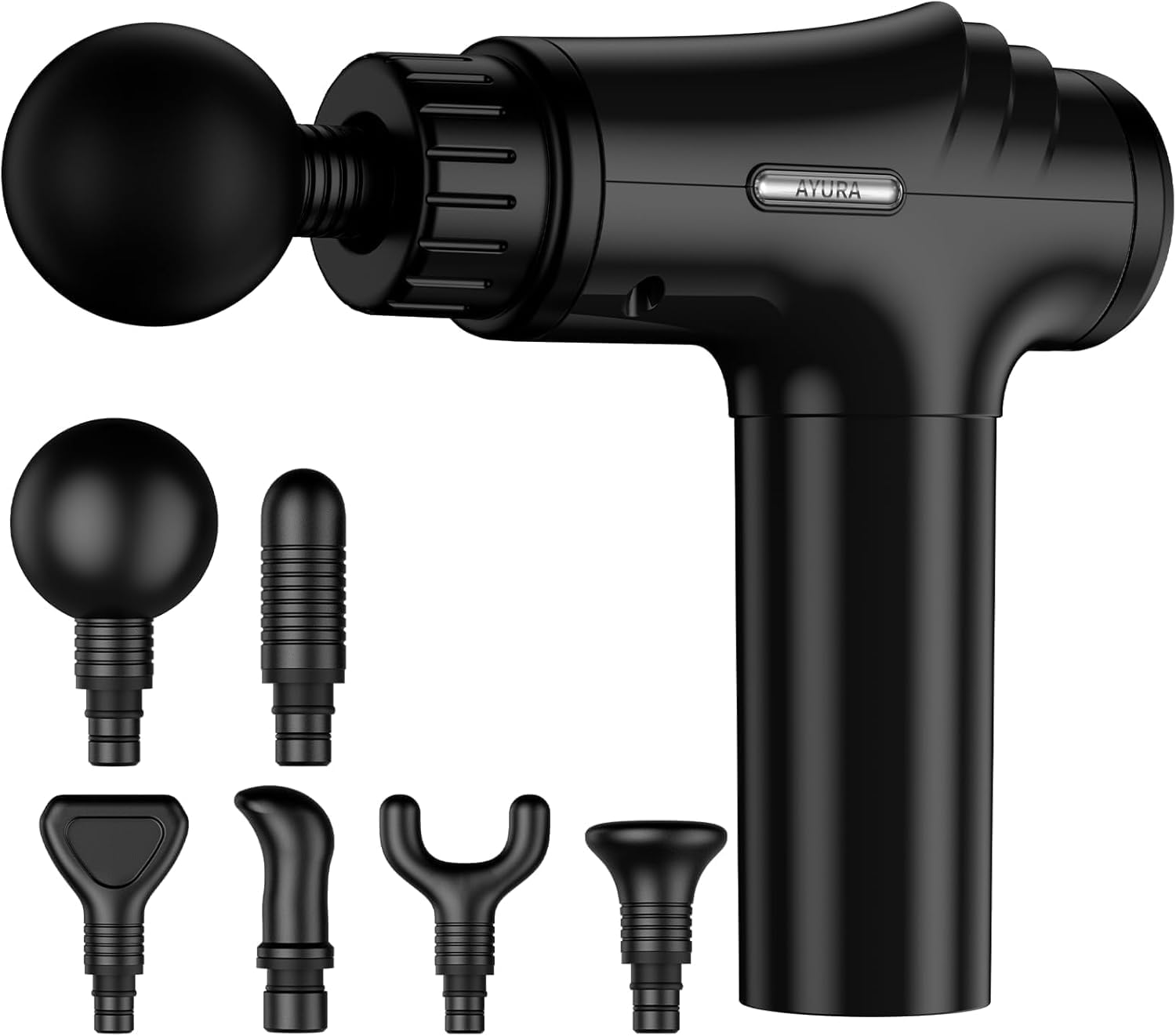 AYURA Massage Gun Deep Tissue, Percussion Muscle Massager Gun, Handheld Back Massager for Pain Relief, Mini Massage Gun with 30 Speeds and 6 Heads for Athletes Men Women Rank #1 | 🏆 Top Pick | — | |
 Type-C Charging Mini Massage Gun Quiet - Percussion Muscle Massager for Back Pain Relief Sports Recovery Rechargeable 6 Speeds Small Toys for Women (Pink) Rank #2 | — | ||
Type-C Charging Mini Massage Gun Quiet 6 Speeds Handheld Percussion Muscle Massager Gun Portable Pain Relief for Athletes Toys for Women (Pink) Rank #3 | — | — | |
Type-C Charging Mini Massage Gun Handheld Muscle Massager for Muscle Relaxation Percussion Muscle Massager Gifts Toys for Women (Pink) Rank #4 | — | — | |
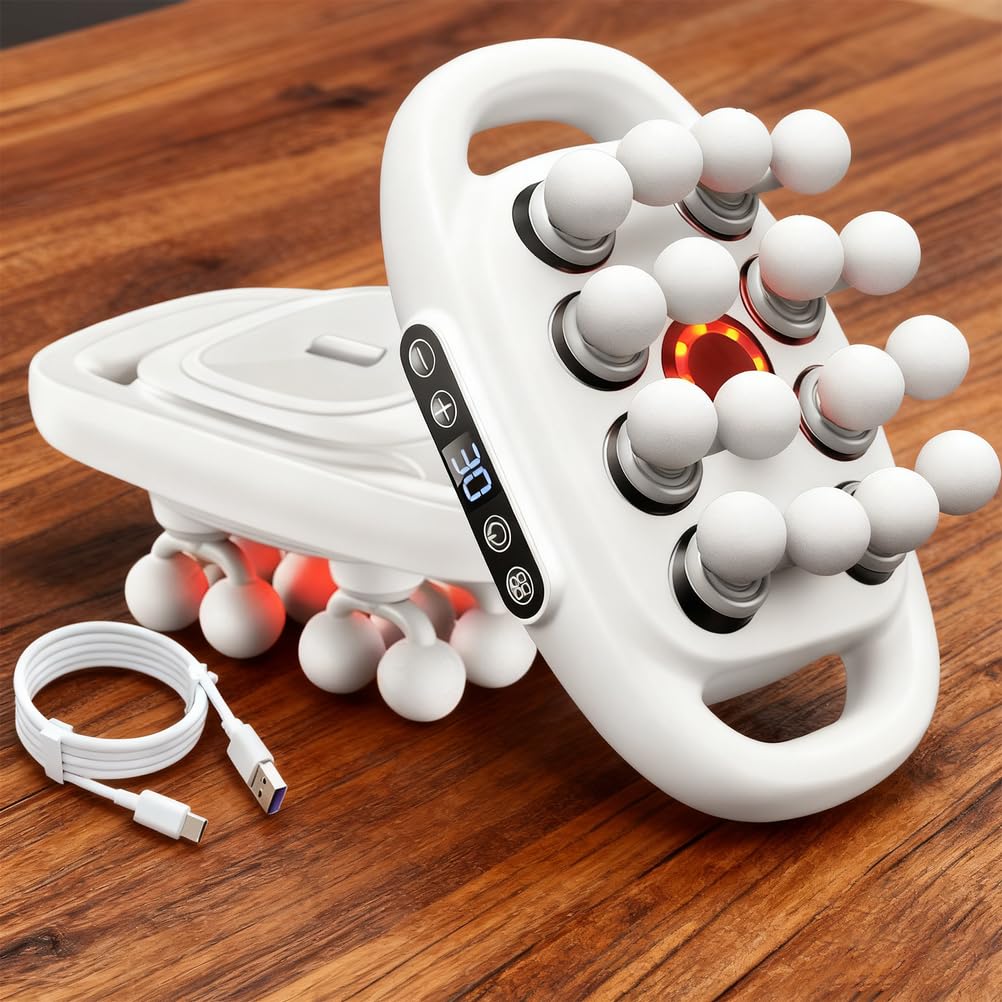 Morgela Deep Tissue Massager, Deep Tissue Percussion Massager with 6 Modes 9 Intensities, Relieves Tension & Stiffness in 5 Minutes for Legs, Arms, Waist, Back, Buttocks,White,16 Heads 16 heads White Rank #5 | 💰 Budget Pick | — |
