Get the App
Better experience on mobile
Get the best products related to our top picks
In today's world of streaming services and cord-cutting, outdoor TV antennas remain a cost-effective way to access free over-the-air (OTA) broadcasts in high definition, including local channels, news, sports, and more. Choosing the right outdoor TV antenna matters because it directly impacts signal reception quality, the number of channels you can pull in, and long-term reliability. Poor choices can lead to frustrating signal drops, limited range, or weather-related failures, while a well-suited antenna can deliver crystal-clear 4K and 1080p signals from 50 to over 120 miles away, depending on your location and terrain. Factors like urban vs. rural settings, obstructions (trees, buildings), and VHF/UHF frequency support play crucial roles—antennas optimized for both ensure broader compatibility with modern digital signals.
This guide compares budget-friendly options under $70, which prioritize affordability and basic performance, against premium models over $100, which offer advanced features like 360° or 720° reception, built-in amplifiers, and robust weatherproofing for harsh conditions. Budget antennas might suffice for suburban users with strong local signals but often lack the power for remote areas, whereas premium ones provide superior stability and ease of installation, justifying the extra cost for RVers, campers, or boat owners needing portability.
Readers will learn key features to evaluate, such as range, directionality, and amplification; budget breakdowns to match their needs; common pitfalls to avoid; and detailed reviews of five standout products. We'll spotlight the Omni Directional TV Antenna Outdoor (Large X BLACK) as a high-end all-rounder, the Outdoor TV Antenna 360° Directional Reception as a value pick, the Digital Outdoor TV Antenna for Smart TV as a balanced mid-tier option, the TV Antenna Long Range for versatile indoor/outdoor use, and the 4000+ Miles Tv Antenna Indoor (noted for its bold claims but indoor focus, adaptable outdoors with care). By the end, you'll confidently select an antenna that maximizes free TV without breaking the bank or compromising quality. (Word count: 278)
Selecting an outdoor TV antenna involves balancing your location, usage, and budget against technical specs. Start by assessing your area's signal strength using tools like the FCC's DTV Reception Maps or apps like AntennaWeb—rural users need longer-range models, while urban dwellers can opt for compact ones. Consider installation: roof-mounted for best results, attic for discretion, or portable for RVs/boats. Prioritize weather resistance (IPX-rated) to withstand rain, wind, and UV exposure.
Range and Reception Distance: Measured in miles, this indicates how far the antenna can pull signals. Look for 50-150 miles; realistic performance varies by terrain (e.g., 120+ miles in open areas but 30-50 in cities). Omni-directional models receive from all angles without aiming, ideal for mobile use, while directional ones focus on towers for stronger signals in one direction.
Directionality (Omni vs. Directional): Omni-directional (360° or 720°) antennas capture signals from any direction, suiting unpredictable environments like boats or campsites. Directional antennas (e.g., Yagi-style) offer higher gain but require precise pointing toward broadcast towers, better for fixed suburban setups.
Amplifier/Signal Booster: Built-in low-noise amplifiers (LNAs) amplify weak signals, extending range by 20-50 miles. However, in strong-signal areas, they can cause overload—many models include switchable boosters. Check power source: USB, coaxial, or solar for off-grid use.
Frequency Support (VHF/UHF): Modern digital TV uses UHF (channels 14-51) primarily, but VHF (7-13) is key for some locals like ABC/CBS. Ensure dual-band support for 4K/1080p compatibility; single-band limits channels.
Build Quality and Weatherproofing: Aluminum or fiberglass construction resists corrosion; look for IP65+ ratings against dust/water. Mounting hardware (poles, brackets) and cable length (RG6 coaxial for low loss) affect durability—longer cables (30-50ft) reduce signal degradation.
Cable and Connectivity: RG6 coaxial cables minimize interference over distance; lengths from 20-40ft are standard. Ensure compatibility with all TVs (smart/old) via F-type connectors; some include splitters for multi-room setups.
Portability and Installation Ease: For RVs/camping, seek lightweight (<5lbs), collapsible designs. Pre-assembled models with clear instructions save time; avoid complex wiring that needs professional help.
Outdoor TV antennas span $42.99 to $136.99, dividing into tiers:
Budget Tier ($40-70): Entry-level like the Outdoor TV Antenna 360° Directional ($42.99) or TV Antenna Long Range ($69.99). You get basic 50-100 mile range, simple amplification, and short cables (20-30ft). Ideal for apartments or strong-signal suburbs; trade-offs include plastic builds prone to weather wear and inconsistent UHF performance. Expect 20-40 channels reliably.
Mid-Range Tier ($70-100): Balanced options like the Digital Outdoor TV Antenna for Smart TV ($99.98). These add 360° reception, better boosters, and 30-40ft cables, pulling 50-120 miles with VHF/UHF support. Suited for rural homes or attics; durable aluminum casings and easy mounts provide value without excess.
Premium Tier ($100+): High-end like the Omni Directional TV Antenna Outdoor (Large X BLACK, $119.99) or 4000+ Miles Tv Antenna Indoor ($136.99). Features 720° rotation, super boosters, and rugged IPX7 weatherproofing for 100-400+ mile claims (realistically 80-150). Best for RVs, boats, or weak-signal areas; includes long cables (39ft+) and portability, but overkill for urban users.
At lower prices, focus on essentials; higher tiers invest in longevity and versatility.
The sweet spot lies in the $70-100 range, where mid-tier antennas like the Digital Outdoor TV Antenna deliver 80-90% of premium performance at 60-70% cost. For instance, budget models ($40-70) excel in clear-weather, close-range scenarios (e.g., 50-mile urban pulls) but falter in rain or foliage, achieving 70% signal stability vs. premiums' 95%. Premiums justify expense with features like auto-rotation (720° in the Omni model) for 20-30% more channels in obstructed areas, but diminishing returns kick in beyond $120— the 4000+ Miles model's extreme claim often tests at 100 miles max due to physics limits.
Analyze ROI: If you live 30 miles from towers, a $50 budget pick suffices (high performance/price ratio). For 60+ miles or mobile use, mid/premium boosts channels by 50%, paying off via free HD content over 1-2 years vs. cable fees. Test post-purchase with signal meters; returns are common if mismatched.
Ignoring Local Signal Conditions: Don't buy based on max range alone—urban interference halves effective distance. Use online maps to verify; mistaking this leads to zero channels.
Overlooking Directionality Needs: Omni models seem versatile but have 3-5dB lower gain than directional in fixed spots, missing weak signals. Aim directional antennas precisely or lose 10-20 channels.
Skipping Amplifier Adjustment: Always use boosters in weak areas but disable in strong ones to avoid distortion. Fixed amps cause pixelation on 30% of channels.
Poor Installation Placement: Mounting low (e.g., balcony) or near metal/electronics blocks signals by 40%. Elevate 20-30ft on roofs; attic installs need non-metallic barriers.
Neglecting Cable Quality/Length: Cheap RG59 cables lose 50% signal over 50ft; stick to RG6. Exposed cables degrade in sun—use waterproof seals to prevent failures within a year.
Our top three picks cater to diverse needs:
Omni Directional TV Antenna Outdoor (Large X BLACK): Best for RVers, campers, and boat owners seeking premium, all-around 720° reception up to 120+ miles with a super booster. Its rotatable design and weatherproof build outperform budget options in mobility but at a higher price.
Outdoor TV Antenna 360° Directional Reception: Ideal for budget-conscious suburban users wanting 120+ mile potential with a 39ft cable and amplifier. It edges mid-tier in value for fixed installs, though less versatile than omnis.
Digital Outdoor TV Antenna for Smart TV: Perfect for rural homeowners or attic setups, balancing 360° omni-reception, 120+ miles, and 32.8ft cable at mid-price. It suits families needing reliable 4K without premium extras, bridging budget and high-end gaps. (Word count: 742)
An outdoor TV antenna is a device mounted outside (roof, attic, or pole) to capture over-the-air (OTA) broadcast signals from TV towers, providing free access to local channels in HD or 4K without subscriptions. Unlike indoor antennas, which are compact and placed near windows but limited to 30-50 mile ranges due


Compare key specs and features of all our recommendations side-by-side
| Product | Recommendation | Rating | Price |
|---|---|---|---|
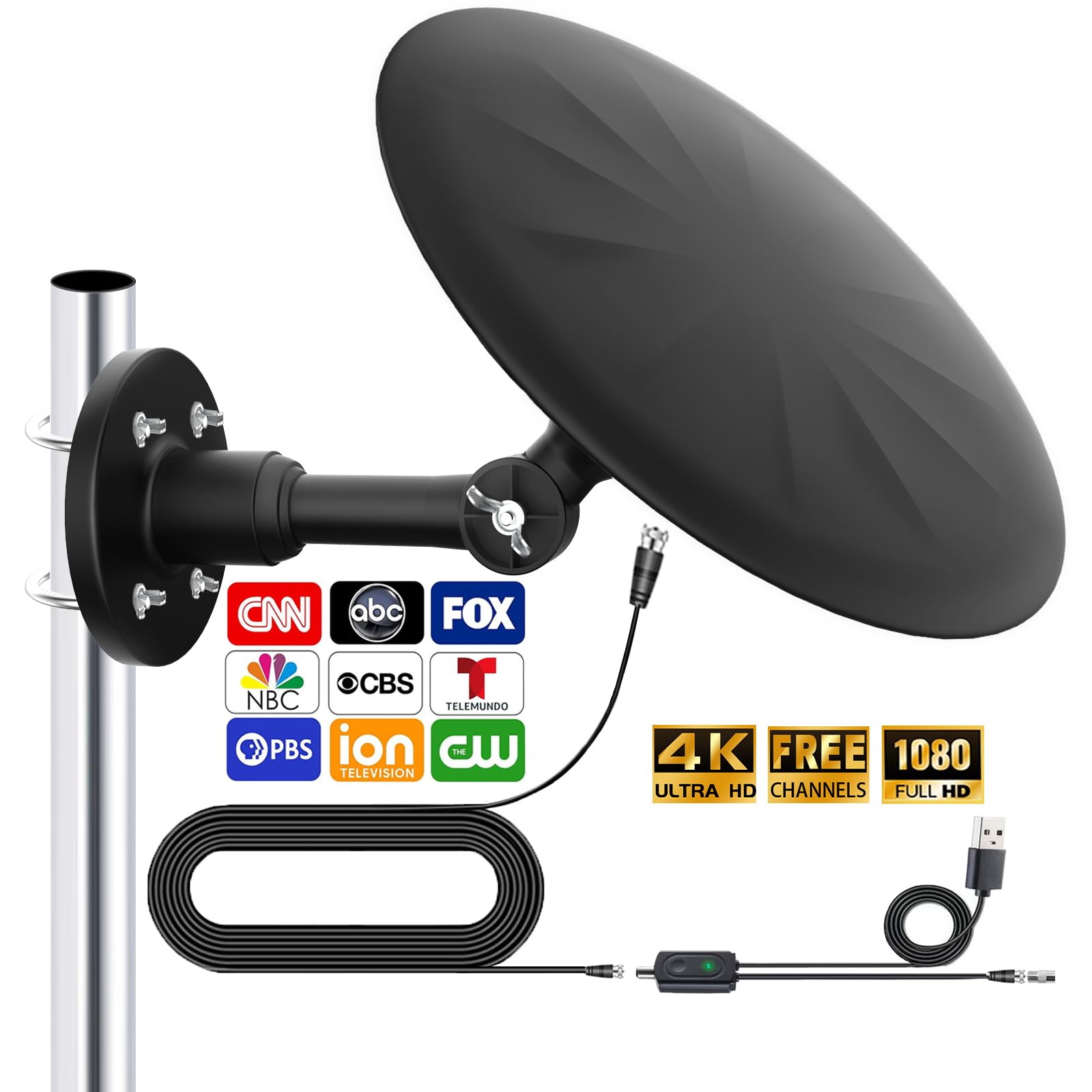 Omni Directional TV Antenna Outdoor, Outdoor Antenna for Smart TV, 720° Long Range Reception Digital HD Signal, with Super Signal Booster, for Attic/Camping/RV/Boat, 2025 Latest (Black, Large X) Large X BLACK Rank #1 | 🏆 Top Pick | 5.0 5.0 | |
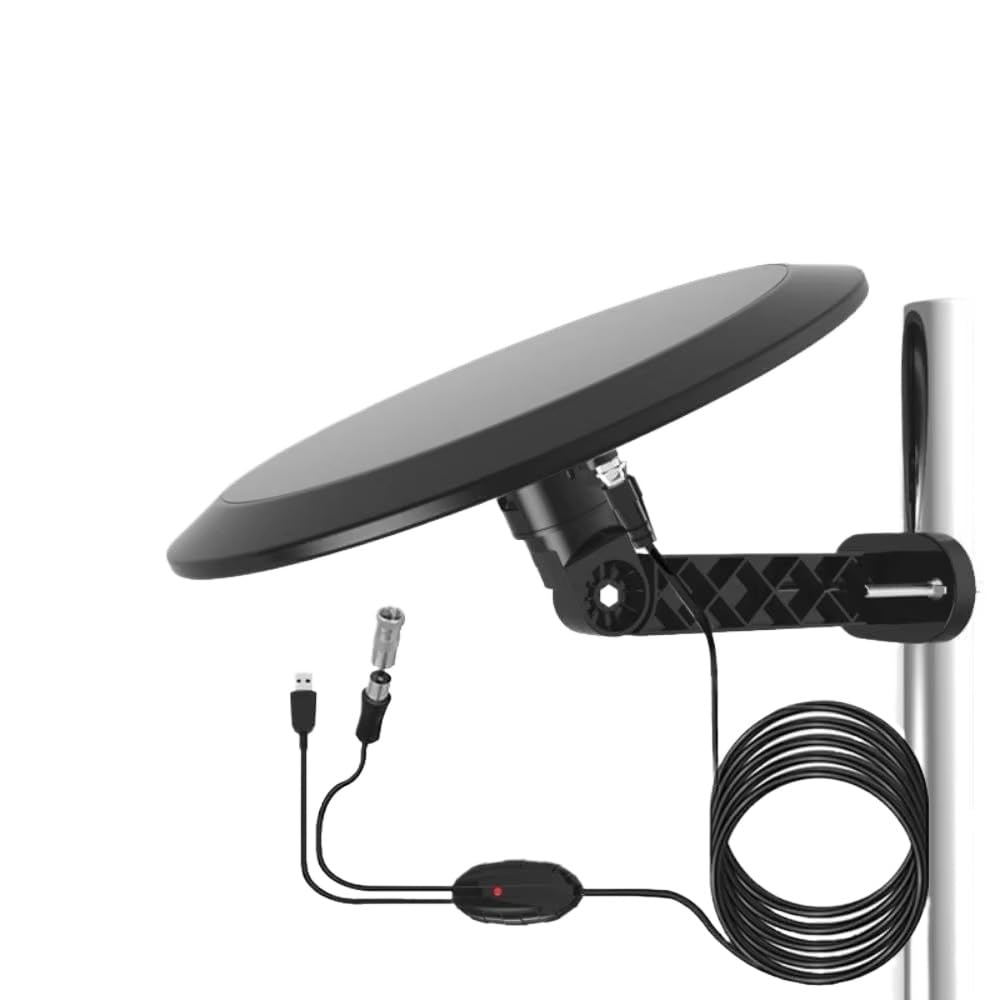 Outdoor TV Antenna 360° Directional Reception with Amplifier Signal Booster Long 120+ Miles for Local Channels 4K 1080P, VHF&UHF Stability for Attic/RV 39ft RG6 Coax Cable Support All Smart/ Old TVs Rank #2 | — | ||
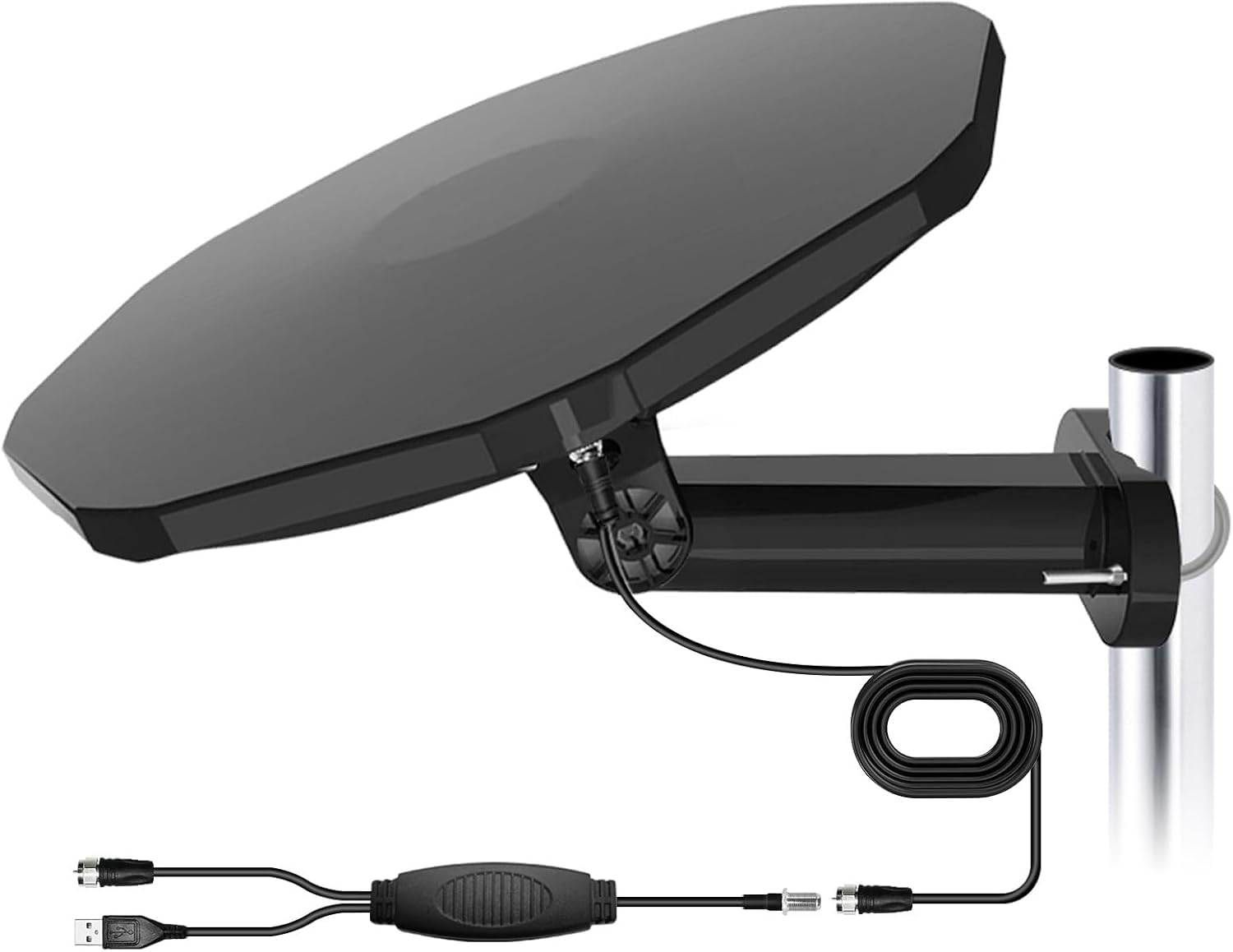 Digital Outdoor TV Antenna for Smart TV, 360° Omni-Directional Reception 4K HD TV Antenna Outdoor with 32.8ft Cable & 120+ Miles Long Range for Attic/Camper/RV, Support 4K 1080p Rank #3 | — | — | |
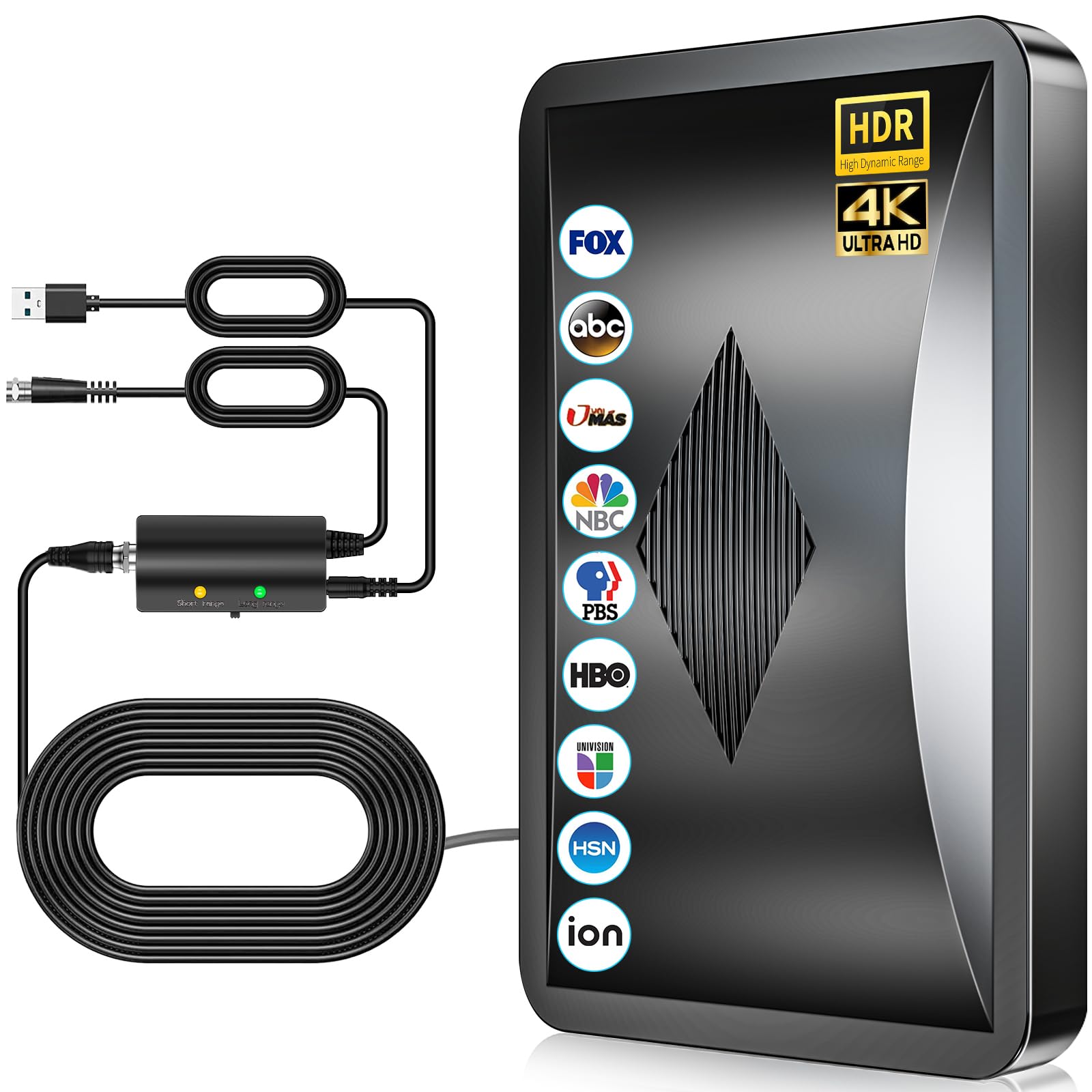 TV Antenna Long Range, Digital Antenna for Smart TV Indoor/Outdoor for Local Channels Rank #4 | — | — | |
 4000+ Miles Tv Antenna Indoor, 2025 Digital Antenna Rank #5 | 💰 Budget Pick | — |
