Get the App
Better experience on mobile
We compared the most popular mics for Twitch, YouTube, and podcasting to find the best voice upgrade for every setup and budget.
The most important thing to understand about streaming microphones is that 'good' is not the same as 'expensive.' Many newer streamers assume a studio-grade condenser will instantly improve their audio, but in a typical untreated room, a dynamic microphone often sounds better in practice. The key is matching the mic to your environment, your interface, and your voice.
Consumer-grade USB microphones have gotten remarkably close to their professional XLR counterparts, and most people don't need an external audio interface. But if you want to do live broadcast with multiple voices or apply serious EQ, an XLR path might be worth the extra cost.
We looked at specs like frequency response, polar pattern, and dynamic range, but also at features that matter specifically for streaming: mute buttons that are hard to accidentally hit, internal level control, and whether the mic has software for monitoring and noise suppression. We also factored in real-world buyer feedback from thousands of verified reviews across e-commerce sites and content creator communities.
From a $99 dynamic USB mic that's perfect for beginners to a $450 broadcast legend still used by talk show hosts, here are the six microphones we'd buy in 2026.
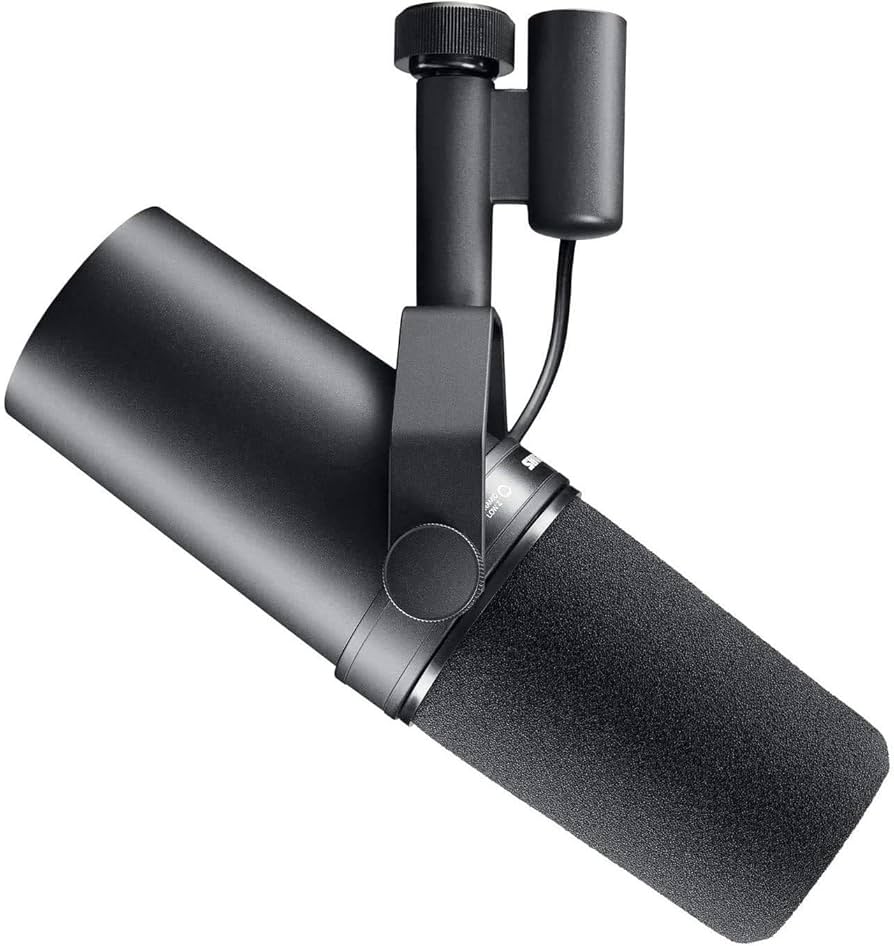
The Shure SM7B has been the default recommendation for streamers and podcasters for a decade, and it still justifies that status in 2026. Its tight cardioid pattern and built-in pop filter deliver a clean, full-bodied voice that sits well in busy mixes, and it handles loud or soft speakers without distortion. The trade-off is that it needs a quality audio interface with at least 60dB of clean gain or a Cloudlifter to sound its best — it's not plug-and-play.
Main limitation: Requires a good preamp or inline booster, which adds to the cost and setup complexity.
Skip if: If you're a pure beginner who doesn't own an audio interface and isn't ready to buy one, you'll get a better experience from a quality USB mic.
The ATR2100x-USB is the best budget microphone for streaming because it gives you both USB and XLR connectivity for around $100. It sounds surprisingly full and smooth for the price, dynamically rejecting background rumble and key clatter, and it has a built-in headphone jack for zero-latency monitoring. You lose some clarity compared to higher-priced mics, and the plastic body feels a bit light, but for a first real stream mic it's unbeatable.
Main limitation: The build quality is less robust than metal-clad competitors, and the pop filter is only adequate.
Skip if: If you want a mic with onboard DSP effects like EQ and compression, consider spending more.
The Elgato Wave:3 is a condenser mic with a rare superpower: Wave Link software that lets you mix your mic, game audio, and chat into separate virtual channels. It has a solid, 24-bit/96kHz capture, a built-in mute button that's easy to find in panic moments, and Clipguard to prevent distortion. Trade-offs are that the condenser picks up more room noise than dynamic alternatives, and it's not the best for absolute vocal warmth.
Main limitation: Condenser capsule requires a fairly quiet room for best results.
Skip if: If you broadcast from a noisy environment with no sound treatment, a dynamic mic like the SM7B or ATR2100 will serve you better.
The Shure MV6 packs a dynamic capsule in a compact USB package, delivering the SM7B-style sound with far less size and cost. It offers plug-and-play USB-C operation, a built-in DSP with automatic leveling, EQ presets, and a real-time background noise reduction that works surprisingly well. The main limitation is that the software is Windows/macOS only; there's no mobile app for direct smartphone streaming.
Main limitation: DSP features require Shure's MOTIV Mix app, which isn't available for iOS or Android.
Skip if: Mobile streamers who want a USB mic for a phone or tablet should look at a dedicated iOS-friendly mic.
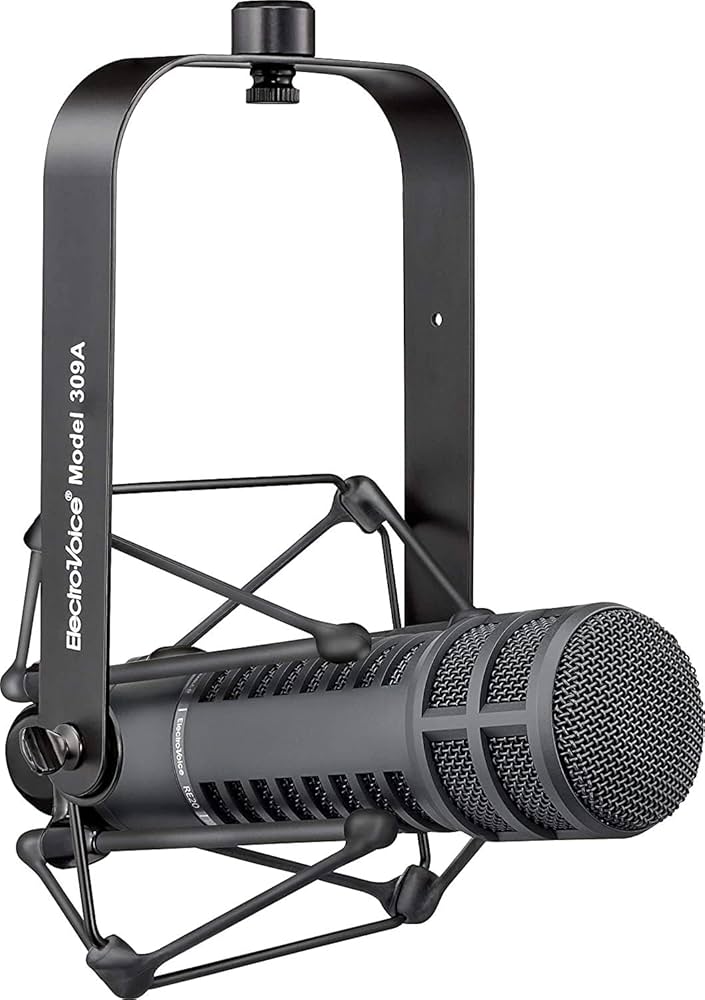
If you want that unmistakable late-night radio presence, the Electro-Voice RE20 gives you a massive, articulate low end, thanks to its variable-D design that minimizes proximity effect consistency. It's a standard in professional radio studios and is also used by some of the biggest podcasters. The catch is the price, and like the SM7B, it needs a strong preamp — we've seen people use it with a simple USB interface, but it shines with a dedicated channel strip.
Main limitation: Requires high gain and a quality interface, making it a bigger investment than cheaper dynamics.
Skip if: Streamers on a budget who don't want to also buy a Cloudlifter and a better audio interface.
For less than $100, the Rode PodMic gives you a sturdy, high-quality XLR-only dynamic mic that holds its own against mics twice the price. It has a rich, mid-forward sound that cuts through cluttered game audio, and the integrated pop filter is effective. But unlike the ATR2100x, there's no USB output, so it's only for people who already have an audio interface or mixer — plus the mounting setup is slightly awkward because the yoke mounts onto the mic itself.
Main limitation: No USB output, limiting its appeal for streamers without an interface.
Skip if: If you're not ready to invest in an audio interface, get a USB mic like the ATR2100x-USB instead.
Compare key specs and features of all our recommendations side-by-side
| Product | Recommendation | Rating | Price |
|---|---|---|---|
Shure SM7B Dynamic Vocal Microphone Rank #1 | 🏆 Top Pick | 9.2/10 | $399–$549 (with cable and arm often needed) Check current price → |
Audio-Technica ATR2100x-USB Dynamic Microphone Rank #2 | 💰 Budget Pick | 8.2/10 | $79–$99 Check current price → |
Elgato Wave:3 USB Microphone Rank #3 | ⭐ Editor's Choice | 8.7/10 | $159–$179 Check current price → |
Shure MV6 USB Dynamic Microphone Rank #4 | — | 8.3/10 | $149–$169 Check current price → |
Electro-Voice RE20 Broadcast Microphone Rank #5 | — | 8.8/10 | $449–$499 Check current price → |
Rode PodMic Dynamic Microphone Rank #6 | — | 7.8/10 | $89–$99 Check current price → |
Common questions buyers have about this category.
Dynamic mics have a thicker diaphragm and reject more background noise, making them ideal for untreated rooms. Condenser mics are more sensitive and capture a more detailed, brighter sound but also pick up more room tone, keyboard clicks, and ambient noise. For streaming, most beginners do better with a dynamic mic unless they have a treated room.
Not necessarily. Many USB microphones like the Elgato Wave 3 or Shure MV6 deliver excellent sound and include features like mute buttons and headphone monitoring for less than a bundle of a separate interface and XLR mic. XLR offers more future-proofing and upgradeability, but it also means more complexity and cost.
Position the mic 4-6 inches from your mouth and slightly off to the side to avoid plosives. Use a pop filter or wind screen, turn off any AC/fan noise, and reduce microphone gain while speaking closer to reduce ambient pickup. Many mics also have software EQ or built-in DSP — use it to roll off low-end rumble.
The Audio-Technica ATR2100x-USB is the best value at around $80-100. It's dynamic, works via USB or XLR, and has built-in headphone monitoring. If you want to spend under $50, consider the Fifine A6T, but expect a thinner sound and less robust build quality.
Yes, for many streamers, it remains the gold standard. It produces a warm, full voice with excellent isolation and has survived for years in broadcasting. But it requires a preamp with high gain or a booster like a Cloudlifter. If you don't have an interface, you'll get a comparable experience from a high-end USB dynamic like the Shure MV6.
Use a dynamic microphone and get close to it (4-6 inches). Enable noise suppression in your streaming software (OBS has one built-in) or use the DSP in the mic itself. Isolate the mic with a shock mount to eliminate desk vibration, and treat the room with acoustic panels or even hanging fabric to reduce reflections.
Products we evaluated but did not recommend — and why.
