Get the App
Better experience on mobile
Seven microphones for solo hosts, co-hosted shows, remote interviews, and every budget in between — ranked by value, not by hype.
Most bad podcast audio isn't a microphone problem — it's a room problem. A $400 dynamic mic in a bare-walled bedroom with hardwood floors will sound worse than a $100 dynamic mic surrounded by bookshelves, a rug, and a couch. That single fact explains why the microphone conversation should really start with a different question: how much of your room do you want the mic to hear?
That question is what separates the two big families of podcast microphones. Dynamic mics (the SM7B, PodMic, RE20) use heavier diaphragms and tighter pickup patterns, so they capture mostly what's directly in front of them and let you work close without a ton of room bleed. Condensers (the Rode NT1) are more sensitive and more detailed, which is wonderful in a treated space and punishing in an untreated one. Neither is objectively "better" — they solve different problems.
The other decision is connectivity. USB mics plug straight into a laptop and remove a whole category of gear from your life, while XLR mics route through an audio interface or mixer and give you more gain headroom, cleaner upgrade paths, and the ability to add a second host later. Hidden costs live here: a $99 XLR mic often needs a $100–$200 interface, plus a boom arm, shock mount, and cable.
Below you'll find seven picks spanning roughly $90 to $500 — USB, XLR, hybrid, and wireless — with the honest trade-offs each one carries. We call out gain requirements and room sensitivity wherever they matter, because those are the two specs that most often turn a great microphone into a disappointing purchase.
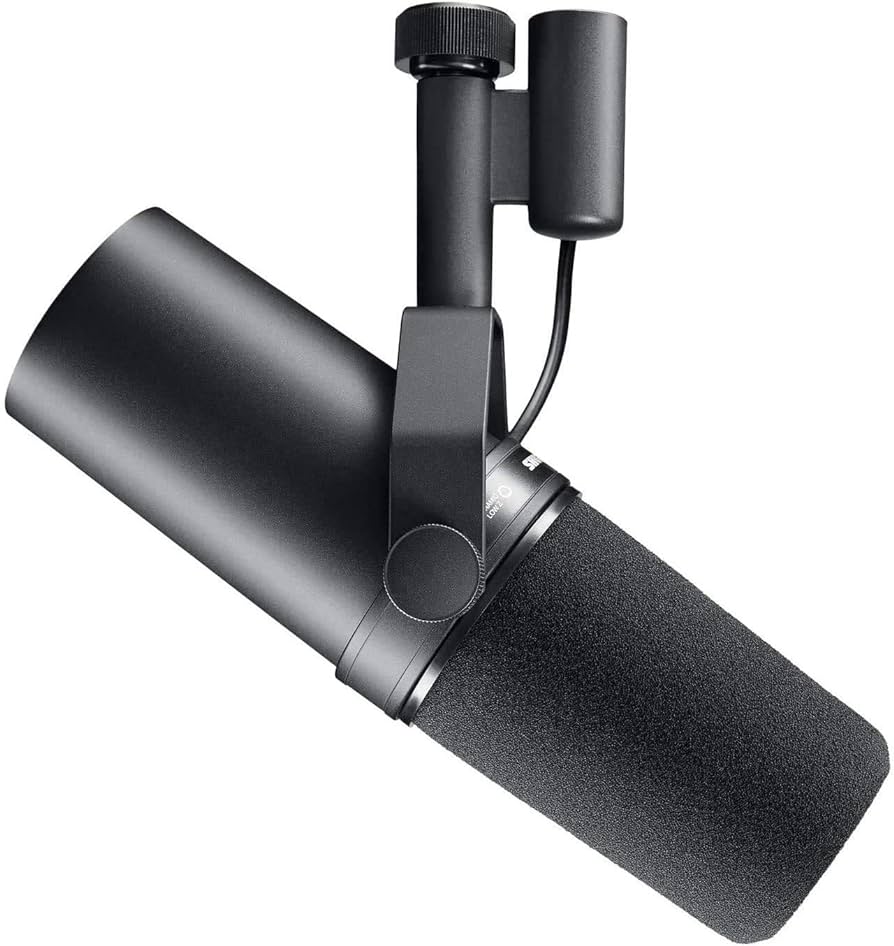
The SM7B is the closest thing podcasting has to a house standard: a smooth, low-sibilance dynamic capsule with excellent off-axis rejection and internal shock isolation, so it flatters almost any voice and shrugs off imperfect rooms. It's built to survive years of daily use and holds resale value unusually well. The catch is gain — it's an inherently quiet mic that needs a serious preamp to shine.
Main limitation: It requires roughly 60 dB of clean gain, so a cheap or low-output USB interface will leave you with a hissy, thin signal that sounds nothing like the recordings you've heard.
Skip if: Skip it if you want a single-cable USB setup or aren't prepared to buy an interface or inline preamp alongside it.
At around $99, the ATR2100x-USB is the rare budget mic that gives you both a USB-C output for plug-and-play recording and an XLR output for when you eventually buy an interface. Its cardioid dynamic capsule handles close-mic'd speech well, and the included desk stand, headphone jack, and cables mean you can record the day it arrives. It won't match a broadcast dynamic, but the gap is smaller than the price difference suggests.
Main limitation: The onboard headphone monitoring is quiet and the body is mostly plastic, so it feels and sounds a tier below XLR-only dynamics built for studio use.
Skip if: Skip it if you're building a permanent studio setup and want broadcast-grade signal quality — the ATR2100x-USB is a starter mic, not an endgame one.
The MV7+ is essentially a voice-optimized dynamic capsule with a USB audio interface built in, plus onboard DSP that handles auto level, tone shaping, and real-time noise reduction through Shure's MOTIV Mix app. It's the mic to pick if you want SM7-family speech character without buying an interface, and it doubles as a normal XLR mic when you upgrade. The processing is genuinely useful, but it's part of the deal — not optional garnish.
Main limitation: Unlocking the real-time denoiser, auto level, and LED customization requires installing the MOTIV Mix desktop app, so it isn't truly plug-and-play out of the box.
Skip if: Skip it if you refuse to install companion software and want a fully appliance-like mic — a plain XLR dynamic gives you comparable raw audio with fewer moving parts.
The PodMic delivers the tight cardioid, close-talk sound that most people associate with professional podcasting for about a quarter of the SM7B's price, and its integrated swing mount and internal pop filter cut down on accessory shopping. Its internal shock mounting and all-metal body also make it a sensible choice for a permanent multi-mic desk setup. Just budget for the interface, because it can't plug into a laptop on its own.
Main limitation: It's XLR-only and needs an interface or mixer capable of supplying roughly 50–60 dB of gain, so the true cost of entry is higher than the sticker price.
Skip if: Skip it if you need a one-cable USB solution or want to record straight into a laptop without buying additional hardware.
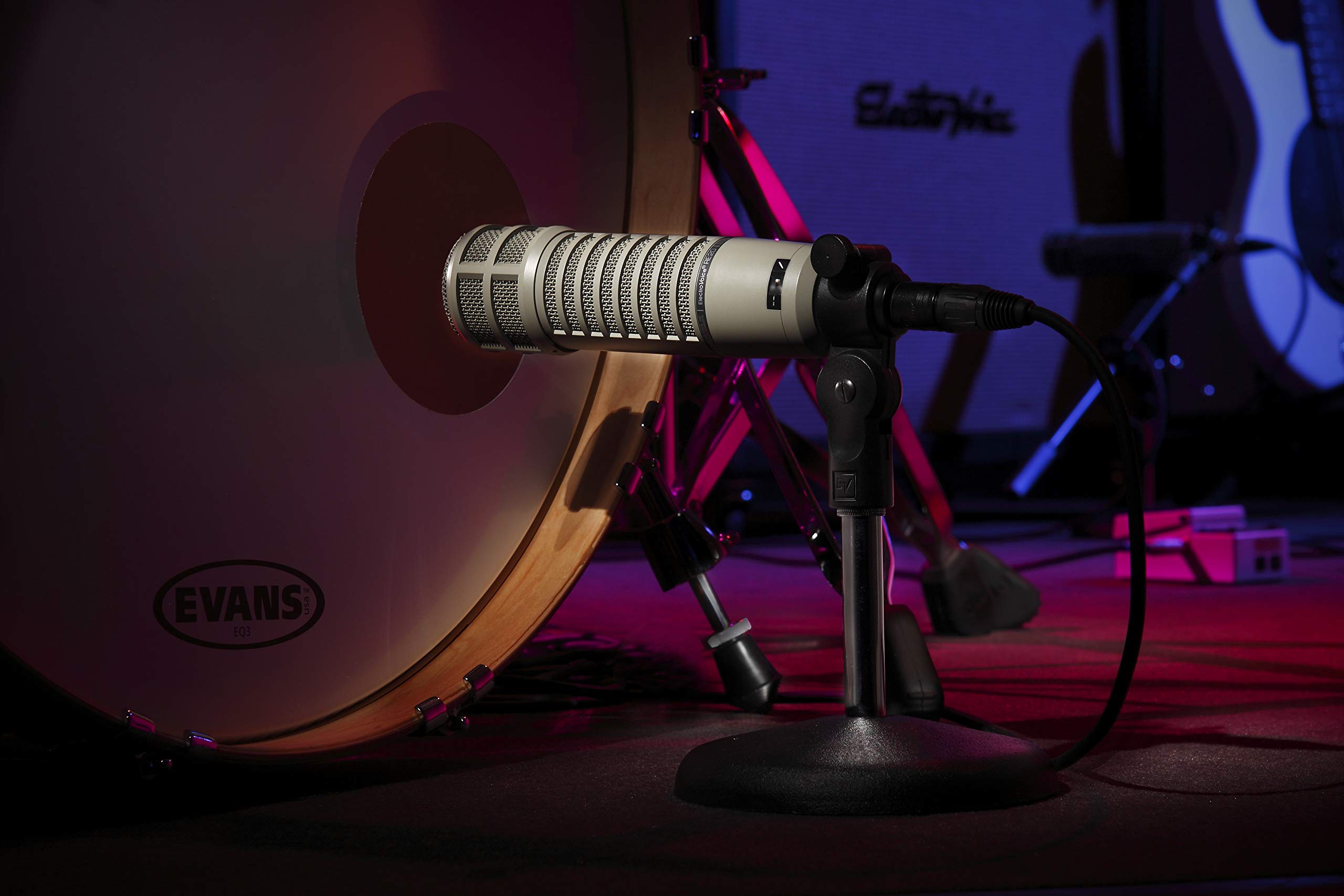
The RE20's Variable-D design is the reason it's still on radio desks decades after launch: it minimizes proximity effect, so you can work right up on the grille without the boomy, bass-heavy buildup that plagues other mics. The result is an unusually consistent, authoritative voice tone that sounds the same whether you lean in or sit back. That consistency comes at a price and a weight penalty.
Main limitation: It weighs roughly 1.5 lb and needs a genuinely sturdy boom arm, and its large body can block your view if you read scripts from a screen directly behind it.
Skip if: Skip it if you record in a small untreated room and want a compact setup — the RE20 is large, heavy, and priced for permanent studio installs.
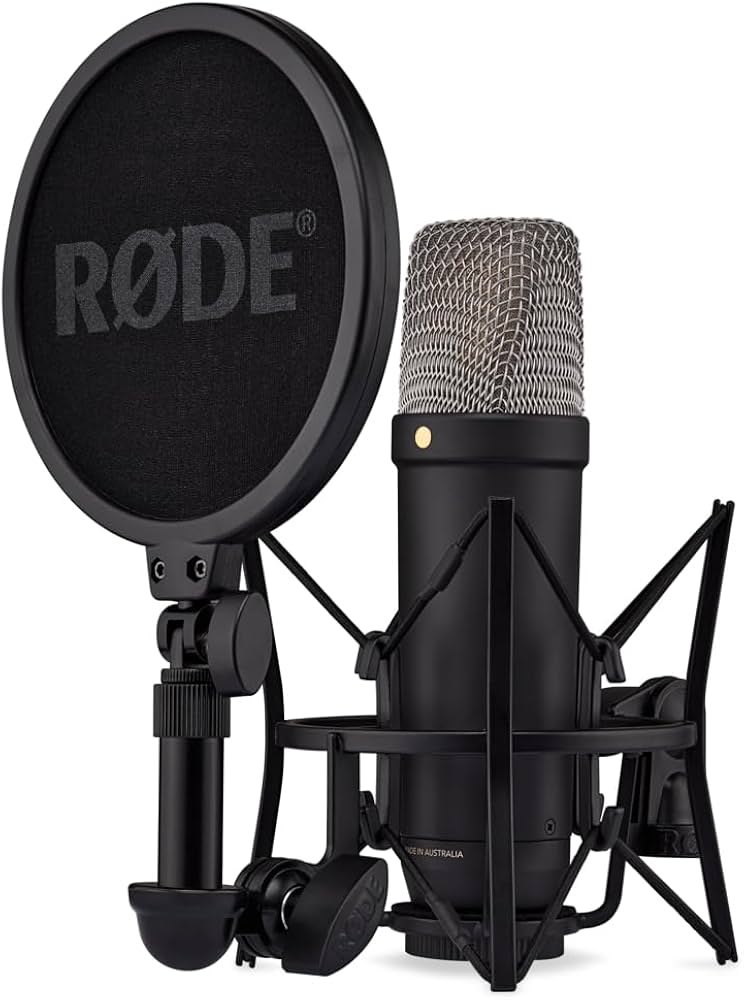
If your recording space already has absorption panels or heavy soft furnishings, the NT1 5th Gen rewards you with remarkably low self-noise and detailed, natural voice capture — plus a 32-bit float USB output that makes clipping nearly impossible to ruin a take. It's the pick for scripted, edited, studio-quality narration. In a live-feeling room, though, its sensitivity works against you.
Main limitation: As a large-diaphragm condenser, it picks up room reflections and background noise far more readily than a dynamic, so an untreated room will undermine everything it does well.
Skip if: Skip it if you record in a hard-surfaced room without acoustic treatment — you'll capture every echo and every passing car.
For field recording, in-person interviews, and any show where a desk isn't an option, the DJI Mic 2 kit packs two clip-on transmitters with onboard 32-bit float recording and a touchscreen receiver, so you can capture clean audio even if the wireless link drops. The onboard backup recording is the feature that makes it genuinely usable for paid work. The trade-off is tonal: a lav clip mic never sounds as full as a desk-mounted dynamic.
Main limitation: Lavalier-style capture sounds thinner and less authoritative than a desk dynamic, and the 32-bit float files typically need level and EQ work before they're publish-ready.
Skip if: Skip it if your show is always recorded at one desk in one room — a wired dynamic mic delivers better tone for similar or less money.
Compare key specs and features of all our recommendations side-by-side
| Product | Recommendation | Rating | Price |
|---|---|---|---|
Shure SM7B Cardioid Dynamic Vocal Microphone Rank #1 | 🏆 Top Pick | 9.3/10 | $399–$429 Check current price → |
Audio-Technica ATR2100x-USB Dynamic Microphone Rank #2 | 💰 Budget Pick | 8.3/10 | $89–$119 Check current price → |
Shure MV7 Hybrid USB/XLR Podcast Microphone Rank #3 | ⭐ Editor's Choice | 9.0/10 | $249–$299 Check current price → |
Rode PodMic Dynamic Podcasting Microphone Rank #4 | — | 8.6/10 | $99–$129 Check current price → |
Electro-Voice RE20 Broadcast Announcer Microphone Rank #5 | — | 8.5/10 | $449–$499 Check current price → |
Rode NT1 5th Generation Condenser Microphone Rank #6 | — | 8.4/10 | $249–$299 Check current price → |
DJI Mic 2 Wireless Microphone System (2 TX + 1 RX) Rank #7 | — | 8.0/10 | $349–$399 Check current price → |
Common questions buyers have about this category.
Yes — an XLR microphone produces an analog signal that a computer's 3.5 mm or USB input can't read without a preamp and analog-to-digital converter, which is exactly what an audio interface or mixer provides. Many podcast-focused mixers, such as RODECaster-style units, combine those functions with headphone monitoring and per-channel gain control. If you'd rather skip that purchase entirely, choose a USB or hybrid microphone instead.
For most home podcasters in untreated rooms, a dynamic microphone is the safer choice because its tighter pickup pattern rejects room reflections, computer fans, and traffic noise. Condensers are more sensitive and detailed, which sounds excellent in a properly treated studio but exposes every flaw in a bare-walled bedroom. If you already have absorption panels and soft furnishings, a condenser like the Rode NT1 can deliver noticeably more natural voice capture.
Absolutely — plenty of successful shows are recorded on USB and hybrid microphones, and listeners generally can't tell the difference when the room is quiet and mic technique is good. USB's real limitation isn't sound quality so much as flexibility: you're typically limited to one or two inputs and you can't swap in a better preamp later. Hybrid mics like the Shure MV7+ and Audio-Technica ATR2100x-USB give you a USB workflow now and an XLR upgrade path later.
Plan on spending more than the microphone's sticker price, because the accessory chain is where budgets quietly break. A realistic entry-level setup with a budget USB mic, a boom arm, and headphones often lands in the $150–$250 range, while an XLR setup adds an interface and cable that can push it to $300 or more. It's usually smarter to buy a modest mic plus good positioning gear than an expensive mic on a wobbly stand in an echoey room.
A boom arm matters more than most beginners expect, because it lets you position the mic at a consistent distance and angle while keeping it off the desk — where typing, mouse clicks, and bumped cables get transmitted straight into your recording. Built-in shock mounting on mics like the PodMic, RE20, and SM7B reduces the need for a separate shock mount, but a low-cost arm still improves consistency dramatically. If you record at a desk, treat the arm as part of the microphone's cost.
That symptom almost always points to insufficient clean gain rather than a defective microphone, and it's especially common with low-output dynamics like the SM7B and PodMic paired with budget interfaces. The fix is either a preamp with more headroom, an inline gain booster, or simply moving closer to the capsule and raising input gain while lowering your monitoring volume. Raising gain in post-production instead amplifies the noise floor along with your voice, which is why fixing it at the source matters.
Yes, and USB and hybrid microphones are generally the easiest way to do it, since most operating systems and conferencing apps recognize them as standard audio devices without extra routing. XLR mics work too, but you'll typically need your interface's loopback or a virtual audio routing tool to send the signal into apps like Zoom or Discord. If multi-purpose use is a priority, a hybrid like the MV7+ or ATR2100x-USB is the least complicated option.
Products we evaluated but did not recommend — and why.
