Get the App
Better experience on mobile
Ranked by vocal clarity, background-noise rejection, and connection flexibility for creators at every level.
For every polished podcast with a warm, radio-style voice, there's a basement producer who bought a condenser mic and spent hours editing out refrigerator hum. The truth is that the best podcast microphone is the one that fits your room, your voice, and your entire recording chain — not the one with the most impressive spec sheet.
The good news for 2026 is that you no longer need to pick between ease of use and sound quality. USB dynamics like the Samson Q2U and Shure MV7+ offer remarkably clean levels of background isolation, while XLR classics like the Shure SM7B and Electro-Voice RE20 still define the broadcast sound. Most podcasters will get better results by matching a mic's polar pattern and connectivity to their actual setup than by chasing the most expensive option.
In this guide, we've sorted through the specifications and verified buyer feedback to highlight seven microphones that cover different budgets and workflows. We focused on vocal clarity, off-axis noise rejection, and how each mic behaves when you're recording in a normal home environment. You'll also see honest notes about each pick's weaknesses, so you can avoid the common trap of buying a mic that sounds impressive in specs but disappointing in your room.
Whether you're launching your first show or upgrading your home studio for higher production values, these options will help you sound clearer without making you redo your entire equipment stack.
The Shure SM7B remains the podcast gold standard for one reason: it delivers a thick, warm, and highly articulate vocal sound while rejecting room noise and treatment issues exceptionally well. It requires an audio interface with strong gain or a clean inline booster, so factor that into your budget.
Main limitation: You'll need an interface or Cloudlifter to avoid having to crank preamps, and it comes with no built-in USB output.
Skip if: Skip it if you want a single plug-and-play USB mic for travel or quick recording sessions.
The Samson Q2U is the best starting point for new podcasters: it works over USB for immediate plug-and-play and includes an XLR output for future upgrades when you buy an interface. The dynamic capsule does a solid job of ignoring room reflections, and a basic tripod and windscreen are included in the box.
Main limitation: The plastic housing feels less premium and the high end can get a bit mushy on voices with a lot of sibilance.
Skip if: Skip it if you're chasing a polished broadcast-grade midrange and don't want to upgrade within the first year.
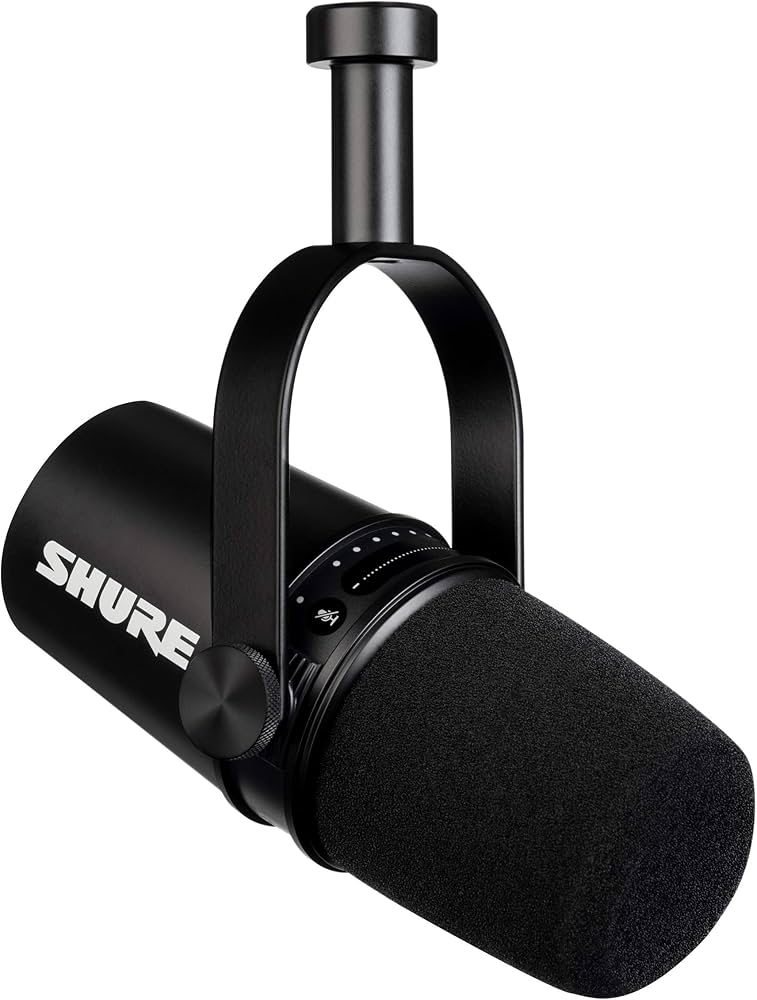
The MV7+ gives you Shure's signature dynamic sound in a body that runs on both USB-C and XLR, so you can start directly into your computer and later run it through a hardware preamp. Its touch-panel controls, auto-level mode, and headphone output with real-time monitoring make it a more flexible companion than the SM7B for remote interviews and multi-platform recording.
Main limitation: It's heavier and more expensive than a basic USB mic, and the auto-level feature occasionally adds pumping on very dynamic speech.
Skip if: Skip it if you're already invested in an XLR interface and don't need the USB convenience.
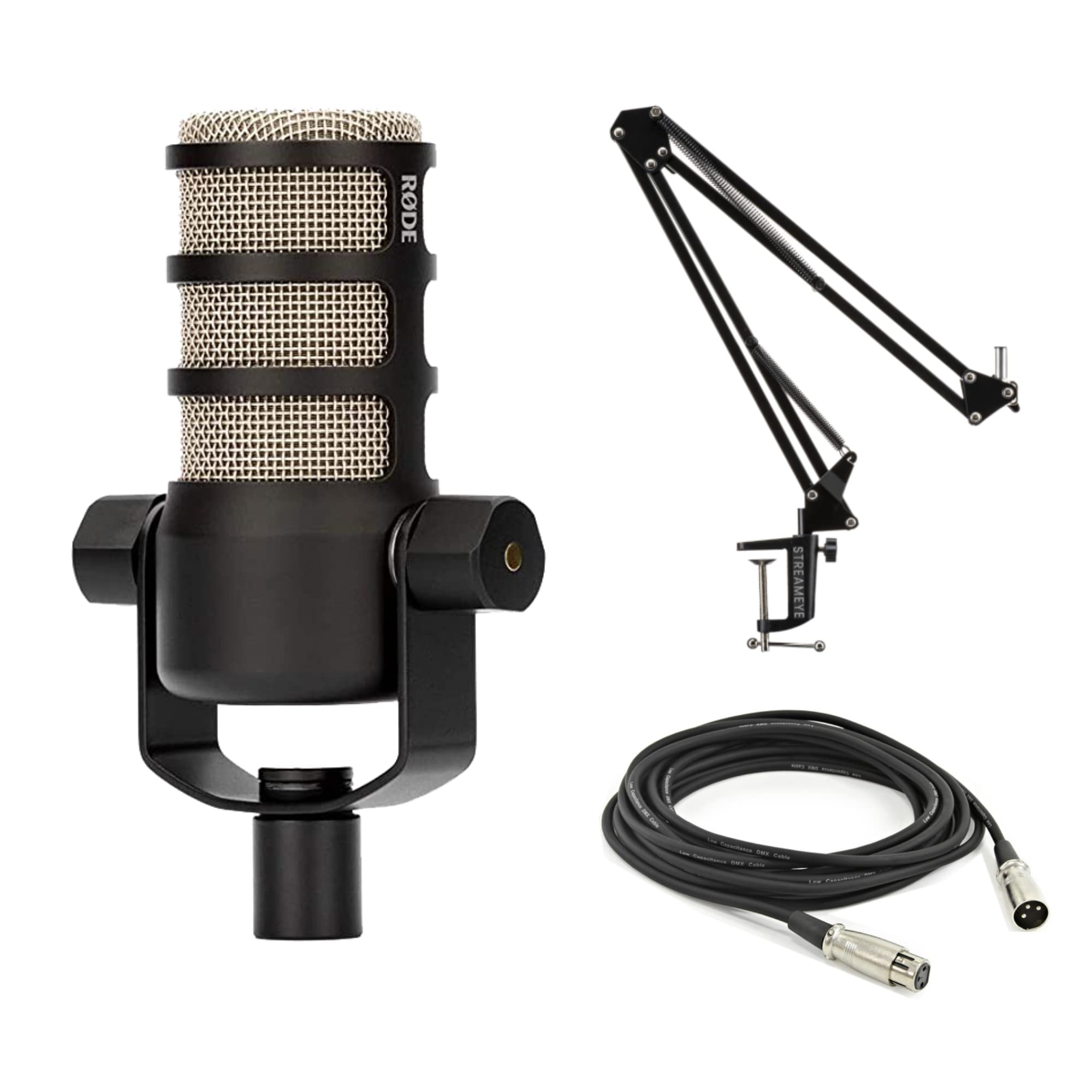
Rode's PodMic is a dynamic workhorse with a strong internal pop filter and tough metal housing, making it ideal for podcasters who record in rooms full of hard surfaces and background noise. It sounds polished and present with minimal sibilance for the price, and it comes with a useful gooseneck mount.
Main limitation: The sound is a bit darker than more expensive dynamic mics, and you'll still need an XLR interface.
Skip if: Skip it if you don't already have an audio interface or want USB connectivity.
The RE20 has been a radio standard for decades, with a remarkably smooth midrange, minimal proximity effect, and a Variable-D design that keeps your voice consistent even when you move toward or away from the mic. It's a large and heavy broadcast tool that demands a proper boom arm, but the voice articulation is about as good as it gets.
Main limitation: It's expensive and requires more gain than typical interfaces can deliver cleanly, often needing an inline activator.
Skip if: Skip it if you need a compact or budget-friendly mic, or if you're mostly doing solo remote podcasts via USB.
If your recording space is well treated and you want the full frequency spectrum of your voice, the NT1 5th Gen pairs a famously low-noise large-diaphragm capsule with both USB-C and XLR outputs and 32-bit float recording. It delivers a crisp, studio-polished sound with deep lows and airy highs, though it will pick up room ambience if your space is too live.
Main limitation: A condenser this sensitive requires a quiet, acoustically treated space to avoid harsh room tone.
Skip if: Skip it if you're recording in a noisy or echoey room and can't treat it.
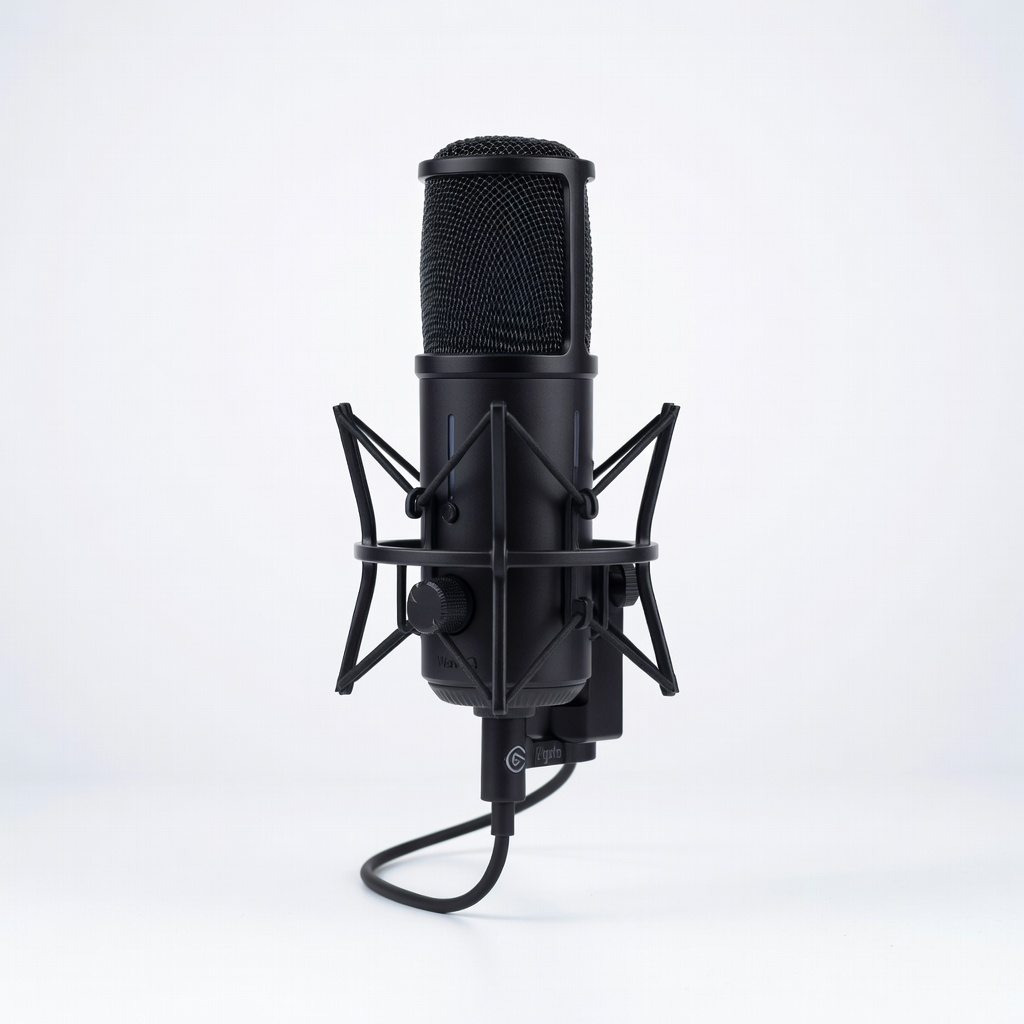
Wave 3 is a USB-C condenser with a great sound profile and a secret weapon: its Wave Link app acts as a free virtual mixer, letting you combine mic, browser, and game audio into separate channels for seamless multi-track recording. If you record video podcasts that include sound bites, music, or guests from your computer, this all-in-one system is far more flexible than a standard USB mic.
Main limitation: The condenser capsule is more sensitive to room noise than dynamics, and the stand can feel wobbly with heavy cables.
Skip if: Skip it if you record in a noisy room or primarily use XLR gear.
Compare key specs and features of all our recommendations side-by-side
| Product | Recommendation | Rating | Price |
|---|---|---|---|
Shure SM7B Dynamic Microphone Rank #1 | 🏆 Top Pick | 9.0/10 | $399–$449 Check current price → |
Samson Q2U USB/XLR Dynamic Microphone Rank #2 | 💰 Budget Pick | 8.0/10 | $60–$70 Check current price → |
Shure MV7 USB/XLR Dynamic Microphone Rank #3 | ⭐ Editor's Choice | 8.5/10 | $200–$249 Check current price → |
Rode PodMic Dynamic Podcast Microphone Rank #4 | — | 8.0/10 | $99–$129 Check current price → |
Electro-Voice RE20 Dynamic Cardioid Microphone Rank #5 | — | 8.5/10 | $449–$499 Check current price → |
Rode NT1 5th Generation Large-Diaphragm Condenser Rank #6 | — | 8.0/10 | $249–$279 Check current price → |
Elgato Wave:3 USB Condenser Microphone Rank #7 | — | 8.0/10 | $120–$150 Check current price → |
Common questions buyers have about this category.
Dynamic microphones reject background noise and are forgiving in untreated rooms, making them the safer default for most podcasters. Condensers capture more detail and high-end air, but they expose room reflections and background hum, so they only make sense when your space is treated.
No. A USB mic converts audio to digital inside the mic, so it connects directly to your computer. An interface becomes necessary when you choose an XLR-only mic or want to route multiple XLR mics into the same computer for multi-person shows.
The SM7B is famously low-output, so most standard interfaces need to be raised to around 60 dB of gain, which can introduce preamp hiss. A dedicated clean preamp or an inline amplifier like a Cloudlifter adds roughly 25 dB of clean gain and makes the SM7B much easier to drive.
Absolutely. A USB or hybrid mic like the Shure MV7+ or Elgato Wave 3 is ideal because you can monitor yourself and control volume right from the mic or its software. If you're using XLR, you'll want an interface with a monitor mix and possibly a dedicated mixer for more complex routing.
For most home setups, two dynamic USB/XLR hybrid mics like the Samson Q2U or Shure MV7+ work well because they isolate each voice and keep tracks separate. If you're on a budget, two Rode PodMics and a two-channel interface deliver excellent isolation, but you'll need to treat room echoes.
The most common causes are using a condenser instead of a dynamic, recording near a noisy fan or computer, or having the mic gain too high. Switching to a cardioid dynamic, moving closer to the mic, and lowering gain while increasing your recording software's level will usually reduce the problem.
Products we evaluated but did not recommend — and why.
