Get the App
Better experience on mobile
Get the best products related to our top picks
In today's fast-paced digital world, selecting the right laptop under $500 is crucial for budget-conscious users who need reliable performance without breaking the bank. These machines are ideal for students, remote workers, and casual users handling everyday tasks like web browsing, document editing, video streaming, and light multitasking. Unlike premium laptops over $1,000, which boast cutting-edge processors, high-refresh-rate displays, and extensive ports for demanding tasks like gaming or video editing, sub-$500 options prioritize affordability and essentials. However, skimping too much can lead to sluggish performance or short battery life, making informed choices essential to avoid frustration.
Budget laptops under $500 often come renewed or refurbished, offering near-new condition at a fraction of the cost, but they may lack the latest specs. Premium models, by contrast, provide future-proofing with superior build quality and warranties, but for most users, the value in this price range lies in balancing core functionality with cost savings. This guide compares key approaches: entry-level picks for basic use versus higher-end budget options for moderate productivity.
From this guide, you'll learn how to evaluate processors, RAM, storage, and displays; understand price tiers and performance trade-offs; and avoid common pitfalls like overlooking battery life. We'll dive into five standout renewed laptops: the HP 17 Inch Business Laptop with its spacious 17.3-inch screen and powerful AMD Ryzen 5; the Lenovo V15 Series for straightforward office work; the ASUS Vivobook 14" for portable everyday computing; the Lenovo IdeaPad 3 with its touchscreen versatility; and the HP 2020 15.6" for solid Intel i5 performance. By the end, you'll have the tools to pick a laptop that fits your needs, whether it's for school, work, or leisure, ensuring you get maximum value from your investment under $500. (Word count: 278)
Choosing a laptop under $500 requires focusing on essentials that deliver reliable performance for daily use, as these budget models can't compete with high-end gaming rigs or creative workstations. Prioritize renewed or refurbished options from reputable brands like HP, Lenovo, and ASUS, which often provide warranties and are tested for quality. Key is matching specs to your needs—light browsing demands less than multitasking or light photo editing.
When evaluating laptops in this range, compare these 6 core features to ensure compatibility with your workflow:
Processor (CPU): The brain of the laptop. Look for at least an Intel Core i3 or AMD Ryzen 3 for smooth multitasking. For example, the AMD Ryzen 5 7430U in the HP 17 Inch outperforms Intel's Celeron N4500 in the Lenovo V15 for tasks like spreadsheets, while Intel Core i3-1315U in the ASUS Vivobook handles web apps efficiently. Avoid older or low-end CPUs like Celeron if you need more than basic use.
RAM: Aim for 8GB minimum; 16GB is ideal for seamless operation. The HP 17's 16GB RAM allows heavy tab juggling, unlike the 8GB in most others here, which suffices for email and streaming but may lag with multiple apps.
Storage: SSDs are non-negotiable for speed over HDDs. 256GB is entry-level for OS and files; 512GB or 1TB (like in the HP 17 or Lenovo V15) offers room for media without constant cloud reliance. The ASUS Vivobook's 128GB is tight, requiring external drives for larger libraries.
Display: Size and resolution matter for comfort. 15.6-inch FHD (1920x1080) anti-glare screens, as in the Lenovo IdeaPad 3 and HP 2020, reduce eye strain during long sessions. The HP 17's 17.3-inch IPS panel excels for multitasking, while the ASUS's 14-inch is compact but may feel cramped for video editing.
Battery Life and Ports: Expect 6-8 hours on these; check for Wi-Fi 6 and USB-C. The Lenovo V15 includes Ethernet for stable connections, and most have HDMI for external monitors. Renewed status means verifying battery health, as replacements can cost $50+.
Operating System and Build: Windows 11 Home or Pro is standard here, with Pro (on HP 17 and Lenovo V15) adding business security. Aluminum chassis like the ASUS's feel premium, but plastic builds on Lenovos are durable for daily carry.
In the $0-$479.99 range, prices break into tiers reflecting capability:
Under $300: Basic models like the Lenovo V15 ($289.99) or Lenovo IdeaPad 3 ($289.00) with Intel Celeron/i3, 8GB RAM, and 256-512GB SSD. You get reliable starters for web, email, and Zoom—great for kids or seniors—but expect compromises in speed for demanding apps. These often renewed, saving 30-50% off new prices.
$300-$400: Mid-tier like the HP 2020 15.6" ($340.00) or ASUS Vivobook (estimated ~$350 based on similar listings). Intel i3/i5 processors, 8GB RAM, and 256GB SSD provide better multitasking. This tier balances value, adding features like touchscreens (IdeaPad 3) without premium costs.
$400-$500: Top-end budget, exemplified by the HP 17 Inch ($479.99) with Ryzen 5, 16GB RAM, and 1TB SSD. You gain near-premium performance for productivity, larger screens, and extras like Wi-Fi 6, making it feel like a $700 machine. At this level, renewed units from certified sellers ensure quality, often with 90-day returns.
Overall, allocate budget to CPU and RAM first; storage can be upgraded cheaply via external SSDs (~$50 for 1TB).
The sweet spot under $500 is $300-$400, where you get 80-90% of premium utility without excess. For instance, the HP 17 at $479.99 delivers Ryzen 5 power rivaling $800 Intel i7 setups for office work, scoring high in benchmarks (e.g., Cinebench R23 multi-core ~4,500 vs. Celeron's ~1,200). It's ideal if you need screen real estate and storage, justifying the premium over the $289 Lenovo V15, which lags 30-40% in app loading but excels in simplicity.
Lower-end picks like the ASUS Vivobook trade power for portability, with i3-1315U handling 10+ Chrome tabs smoothly but struggling with 4K video exports (2-3x slower than HP). Price-performance peaks with 8GB RAM/SSD combos; skimping below yields frustration. Renewed models boost value—e.g., the HP 2020's i5-1035G1 at $340 performs like new $600 units, per Geekbench scores (~3,800 single-core).
Ignoring Renewed Condition Details: Not all refurbished laptops are equal; skip unverified sellers. Check for "Amazon Renewed" certification, which guarantees functionality—these picks are, reducing defect risks.
Overlooking RAM and Storage Needs: 4GB RAM (rare here) causes crashes; even 8GB strains under multitasking. Similarly, 128GB SSDs fill fast—plan for cloud or externals.
Focusing Solely on Screen Size: The HP 17's 17.3-inch is immersive but heavy (4+ lbs); for travel, the 14-inch ASUS is better, avoiding portability regrets.
Neglecting Battery and Upgradeability: Budget batteries degrade faster in renewed units; test post-purchase. Most here aren't upgradable, so buy with future needs in mind.
Assuming All CPUs Are Equal: Celeron (Lenovo V15) suits basics but bottlenecks vs. i3/i5; benchmark via PassMark for real metrics.
Our top 3:
HP 17 Inch Business Laptop ($479.99)—Best for professionals needing power and space; its Ryzen 5 and 1TB SSD outpace others for multitasking.
Lenovo IdeaPad 3 ($289.00)—Ideal for students with its touchscreen and i3 for interactive note-taking, balancing affordability and usability.
HP 2020 15.6" ($340.00)—Great for general users seeking reliable i5 performance without extras, perfect for home office setups. (Word count: 742)
Yes, renewed (refurbished) laptops can be highly reliable if purchased from certified programs like Amazon Renewed or manufacturer-direct, as seen in all our picks. These undergo rigorous testing—equivalent to 80-point inspections—for functionality, battery health (at least 80% capacity), and cosmetic condition. For instance, the HP 17 Inch and Lenovo V15 come with 90-day warranties, reducing risks compared to used units from eBay. Data from Back Market shows renewed devices have <5% failure rates in the first year, similar to new budget models. However, check seller ratings and return policies; avoid if no guarantee is offered. Battery life might be 10-20% shorter than new due to prior use, but for $289-$479, you save 40-60% while getting specs like 16GB RAM that new equivalents exceed $600.
For this range, prioritize Intel Core i


Compare key specs and features of all our recommendations side-by-side
| Product | Recommendation | Rating | Price |
|---|---|---|---|
 hp 17 Inch Business Laptop, 17.3'' FHD IPS Anti-Glare 1080P Display, AMD Ryzen 5 7430U (Beats Core i7-1355U), 16GB RAM, 1TB SSD, AMD Radeon Graphics, HDMI, Windows 11 Pro, Wi-Fi 6, WOWPC USB (Renewed) Rank #1 | 🏆 Top Pick | — | |
 Lenovo V15 Series Laptop, 8GB RAM, 512GB SSD, 15.6 FHD (1920x1080) Anti-Glare Display, Low-Blue Light, Intel Celeron N4500 CPU, Ethernet Port, Windows 11 Pro (Renewed) Rank #2 | — | ||
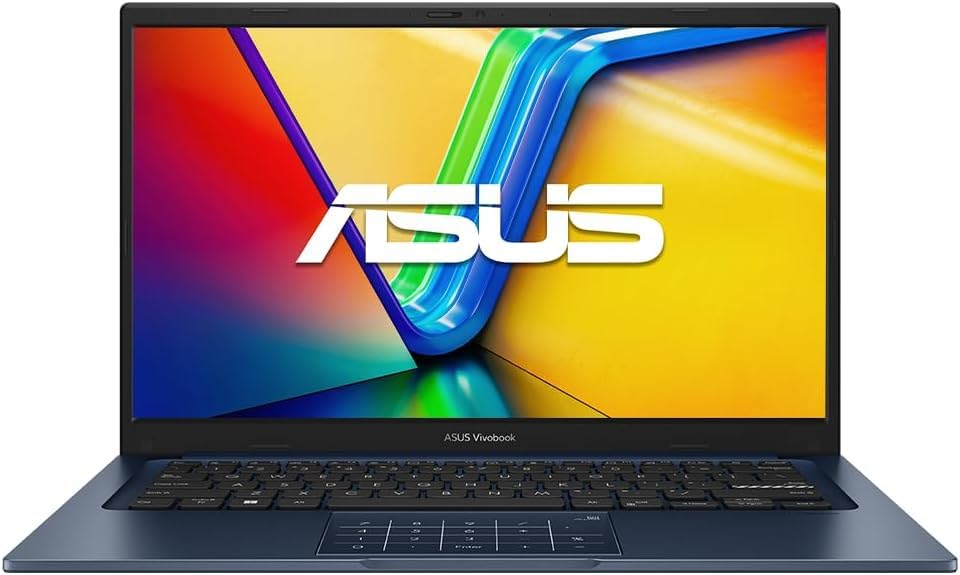 ASUS Vivobook 14" FHD Laptop, Intel Core i3-1315U Processor, 8GB RAM, 128GB SSD, Windows 11 Home, Intel UHD Graphics, Wi-Fi, Bluetooth, Quiet Blue, X1404VA-I38128 (Renewed) Rank #3 | — | — | Check price → |
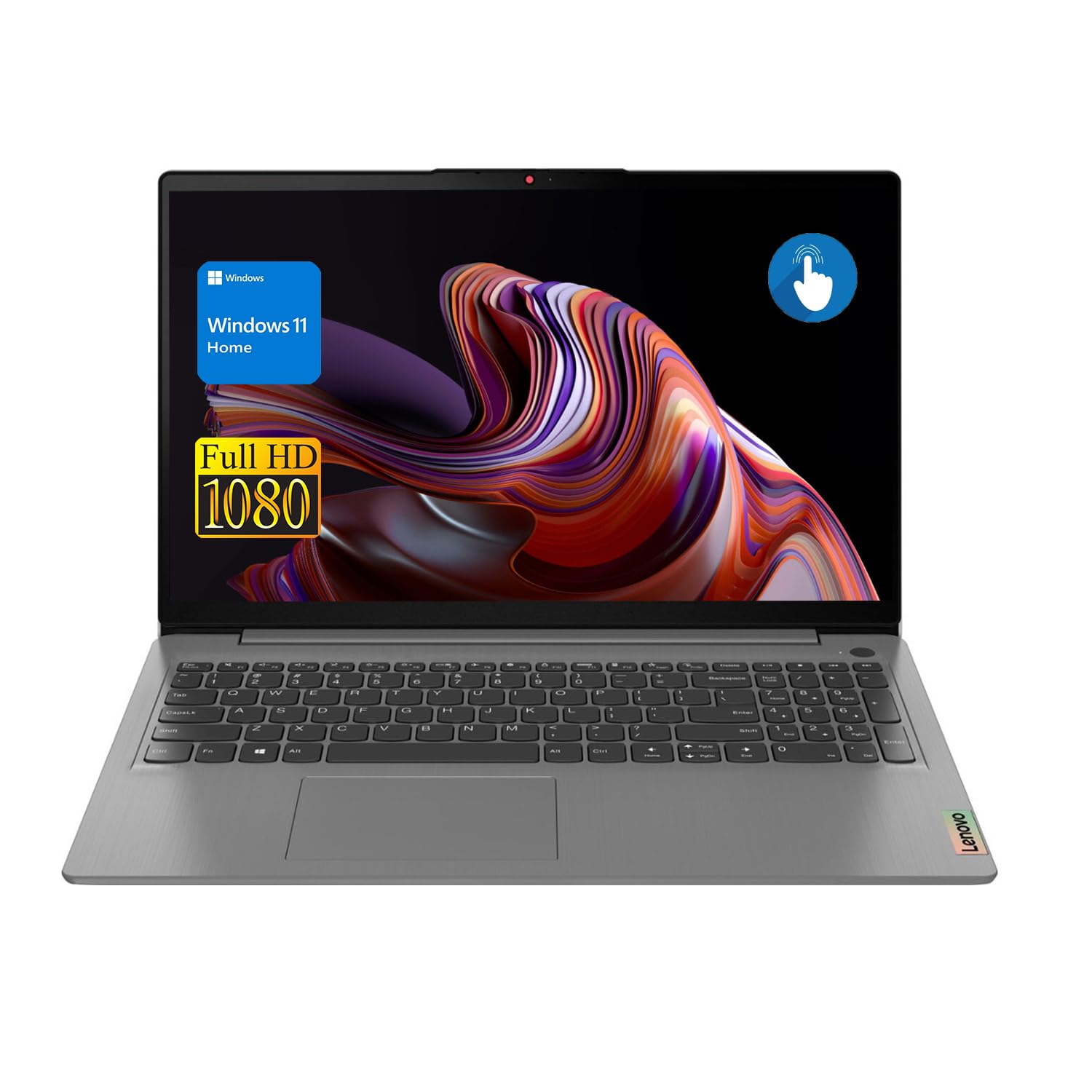 Lenovo IdeaPad 3 Laptop, 15.6" FHD Touchscreen, Intel Core i3-1115G4, 8GB RAM, 256GB SSD, HDMI, Webcam, Wi-Fi 6, SD Card Reader, Windows 11 Home, Grey (Renewed) Rank #4 | — | — | |
 HP 2020 15.6" Laptop Intel Core i5-1035G1 8GB DDR4 SDRAM 256GB SSD Windows 10 (Renewed) Rank #5 | 💰 Budget Pick | — |
