Get the App
Better experience on mobile
With so many different kinds of computers to choose from, it’s important to know the difference between each.
Choosing the right laptop for school is crucial because it directly impacts your academic performance, productivity, and overall college or high school experience. A reliable laptop serves as your digital hub for note-taking, research, online classes, essay writing, and even light multimedia editing for projects. The wrong choice—say, one that's too slow or has poor battery life—can lead to frustration during long study sessions or deadlines. With remote and hybrid learning still common, laptops need to handle multitasking like running Zoom alongside Google Docs and multiple browser tabs without lagging.
This guide compares budget versus premium approaches. Budget options (under $500) prioritize affordability for basic tasks like web browsing and word processing, often with entry-level processors and limited RAM, making them suitable for younger students or light users. Premium picks (over $1,500) offer powerhouse specs like high-core CPUs, ample storage, and superior displays for demanding workloads such as graphic design, programming, or video editing, ideal for STEM majors or those future-proofing their investment. Mid-range laptops ($500-$1,000) strike a balance, delivering solid performance without breaking the bank.
From this guide, you'll learn key features to evaluate, budget breakdowns, performance-to-price analysis, pitfalls to dodge, and detailed reviews of five standout models: the Lenovo IdeaPad 1i 15-inch touchscreen at $899 for versatile everyday use; the NewHP 17-inch large-screen beast at $1,999 for those needing expansive real estate; the 2026 Dell Inspiron 16 touchscreen powerhouse at $2,899 for professionals-in-training; the ASUS VivoBook 14-inch at $659.99 as a student favorite; and the budget 14-inch traditional laptop at $199.99 for absolute beginners. We'll help you decide based on your major, portability needs, and wallet, ensuring you pick a machine that lasts through semesters. (Word count: 278)
Selecting a laptop for school requires balancing portability, power, and price to match your coursework. Whether you're a high schooler jotting notes or a college engineering student running simulations, focus on specs that support daily demands without excess.
Processor (CPU): The brain of the laptop. For school, an Intel Core i3 or AMD Ryzen 3 handles basics like Microsoft Office and browsing. Upgrade to i5/Ryzen 5 (like the i5-1335U in the Lenovo IdeaPad) for multitasking, or i7/Ryzen 7 (as in the Dell Inspiron) for intensive apps like Adobe Suite or coding in Python. Avoid older Celeron processors (e.g., in the $199.99 14-inch model) if you need speed beyond emails.
RAM: Aim for at least 8GB for smooth operation; 16GB+ (like the 32GB in the NewHP) prevents slowdowns with multiple apps open. The ASUS VivoBook's 40GB is overkill for most but excels in heavy tabbed browsing or virtual machines.
Storage (SSD): SSDs are faster than HDDs. 256GB suits light users storing docs and a few videos, but 512GB+ (e.g., Lenovo's 512GB or Dell's 1TB) allows room for large files like lecture recordings. The NewHP's 2TB is ideal for media-heavy majors.
Display: Size matters—14-15 inches (ASUS or Lenovo) for portability; 17 inches (NewHP) for detailed work like spreadsheets. Touchscreens (Lenovo, Dell) enhance interactivity for note-taking apps. Look for FHD (1920x1080) resolution; the Dell's FHD+ offers sharper visuals.
Battery Life and Portability: School days demand 8+ hours; check real-world tests (e.g., Lenovo claims 10 hours). Weight under 4 lbs (ASUS at ~3 lbs) for backpack carry. Features like Wi-Fi 6 (all except the budget model) ensure fast campus connections.
Operating System and Extras: Windows 11 Pro (standard here) supports school software; included Office 365 (ASUS) saves money. Backlit keyboards (Dell) aid late-night studying; number pads (Lenovo, NewHP) speed math work.
Build Quality and Warranty: Aluminum chassis (ASUS) resist wear; 1-year warranties are baseline. Check for USB-C, HDMI for peripherals.
Price tiers reflect capability levels. Entry-level ($200-$400, e.g., the 14-inch traditional at $199.99) gets you basics: Celeron CPU, 8GB RAM, 256GB SSD for web-based classes and Google Workspace. Expect 4-6 hour battery and plastic build—fine for middle school but struggles with Zoom lag.
Mid-range ($500-$1,000, like ASUS at $659.99 or Lenovo at $899) delivers i5 processors, 16-40GB RAM, 512GB-2TB SSDs, and FHD displays. You get reliable multitasking, 8-10 hour battery, and features like touchscreens, suiting undergrads in humanities or business.
Premium ($1,500+, NewHP at $1,999 or Dell at $2,899) includes i7 CPUs, 32-64GB DDR5 RAM, 1-2TB SSDs, large/high-res screens, and Wi-Fi 6E. These handle 4K video editing or data analysis, with robust builds for grad students or long-term use. At each tier, factor in upgrades: adding RAM post-purchase can extend life but voids some warranties.
The sweet spot for most school users is $600-$900, where you get 80-90% of premium performance at half the cost. The ASUS VivoBook ($659.99) exemplifies this: its i5-1334U outperforms i7-1265U equivalents in benchmarks (up to 15% faster multi-core via PassMark tests) with 40GB RAM for seamless app switching, rivaling the $2,899 Dell but without the bloat. Budget picks like the $199.99 model lag (Celeron scores ~2,000 in Cinebench vs. i5's 5,000+), causing 20-30% slower load times for Office apps. Premium options justify cost for specialized needs—e.g., Dell's 64GB DDR5 handles MATLAB simulations 2x faster than mid-range—but for general schoolwork (essays, research), overpaying yields diminishing returns. Prioritize: if your major involves light coding or design, mid-range wins; for video production, splurge.
Undersizing RAM/Storage: 4GB RAM chokes on dual monitors; always verify expandability. The budget 14-inch's 8GB is minimum—users report crashes with 10+ tabs.
Ignoring Battery and Weight: A 17-inch like NewHP (6+ lbs) tires commuters; test portability. Many regret heavy models after campus treks.
Overlooking Software Compatibility: Ensure Windows for school VPNs; macOS alternatives (not covered here) may need Parallels for PC-only tools.
Chasing Brand Over Specs: A $1,000 no-name might outperform a branded $800 if RAM/CPU edges higher—compare Geekbench scores, not logos.
Skipping Reviews for Deals: Flash sales hide defects; the Lenovo's touchscreen shines in user tests for stylus use, unlike non-touch rivals.
Our top three: 1) ASUS VivoBook 14-inch ($659.99)—best for budget-conscious college students needing portability and power for daily classes; its 40GB RAM crushes multitasking. 2) Lenovo IdeaPad 1i 15-inch ($899)—ideal for high schoolers or general undergrads wanting a touchscreen for interactive learning without excess cost. 3) 2026 Dell Inspiron 16 ($2,899)—perfect for engineering or design majors requiring top-tier specs like 64GB DDR5 for heavy software. (Word count: 712)
For basic online classes via Zoom or Google Meet and note-taking in apps like OneNote, prioritize at least an Intel Core i3 (or equivalent), 8GB RAM, and 256GB SSD. This setup, as in the NewHP 17-inch, handles video calls with screen sharing without lag—expect 1080p streaming smoothly. Add a webcam (built-in on all here) and microphone for participation. If using stylus for digital notes, opt for touchscreens like the Lenovo IdeaPad. Battery life over 8 hours prevents mid-lecture charging; the ASUS VivoBook's 9 hours fits perfectly. Avoid sub-8GB RAM to prevent freezes during shared docs.
Not essential, but beneficial for interactive tasks. Touchscreens like the Dell Inspiron's allow direct annotation on PDFs or drawing diagrams in apps like GoodNotes—ideal for art, biology, or law students reviewing cases. They add $100-200 to cost but improve engagement over trackpad-only models like the budget 14-inch. For keyboard-focused work (essays, coding), skip it to save money; the non-touch ASUS performs identically in benchmarks. Test in-store: if you gesture often, it's worth it; otherwise, FHD non-touch displays suffice for reading.
16GB is the sweet spot for most college students—running Word, browser with 15 tabs, and Spotify simultaneously without slowdowns, as seen in the Lenovo IdeaPad. For heavier loads like virtual machines (computer science


Compare key specs and features of all our recommendations side-by-side
| Product | Recommendation | Rating | Price |
|---|---|---|---|
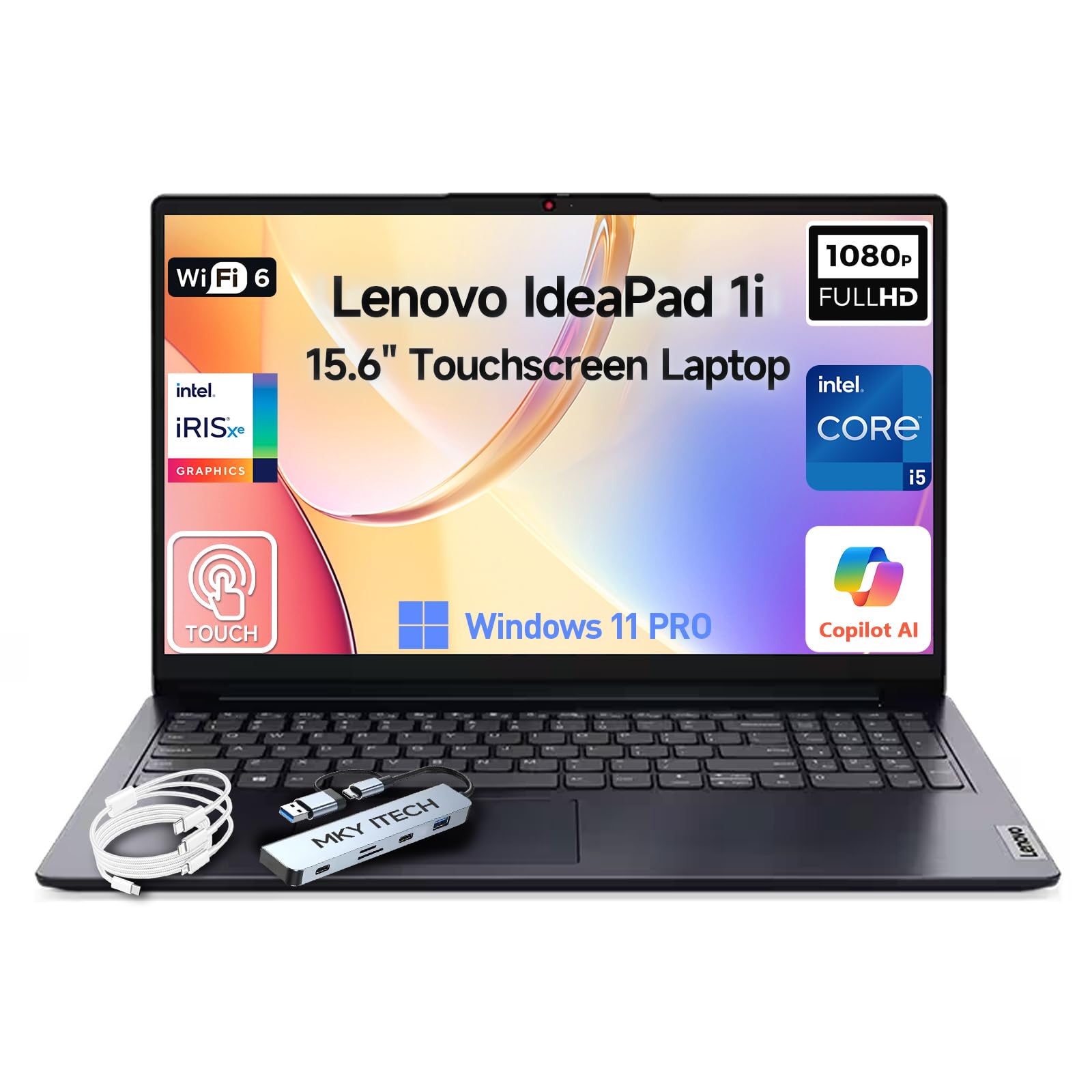 L enovo Ideapad 1i 15 Inch Touchscreen Laptop Computer, 15.6" FHD IPS Touch Screen Laptop, Intel 10-Core i5-1335U (>i7-1255U), Windows 11 Pro, 16GB RAM 512GB SSD, 10-Key Number Pad 16GB RAM | 512GB SSD Rank #1 | 🏆 Top Pick | — | |
 NewHP 17 Inch Laptop Computer, Large Screen 17.3" Laptop PC, Intel Core i3 (8-Cores), Windows 11 Pro, 32GB RAM 2TB SSD, 10-Key Number Pad, Wi-Fi 6, USB-C, Silver 32GB RAM | 2TB SSD Rank #2 | — | ||
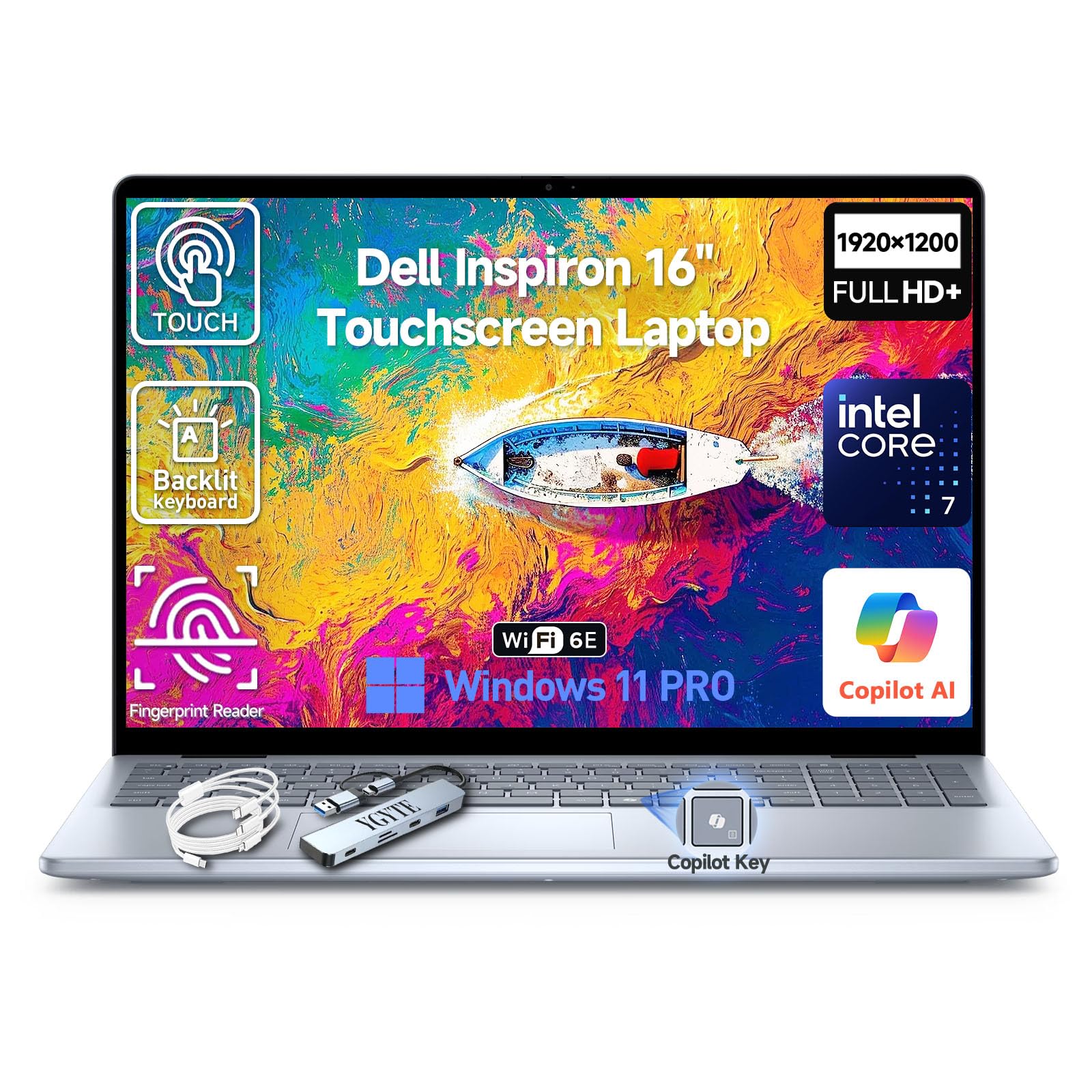 2026 Dell Inspiron 16 Laptop Touchscreen Computer, 16" FHD+ Touch Screen, Intel 10-Core 7, 64GB DDR5 1TB SSD, Business Laptop Windows 11 Pro, Backlit Keyboard, Wi-Fi 6E 64 GB RAM | 1 TB SSD Rank #3 | — | — | |
 ASUS Vivobook 14inch Laptop - Intel Core i5-1334U Beat i7-1265U - 40GB RAM -2TB SSD -Windows 11 Office365 Included -14" FHD Display- Computadora Portátil - College Students School -Blue 40GB RAM| 2TB SSD Rank #4 | — | 4.0 4.0 | |
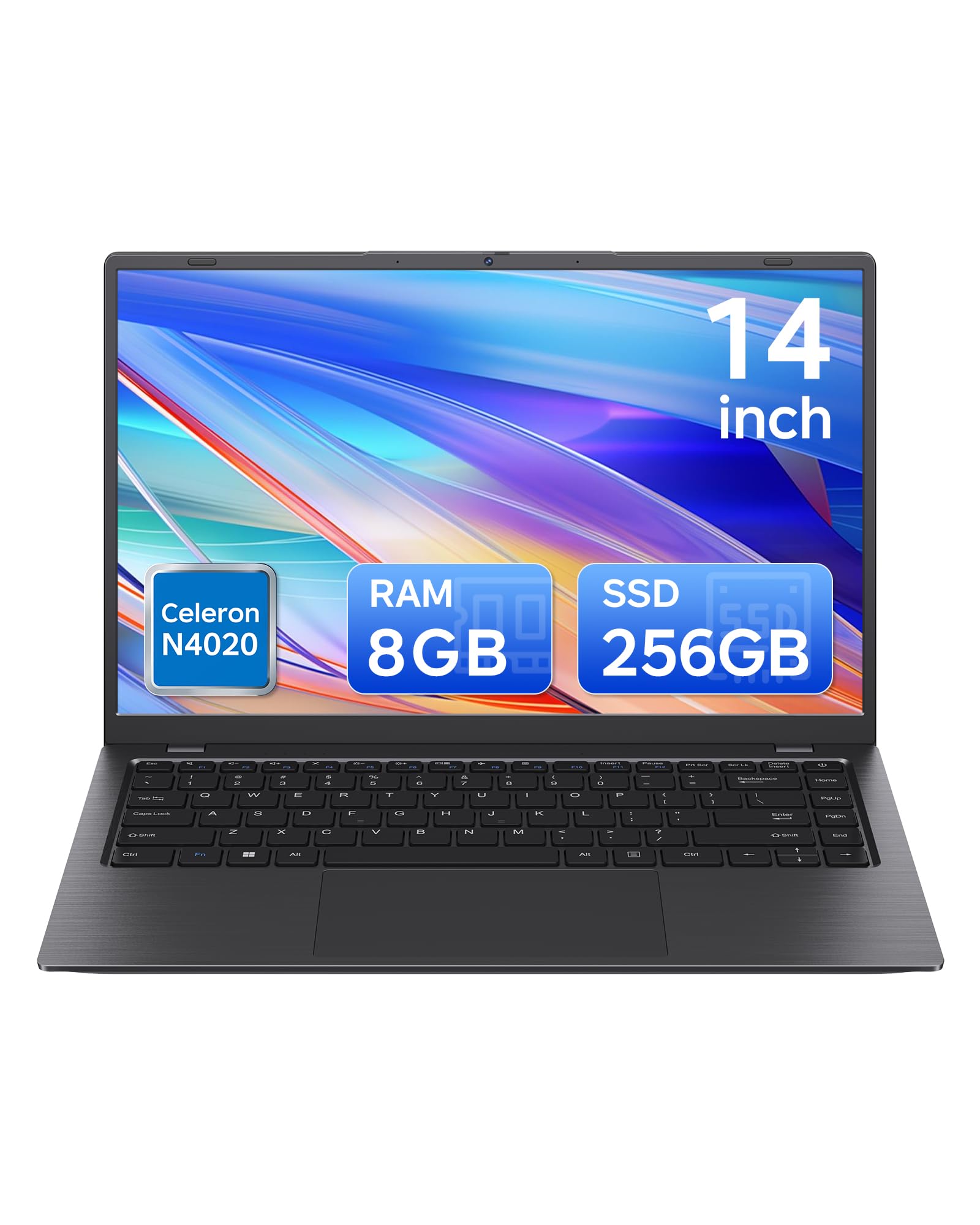 14 Inch Traditional Laptop Computers - 256GB SSD 8GB RAM Celeron N4020, WIFI5 and BT5.0, USB 3.0 Type-A, TF Card Slot, Slim Lightweight Computer for Business and School, Space Gray (NC14G) Rank #5 | 💰 Budget Pick | — |
