Get the App
Better experience on mobile
One option for transitioning very young children from climbing on the couch to climbing up a park slide is to get some indoor climbing toys for kids.
Indoor climbing toys for toddlers are more than just playthings—they're essential tools for physical, cognitive, and emotional development during the critical ages of 1 to 3 years. At this stage, toddlers are building gross motor skills like balance, coordination, and strength, while also fostering confidence through safe exploration. The wrong toy, however, can lead to frustration, injury, or disinterest; for instance, overly complex structures might overwhelm a 1-year-old, while flimsy materials could collapse under active play. Choosing the right one ensures hours of engaging, safe indoor fun, especially in limited spaces like apartments where outdoor access is restricted.
This guide compares budget-friendly options against premium sets, highlighting how cheaper toys like the Santa Claus Roller Coaster Fun ($16.88) offer quick, electric-powered thrills but lack durability, versus high-end wooden climbers like the Pikler Triangle Climbing Set (Rainbow or Blue, both $189.99) that provide versatile, long-lasting play. Mid-range picks, such as the 5-Piece Foam Climbing Blocks ($70.99) or the MIND&ACTION 6 Pieces Toddler Climbing Toys ($139.99), strike a balance with soft, modular designs for customizable setups.
Readers will learn key features to evaluate, like material safety and stability; budget breakdowns from entry-level to investment pieces; performance-price trade-offs; and pitfalls to dodge. We'll review all five products in detail, including pros/cons, and wrap with FAQs on safety and maintenance. By the end, you'll know which toy fits your toddler's needs—whether for a first climber or a growing playroom staple—empowering informed decisions that maximize developmental benefits without breaking the bank. (Word count: 278)
Selecting indoor climbing toys requires focusing on safety, durability, and age-appropriateness to support toddlers' rapid development without risks. These toys should encourage climbing, sliding, and balancing in a controlled environment, ideally suiting 1-3-year-olds who are honing spatial awareness and muscle control.
Material and Safety: Prioritize non-toxic, BPA-free materials. Foam sets like the 5-Piece Foam Climbing Blocks use PU leather covers for easy cleaning and cushioning against falls, while wooden options like the Pikler Triangle sets employ smooth, rounded edges to prevent splinters. Avoid sharp corners or small parts that could pose choking hazards.
Size and Stability: Measure against your space—toddlers need stable bases to build confidence. The MIND&ACTION 6 Pieces set offers interlocking blocks up to 3 feet high when stacked, with non-slip bottoms, whereas the Santa Claus Roller Coaster is compact (under 2 feet) but relies on electric momentum, which may wobble on uneven floors.
Versatility and Modularity: Look for toys that grow with the child. Pikler Triangles (Rainbow or Blue) convert from arches to ramps via fabric connectors, supporting endless configurations. In contrast, the fixed-track Santa toy limits play to rolling balls, reducing replay value.
Weight Capacity and Durability: Ensure it holds 50-100 lbs for active toddlers. Premium wood like in Pikler sets withstands years of use, while foam alternatives like MIND&ACTION endure rough play but may compress over time.
Age Suitability and Sensory Elements: Match to developmental stages—simple inclines for 1-year-olds, complex builds for 3-year-olds. The Rainbow Pikler adds color-coded climbing for visual stimulation, and the Santa toy includes lights/music for auditory engagement.
Ease of Assembly and Storage: Quick-setup is key for busy parents. Foam blocks snap together with Velcro, unlike wooden Piklers requiring minor tools. Foldable designs, like the Blue Pikler, store easily in small spaces.
Certifications and Reviews: Check for ASTM or EN71 safety standards. The MIND&ACTION's 4.2-star rating reflects real-user feedback on stability, while N/A-rated items like the Foam Blocks demand scrutinizing seller details.
Prices span $16.88 to $189.99, dividing into tiers:
Entry-Level ($15-30): Basic motorized fun like the Santa Claus Roller Coaster Fun. You get short-term novelty with lights and sounds, ideal for holiday gifting or testing interest, but expect plastic wear after months.
Mid-Range ($70-140): Value-driven sets such as the 5-Piece Foam Climbing Blocks or MIND&ACTION 6 Pieces. These deliver modular play with soft safety, offering 2-3 years of use before upgrading, balancing cost with expandability.
Premium ($180+): Investment pieces like Pikler Triangle sets (Rainbow or Blue). Crafted from sustainable beechwood, they last 5+ years, transitioning to preschool activities, justifying the price through heirloom quality and therapeutic benefits endorsed by Montessori experts.
Lower tiers suit trial runs; higher ones for committed playrooms.
The sweet spot lies in mid-range options around $70-140, where performance peaks without premium markups. For example, the MIND&ACTION set at $139.99 rivals Pikler's versatility at half the cost, using foam for quieter, safer falls—perfect for apartments. Budget picks like the $16.88 Santa toy perform well for sensory stimulation but falter in physical climbing development, lasting only 6-12 months. Premium Piklers excel in longevity and motor skill-building, with the Rainbow version's colors enhancing engagement, but they're overkill for casual use. Overall, mid-tier delivers 80% of high-end benefits for 40% of the price, especially if space limits full wooden setups.
Ignoring Weight Limits: Overloading cheap plastics, like the Santa toy's tracks, can cause breaks—always verify 50+ lb capacity for toddlers plus siblings.
Overlooking Space Needs: Assuming compact means versatile; the Pikler requires 6x6 feet cleared, while foam blocks fit 4x4, leading to cramped, unsafe play if mismatched.
Skipping Safety Checks: Buying unrated items without certifications—e.g., the N/A-star Foam Blocks—risks toxins; cross-reference with CPSC recalls.
Forgetting Maintenance: Foam attracts dust, needing weekly wipes; wooden sets like Pikler demand oiling to prevent cracks, or they'll warp.
Age Mismatch: Giving complex climbers to 1-year-olds, like full Pikler arches, can frustrate; start with low inclines in MIND&ACTION for gradual progression.
Our top three cater to varied needs:
Pikler Triangle Climbing Set (Rainbow) - Best for Long-Term Development: Ideal for parents investing in Montessori-style play; its wooden durability and colorful versatility suit active 2-3-year-olds building advanced skills.
MIND&ACTION 6 Pieces Toddler Climbing Toys - Best for Versatile Indoor Fun: Perfect for space-conscious families; modular foam excels in customizable setups for 1-3-year-olds, offering safety and value.
5-Piece Foam Climbing Blocks - Best for Budget-Conscious Beginners: Great for first-time buyers with young 1-year-olds; soft, colorful design provides gentle introduction to climbing without high costs. (Word count: 742)
Yes, but only if they meet safety standards like ASTM F963 for toddler toys. For 1-year-olds, prioritize low-profile designs under 18 inches high with soft edges—options like the 5-Piece Foam Climbing Blocks or MIND&ACTION set are ideal, as their cushioned foam absorbs falls better than wooden Pikler Triangles, which suit 18+ months. Always supervise play to prevent tipping, and ensure no small detachable parts. Check for non-toxic certifications; avoid anything with lead paint or phthalates. Start with guided sessions to build confidence, gradually increasing independence as crawling turns to climbing.
Space varies by product: Compact like the Santa Claus Roller Coaster needs just 2x3 feet for its track, making it apartment-friendly. Modular foam sets (MIND&ACTION or 5-Piece Blocks) require 4x4 feet when assembled but store flat. Pikler Triangles demand 6x6 feet for safe maneuvering, with clearance above to avoid head bumps. Measure your play area, factoring in toddler movement—add 2 feet buffer around edges. Wall-mounting isn't recommended for stability, but folding designs like Piklers help in tight spots. Overcrowded setups increase injury risk, so rotate toys if space is limited.
Foam toys, such as MIND&ACTION or 5-Piece Blocks, offer superior shock absorption and portability, ideal for soft landings and easy cleaning, but they compress over 2-3 years and aren't as eco-friendly. Wooden sets like Pikler Triangles provide natural textures for sensory development, lasting 5+ years with better weight support (up to 150 lbs vs. foam's 100 lbs), aligning with Montessori principles for real-world skill transfer. Wood is quieter and promotes barefoot grip, but requires maintenance like varnishing. Choose foam for beginners or rentals; wood for long-term investment. Both avoid plastics like the Santa toy, which prioritize fun over physical climbing.
Regular upkeep extends lifespan: For foam like MIND&ACTION, spot-clean with mild soap and air-dry; avoid machine washing to prevent Velcro damage—weekly wipes suffice for dust. Wooden Piklers need monthly inspections for splinters, applying food-grade oil yearly to seal against moisture, and never submerge in water. The Santa toy's plastics wipe easily but disassemble tracks for battery compartment drying. Store in dry areas away from direct sun to prevent fading. Disinfect with child-safe sprays post-illness. If pieces loosen, tighten immediately—neglect leads to hazards. Most are low-maintenance, but factor 10-15 minutes weekly into routines.
Absolutely—climbing builds gross motor skills like leg strength and balance, per American Academy of Pediatrics guidelines. Pikler sets target spatial awareness through configurations, aiding 2-year-old problem-solving, while foam blocks like the 5-Piece encourage stacking for fine motor refinement in 1-year-olds. The Santa toy boosts cause-effect via sounds, but less physically. Use them 20-30 minutes daily to hit milestones like pulling up or cruising. Track progress: If a toddler masters inclines, advance to arches. Consult pediatricians for delays, but these toys complement active play, reducing screen time and obesity risks.
Yes, most are expandable: MIND&ACTION and 5-Piece Foam Blocks add compatible pieces via Velcro for $20-50 extras, turning basics into full gyms. Pikler Triangles (Rainbow/Blue) integrate with brand add-ons like tunnels or arches ($50-100), creating playscapes. The Santa Roller Coaster lacks expansions, sticking to its track. Start core, then scale—e.g., add ramps to foam for 3-year-old challenges. Check compatibility to avoid mismatches; over-expansion overwhelms small spaces. This modularity makes mid/premium picks future-proof, saving money long-term versus replacing budget toys yearly.
Policies vary by retailer—Amazon (common for these) offers 30-day returns for unused items, but climbing toys often qualify for extended if defective. MIND&ACTION's 4.2 stars include easy returns noted; Piklers, as premium, have 60-day manufacturer guarantees. Santa's low price means quick refunds, but inspect on arrival for shipping damage. Foam sets like 5-Piece may have hygiene restrictions post-use.


Compare key specs and features of all our recommendations side-by-side
| Product | Recommendation | Rating | Price |
|---|---|---|---|
 MIND&ACTION 6 Pieces Toddler Climbing Toys Indoor for 1 Year Old, Baby Climbing Blocks for Toddler 1-3, Soft Play Set Kids' Indoor Climber & Play Structues Multi-6p Rank #1 | 🏆 Top Pick | 4.2 4.2 | |
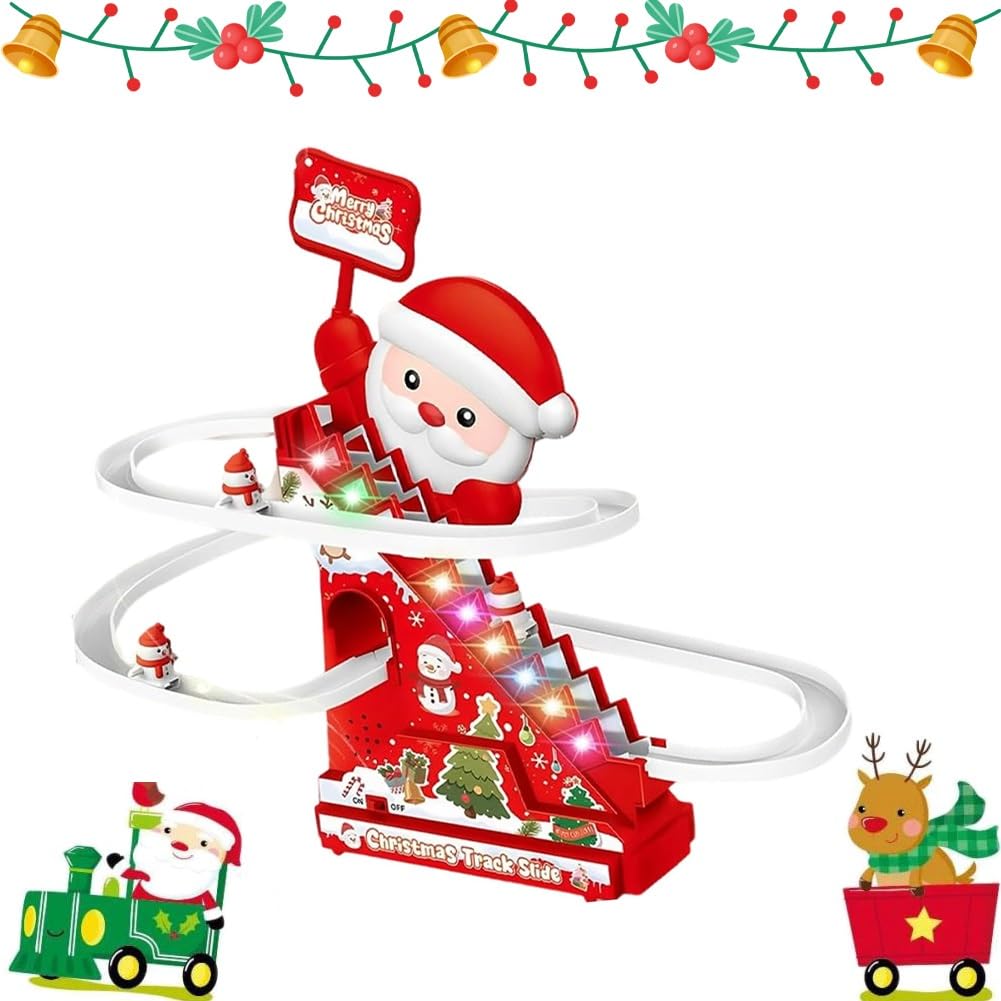 Santa Claus Roller Coaster Fun, Toddler Roller Coaster - Santa Christmas Electric Track Toy, Electric Snowman with Light Music, Climbing Stairs Tracks Slide Toys for Home Play Rank #2 | — | ||
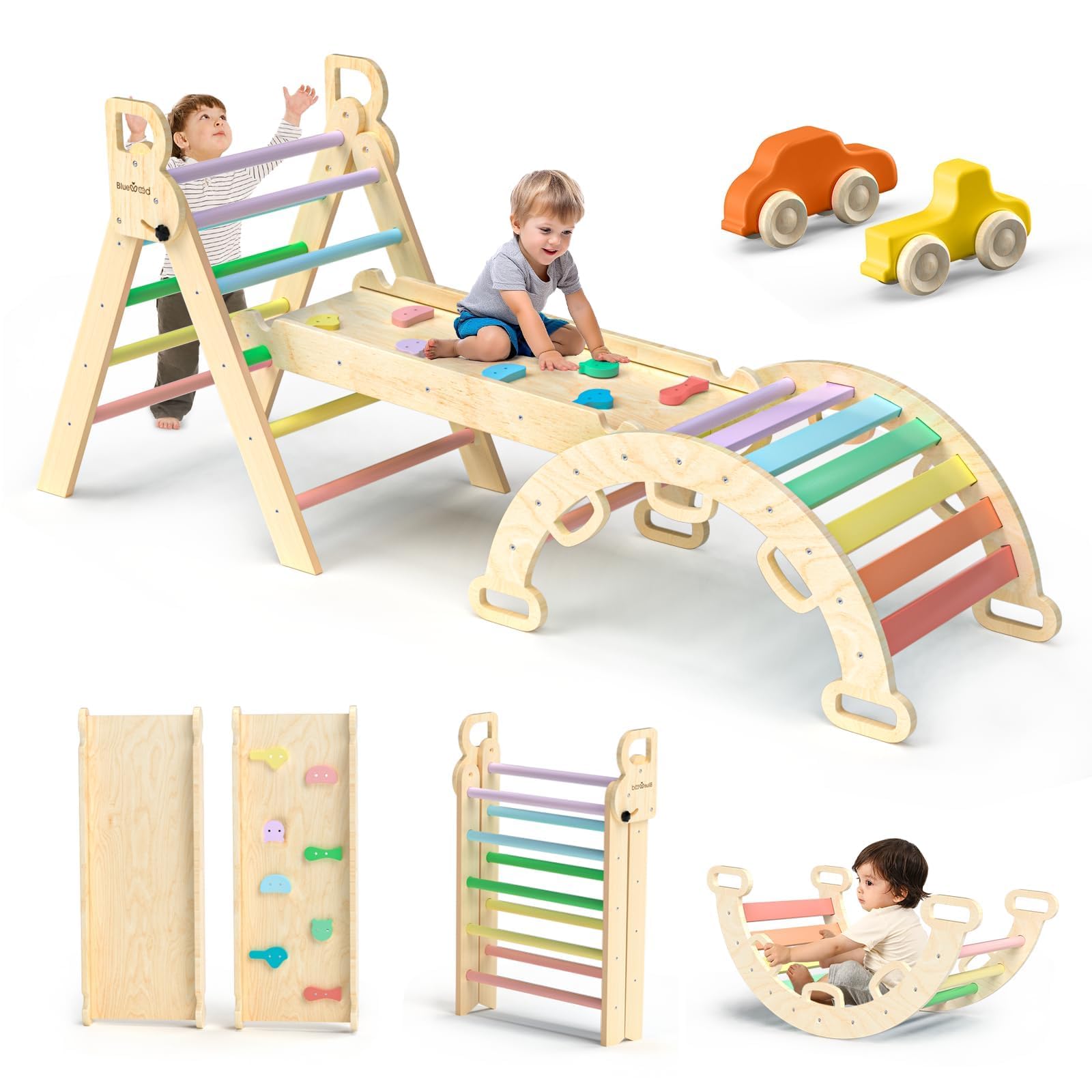 Pikler Triangle Climbing Set (Rainbow) Rank #3 | — | — | |
Pikler Triangle Climbing Set (Blue) Rank #4 | — | — | |
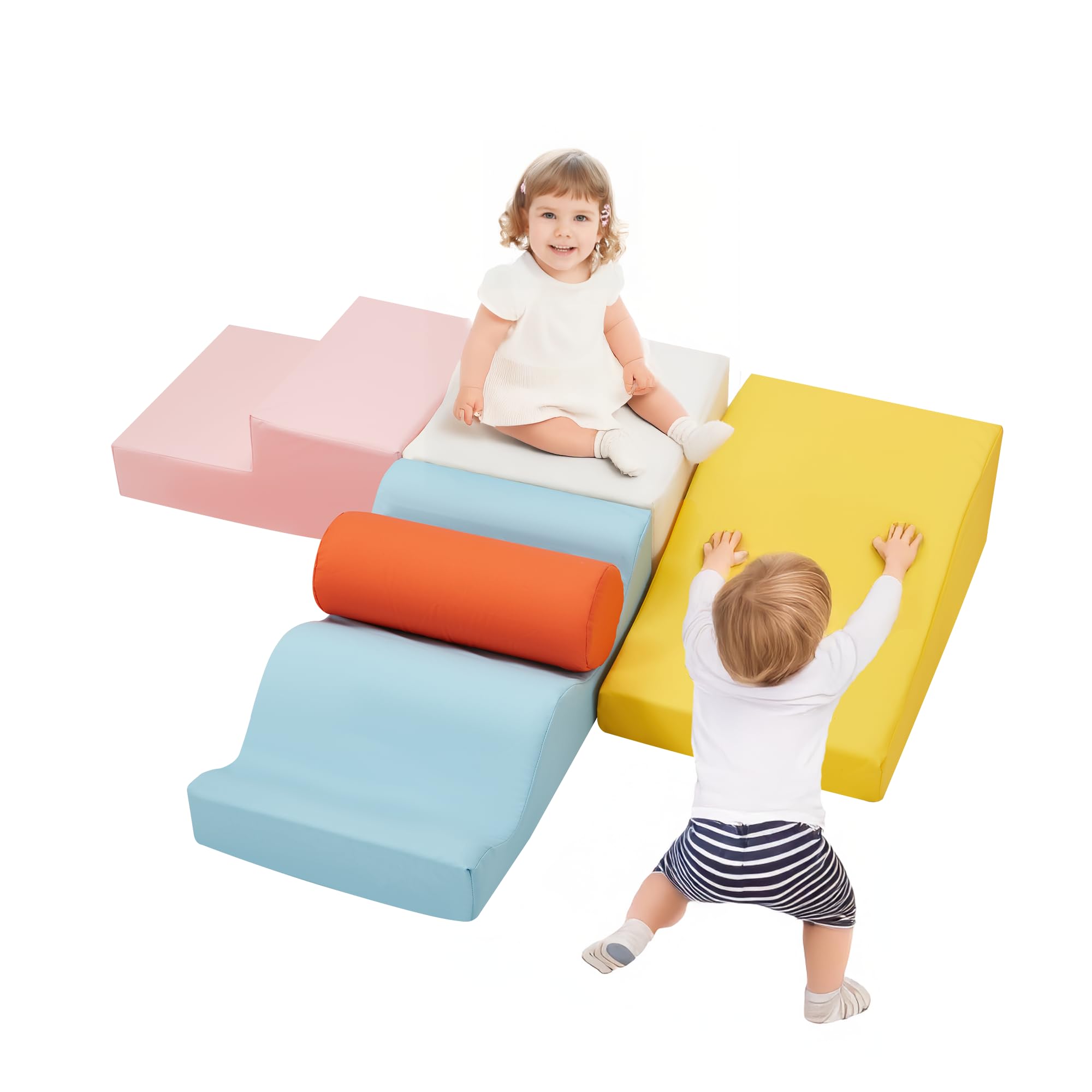 5-Piece Foam Climbing Blocks for Toddlers, PU Leather Toddler Climbing Toys Indoor, Soft Play Toys with Non-Slip Bottom & Velcro, Foam Blocks for Toddlers for Climbing, Colorful Style Rank #5 | 💰 Budget Pick | — |


