Get the App
Better experience on mobile
Get the best products related to our top picks
Choosing the right globe goes beyond mere decoration—it's a tool for education, navigation, and sparking curiosity about the world. Whether you're a teacher outfitting a classroom, a parent seeking an engaging learning aid for kids, or a collector hunting for a statement piece, a quality globe can transform how you interact with global geography. Poorly made globes might feature outdated maps, flimsy construction, or inaccurate details, leading to frustration and misinformation. In contrast, well-crafted ones offer precise political boundaries, durable materials, and interactive elements that enhance usability.
This guide compares budget-friendly options, which prioritize affordability and basic functionality for casual or educational use, against premium models that emphasize aesthetics, innovation, and longevity. Budget globes, often under $100, deliver straightforward designs with essential features like magnifying glasses for reading fine print. Premium ones, exceeding $200, incorporate advanced mechanics like light-powered rotation or antique styling for a luxurious feel, though they come at a higher cost.
From this guide, you'll learn how to evaluate key features such as size, materials, and accuracy; navigate budget tiers to match your needs; avoid pitfalls like overlooking map updates; and discover our top picks tailored to specific users. We'll dive into five standout products: the TROIKA Globe WELTBLICK 30 for high-end precision; the Educational World Map 10 Inch Political Desktop Globe and the similar 8 Inch version for student-friendly learning; the innovative MOVA Globe Earth at Night for mesmerizing decor; and the Antique Brass Zodiac Armillary Sphere for vintage collectors. By the end, you'll be equipped to select a globe that fits your space, purpose, and wallet, ensuring it serves as both a practical tool and a captivating focal point. (Word count: 278)
Selecting a globe involves balancing functionality, aesthetics, and durability to suit your intended use—whether for education, office decor, or as a collectible. Focus on aspects that align with your space and needs, such as desk size or interactive features.
Size and Diameter: Globes range from 6 to 30 inches. Smaller ones (6-10 inches) suit desktops and kids' rooms without overwhelming space, like the 8-inch Educational World Globe. Larger models (20+ inches) provide detailed views for serious study or display, as seen in the 30cm TROIKA WELTBLICK 30, but require more room.
Materials and Build Quality: Look for sturdy construction to prevent tipping or fading. Metal bases offer stability (e.g., chrome in TROIKA or blue metal in Educational models), while plastic spheres keep costs down but may scratch easier. Premium options like the MOVA's acrylic and the Antique Brass's metal-wood combo ensure longevity and a polished look.
Map Accuracy and Design: Political globes show borders and countries clearly, ideal for learning—check for recent updates to reflect current geopolitics. Thematic designs, like the MOVA's Earth at Night satellite imagery or the Zodiac Armillary's celestial focus, add uniqueness but may sacrifice standard geography details.
Interactive Features: Magnifying glasses aid readability on small prints, featured in both Educational globes. Rotation mechanisms vary: manual tilting (TROIKA's movable axis), light-powered seamless spin (MOVA), or static armillary rings (Antique Brass). These enhance engagement without cords or batteries in top models.
Base and Stability: A solid base prevents wobbling. Metal or wooden stands, like the MOVA's minimalist design or Antique Brass's nautical wood, elevate aesthetics. Ensure weighted bases for safety around children.
Aesthetic and Finish: Glossy blue oceans (Educational series) appeal to modern tastes, while silver-black chrome (TROIKA) or antique brass (Zodiac) suits vintage decor. Consider lighting compatibility for night views in illuminated models.
Ease of Use and Maintenance: Dust-resistant finishes and simple assembly are key. Avoid complex setups; most here are plug-and-play, but verify globe orientation for accurate meridian lines.
Globes span $56 to $349, divided into tiers that reflect value and features.
Low-End ($50-100): Basic educational tools for kids or casual users. At this level, expect plastic spheres, metal stands, and essentials like magnifying glasses—exemplified by the $56 Antique Brass Zodiac and $59 Educational 8 Inch. You get functional accuracy and decor appeal without frills, ideal for beginners or tight budgets. Durability is decent but not heirloom-quality.
Mid-Range ($100-200): Balanced options with enhanced details and stability. The $64 Educational 10 Inch fits here, offering a larger size and glossy finish for better visibility. This tier provides good performance for students or home offices, including interactive aids, but lacks innovative rotation.
High-End ($200+): Premium craftsmanship for collectors or upscale decor. The $280 TROIKA WELTBLICK 30 and $349 MOVA deliver superior materials, precise engineering, and unique features like ambient light powering. You invest in aesthetics and subtlety—think seamless rotation or German-engineered precision—but justify the cost with long-term appeal and minimal maintenance.
Overall, low-end suits impulse buys, mid-range hits practicality, and high-end rewards those prioritizing luxury.
The sweet spot lies in the mid-range ($60-100), where you get 80% of premium performance at a fraction of the cost. For instance, the Educational 10 Inch Globe ($64) rivals the TROIKA's detail in a compact form with added magnification, outperforming basic $56 models in usability without the $280 markup. It balances accuracy, stability, and kid-friendly design, making it ideal for most households.
Premium picks like the MOVA ($349) excel in "wow" factor—its cordless, light-driven rotation creates hypnotic city-light views unmatched by static globes—but the price premium (over 5x budget options) suits niche decor enthusiasts, not everyday learners. The TROIKA offers pro-level tilt and chrome elegance for $280, justifying cost for offices, yet the Antique Brass ($56) delivers vintage charm at entry-level pricing with comparable collectible value.
Budget extremes falter: Under $60 risks lightweight bases (e.g., potential tip in smaller Educational 8 Inch), while over $300 demands justifying extras like MOVA's satellite imagery. Aim for value—performance plateaus after $100 unless you need innovation.
Overlooking Map Currency: Many globes use outdated maps; skip ones without 2020s updates, as borders change (e.g., ensure post-Brexit accuracy in European models like TROIKA's German lettering).
Ignoring Size Relative to Space: A 30cm globe like TROIKA dominates small desks—measure first to avoid clutter.
Neglecting Base Stability: Lightweight stands tip easily with kids; prioritize metal over plastic, avoiding flimsy alternatives to the Educational series' solid bases.
Assuming All Globes Rotate Smoothly: Not all do—static armillary like Antique Brass limits interactivity; test or research mechanisms to match needs.
Forgetting Maintenance Needs: Glossy finishes (Educational globes) attract dust; choose wipeable materials and avoid outdoor exposure to prevent fading in light-sensitive designs like MOVA.
Our top three cater to diverse users:
MOVA Globe Earth at Night ($349): Best for modern decor enthusiasts or offices seeking a low-maintenance, ambient-powered rotator. Its 6-inch satellite night view outshines traditional globes in visual impact, ideal for tech-savvy adults.
Educational World Map 10 Inch Political Desktop Globe ($64): Top value for students, kids, or teachers. The larger size and magnifying glass provide clear learning without premium costs, surpassing the 8-inch version in detail.
TROIKA Globe WELTBLICK 30 ($280): Premium choice for professionals or collectors wanting precise, tiltable engineering. Its 30cm scale and chrome base suit serious geography buffs over decorative alternatives. (Word count: 742)
Educational globes prioritize accurate, up-to-date political and physical mapping, like the Educational World Map 10 Inch with its clear country borders and magnifying glass for label reading—essential for students learning geography. Decorative ones, such as the MOVA Earth at Night, emphasize aesthetics like rotating city lights or thematic designs (e.g., Antique Brass Zodiac's celestial rings), suiting home offices but offering less factual detail. Choose based on use: for classrooms, opt for political accuracy; for shelves, prioritize visual appeal. Hybrids like the TROIKA WELTBLICK 30 blend both with precise German-labeled maps and elegant chrome.
Verify the publication date or check for post-2020 updates, as geopolitical changes (e.g., new borders in Africa or Europe) render older maps obsolete. Products like the Educational series use recent political data, while the TROIKA's German engineering ensures precision. Avoid antiques like the Zodiac Armillary if accuracy matters, as its symbolic focus skips modern details. Cross-reference with online atlases before purchase, and look for brands specifying "updated 2023" or similar—crucial for the $59-64 budget options where outdated prints are common pitfalls.
Rotating features enhance engagement but aren't essential for all. The MOVA's light-powered spin ($349) provides cordless, mesmerizing motion ideal for decor, outperforming manual tilts in the TROIKA ($280) for seamless viewing. Budget static globes like the Educational 8 Inch ($59) suffice for learning via hand-spinning. Worth it if you want ambient interaction—saving on batteries—but skip for basic study, as the $56 Antique Brass shows rotation isn't needed for collectible value. Test in-store if possible to gauge appeal.
For kids (ages 5-12), 8-10 inch diameters like the Educational World Globe prevent overwhelm and fit small desks, with magnification aiding short attention spans. Adults or professionals benefit from 20-30cm options like the TROIKA for detailed reference without hunching. The 6-inch MOVA suits adults for subtle decor but frustrates kids lacking detail. Consider height: kids' eye-level access favors compact bases, while adults prioritize stability in larger models to avoid tipping during use.
Dust weekly with a soft microfiber cloth—avoid abrasives on glossy finishes like the Educational series' blue sphere, which can scratch easily. For metal bases (TROIKA chrome or Educational blue), use polish sparingly to prevent tarnish. The MOVA's acrylic repels dust but needs indirect light to avoid fading satellite prints. Wooden stands in the Antique Brass benefit from occasional oiling. Store away from direct sun or humidity to preserve maps; most here are low-maintenance, but the $280+ premiums like TROIKA withstand neglect better than $50-60 plastic builds.


Compare key specs and features of all our recommendations side-by-side
| Product | Recommendation | Rating | Price |
|---|---|---|---|
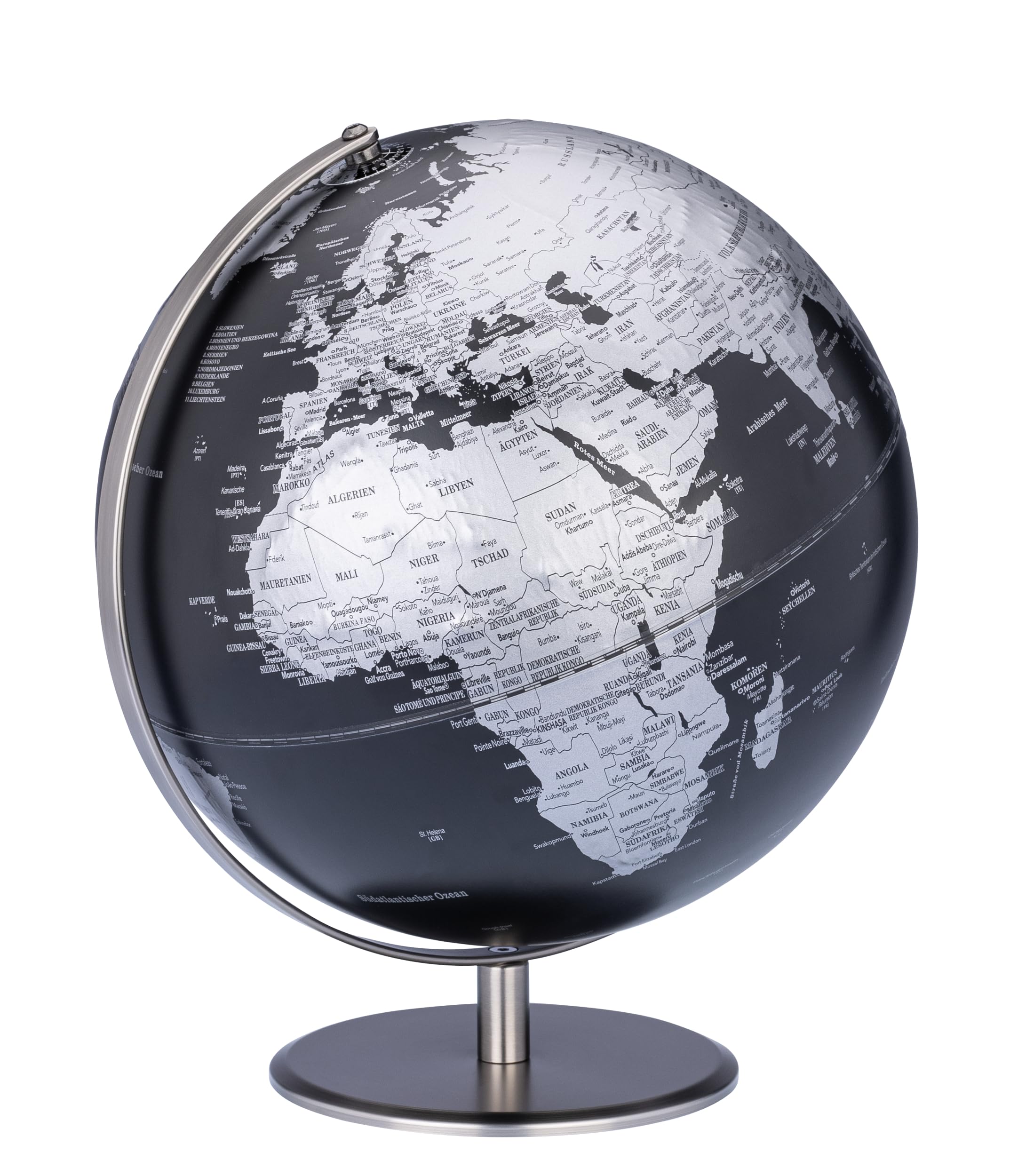 TROIKA Globe with 30 cm Diameter WELTBLICK 30 - Chrome-plated Metal Base - Movable Axis - German Lettering - Plastic, Metal - Black, Silver - TROIKA Original Rank #1 | 🏆 Top Pick | — | |
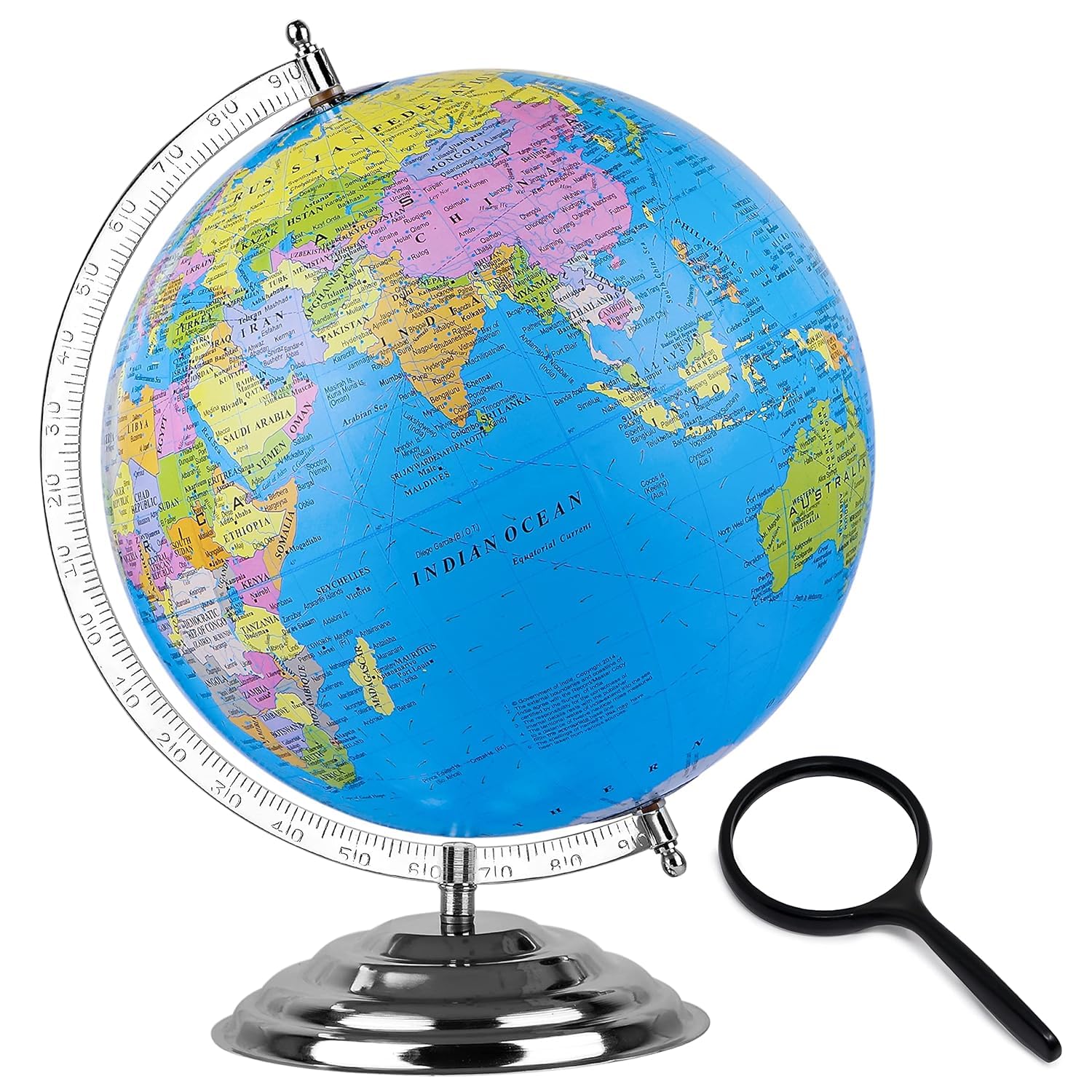 Educational World Map, 10 Inch Political Desktop Globe with Metal Base and Magnifying Glass, Blue Globe for Students and Kids Learning, Glossy Finish Rank #2 | — | ||
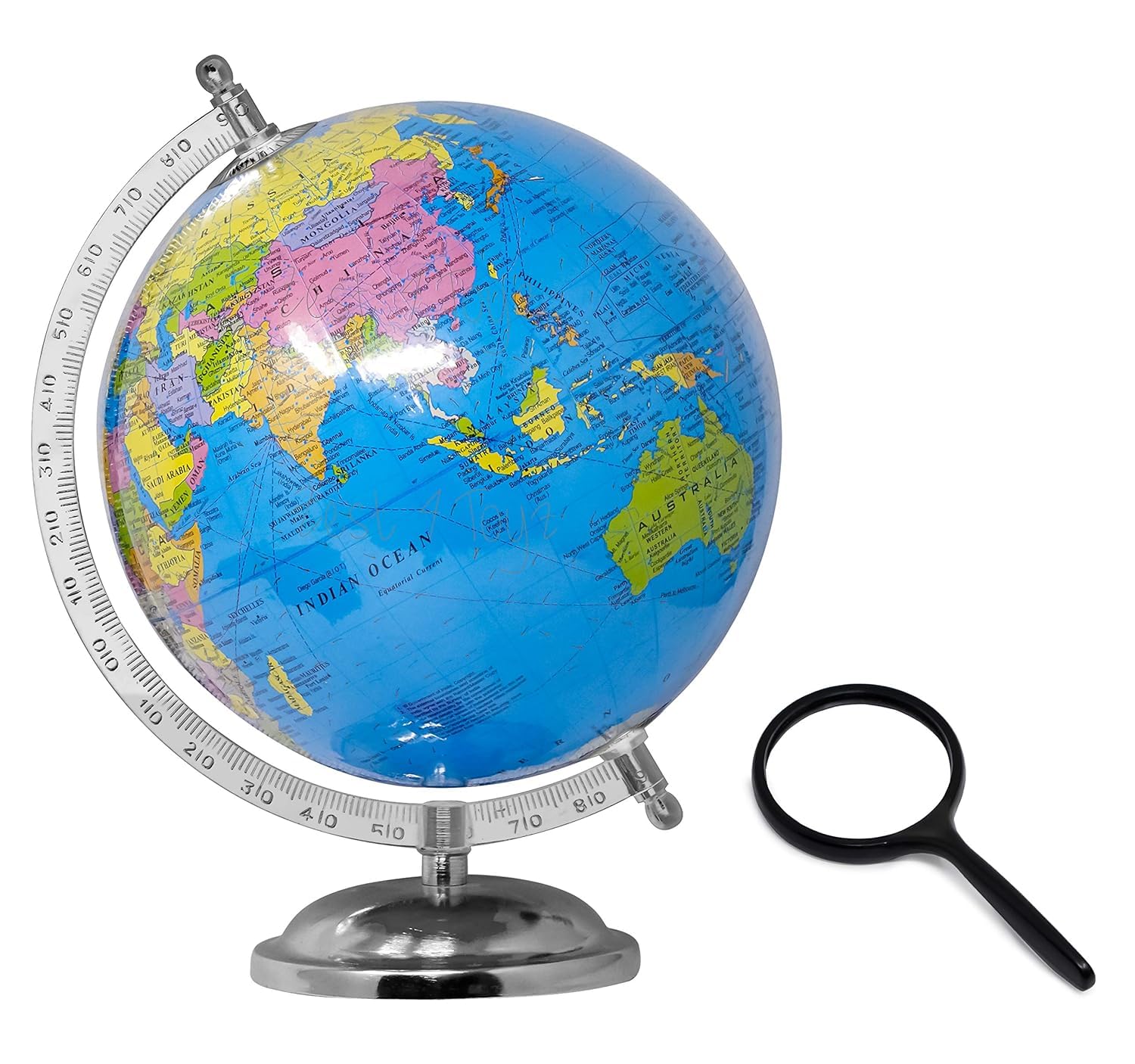 Educational World Globe with Magnifying Glass, 8 Inch Political Desktop Globe for Kids, Students, Learning, Blue Metal Stand Rank #3 | — | — | |
 MOVA Globe – Earth at Night (6”) | Rotating Globe Powered by Light, No Batteries or Cords | City Lights Satellite Imagery | Unique Gift or Modern Desk Decor Rank #4 | — | 4.1 4.1 | |
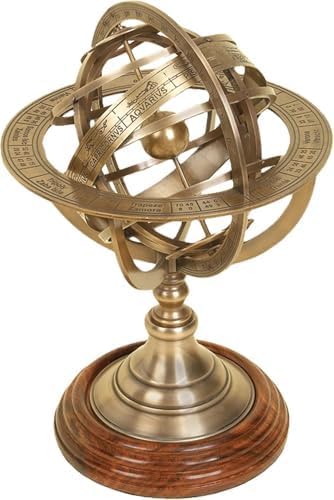 Antique Brass Zodiac Armillary Sphere Globe with Wooden Stand – Vintage Nautical Brass Globe, Pirate Ship Decor & Collectible Gift Rank #5 | 💰 Budget Pick | — |
