Get the App
Better experience on mobile
We've analyzed the best prebuilt gaming desktops under $1,500 to help you get the most fps for your dollar without overpaying.
Most $1,500 gaming PCs aren't truly $1,500 machines. The best ones are often $1,100 towers with well-chosen parts, leaving you room for a second monitor or a better mechanical keyboard. In this price range, the GPU is still the backbone, but the CPU and motherboard determine how long you can wait before an upgrade. We've combed through current prebuilt lineups, spec sheets, and user reviews to find the models that give you the most gaming performance per dollar.
We looked at GPU class (anything from an RTX 4060 to a 4070 Super), memory and storage quantity, upgradeability (tool-less panels, standard ATX parts), and the maker's warranty. We also considered real-world buyer feedback, not just vendor claims. A PC that scores well on paper but comes with bloatware or a flaky support line gets a rating dock.
What you can expect from this list is a mix of mainstream brands (Lenovo, HP, CyberPowerPC, iBuyPower, ABS, Skytech) that represent the best value picks at the moment. We've also flagged each one's biggest weakness, because every prebuilt has a compromise—whether it's the noise level, the case, or the support. If you're not afraid to open a chassis, the 'Budget Pick' will make your money stretch further, and the specialized picks below cover everything from compact builds to esports-focused rigs.
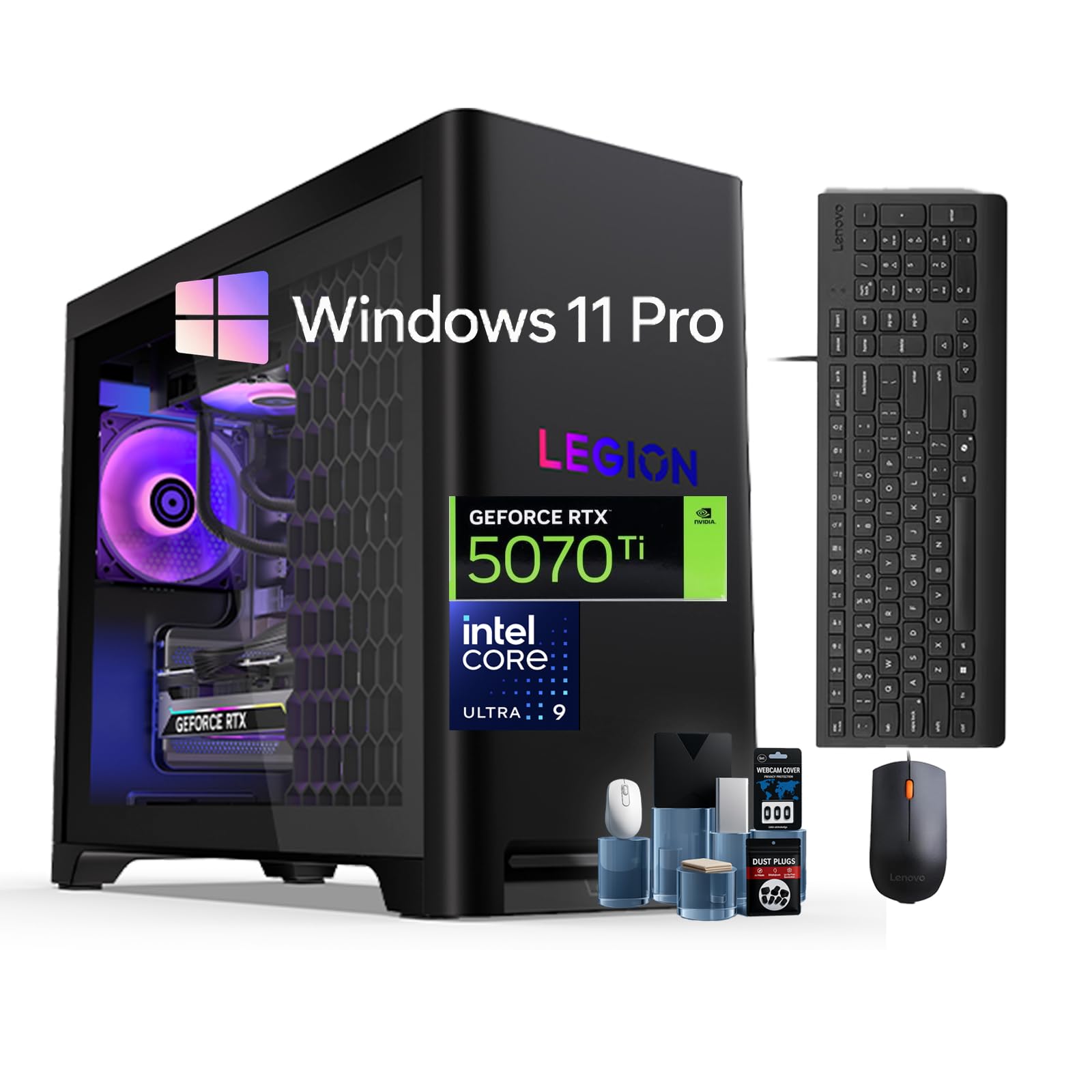
The Legion Tower 5i hits the sweet spot for 1440p gaming, pairing an RTX 4070 with a solid Intel Core i5-14400F and a clean, tool-less chassis that's easy to open. The trade-off is that Lenovo preloads some bloatware, and the standard config only includes 16GB of RAM, which you'll likely want to double.
Main limitation: The included keyboard and mouse are cheap, and the one-year warranty is standard but not exceptional.
Skip if: If you're looking for a flashy RGB-filled showpiece, this is a more conservative-looking machine.
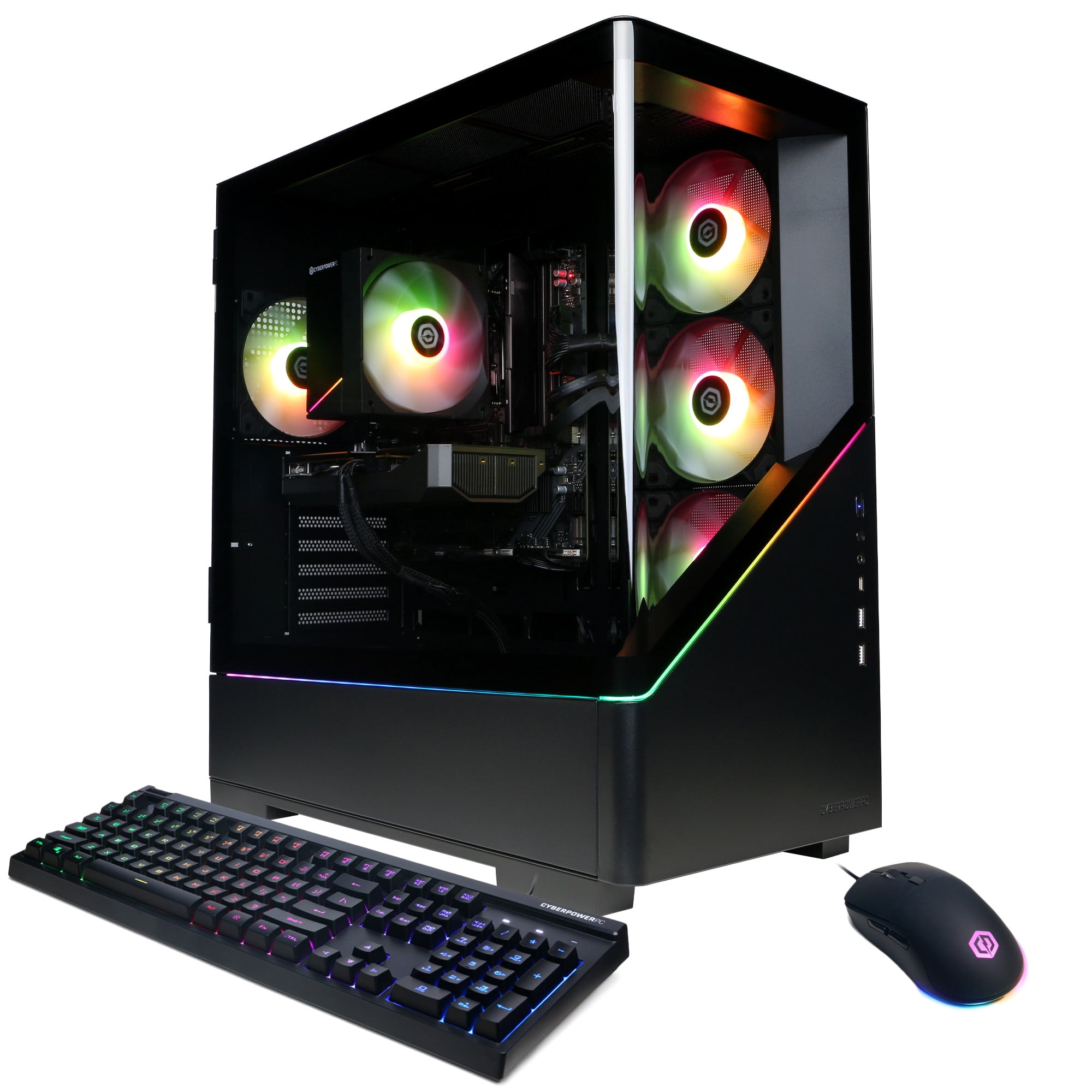
This Newegg house brand delivers the best raw value: a modern Ryzen 5 7600 and RTX 4060 for around $1,000, leaving hundreds for a better GPU later. The trade-off is a no-frills case and minimal RGB, so it looks plain on your desk.
Main limitation: The stock cooler can get loud under load, and the included RAM runs at a modest speed (though still DDR5).
Skip if: Anyone wanting a showpiece PC or guaranteed quiet operation should look elsewhere.
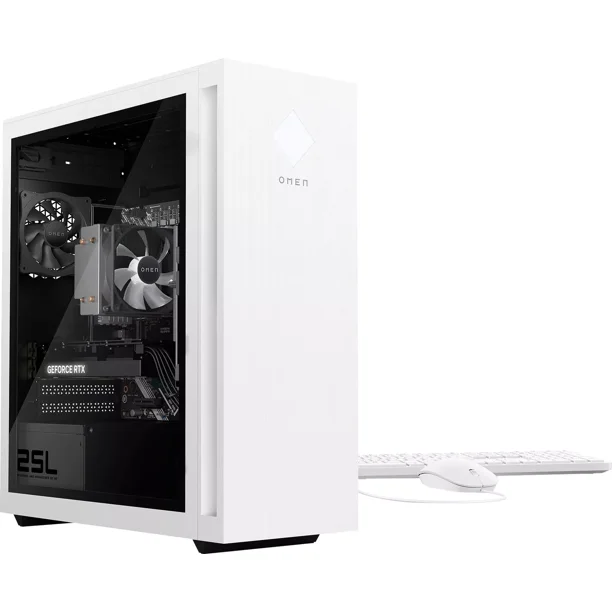
A genuinely compact tower that fits on a small desk without sacrificing too much gaming muscle—the RTX 4060 Ti handles 1080p max settings with ease. Trade-off: the compact layout makes upgrades a little tighter, and it runs warmer than larger cases.
Main limitation: HP's customer support has been inconsistent in recent years, and the sound insulation is minimal, so fan noise can be noticeable.
Skip if: If you plan to install a liquid-cooled graphics card or need multiple 3.5-inch drives, this is not for you.
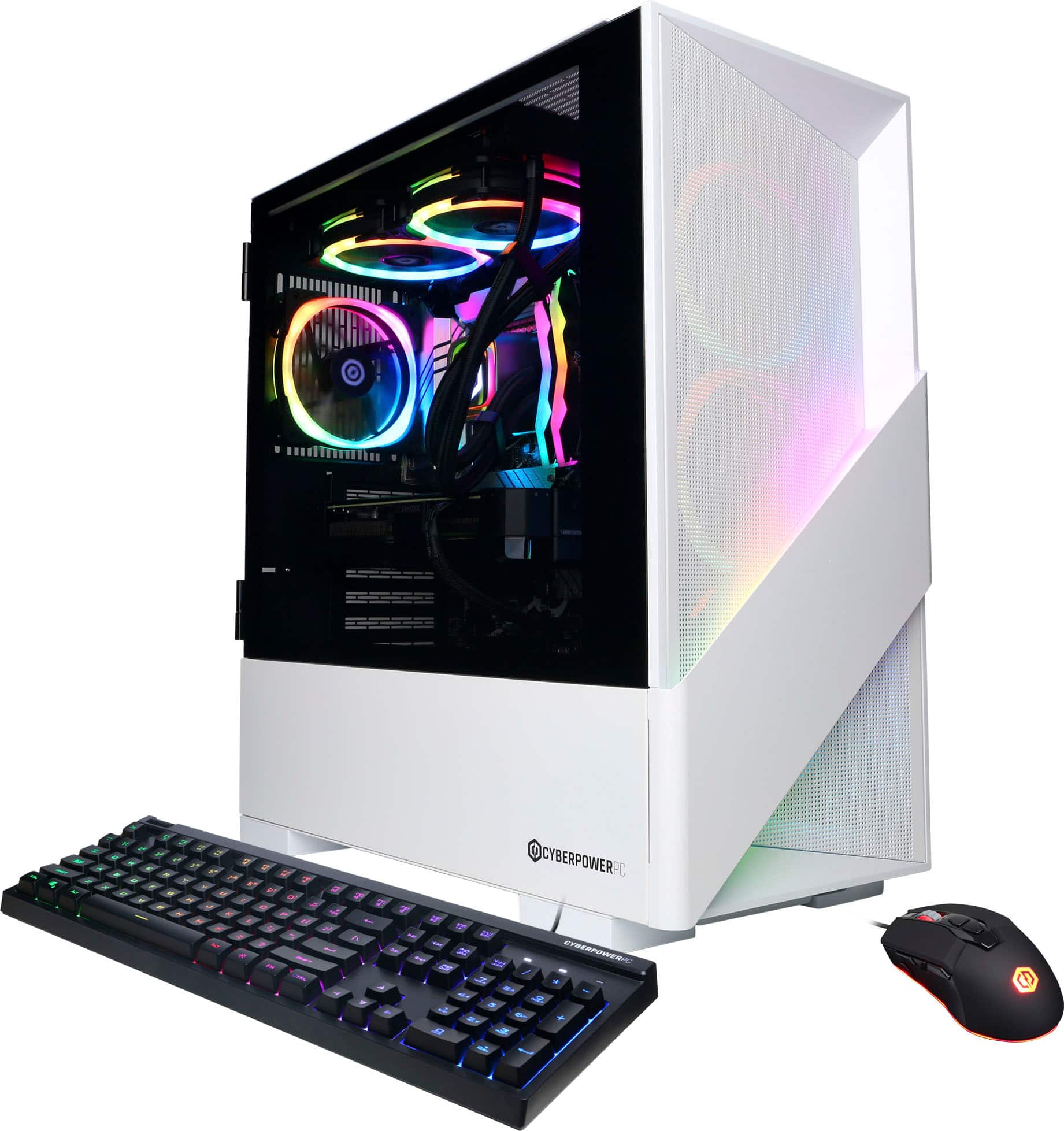
One of the few prebuilts that pack an RTX 4070 Super into the $1,400 range, giving you serious 1440p headroom. The trade-off is the case's quality—it's a budget chassis with glued-in RGB, and it's not the easiest to open.
Main limitation: CyberPowerPC has a spotty record on warranty support and sometimes installs a bloatware-laden OS.
Skip if: If you want a brand with a more reliable support track record (like Dell or Lenovo), consider another option.
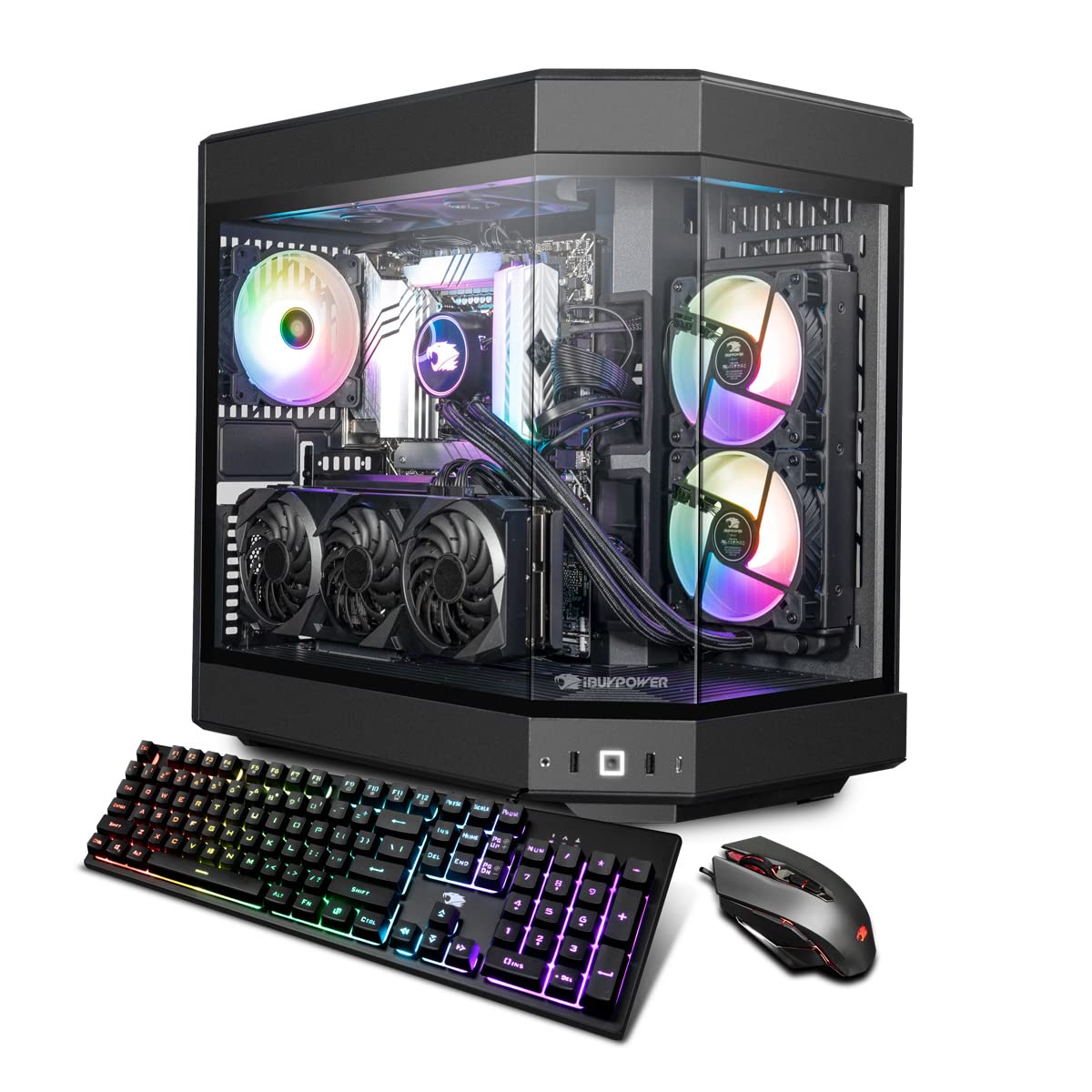
It's a head-turning PC with a vertical GPU mount and tempered-glass panels, yet it stays under budget with an RTX 4060 Ti. The catch: the unique layout can make maintenance trickier, and the fans tend to be on the noisy side.
Main limitation: The vertical GPU restricts PCIe-card expansion, and the internal routing is messy for upgrades.
Skip if: Anyone prioritizing function over form or wanting a silent system should skip this.
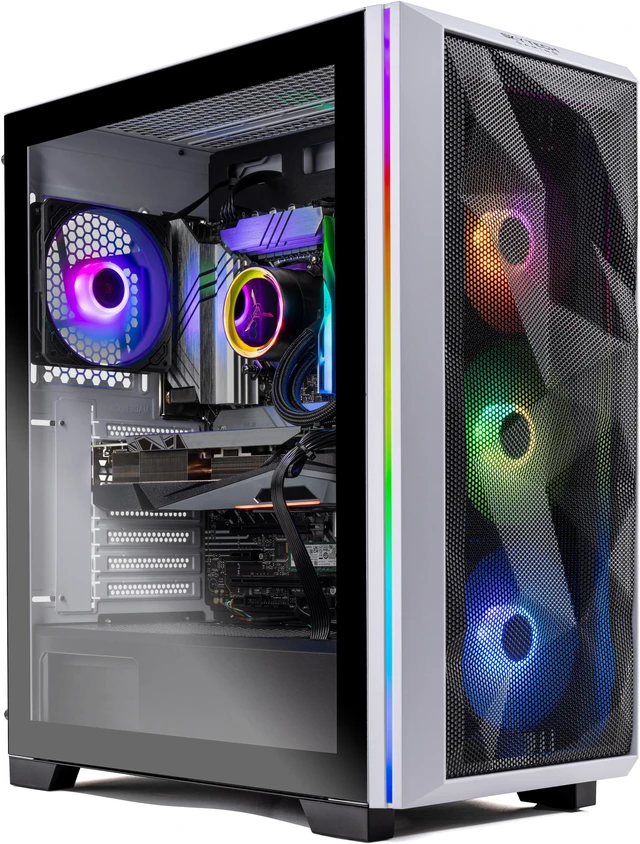
With a Ryzen 7 7700X and an RTX 4060, this is a smart pick for eSports and high-refresh 1080p gaming—the CPU is the star for Valorant, CS2, and Fortnite. The downside is that the GPU is only a 4060, so you'll need to dial settings for AAA titles at 1440p.
Main limitation: The included case fans are budget units, and the CPU is cooled by air only, which may be insufficient for heavy all-core loads.
Skip if: If you only play story-driven AAA games and want 1440p ultra, look for a GPU-heavy system.
Compare key specs and features of all our recommendations side-by-side
| Product | Recommendation | Rating | Price |
|---|---|---|---|
Lenovo Legion Tower 5i Rank #1 | 🏆 Top Pick | 9.0/10 | $1,350–$1,499 Check current price → |
ABS Master Gaming PC (Ryzen 5 7600, RTX 4060) Rank #2 | 💰 Budget Pick | 8.0/10 | $950–$1,100 Check current price → |
HP Omen 25L Gaming Desktop (RTX 4060 Ti) Rank #3 | ⭐ Editor's Choice | 8.2/10 | $1,100–$1,300 Check current price → |
CyberPowerPC Gamer Supreme (RTX 4070 Super) Rank #4 | — | 8.5/10 | $1,400–$1,499 Check current price → |
iBuyPower Y60 Gaming Desktop Rank #5 | — | 8.0/10 | $1,250–$1,400 Check current price → |
Skytech Gaming Chronos (Ryzen 7, RTX 4060) Rank #6 | — | 7.8/10 | $1,150–$1,300 Check current price → |
Common questions buyers have about this category.
Building your own PC can save you 10–20% if you score good deals on parts, but it comes with the risk of component compatibility issues and no single point of warranty support. At the $1,500 mark, the saving is often less than $100–$200 when you factor in the cost of a Windows license and the value of your time. If you want the convenience of a plug-and-play system and a single warranty, a prebuilt is a reasonable choice.
In 2026, a $1,500 prebuilt should include at least an RTX 4060 Ti or Radeon RX 7700 XT, and many deals squeeze in an RTX 4070 or even a Super variant. This tier will comfortably handle 1080p max settings and 1440p on high/medium in AAA games. Look for GPU deals that include a 4070 for around $1,400—they're the best performance-per-dollar for 1440p.
16GB is still the baseline for gaming, but if you like to stream, run Discord plus a browser with many tabs, or play modern simulators, we recommend 32GB. Many prebuilts have two open slots, so you can easily upgrade to 32GB later—just make sure the motherboard supports it and you buy identical RAM for best performance.
No, a quality air cooler is sufficient for the CPUs that typically come in this price range, such as the Ryzen 5 7600 or Core i5-14400F. Liquid cooling is usually only needed for high-end processors like the Ryzen 7 7800X3D or Core i7-14700K, which are uncommon in prebuilts under $1,500. If you do want liquid cooling, it's often an extra cost that takes away from GPU budget—spend it on a better graphics card instead.
Most prebuilts in this price range use standard ATX motherboards and power supplies, so you can upgrade the GPU, RAM, storage, and even the CPU in the future. However, some brands like HP and Lenovo use proprietary motherboards and case connections, which can limit upgrades. The best upgrade-friendly systems are from boutique builders like ABS or CyberPowerPC, which use off-the-shelf components. Always check if the power supply has enough wattage headroom for a future GPU upgrade—we recommend at least 650W for an RTX 4070-class card.
Refurbished gaming PCs can be a great value if they come from a reputable seller with a warranty, like Dell Outlet, Newegg, or Amazon Renewed. You might save 20–40% off the original price, but the risk is that the previous owner may have overclocked or modified the system. Always check the condition grade, return policy, and warranty length before buying. Avoid refurbished units with less than a 90-day warranty or from sellers with poor feedback scores.
A good gaming PC warranty should cover parts and labor for at least one year, with the option to extend to two or three years. Look for 'on-site' service if you want help without shipping your PC, but that's rare at this price. Also verify that the GPU is covered—some brands only cover the proprietary motherboard and not the graphics card. For peace of mind, consider buying with a credit card that extends the manufacturer's warranty or purchase from a retailer with a generous return policy.
Products we evaluated but did not recommend — and why.
