Get the App
Better experience on mobile
Lightweight, volume-safe, and built to survive the gaming chair — these are the headsets that fit real kids' heads and parents' wallets.
A kid’s gaming headset is not a scaled-down version of your pro headset — it’s a different animal altogether. Smaller heads, sweaty ears, and a longer recovery period from loud audio mean parents have to weigh factors that adult gamers rarely think about. The good news is that the market has started to take young players seriously, with lightweight builds, volume-limiting features, and microphones designed for trash talk that stays in the game.
The biggest mistake most parents make is choosing a headset based on the loudest bass or the flashiest RGB. For children, fit is the first priority — a heavy clamp force can cause headaches in under 30 minutes, and a headset that slides around will make them quit using it entirely. Hearing safety is a close second, as the World Health Organization notes that 1.1 billion young people are at risk of noise-induced hearing loss from recreational audio.
We focused our research on headsets that are light enough for small necks, adjustable enough to grow with your child, and honest about their limitations. We looked at everything from $20 wired options to $150 premium models, evaluated them against fit, durability, mic quality, and volume management, and zeroed in on six that cover the range of kids' gaming needs — from first-time Fortnite players to serious young streamers.
In this list, you'll find the best all-around headset for most kids, the best budget pick that doesn't feel cheap, an editor's choice for hearing safety, and specialized options for glasses wearers, rough handlers, and kids who just want something light. Every recommendation includes a clear trade-off, because no headset is perfect — but the right one can mean the difference between a child who games comfortably for an hour and one who tosses the headset aside in frustration.
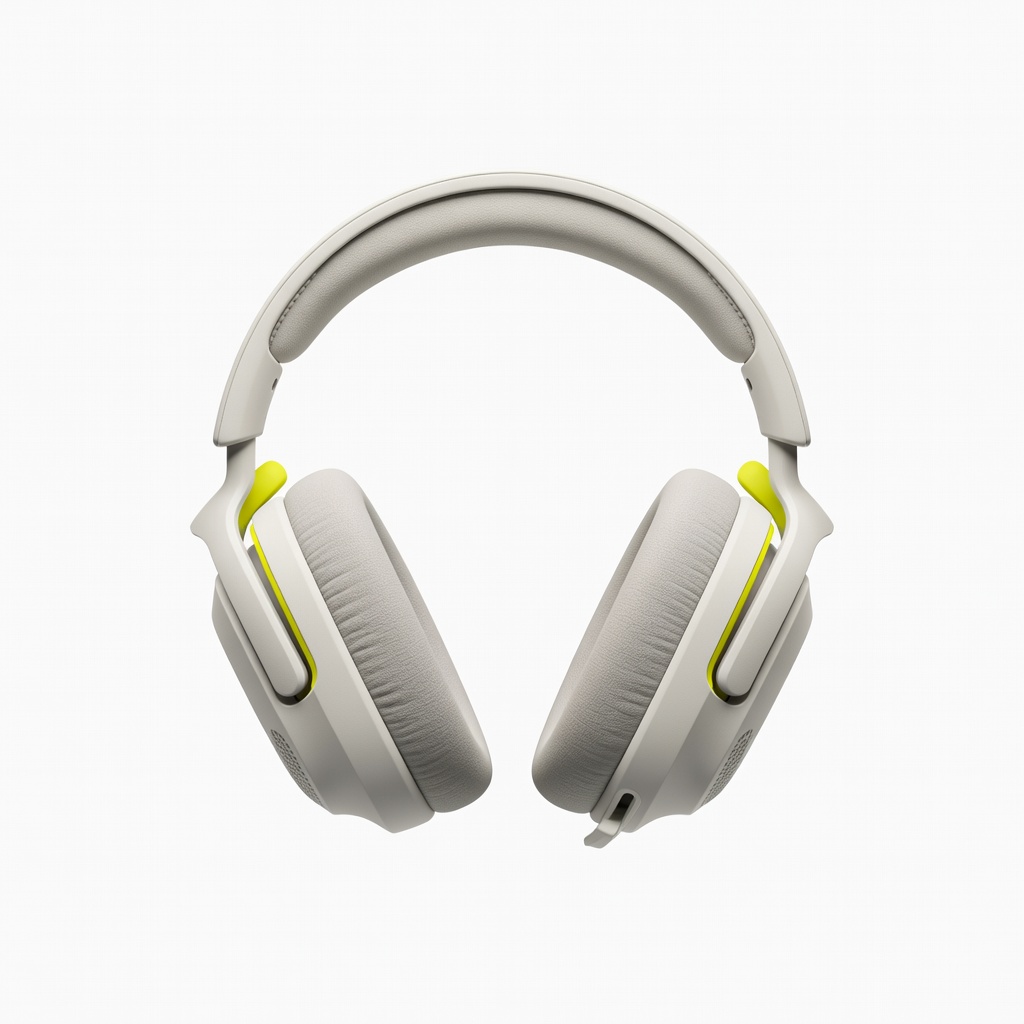
The Logitech G435 nails the balance between light weight, wireless freedom, and small-friendly sizing. At 165 grams it’s one of the lightest over-ear headsets around, and the dual-wireless design (Bluetooth plus 2.4GHz) works with everything from a Nintendo Switch to a phone. The trade-off is a slightly clunky mute control and a plastic hinge that won’t survive being thrown across the room.
Main limitation: The plastic hinge can crack if handled carelessly, and the built-in mic is less clear than a traditional boom mic for rowdy group chats.
Skip if: Kids who need a simple, dedicated mute button on the earcup will find the G435’s combo-press controls frustrating.
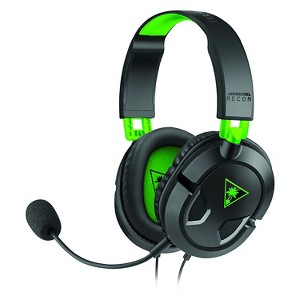
If you want a solid headset under $30, the Turtle Beach Recon 50 punches above its price with a surprisingly clear mic and a lightweight frame. It’s wired, which means no charging or pairing issues, and the open-back ear cups keep kids from feeling sealed off from the rest of the house. The trade-off is a single cable that can get knotted in backpacks, and the foam ear pads aren’t built for marathon sessions.
Main limitation: The non-detachable cable is a common failure point, and high-volume game audio can leak out due to the open-back design.
Skip if: Families with more than one kid gaming daily in the same room, because the audio bleed from the open ear cups will disturb others.
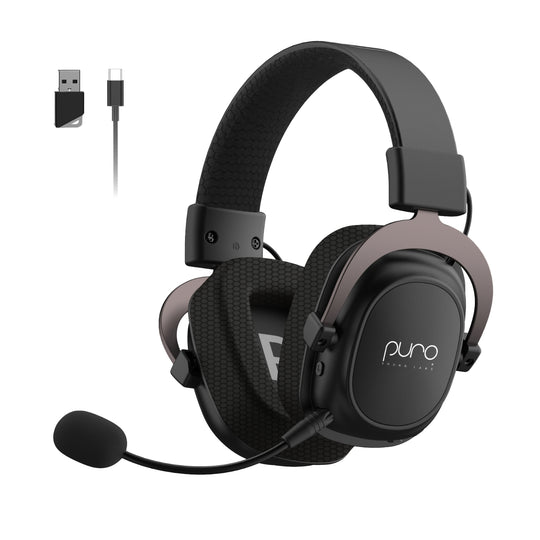
The Puro Gamer is one of the few headsets that cap volume at 85dB, a level recommended by pediatric audiologists to protect young ears. It’s deliberately engineered for kids, with a padded headband and breathable ear cups for longer comfort. The main trade-off is that the sound profile is tuned for safety over punch, so explosions and bass feel less immersive than on adult-oriented headsets.
Main limitation: The 85dB limit can feel quiet to older kids or teens used to louder audio, and the wired connection only works with devices that have a 3.5mm jack.
Skip if: Tweens and teens who expect deep, rumbling bass for immersive game sound will find the volume cap limiting.
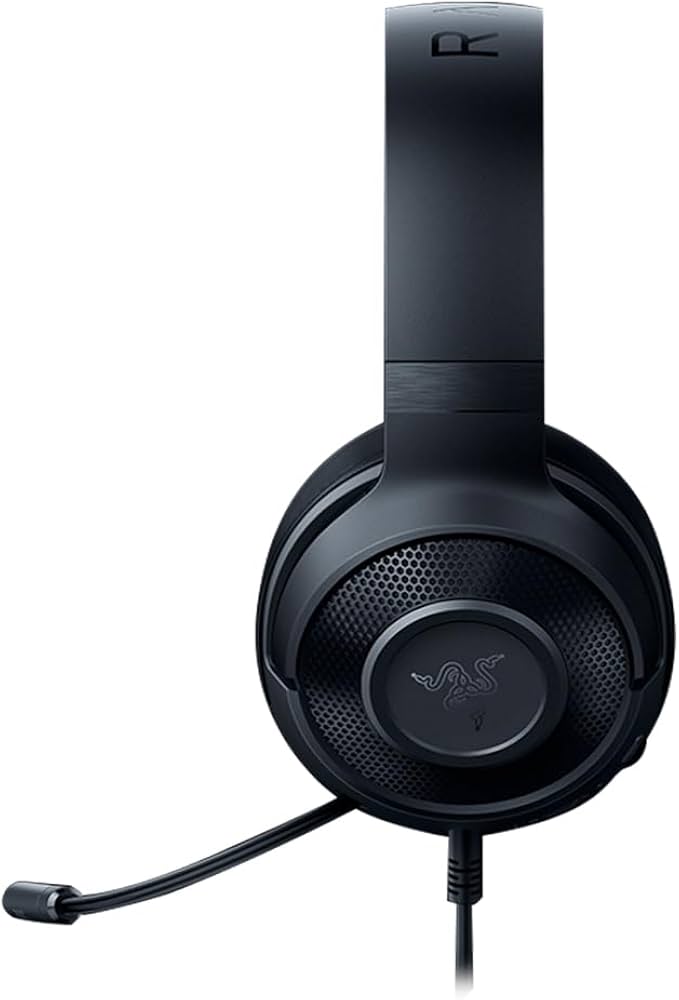
At 250 grams, the Razer Kraken X is among the lightest wired gaming headsets with a cardioid mic and 7.1 virtual surround sound on PC. It’s a solid pick for kids who want the gamer aesthetic without the bulk. The trade-off is that the surround-sound feature requires the Razer Synapse app, and the ear cups are shallow for kids with larger ears.
Main limitation: The plastic frame feels somewhat brittle if bent the wrong way, and the inline volume wheel is small for young fingers.
Skip if: Kids who sit at a PC that isn't allowed to install extra drivers will miss out on the 7.1 virtual surround sound.
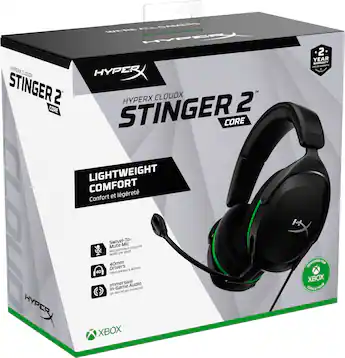
The HyperX CloudX Stinger 2 inherits HyperX’s reputation for durability, with a sturdy aluminum frame and a design that has survived a fair amount of abuse in school backpacks. It’s wired for Xbox and PC, has a rotating ear cup to rest the headset around the neck, and the mic automatically mutes when swiveled up. The trade-off is a narrower spatial stage compared to more expensive models, and the on-ear cup controls can be hard for small hands to adjust.
Main limitation: The ear cups are not removable for cleaning, which can be a hygiene issue after sticky-finger gaming sessions.
Skip if: Kids who play in mixed-device households (PC and PlayStation) will need an adapter, because the Stinger 2 is tuned for Xbox/PC only.
The Arctis Nova 1’s suspended ski-band headband is a rare headphone that genuinely accommodates eyeglass frames without pinching. It also has a retractable mic and is compatible with every major platform, making it a flexible family hand-me-down. The trade-off is a fabric strap that can stretch after a year of daily use, and the on-ear control wheel is easy for kids to knock accidentally.
Main limitation: The elastic band gradually loses tension, and the earcup foam can become compressed if left on a desk corner regularly.
Skip if: Kids who prefer a traditional padded headband and don't mind an occasional pinch will not need the extra adjustability.
Compare key specs and features of all our recommendations side-by-side
| Product | Recommendation | Rating | Price |
|---|---|---|---|
Logitech G435 LIGHTSPEED Wireless Gaming Headset Rank #1 | 🏆 Top Pick | 8.7/10 | $45–$70 Check current price → |
Turtle Beach Recon 50 Rank #2 | 💰 Budget Pick | 8.0/10 | $20–$30 Check current price → |
Puro Gamer (Puro Sound Labs) Rank #3 | ⭐ Editor's Choice | 8.5/10 | $50–$70 Check current price → |
Razer Kraken X Rank #4 | — | 7.8/10 | $30–$40 Check current price → |
HyperX CloudX Stinger 2 Rank #5 | — | 7.5/10 | $40–$50 Check current price → |
SteelSeries Arctis Nova 1 Rank #6 | — | 7.6/10 | $45–$60 Check current price → |
Common questions buyers have about this category.
Pediatric audiologists recommend keeping children's audio at or below 85 decibels. Many gaming headsets can exceed this, so look for models with built-in volume limiters (like the Puro Gamer) or use the volume limit settings on the device. A good rule of thumb: if you can hear the game clearly when standing a foot away from your child, it's too loud.
Wired headsets are simpler, more reliable, and cheaper — no charging, no pairing, and lower latency. Wireless offers more freedom of movement and less cable clutter, but adds battery management and a higher price. For younger kids, wired is usually the smarter choice; for tweens and teens who game on PCs, wireless like the Logitech G435 can be worth it.
Look for headsets with adjustable headbands or suspended ski bands, and check the weight — anything under 300 grams is a good starting point. Pay attention to clamp force scores from reviews; if a headset feels tight on adult reviewers, it's likely too tight for a child. Also, look for earcups that are small or medium sized, not oversized over-ear cups that can slide off.
Yes, if the headset has a clear microphone and works with the child's school device (often a Chromebook or iPad). Look for headsets with a 3.5mm jack or Bluetooth compatibility. The Logitech G435 is a good dual-use option because it pairs with both Bluetooth and a USB dongle, and the mic is acceptable for video calls.
Xbox and PlayStation consoles use different wireless and mic protocols, so multi-platform headsets are tricky. The SteelSeries Arctis Nova 1 works with both when plugged into the controller via a 3.5mm cable, and it doesn't need any adapters. Alternatively, choose a headset designed for your primary console and buy a cheap second one for the other, or rely on the console's controller chat audio with a standard wired headset.
For most kids, $20–$60 is the sweet spot. Budget headsets like the Turtle Beach Recon 50 cover the basics fine, while $50–$70 options like the Logitech G435 offer better wireless and comfort. Spending more than $80 on a kid's headset is rarely necessary — they'll likely outgrow it or misuse it before the premium features pay off.
Products we evaluated but did not recommend — and why.
