Get the App
Better experience on mobile
Get the best products related to our top picks
Choosing the right digital keyboard is crucial for musicians of all levels, whether you're a beginner dipping your toes into piano playing or an intermediate player seeking a reliable home instrument. Unlike traditional acoustic pianos, digital keyboards offer portability, affordability, and versatile features like built-in sounds, MIDI connectivity, and headphone jacks, making them ideal for practice without disturbing others. However, the market is flooded with options varying in key count, action type, build quality, and extras, which can lead to buyer's remorse if you pick the wrong one. A mismatched keyboard might feel unresponsive, lack durability, or fail to grow with your skills, hindering progress.
This guide compares budget-friendly models under $200, mid-range options around $300, and premium picks up to $400, highlighting trade-offs in realism, features, and longevity. Budget keyboards often prioritize portability and basic functionality but may skimp on weighted keys or sound quality. Premium ones deliver hammer-action realism and professional connectivity, justifying the higher cost for serious users. You'll learn key features to evaluate, budget breakdowns, performance-to-price ratios, pitfalls to dodge, and detailed reviews of five standout models: the WENCAI 88 Key Electric Piano Velocity-Sensitive Keyboard ($338.88), Garvee Digital Piano with 88 Key ($309.99), WENCAI 88 Key Fully Weighted Digital Piano Keyboard ($403.88), 88 Key Piano Keyboard Semi Weighted ($189.99), and Professional 61-Key Digital Piano Keyboard (price varies).
By the end, you'll have the tools to select a keyboard that matches your needs—be it home practice, travel, or stage use—ensuring an enjoyable and productive musical journey without wasting money on subpar gear. (Word count: 278)
Selecting a digital keyboard involves balancing your skill level, intended use (home, travel, or performance), and budget against core specs. Focus on realism in feel and sound, expandability via connectivity, and durability for long-term value.
Number of Keys and Action Type: Standard full-size pianos have 88 keys; opt for this if you want authentic range. 61-key models suit beginners or portability but limit repertoire. Action matters most—fully weighted or hammer-action keys mimic acoustic piano resistance for better technique development. Velocity-sensitive keys detect touch strength for expressive dynamics, while semi-weighted offers a middle ground but feels lighter.
Sound Quality and Voices: Look for at least 128-note polyphony to handle complex pieces without note dropout. Built-in speakers (ideally 20W+ stereo) should deliver clear, sampled grand piano tones. Multiple voices (piano, organ, strings) add versatility; premium models like the WENCAI Fully Weighted include layered sounds for richer play.
Pedals and Accessories: Triple pedals (sustain, soft, sostenuto) are essential for classical training, emulating acoustic control. Included stands, music rests, and power supplies save hassle; Bluetooth or USB-MIDI connectivity enables app integration, recording, or computer use as a controller.
Build and Portability: Wooden cabinets provide stability and aesthetics for home uprights, while lightweight synthetics (under 25 lbs) suit travel. Check key cover and adjustable stands for protection and ergonomics.
Battery Life and Power Options: For travel, prioritize models with 6-8 hour battery support. Most run on AC adapters, but versatile power ensures reliability.
Additional Functions: Metronome, recording modes, and lesson modes aid practice. Bluetooth for wireless headphones or speakers enhances quiet sessions.
Connectivity and Compatibility: USB-MIDI for DAWs, AUX outputs for amps, and headphone jacks are must-haves. Wireless options like in the WENCAI Velocity-Sensitive model allow seamless device pairing.
Digital keyboards span $0-$403.88, divided into tiers reflecting value.
Entry-Level ($0-$200): Basic models like the 88 Key Piano Keyboard Semi Weighted ($189.99) offer 88 semi-weighted keys, Bluetooth, and a stand for beginners. You get essential sounds (100+ voices) and MIDI, but expect plastic builds, lower polyphony (64 notes), and tinny speakers. Ideal for casual learners testing the waters without commitment.
Mid-Range ($200-$350): Sweet spot for most, including the Garvee Digital Piano ($309.99) and WENCAI Velocity-Sensitive ($338.88). These provide fully weighted actions, 128-note polyphony, triple pedals, and wooden frames for realistic feel. Speakers are balanced (15-25W), with MIDI/USB for expansion. Drawback: Fewer premium voices or app ecosystems.
Premium ($350-$403.88): Top-tier like the WENCAI Fully Weighted ($403.88) adds pro-grade hammer action, superior sampling (e.g., concert grand tones), and robust connectivity. Expect durable wood construction and advanced features like split/layer modes. The 61-Key model fits here if portability trumps keys, but it sacrifices range. Higher cost buys longevity and stage-readiness.
At lower prices, prioritize key action over bells and whistles; upscale for authenticity.
The sweet spot lies in mid-range models ($300-$350), where performance rivals acoustics without premium markups. The Garvee ($309.99, 5 stars) exemplifies this: full 88 weighted keys, heavy hammer action, and travel-friendly design deliver pro-level response at budget cost—better than the cheaper semi-weighted $189.99 option, which feels mushy for advancing players. The WENCAI Velocity-Sensitive ($338.88, 4.5 stars) edges out with wireless MIDI, justifying a slight premium over Garvee for tech-savvy users.
Budget picks like the $189.99 keyboard perform adequately for basics (decent Bluetooth, sustain pedal) but falter in touch sensitivity, leading to poor habit formation. Premium WENCAI ($403.88) offers the best realism—fully weighted keys with graded hammer feel—but its $100+ jump suits pros needing triple pedals and wooden stability, not novices. Overall, mid-range yields 80-90% of premium performance for 75% of the cost, making it ideal unless you demand concert-level fidelity.
Overlooking Key Action: Beginners often grab lightweight, non-weighted keys for affordability, but this builds bad technique—switch to weighted later and relearn. Always test or research hammer action.
Ignoring Polyphony: Low polyphony (under 128 notes) causes sustained chords to cut out in pieces like Bach inventions. Check specs to avoid frustration.
Skipping Connectivity Checks: Buying without USB-MIDI or Bluetooth limits future use with software like GarageBand. Ensure compatibility with your devices.
Neglecting Build Quality: Cheap plastic models warp or key-bed fail after months; wood-framed like WENCAI last years. Read reviews for durability.
Forgetting Accessories: Models without included pedals or stands add $50-100 extra. Verify bundles to stay within budget.
Garvee Digital Piano ($309.99): Best for beginners to intermediates seeking balanced value. Its full weighted keys and portability outperform budget rivals, ideal for home practice without excess features.
WENCAI 88 Key Electric Piano Velocity-Sensitive ($338.88): Top for tech-integrated users. Wireless connectivity and velocity sensitivity make it great for app-based learning, edging budget options in expressiveness.
WENCAI 88 Key Fully Weighted ($403.88): Premium choice for serious adults/professionals. Hammer action and triple pedals provide acoustic-like control, best for those prioritizing realism over cost. (Word count: 742)
Weighted keys, especially fully weighted or hammer-action like in the Garvee or WENCAI Fully Weighted models, replicate the resistance of acoustic piano hammers, helping develop proper finger strength and technique—crucial for intermediates. They vary in feel across octaves (graded) for realism. Semi-weighted keys, as in the $189.99 88 Key Piano Keyboard, provide some resistance but lighter overall, suiting beginners who find full weighting intimidating. Non-weighted (like the 61-Key) feel synth-like and are easiest for kids or casual play but can foster sloppy habits. For serious practice, prioritize weighted; test in-store if possible to match your comfort.
It depends on your goals. 88 keys cover the full piano range (A0 to C8), essential for classical, jazz, or any standard repertoire—models like the WENCAI Velocity-Sensitive ensure no limitations. A 61-key (C2 to C7), like the Professional model, spans most pop/rock songs and beginner exercises but cuts bass/treble notes, frustrating as you advance. If portability or budget is key (under $200), start with 61; otherwise, invest in 88 for longevity. Most adults benefit from full size to avoid relearning later.
Polyphony—the number of simultaneous notes—prevents dropout in chords or arpeggios. Budget models (64 notes, e.g., $189.99 keyboard) handle simple pieces but falter on sustains in Bach or modern tracks. Mid/premium like Garvee (128 notes) or WENCAI Fully Weighted (256) manage complex layers, ideal for pros. Aim for 128+ unless you're a total novice; check specs, as higher equals smoother performance without artificial cutoffs.
Pedals enhance expression: sustain (damper) prolongs notes, soft reduces volume, sostenuto holds specific sustains—triple sets like in WENCAIs mimic acoustics for classical training. Beginners can start with single sustain (included in most here), but omit it and you'll miss dynamic control in ballads. The Garvee has one, sufficient for practice; pros need three. Bundled pedals save $20-50; ensure compatibility, as some keyboards require specific plugs.
Yes, via USB-MIDI (standard in all reviewed) for use as controllers in software like Flowkey or DAWs (Ableton). Bluetooth models (WENCAI Velocity-Sensitive, $189.99 keyboard) add wireless headphone/app pairing for silent, guided lessons. The 61-Key and Garvee use wired MIDI, still effective but less convenient. Verify OS compatibility (Windows/Mac/iOS); this expands your keyboard into a full studio tool, justifying mid-range picks over basics.
For under $200, the 88 Key Piano Keyboard Semi Weighted ($189.99) is ideal: full keys, Bluetooth for apps, and included stand/pedal ease entry without overwhelming features. It outperforms bare-bones 61-Key options in range. If stretching to $300, upgrade to Garvee for weighted action to build skills right. Avoid ultra-cheap non-weighted; focus on velocity sensitivity and lesson modes.
Portability varies: the Garvee (25 lbs, foldable stand) and 61-Key (under 15 lbs) excel for travel, with AC/battery options on some. Upright WENCAIs (26-30 lbs, wooden)
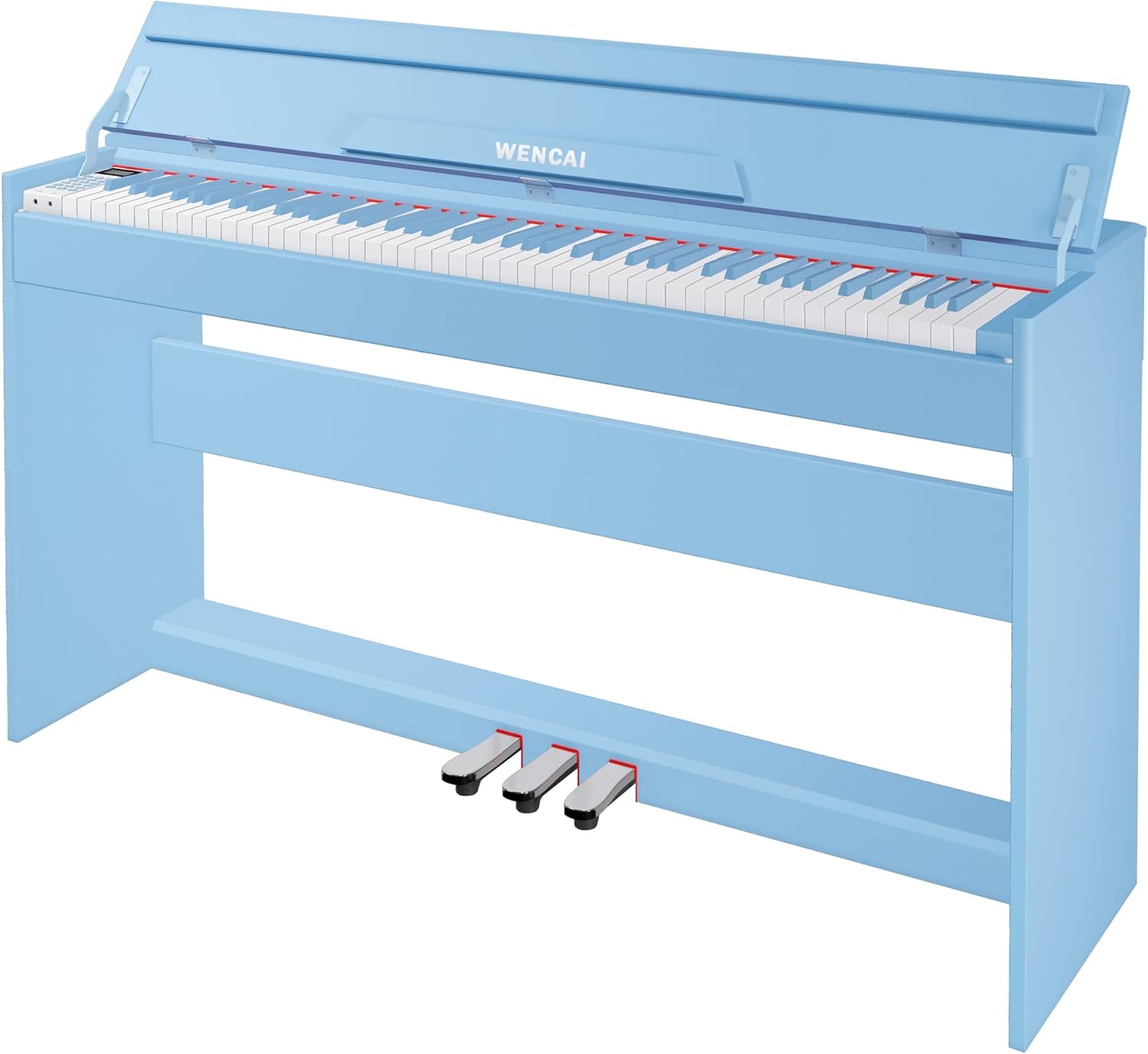


Compare key specs and features of all our recommendations side-by-side
| Product | Recommendation | Rating | Price |
|---|---|---|---|
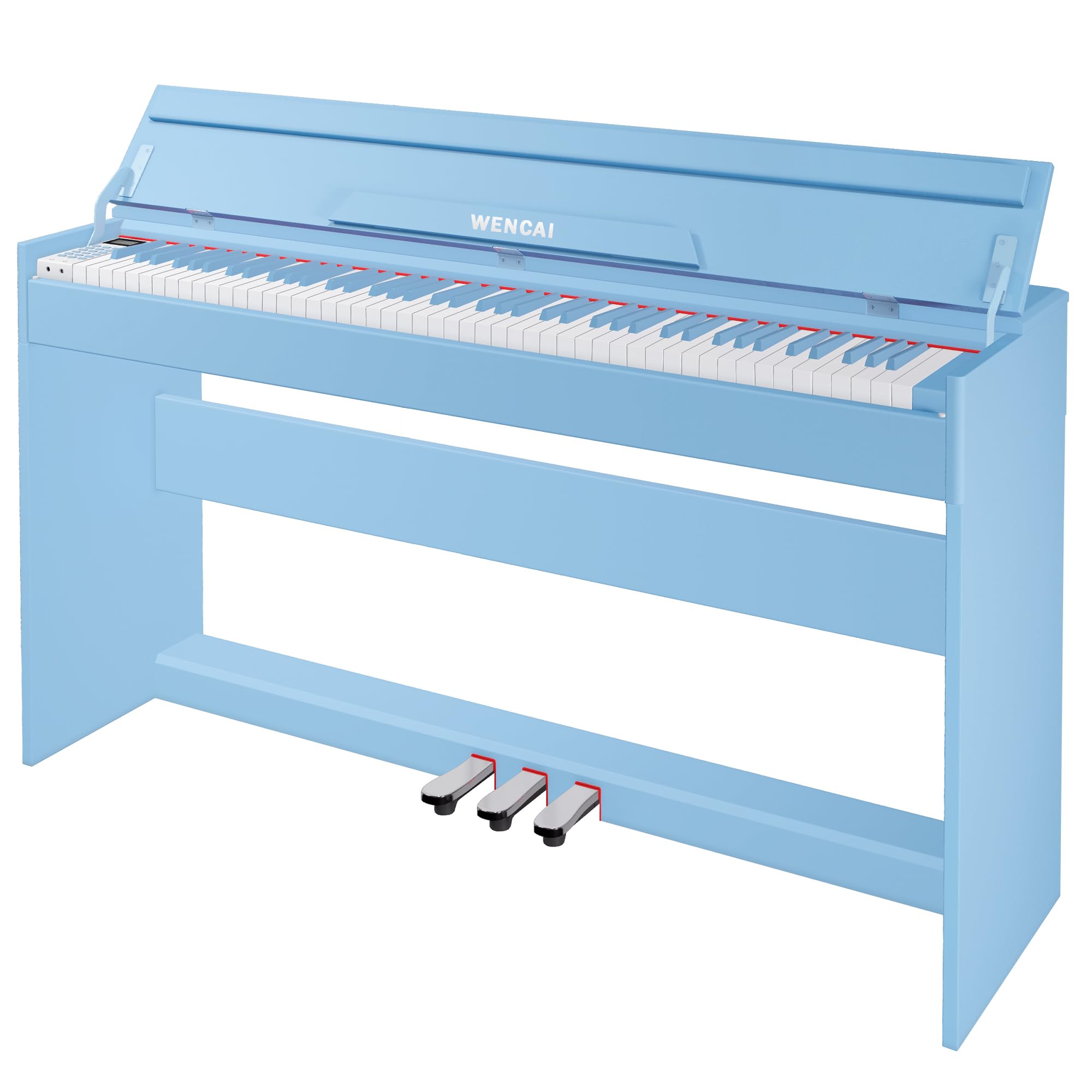 WENCAI 88 Key Electric Piano Velocity-Sensitive Keyboard, 88 Keys Home Upright Digital Pianos, Wooden Electronic Piano for Beginner Adult with 3 Pedals, Supports USB-MIDI/Wireless Connect, Blue Rank #1 | 🏆 Top Pick | 4.5 4.5 | |
 Garvee Digital Piano with 88 Key, Full Size Heavy Hammer Keyboard, Electric Piano for Home Practice or Travel 88 Keys Digital Piano Rank #2 | 5.0 5.0 | ||
 WENCAI 88 Key Fully Weighted Digital Piano Keyboard, 88 Keys Hammer Action Electric Pianos, Wooden Classic Upright Electronic Piano for Beginner, Professional, Triple Pedal (Blue) Rank #3 | — | — | |
 88 Key Piano Keyboard, Semi Weighted Electronic Digital Piano with Music Stand, Power Supply, Sustain Pedal, Bluetooth, Stand, MIDI, for Beginner Professional at Home, Stage Rank #4 | — | — | |
 Professional 61-Key Digital Piano Keyboard with Built-in Dual Stereo Speakers, Electronic Musical Instrument for Beginners, Adults Rank #5 | 💰 Budget Pick | — | Check price → |


