Get the App
Better experience on mobile
Get the best products related to our top picks
In today's digital age, capturing life's moments doesn't have to break the bank, but selecting the right digital camera under $100 is crucial for avoiding disappointment and getting real value. Budget cameras in this price range offer accessible entry points for beginners, kids, travelers, or casual photographers who want portability without the complexity or cost of premium models like DSLRs or mirrorless systems from Canon or Sony, which start at $500 and deliver superior image quality, advanced autofocus, and weather-sealing. Under $100, you're trading some performance for affordability—expect basic point-and-shoot functionality, limited megapixels, and simpler video capabilities rather than pro-level features like 4K video at 60fps or RAW file support. However, these cameras excel in scenarios like quick snapshots, vlogging on a budget, or teaching kids photography basics, often including extras like memory cards and batteries that add immediate utility.
The key is understanding trade-offs: a $20 camera might suffice for fun, low-stakes use but could frustrate with poor low-light performance, while an $80-90 option might include optical zoom or flip screens for better versatility. Premium cameras justify their price with sharper lenses and faster processing, but for most non-professionals, the under-$100 segment provides 80% of the utility at 20% of the cost—ideal if you're not printing large photos or shooting in demanding conditions.
This guide will equip you with the knowledge to make an informed choice by breaking down essential features, budget tiers, performance realities, and pitfalls to avoid. We'll review five standout options: the ultra-compact Mini Keychain Camera ($29.99) for on-the-go portability; the kid-friendly SOOMFON Digital Camera ($19.99) with zoom and included accessories; the renewed OM SYSTEM OLYMPUS Camedia D-520 ($89.99) for reliable optics; the feature-packed Digital Camera 8K 88MP ($89.99) with flip screen and WiFi; and the versatile Digital Camera 4K 64MP ($49.99) for vlogging beginners. By the end, you'll know which camera aligns with your needs, whether it's for travel, family events, or introductory photography, helping you capture memories without overspending. (Word count: 278)
Selecting a digital camera under $100 requires focusing on practical needs like portability, ease of use, and basic image quality, as these devices prioritize affordability over high-end specs. Unlike pricier models, budget cameras often use fixed lenses and CMOS sensors with 2-20 effective megapixels (MP), sufficient for social media sharing or small prints but not for professional editing. Start by assessing your primary use: casual snapshots, video recording, or teaching kids? This guides feature prioritization.
Resolution and Megapixels: Look for at least 8-12MP for clear photos; higher claims like 88MP are often interpolated (software-upscaled) and don't reflect true sensor quality. Compare effective vs. interpolated MP—real sensors in this range top out around 20MP. For video, check for 1080p (Full HD) minimum; 4K or 8K claims are rare and usually downscaled from lower sources, leading to choppy footage.
Zoom Capabilities: Digital zoom (up to 18x in budget models) crops the image, reducing quality, while optical zoom (3x-16x) maintains sharpness. Prioritize optical if versatility matters; most under $100 rely on digital, which is fine for distant subjects like family events but blurs at max extension.
Screen and Controls: A 2-3 inch LCD screen is standard; flip or rotatable screens (180°) aid selfies and vlogging. Touchscreens are uncommon—expect buttons instead. Autofocus is basic face-detection; manual modes are absent, so compare battery life (200-500 shots per charge) and included extras like SD cards.
Build and Portability: Compact size (pocket-friendly under 6oz) suits travel, but cheap plastics feel flimsy. Waterproofing or anti-shake is rare—seek stabilized models for handheld video. Check for LED lights for low-light fill.
Connectivity and Storage: WiFi for wireless transfer is a bonus in higher-end budgets; most use microSD (up to 32GB included). Compare battery types—rechargeable lithium-ion lasts longer than AA.
Video and Audio Features: 1080p at 30fps is typical; higher framerates (60fps) are uncommon. Built-in mics are basic—external options aren't supported. Anti-shake reduces blur in motion.
Warranty and Renewed Status: New vs. renewed (refurbished) affects reliability; check seller ratings on platforms like Amazon for return policies.
Under $100, prices cluster into tiers reflecting capability:
$20-40 Tier: Basic entry-level like the SOOMFON ($19.99) or Mini Keychain ($29.99). You get 8-16MP stills, 1080p video, and 8-16x digital zoom, plus often a 16-32GB card and batteries. Ideal for kids or absolute beginners—simple interfaces, but expect noisy images in low light and no advanced modes. Value lies in low risk; they're disposable if lost.
$40-60 Tier: Mid-range like the Digital Camera 4K 64MP ($49.99). Steps up with 16x zoom, flip screens, and 4K video (often interpolated). Includes cases or readers; better for students or casual vloggers. You gain anti-shake and autofocus, but build quality varies—avoid no-name brands with fake specs.
$60-90 Tier: Near-premium like the OM SYSTEM OLYMPUS ($89.99 renewed) or Digital Camera 8K ($89.99). Offers 3x optical zoom, WiFi, or higher-res screens. Renewed models provide tested reliability; new ones add LED lights. Best for travel or semi-serious use—more durable, with 1080p-4K video, but still limited by small sensors.
At each level, factor in extras: lower tiers bundle more accessories, offsetting costs, while higher ones focus on core performance.
The sweet spot is $40-60, where you balance features without inflated claims. For instance, a $50 camera like the Digital Camera 4K delivers usable 1080p video and 16MP photos for social media, outperforming $20 toys in sharpness and stability. Under $30, performance dips—colors wash out, and zoom artifacts appear early. At $80+, like the Olympus renewed, you get optical zoom for crisper telephoto shots, justifying the price for users needing reliability over gimmicks. Overall, diminishing returns kick in above $60; test via user photos on retail sites to verify real-world output, as lab specs often exaggerate.
Falling for Inflated Specs: Claims of 8K or 88MP sound impressive but are usually software tricks—real resolution is closer to 1080p/12MP. Verify with independent reviews, not seller descriptions.
Ignoring Sensor Size: Budget cameras use tiny 1/2.3-inch sensors, leading to poor low-light performance. Avoid if you shoot indoors without flash.
Overlooking Battery Life: Many last only 100-200 shots; skip models without rechargeables or spares, especially for travel.
Neglecting Compatibility: Ensure microSD support matches your cards; some cap at 32GB, filling quickly with 4K video.
Buying Without Renewed Certification: For older models like the Olympus, confirm "renewed" status from reputable sellers to avoid defects.
Our top three picks cater to specific users:
Digital Camera 4K 64MP ($49.99): Best for beginner vloggers and students. It offers a flip screen, 16x zoom, and anti-shake for stable videos, outpacing cheaper toys in usability while including a 64GB card—ideal for teens learning content creation.
OM SYSTEM OLYMPUS Camedia D-520 ($89.99 renewed): Best for casual travelers seeking reliability. With 3x optical zoom and a proven 2MP sensor, it provides sharper, more consistent shots than digital-only rivals, perfect for adults wanting a no-frills, durable option.
SOOMFON Digital Camera ($19.99): Best for kids and absolute beginners. Its 72MP (interpolated) mode, 16x zoom, and bundled 32GB card make it a fun, low-cost intro to photography, though limited by basic build—great for young users experimenting without high expectations. (Word count: 742)
Yes, but with realistic expectations—they're excellent for learning basics like composition and exposure without a steep investment. Models like the SOOMFON ($19.99) or Digital Camera 4K ($49.99) provide point-and-shoot simplicity, 1080p video, and zoom, helping novices build skills for family photos or YouTube starters. Unlike smartphones, they encourage dedicated photography habits. However, image quality won't match a $300 Canon; sensors are small (1/3-inch typical), leading to softer details and noise above ISO 400. Start here if you're testing interest—many include cards and batteries, reducing setup costs. For progression, upgrade to $200+ for better lenses. User reviews often praise their fun factor for kids, with 4-5 star averages on affordability.
Optical zoom physically adjusts the lens for magnification without quality loss, like the 3x in the Olympus D-520 ($89.99), preserving sharpness for subjects 10-20 feet away. Digital zoom crops and enlarges pixels, common in 16x options like the SOOMFON, causing pixelation beyond 4x—think blurry wildlife shots. Under $100, optical is rare (only in renewed models), so prioritize it if zoom matters; otherwise, get close physically. This distinction explains why $20 cameras feel limiting for events, while $50+ ones with hybrid zoom (e.g., Digital Camera 4K) balance usability.
Generally, no—budget sensors struggle without ample light, producing grainy, underexposed results. Features like the LED fill light in the Digital Camera 8K ($89.99) or 4K model help for close-ups, adding brightness for indoor vlogs, but they're no match for dedicated flashes. Expect usable shots at ISO 100-200 in daylight; night modes are basic noise reduction. Compared to phones with night modes, these lag, so avoid for concerts or dusk—opt for the Olympus for better natural exposure. Tips: Use tripods and edit in free apps like Lightroom Mobile to salvage footage.
Claims like 4K in the Digital Camera 4K ($49.99) or 8K in the $89.99 model are often interpolated—recorded


Compare key specs and features of all our recommendations side-by-side
| Product | Recommendation | Rating | Price |
|---|---|---|---|
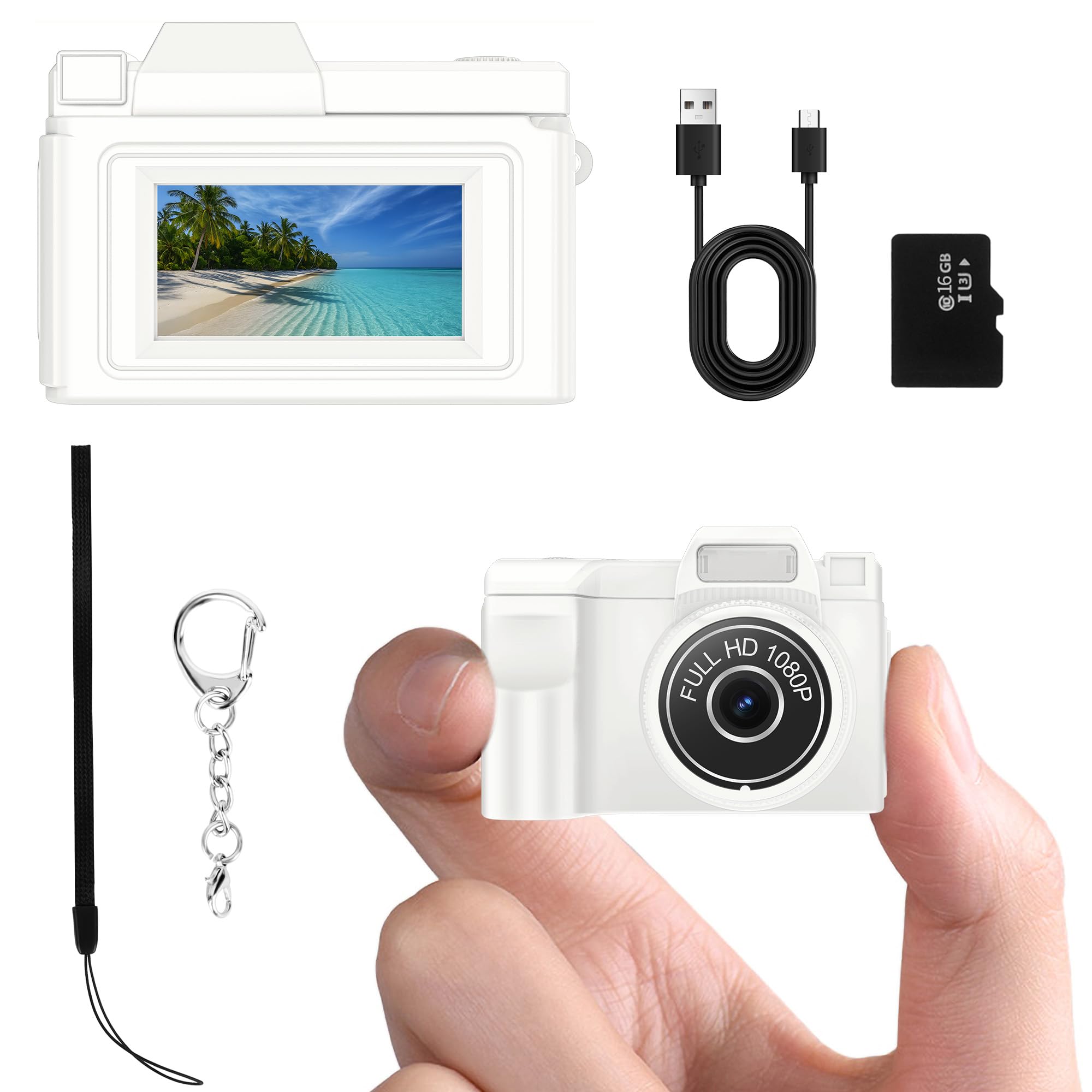 Mini Keychain Camera Mini Retro Digital Camera FHD 1080P Tiny Pocket Size Photo Video Cameras with 16GB Card Small Compact Micro Camara Portable Video Recorder for Travel Study Recording Rank #1 | 🏆 Top Pick | — | |
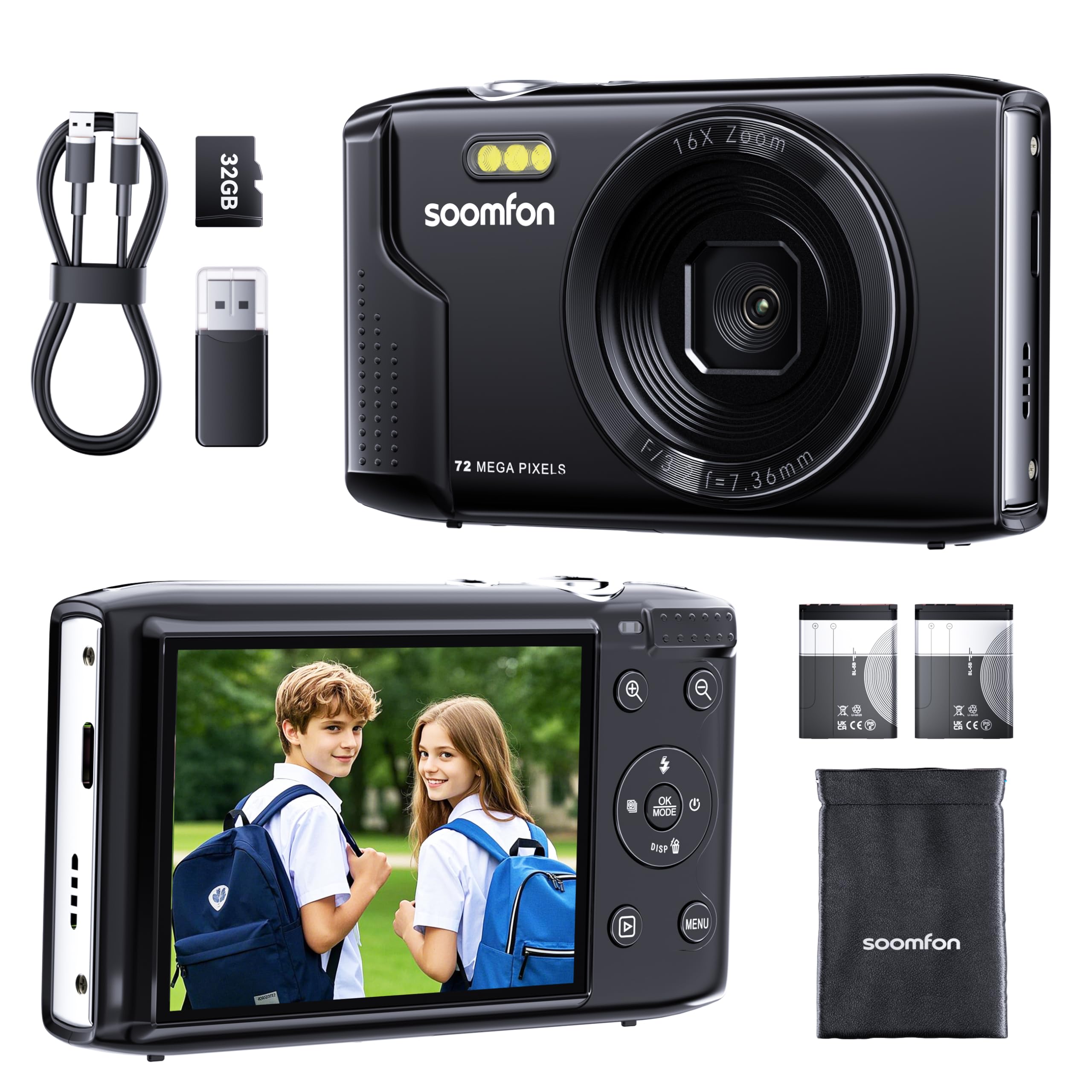 SOOMFON Digital Camera - Max 72MP Point and Shoot Kids Cameras with 16X Zoom, 32G TF Card, 2 Batteries and Card Reader, Compact Digital Camera for Kids Teens Beginners (Black) Rank #2 | — | ||
 OM SYSTEM OLYMPUS Camedia D-520 2MP Digital Camera w/ 3x Optical Zoom (Renewed) Rank #3 | — | — | |
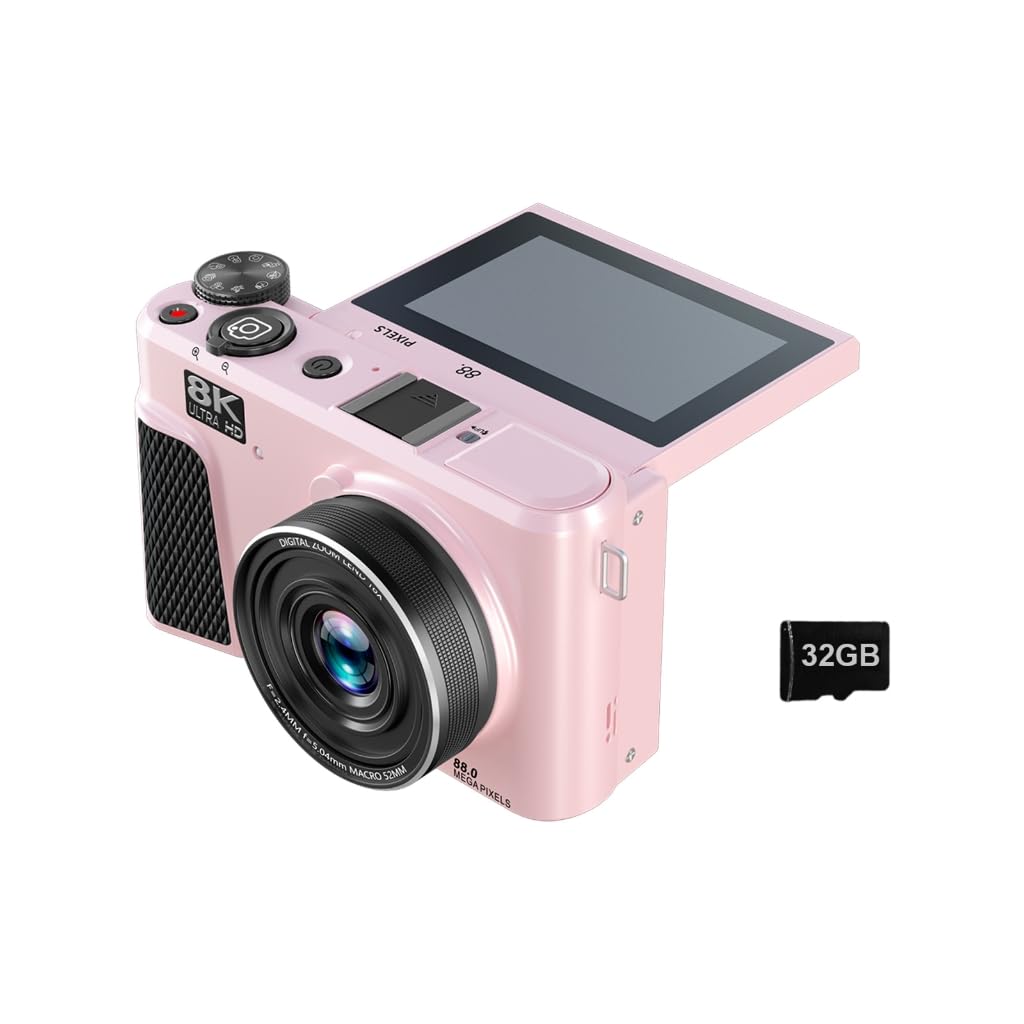 Digital Camera, 8K 88MP Autofocus Video Camera with 3in 180° Flip Screen, LED Fill Light, Support 18X Digital Zoom, WiFi Wireless Control, for Travel Photography (Pink) Rank #4 | — | — | |
 Digital Camera 4K with Case, 64MP Compact Vlogging Point&Shoot Video Camera 2.4" Flip Screen 16X Zoom Autofocus Antishake with 64GB Card Gift for Children Teen Boy Girl Student Beginner (Dark Brown) Rank #5 | 💰 Budget Pick | — |
