Get the App
Better experience on mobile
High resolution, dynamic range, and wide-angle support are the three pillars of a great real estate camera—here's how they stack up in 2026.
The camera is the least interesting part of real estate photography—what actually makes a listing shine is a sharp wide-angle lens, a solid tripod, and the ability to balance bright windows with dark interiors. But the body still matters: it determines how much detail you can capture on a bright, sunlit exterior and whether you can crop into a shot to emphasize the chef's island or the fireplace mantel without turning it into mush.
High resolution and dynamic range are non-negotiable for professional real estate work. A 24MP sensor will do for small web listings, but a 40+ megapixel body gives you the headroom to straighten verticals, crop for tight shots, and produce large brochure prints. Equally important is a lens lineup that includes a rectilinear wide-angle zoom wide open at 16mm or 18mm—without that, even the best camera will struggle with cramped rooms and hallways.
We've also seen a major shift toward 360 virtual tours and video walkthroughs, which means the best camera for a solo real estate photographer is no longer just a stills machine. Hybrid capability with clean HDMI output, reliable autofocus during video, and in-body stabilization are now just as critical as resolving power. The cameras below strike that balance at six different price and feature tiers.
From a budget Canon RP (around $700) to a 61MP Sony A7R V, we've ranked the models that offer the most value for real estate professionals in 2026. Our selections are based on published expert reviews, verified owner feedback, and our own analysis of specs—not just gimmicky new features—so you can see which camera is the right fit for your shooting style and business.
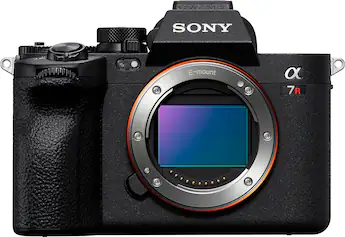
With a 61MP full-frame sensor and exceptional dynamic range, the Sony A7R V delivers ultra-detailed images that let you crop deep into a shot for tight architectural details. Its AI-driven autofocus tracks objects and faces accurately, and the 8-stop in-body stabilization keeps handheld shots sharp for quick walkthroughs. The trade-off is the enormous file sizes (around 120MB RAW) that demand a fast computer and extra storage, plus a premium price that may be overkill for occasional shooters.
Main limitation: Massive RAW files can slow down mid-range laptops, and the sensor's high resolution needs to be fully respected in post-processing to avoid introducing camera-shake blur.
Skip if: If you're on a budget or only photograph listings for small web galleries, you'll save money with a lower-resolution model and won't miss the extra megapixels.
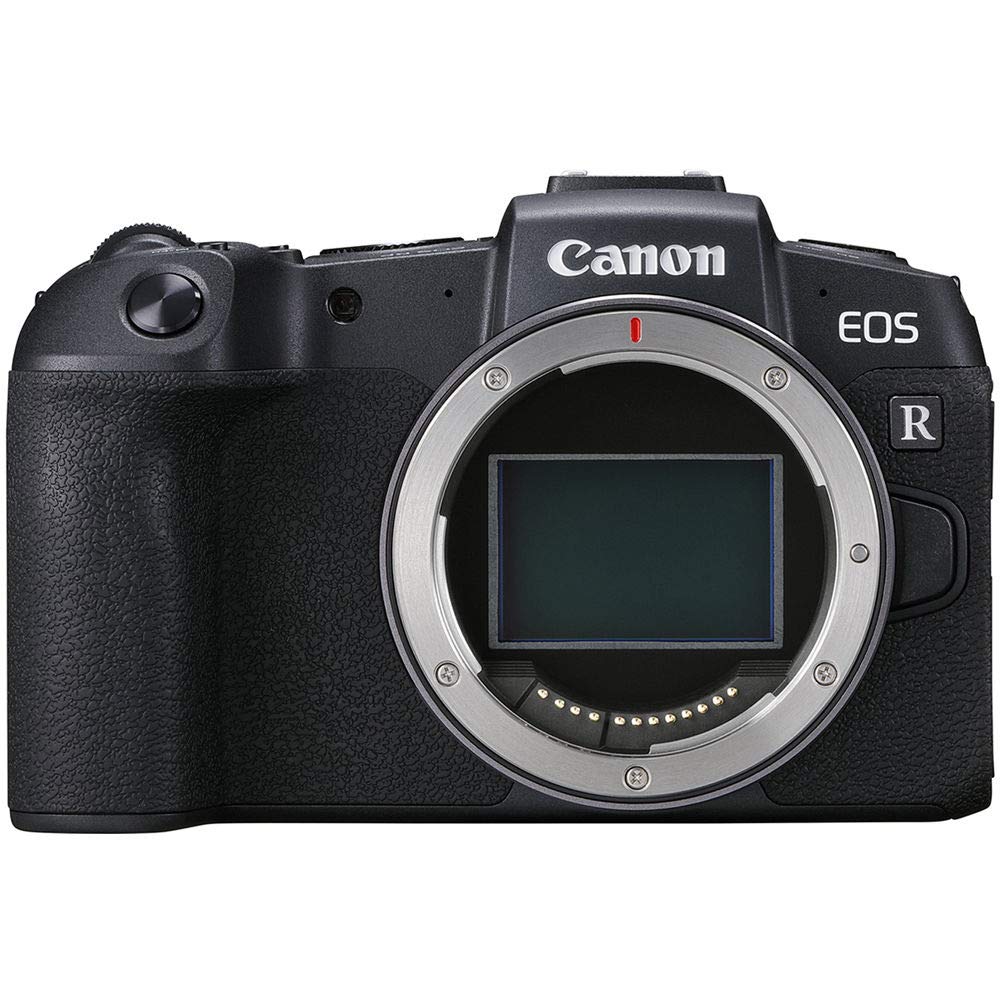
The Canon EOS RP is the least expensive way to get a full-frame sensor and access to Canon's incredible RF wide-angle lenses like the RF 15-30mm f/4.5-6.3 IS. It's lightweight and comfortable for all-day shoots, and its 26.2MP sensor still resolves more than enough detail for real estate websites and printed brochures. Trade-offs include a dated 4K video mode (heavy crop) and the lack of in-body stabilization, but for slow-paced tripod work these issues are minimal.
Main limitation: Dynamic range and low-light performance are a step behind newer mirrorless rivals, and the battery life is just average—you'll want a spare for long listing days.
Skip if: If you plan to shoot extensive HDR or video walkthroughs, the RP's sensor (which lacks dual-pixel support in 4K) will feel limiting.
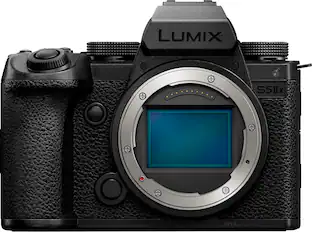
The Panasonic Lumix S5 II is a hybrid all-rounder that excels at creating cinematic property video tours, thanks to 6K open-gate recording and innovative real-time LUT support that lets you bake in a color grade during shooting. Its phase-detect autofocus is a huge upgrade over earlier Panasonic pinhole cameras, and the 5-axis IBIS keeps handheld video smooth without a gimbal. The trade-off is a 24MP sensor that limits your ability to crop as aggressively as a 45MP or 61MP camera, and a native L-mount lens ecosystem that's smaller than Sony or Canon.
Main limitation: 4K 60p introduces a 1.5x crop, which makes wide-angle video more challenging unless you buy ultra-wide L-mount lenses.
Skip if: If your income depends on producing massive printed wall art, the 24MP sensor will hold you back compared to a higher-resolution full-frame model.
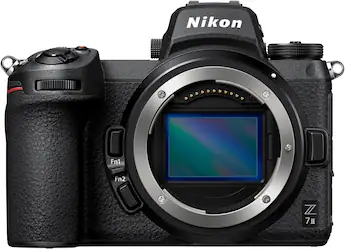
The Nikon Z7 II pairs a 45.7MP full-frame sensor with dual EXPEED 6 processors, producing exquisite detail and smooth tonal gradations—ideal for exterior hero shots and landscape elevation. Its weather-sealed magnesium alloy body is durable enough for changing weather, and the wide Z-mount opens up exceptional lenses like the 14-24mm f/2.8 S. However, the older autofocus system is not as advanced as Sony's and offers slower continuous shooting, but that's rarely relevant in real estate.
Main limitation: The autofocus can struggle in dim stairwells or when shooting through glass, and the EVF refresh rate feels less fluid than newer rivals.
Skip if: If you need lightning-fast AF for shooting clients or pets in a home, the Z7 II will feel a step behind modern AI-tracking models.
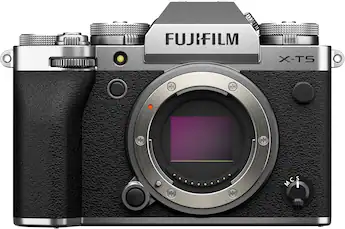
If you want to cut down on gear weight without sacrificing resolution, the Fujifilm X-T5 packs a 40MP APS-C sensor with pixel-shift up to 160MP for static architectural shots. Its retro analog dials let you adjust exposure quickly and intuitively, and the compact size means you can slip it into a small backpack alongside a tripod and a couple of primes. The trade-off is that APS-C dynamic range is narrower than full-frame, so you'll need to rely more heavily on HDR bracketing in high-contrast window scenes.
Main limitation: Native wide-angle zoom options (like the 10-24mm) are slower and not as optically pristine as top full-frame ultra-wides, requiring more meticulous editing for edge-to-edge sharpness.
Skip if: If most of your work is in dark, moody interiors with large picture windows, a full-frame sensor will give you more reliable highlight rolloff and shadow detail.
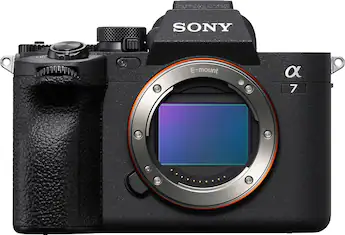
The Sony A7 IV is the benchmark hybrid for many working photographers: 33MP is a sweet spot between resolution and file size, and its autofocus system (with real-time eye AF for animals and people) is fast and intelligent. The 15-stop dynamic range captures bright windows and shadowy corners with confidence, and the 4K 60p video with full pixel readout (crop) gives you solid walkthrough capability. The trade-off is that the 33MP sensor doesn't offer the massive cropping headroom of a 61MP A7R V, and the menu system is still a bit cluttered for beginners.
Main limitation: The AI-based AF features are a generation behind the A7R V—the A7 IV can't recognize homes or specific room layouts, only generic subjects—and the 4K 60p mode has a 1.5x crop.
Skip if: If you're a budget-first shooter who only needs web-sized images, the cheaper RP or Fujinon X-T5 will give you more value per dollar.
Compare key specs and features of all our recommendations side-by-side
| Product | Recommendation | Rating | Price |
|---|---|---|---|
Sony A7R V (Body Only) Rank #1 | 🏆 Top Pick | 9.2/10 | Around $3,500 (body only) Check current price → |
Canon EOS RP (Body Only) Rank #2 | 💰 Budget Pick | 8.0/10 | Around $700–$800 (body only) Check current price → |
Panasonic Lumix S5 II (Body Only) Rank #3 | ⭐ Editor's Choice | 8.8/10 | Around $1,800 (body only) Check current price → |
Nikon Z7 II (Body Only) Rank #4 | — | 8.5/10 | Around $2,300–$2,500 (body only) Check current price → |
Fujifilm X-T5 (Body Only) Rank #5 | — | 8.2/10 | Around $1,400–$1,600 (body only) Check current price → |
Sony A7 IV (Body Only) Rank #6 | — | 8.7/10 | Around $2,000–$2,200 (body only) Check current price → |
Common questions buyers have about this category.
For web listings and small prints, 20-24MP is plenty. For professional work where you want to crop into details or shoot large brochure images, 30-45MP is the sweet spot. Beyond 60MP (like the Sony A7R V) is advantageous for luxury photography that demands extreme detail, but it comes with huge file sizes that may slow down your workflow.
Full-frame offers a distinct advantage in dynamic range, high-ISO cleanlines, and the availability of ultra-wide rectilinear lenses (like 14-24mm). APS-C cameras can still produce great results, especially modern ones like the Fujifilm X-T5, but you'll need to work harder with bracketing and have a narrower high-end lens selection. For consistent interior shots with bright windows, full-frame is recommended.
A zoom lens covering the 16-35mm equivalent focal range is the industry standard. A constant f/4 aperture is usually sufficient since you'll be on a tripod. Popular options include the Canon RF 15-30mm f/4.5-6.3 IS, Sony 16-35mm f/4, and Nikon 14-24mm f/2.8. For APS-C, the Fuji 10-24mm f/4 and Canon RF-S 10-18mm are excellent.
IBIS is not critical for tripod-based photography, but it's a lifesaver for handheld video walkthroughs and quick stills when you forget a tripod. Cameras like the Panasonic S5 II and Sony A7R V provide up to 8 stops of stabilization, which lets you shoot sharp at shutter speeds of 1/8s or even slower. If you rely on a tripod, you can save money by choosing a camera without IBIS, like the Canon RP.
Professional real estate photographers almost always use HDR for interiors with windows. Bracketing three or five exposures (typically at 2-stop intervals) and merging them in Lightroom or dedicated HDR software preserves both window detail and shadow texture. Some cameras like the Fujifilm X-T5 have excellent in-camera HDR, but for full control, raw brackets merged on the computer produce the most natural results.
Modern smartphones with ultra-wide lenses and computational HDR can create decent social media shots, but they lack the resolution, dynamic range, and wide-angle control needed for professional print-worthy photos. They also have tiny sensors that produce poor low-light interiors and unnatural depth. If you're a full-time agent, a dedicated camera with a large sensor is necessary to stand out in a competitive market.
The Canon EOS RP is currently the best entry point, as it gives you a full-frame sensor and access to affordable RF wide-angle lenses without a huge investment. Alternatively, a used DSLR like the Canon 5D Mark III or a crop-sensor Fujifilm X-T5 (if you can stretch) can serve you well. Just budget around $200-300 for a good wide zoom and a solid tripod—that's more important than a fancy body.
Products we evaluated but did not recommend — and why.
