Get the App
Better experience on mobile
Seven beginner-friendly cameras that balance ease of use, image quality, and value—rated for 2026.
The hardest part of buying a first camera isn't choosing the body—it's committing to a lens ecosystem. Most beginners chase sensor size and price, but the real question is whether the camera's lens lineup will grow with you over the next five years. In 2026, that means weighing Canon's RF-S mount, Sony's deep E-mount library, and Fujifilm's appealing X-mount against your actual shooting style.
We evaluated seven of the most recommended beginner cameras based on published expert reviews, manufacturer specs, and aggregated buyer feedback. We prioritized autofocus reliability, ease of use, video capability, lens selection, and the staying power of each mount system—because a swapable lens camera is only as good as the lenses you can add later.
Our picks range from sub-$500 entry points to premium APS-C models that can carry you through years of paid work. You'll find options for vloggers, travel photographers, parents, and anyone who just wants a better camera than their phone. We've also flagged where each camera stumbles, so you can avoid surprises.
If you're uncertain where to start, skip to the Canon EOS R50—our top overall—or read the buying considerations at the end. No single camera is perfect for everyone, but every model below earns its place with genuine strengths.
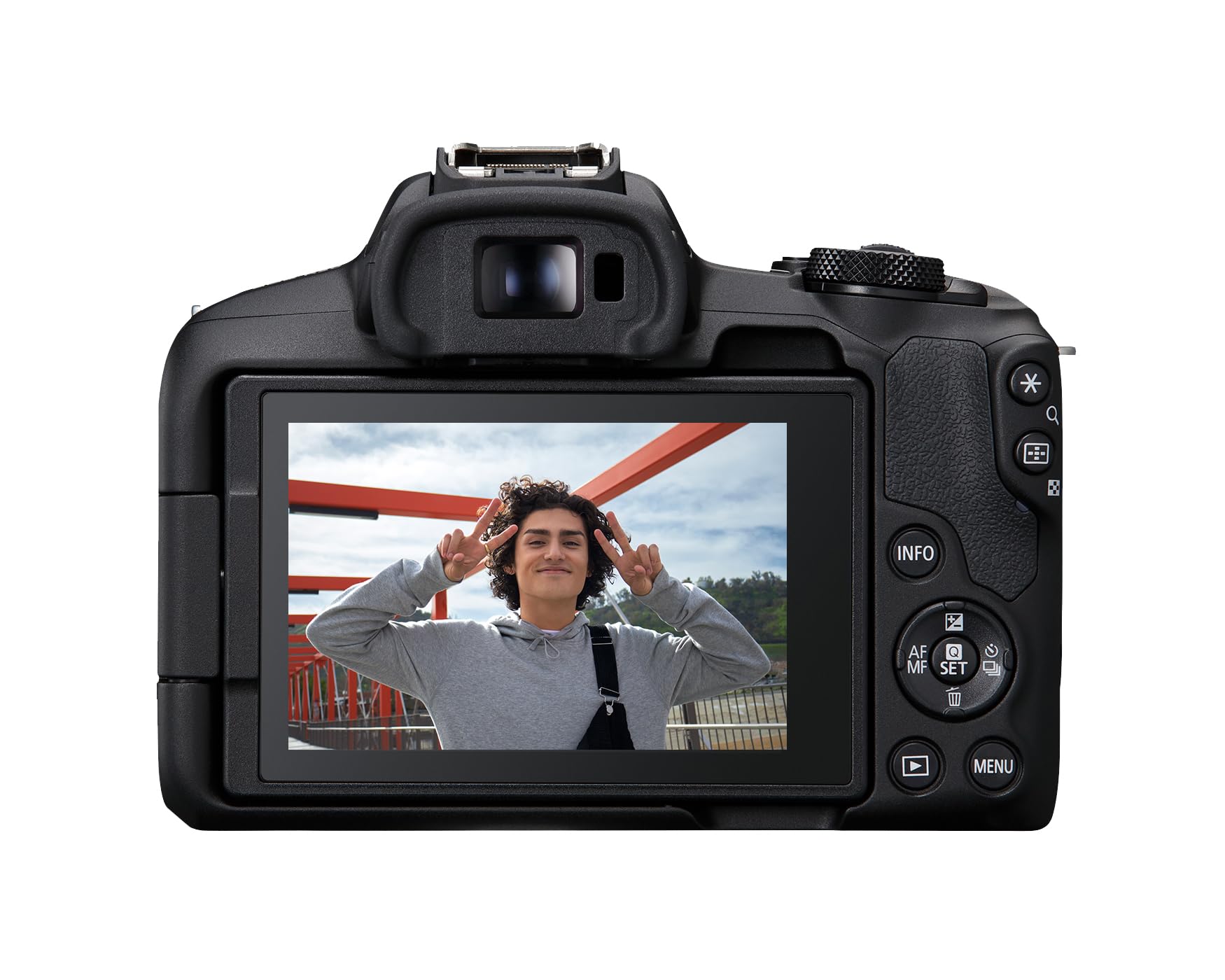
The Canon EOS R50 is the easiest to recommend for most beginners because it nails the fundamentals: fast Dual Pixel AF, clean menus, and a sharp 24.2MP image sensor in a body that won't overwhelm. Add the compact RF-S 18-45mm zoom, and you have a capable stills camera that also shoots 4K video. The main trade-off is that the RF-S lens lineup is still young, so you'll be waiting for more affordable prime lenses.
Main limitation: The RF-S mount has limited lens choices, and there's no in-body image stabilization.
Skip if: If you plan to shoot mainly action or sports, consider a camera with faster burst rates and deeper buffer.
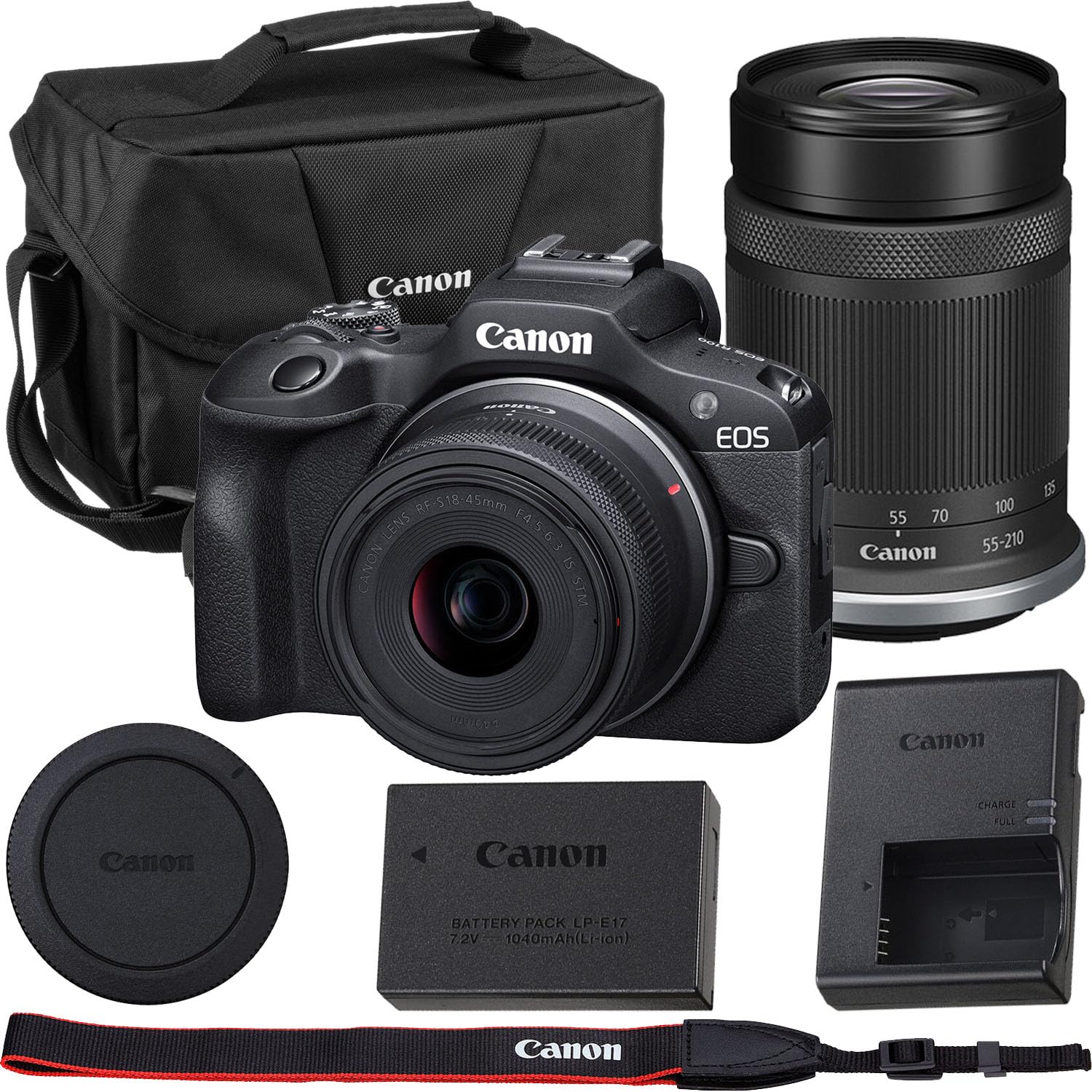
The R100 is the most affordable way into a current mirrorless system, offering the same sensor as the R50 but with simpler controls and no touchscreen. It's fine for basic stills and 4K video, and the price makes it a low-stakes first camera. The trade-off: autofocus is less sophisticated, and you'll outgrow it quickly if you're ambitious.
Main limitation: No touchscreen, fewer AF points, and a more limited JPEG color engine compared with the R50.
Skip if: If you want a camera that will grow with your skills for more than a year, save up for the R50.
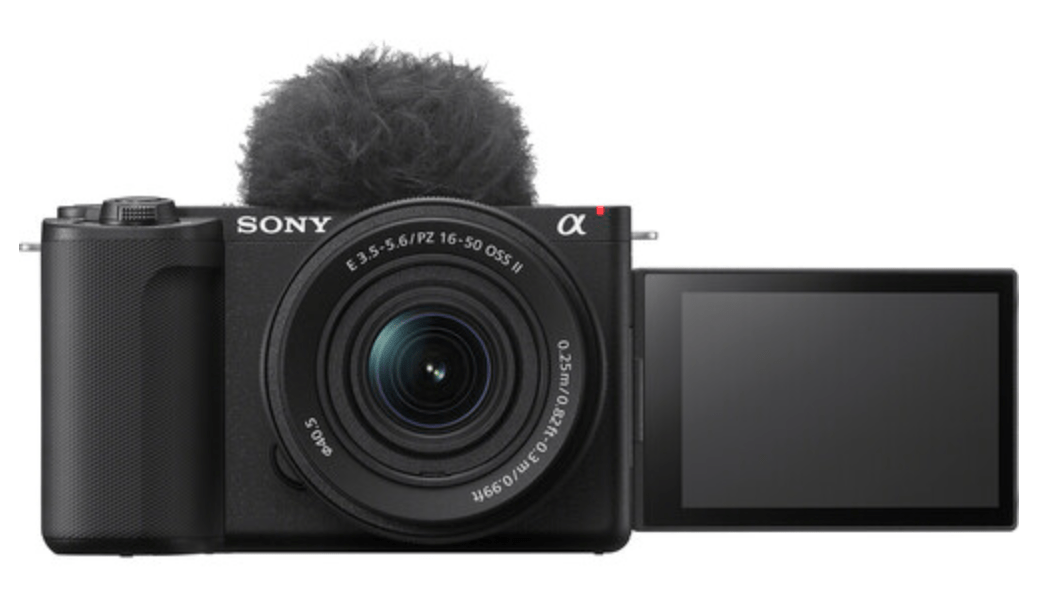
Sony's second-generation ZV-E10 is the vlogger's Swiss Army Knife: it packs a 26MP sensor, 4K 60p video, a flip-out touchscreen, and a built-in three-capsule microphone that actually sounds decent. The AI-driven autofocus keeps faces and eyes locked on even while you wave the camera around. It lacks a viewfinder, which is a real hassle for stills shooters in bright light.
Main limitation: No viewfinder and less ergonomic for photographing with a big lens attached.
Skip if: If you do more stills photography than video, the R50 is a better all-rounder.
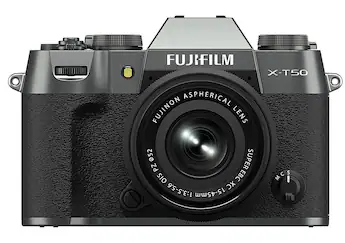
Fujifilm's X-T50 is a bit of a divisive choice for beginners: it has a full set of classic dials, but the real magic is the menu of film simulations that give your JPEGs that sought-after Kodachrome look without editing. The 40MP sensor outresolves rivals, and the body is delightfully small. The trade-off is that its autofocus still trails Sony and Canon, and the kit lens is flimsy.
Main limitation: Autofocus is not as reliable as Sony's or Canon's, and the 15-45mm lens is plasticky.
Skip if: If you want point-and-shoot reliability and fast tracking, stick with Canon or Sony.
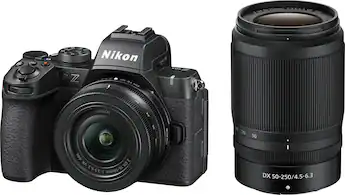
Nikon's Z50 II takes the APS-C mirrorless formula and adds Nikon's class-leading 3D tracking AF, making it a genuine budget button for shooting kids' soccer or pets at full speed. It shoots 11 fps with continuous autofocus and has a deeper buffer than rivals in this class. The trade-off is a larger, heavier body and a viewfinder that's noticeably dimmer than the competition.
Main limitation: EVF is small and low-res, and the kit lens is slow indoors.
Skip if: If you're primarily shooting portraits or low-light scenes, the Fujifilm or Sony will treat you better.
The OM-5 is a weather-sealed Micro Four Thirds camera that's small enough to slip into a jacket pocket, yet rugged enough to survive a downpour. In-body 5-axis stabilization gives you handheld video that rivals heavier gimbals. The trade-off is a smaller sensor that shows more noise in low light, and the menu system requires patience.
Main limitation: Micro Four Thirds sensor is less capable in low light than APS-C alternatives.
Skip if: If you shoot a lot in dim concert halls or blue-hour landscapes, you'll want a larger sensor.
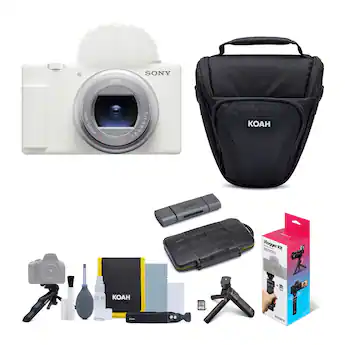
If you're coming from a smartphone and aren't sure you want to deal with interchangeable lenses, the ZV-1 II gives you a 1-inch sensor, fast autofocus, and a bright 18-50mm zoom in a true point-and-shoot body. It's the easiest camera on this list to just pick up and use, and the built-in ND filter lets you shoot wide-aperture video in daylight. The trade-off is a fixed zoom range and smaller sensor, so you can't upgrade lenses later.
Main limitation: No viewfinder, no hot shoe, and the zoom is limited compared with a kit-lens mirrorless.
Skip if: If you see yourself wanting a longer zoom or interchangeable lenses, skip this and start with an R50.
Compare key specs and features of all our recommendations side-by-side
| Product | Recommendation | Rating | Price |
|---|---|---|---|
Canon EOS R50 with RF-S 18-45mm F4.5-6.3 IS STM Lens Rank #1 | 🏆 Top Pick | 9.0/10 | $699–$799 (with 18-45mm kit lens) Check current price → |
Canon EOS R100 (with RF-S 18-45mm F4.5-6.3 IS STM lens) Rank #2 | 💰 Budget Pick | 7.6/10 | $479–$599 (with 18-45mm kit lens) Check current price → |
Sony ZV-E10 II (Body with 16-50mm power zoom lens) Rank #3 | ⭐ Editor's Choice | 8.7/10 | $999–$1,099 (with 16-50mm kit lens) Check current price → |
Fujifilm X-T50 (with XC 15-45mm F3.5-5.6 OIS PZ lens) Rank #4 | — | 8.5/10 | $1,399–$1,499 (with 15-45mm kit lens) Check current price → |
Nikon Z50 II (with NIKKOR Z DX 16-50mm f/3.5-6.3 VR lens) Rank #5 | — | 8.4/10 | $999–$1,099 (with 16-50mm kit lens) Check current price → |
OM System OM-5 (Body with 12-40mm f/2.8 PRO lens optional) Rank #6 | — | 8.2/10 | $999–$1,199 (body only) Check current price → |
Sony ZV-1 II (compact vlogging camera with 18-50mm equivalent lens) Rank #7 | — | 7.8/10 | $799–$899 Check current price → |
Common questions buyers have about this category.
The Canon EOS R50 is the best all-around beginner camera in 2026 because it combines reliable autofocus, easy menus, and a compact size with the ability to grow into Canon's RF system. It works well for both stills and casual 4K video without being intimidating. For a tighter budget, the Canon R100 offers excellent value, though you'll give up a touchscreen and advanced AF.
Mirrorless is the clear choice for beginners in 2026. DSLRs are heavier, have limited live-view autofocus, and the industry is steadily shifting to mirrorless, so lens development has slowed. Mirrorless cameras offer instant feedback through the electronic viewfinder, better video, and smaller bodies, making them easier to learn on.
For most beginners, the kit lens (usually a 18-45mm zoom) is a great starting point because it offers flexibility across focal lengths and helps you figure out your preferred shooting style. However, a fast prime like a 35mm f/1.8 or 50mm f/1.8 is better for low light and portrait backgrounds. If you can afford only one, start with the kit and add a prime later—it's a bigger teacher than a second zoom.
Yes, the Sony ZV-1 II's 1-inch sensor is physically larger than most phone camera sensors, delivering better low-light performance, natural background blur, and more detailed zoom. It also offers dedicated controls and a flip-out screen for vlogging. That said, your phone is often more convenient to carry, so the ZV-1 II is only worth buying if you want a separate camera with real zoom and video controls.
For a beginner in 2026, budget between $500 and $1,000 for a camera with a kit lens. This range includes capable entry models like the Canon R50 and Sony ZV-E10 II, which will keep you satisfied for years. Spending more than $1,500 is usually overkill unless you're certain you'll pursue photography seriously, as advanced sensors and features won't improve your results if you're still learning the basics.
The R10 is a higher-tier camera with a deeper buffer, faster continuous shooting (23 fps vs 15 fps), and more physical controls, making it better for action photography. The R50 is lighter, cheaper, and has a simplified interface that's friendlier to total beginners. For most first-time buyers, the R50 offers the same image quality and autofocus at a lower price, so the R10 is only worth the extra money if you're a fast shooter.
The X-T50's film simulations and classic shutter-speed dials can feel overwhelming at first, but many beginners actually appreciate the tactile controls and the ability to create gorgeous JPEGs straight out of the camera. The menu system is less intuitive than Canon's, and autofocus is not as foolproof, but you'll get there with practice. If you want the absolute simplest experience, a Canon or Sony is easier to learn on.
Products we evaluated but did not recommend — and why.
