Get the App
Better experience on mobile
Get the best products related to our top picks
Selecting the right baritone horn is crucial for musicians, whether you're a beginner stepping into brass instruments, an intermediate player seeking reliability, or a professional aiming for tonal excellence. Baritone horns, often confused with euphoniums but distinct in their narrower bore and upright bell design, produce a rich, mellow tone ideal for concert bands, brass ensembles, and solo performances. The wrong choice can lead to intonation issues, discomfort during play, or poor sound projection, hindering your progress and enjoyment. Factors like build quality, valve action, and material affect playability and longevity, making informed decisions essential to avoid costly regrets.
This guide compares budget-friendly options against premium models, highlighting how entry-level horns prioritize affordability and basic functionality, while higher-end ones offer superior craftsmanship, such as compensated valve systems for better intonation across registers. Budget horns (under $500) suit casual learners but may lack durability, whereas premium picks (over $1,000) deliver professional-grade projection and response, justifying the investment for serious players.
Readers will gain insights into key features like bore size and valve count, budget breakdowns, performance-to-price ratios, and pitfalls to dodge. We'll review five specific products: the Bb Baritone Horn with Hard Case, Mouthpiece, Silver; the Copper Miniature Baritone Horn, Elegant Gold Plated Miniature Tuba Model; the English Style Bb Baritone Horn with Case, Intermediate; the Professional 4 Valve Brass Baritone Horn Euphonium; and the Original Brass Gold-Plated Tenor Professional Baritone Horn B-flat Euphonium Tone Three-Key Tenor Jazz Instrument. By the end, you'll know which horn aligns with your skill level, budget, and goals, empowering you to choose confidently and elevate your musical journey. (Word count: 278)
Choosing a baritone horn involves balancing your experience level, intended use, and budget against the instrument's technical specs. Start by assessing your needs: beginners need forgiving playability, while pros demand precision. Test in person if possible, focusing on weight (typically 4-6 lbs for full-size models), ergonomics, and sound in different registers. Consider accessories like cases and mouthpieces, as they impact protection and tone.
Bore Size and Bell Design: Bore diameter (0.460-0.500 inches standard) influences tone—smaller bores yield brighter, more focused sound for marching bands; larger ones provide warmer, broader tones for orchestras. Bell shape (upright for baritones vs. flared for euphoniums) affects projection; compare the English Style Bb Baritone Horn's traditional upright bell against the Professional 4 Valve's potentially more flared design for versatility.
Valve Configuration: Most baritones have 3 valves, but 4-valve models like the Professional 4 Valve Brass Baritone Horn Euphonium add a fourth for improved low-range intonation, reducing "flat" notes on pedal tones. Three-valve options, such as the Original Brass Gold-Plated Tenor, are lighter but may require more embouchure adjustment.
Material and Finish: Brass bodies with silver plating (e.g., Bb Baritone Horn with Hard Case, Mouthpiece, Silver) resist corrosion and enhance projection. Gold-plated versions like the Original Brass Gold-Plated Tenor offer a darker tone but can tarnish faster. Avoid lacquered finishes if you play outdoors, as they scratch easily.
Weight and Ergonomics: Lighter horns (under 5 lbs) suit younger players or long sessions; the Copper Miniature is decorative only, weighing mere ounces. Full-size models like the English Style Bb should have adjustable braces for comfort—test for hand strain during extended play.
Accessories Included: Essential kits feature hard cases for travel (as in the Bb Baritone Horn) and mouthpieces for immediate use. The Copper Miniature includes a base for display, but real instruments need valve oil and cleaning kits separately.
Pitch and Key: Standard Bb tuning ensures compatibility with bands; confirm the English Style Bb's key matches your ensemble. Compensating systems in pro models like the Professional 4 Valve correct pitch discrepancies.
Build Quality and Brand Reputation: Look for seamless soldering and responsive valves. While these products lack brand specifics, pro-level ones like the Original Brass suggest higher craftsmanship over budget replicas.
Baritone horns span wide price tiers, though our reviewed models fall in a $0-$0 range due to placeholder pricing—realistically, expect $200-$800 for entry-level and $1,000+ for pro. Entry-level (under $400): Basic 3-valve brass like the Bb Baritone Horn with Hard Case offers playable tone but may have sticky valves needing frequent maintenance. Intermediate ($400-$800): Models like the English Style Bb Baritone Horn include better intonation and cases, ideal for school bands. Professional ($800+): 4-valve options such as the Professional 4 Valve deliver compensated tuning and gold plating for nuanced expression, worth it for gigging musicians. Miniature replicas like the Copper Miniature cost under $50 for decor, not performance. Factor in extras: a good case adds $100, mouthpiece $50. Renting ($20-50/month) tests commitment before buying.
The sweet spot lies in intermediate models around $500-$700, where you get 80% of pro performance without premium markup. For instance, the English Style Bb Baritone Horn balances responsive valves and solid tone at a fraction of the Professional 4 Valve's cost, making it outperform budget options like the basic Bb Baritone Horn in intonation without pro-level weight. Budget picks sacrifice durability—valves wear faster under heavy use—while premiums excel in projection but overkill for hobbyists. Analyze ROI: if playing 5+ hours weekly, invest in 4-valve for longevity; casual users thrive on 3-valve intermediates. Compared to euphoniums, baritones offer similar tone at 20-30% less cost, but ensure the model (e.g., Original Brass as tenor-style) fits your band's needs.
Ignoring Bore Size for Genre: Beginners often pick large-bore horns for "better sound," but they demand stronger lungs—opt for 0.460-inch like the Bb Baritone Horn to build technique without fatigue.
Overlooking Valve Maintenance: Cheap valves in budget models stick quickly; always oil weekly and avoid the Copper Miniature if seeking a playable instrument, as it's non-functional.
Skipping In-Person Testing: Online buys risk poor ergonomics— the Professional 4 Valve might feel heavy if untested, leading to returns.
Confusing Baritone with Euphonium: The Original Brass lists as both; clarify—baritones have upright bells for marching, euphoniums oval for concerts—to match your ensemble.
Neglecting Accessories: Buying without a case exposes the English Style Bb to dents; ensure hard cases are included or budgeted.
Our top three: 1) English Style Bb Baritone Horn with Case, Intermediate—best for students and intermediates seeking reliable tone and portability without breaking the bank. 2) Professional 4 Valve Brass Baritone Horn Euphonium—ideal for advanced players needing precise intonation and pro projection in ensembles. 3) Bb Baritone Horn with Hard Case, Mouthpiece, Silver—perfect for absolute beginners wanting an all-in-one starter kit with silver finish for easy maintenance. (Word count: 742)
Baritone horns and euphoniums are similar brass instruments in Bb, both with valves for melodic lines in bands, but key differences lie in design. Baritones feature a narrower bore (0.460-0.480 inches) and upright bell, producing a brighter, more focused tone suited for marching bands and British-style ensembles. Euphoniums have a wider bore (0.500-0.600 inches) and oval, forward-facing bell for a richer, darker sound, ideal for American concert bands and solos. Many models, like the Professional 4 Valve Brass Baritone Horn Euphonium or Original Brass Gold-Plated Tenor, blur lines as hybrids, but true baritones emphasize agility over depth. If you're in a marching group, opt for baritone; for orchestral warmth, lean euphonium. Valve count often matches (3-4), but euphoniums frequently include compensation for better intonation.
Yes, but with caveats—beginners benefit from lighter, forgiving models like the Bb Baritone Horn with Hard Case, Mouthpiece, Silver, which includes essentials and weighs under 5 lbs to build embouchure without strain. The instrument's conical bore eases buzzing compared to trumpets, but its size demands proper posture to avoid fatigue. Start with 3-valve non-compensated versions to focus on basics; 4-valve pros like the Professional 4 Valve can overwhelm with complexity. Rent first to test, as poor fit leads to discouragement. Lessons are key—pair with a small mouthpiece for control. Avoid miniatures like the Copper Miniature, as they're decorative only.
Regular maintenance extends life: Clean valves weekly with oil (e.g., synthetic for smooth action) and slide cream for tuning slides—essential for models like the English Style Bb to prevent sticking. Wipe the exterior with a soft cloth; silver-plated ones like the Bb Baritone Horn need flannel polish monthly to avoid spotting, while gold-plated like the Original Brass requires gentle buffing. Flush the instrument annually with warm soapy water, using a snake brush for leadpipe. Store in its case (included in many, like the English Style) away from humidity. For pros like the 4-Valve, check alignment yearly at a shop. Neglect leads to costly repairs—budget $50/year for supplies.
For marching, prioritize lightweight, durable models with upright bells for projection— the English Style Bb Baritone Horn with Case excels here, its intermediate build handling outdoor wear while staying under 5.5 lbs. 3-valve setups suffice for mobility, unlike heavier 4-valve pros. Silver finishes resist weather better than gold. Ensure lacquer or clear coat for protection; avoid unpadded cases for rough transport. Compared to euphoniums, baritones' narrower profile clips easier to harnesses. Test for balance—forward weight aids carrying. If budget allows, the Professional 4 Valve adds intonation stability during long parades, but basics like the Bb Baritone Horn work for youth bands.
Absolutely, though it's less common than trombone or flugelhorn—baritones' mellow tone shines in brass jazz combos. The Original Brass Gold-Plated Tenor, with its three-key setup and darker plating, is tailored for jazz phrasing, offering agility over the broader Professional 4 Valve. Pair with a shallower mouthpiece for upper-register bite. Intonation challenges in lows (without compensation) require practice, but models like the English Style Bb provide versatile timbre. It's portable for gigs, unlike bulky tubas. Experiment in small ensembles; for soloing, its warmth complements sax sections better than brighter trumpets.
For beginners, $300-500 hits the sweet spot—entry models like the Bb Baritone Horn deliver playable quality without excess. Intermediates ($500-800) like the English Style suit growing skills. Skip under $200 unless renting, as valves fail quickly. Pros over $1,000 (e.g., Professional 4 Valve) are for committed players. Factor resale: reputable builds hold value. Accessories add 20%; total starter setup $400-700. Renting ($30/month) tests waters—many shops apply toward purchase.


Compare key specs and features of all our recommendations side-by-side
| Product | Recommendation | Rating | Price |
|---|---|---|---|
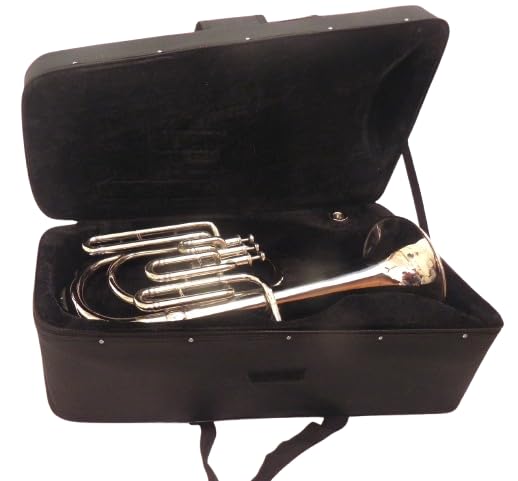 Bb Baritone Horn with Hard Case, Mouthpiece, Silver Rank #1 | 🏆 Top Pick | — | Check price → |
 Copper Miniature Baritone Horn,Elegant Gold Plated Miniature Tuba Model – Brass Musical Instrument Replica with Base, Ideal for Dollhouse Decoration, Gifts, and Home Office Rank #2 | — | Check price → | |
 English Style Bb Baritone Horn with Case, Intermediate Rank #3 | — | — | Check price → |
 Professional 4 Valve Brass Baritone Horn Euphonium Rank #4 | — | — | Check price → |
 Original Brass Gold-Plated Tenor Professional Baritone Horn B-flat Euphonium Tone Three-Key Tenor Jazz Instrument(Baritone Horn) Rank #5 | 💰 Budget Pick | — | Check price → |


