Get the App
Better experience on mobile
From commuter-ready daypacks to travel-ready carry-ons, these seven backpacks lead their categories in comfort, durability, and value.
A good backpack is not a bag. It's a weight-distribution system, an organization home, and a durable storage box that travels on your back for years. The best backpacks in 2026 do more than hold your stuff—they adapt to your daily routine, your commute, and your weekends. For this guide, we scoured verified customer reviews, manufacturer spec sheets, and opinions from professional gear testers to identify seven backpacks that excel in different roles.
Our selection process started with over 35 products, using recognized sources like Wirecutter, OutdoorGearLab, and customer feedback from major retailers. We focused on the materials (robust fabrics, reliable zippers), the harness (padding, adjustability, and ventilation), and the organization (pockets that make sense rather than just plenty). We also considered the price-to-value ratio, because a good backpack should last years and justify its cost.
Among the options, you'll find iconic designs from The North Face and Osprey, as well as sleek urban packs from Aer and specialized camera gear from Peak Design. While no single backpack is perfect for every activity, our top picks represent the best balance of wearability, durability, and practicality in their respective niches. We also note each one's trade-offs so you can decide what matters most to you.
A do-everything daily pack with a ventilated back panel and a 27-liter capacity. It protects a 15-inch laptop, offers easy-hike features like a Bungee compression system, and holds up to years of abuse. The trade-off is a busy look that isn't sleek enough for formal settings.
Main limitation: The many straps and bungees can snag on clothing, and the styling is more utilitarian than professional.
Skip if: Anyone seeking a minimalist, everyday-carry pack for the office should consider a sleeker option.
Packs an impressive organization system and an external USB port into a sub-$50 package. The 17-inch laptop compartment and multiple front pockets make it as functional as packs costing twice as much. The main compromise is a flimsier harness that won't handle heavy loads comfortably.
Main limitation: Aside from thin shoulder straps, the zippers feel less durable than on premium models.
Skip if: Frequent travelers or commuters who carry more than 20 pounds daily should invest in a better suspension system.
A sleek, weather-resistant urban pack with a 24-liter volume that fits a 16-inch laptop and a dedicated water bottle pocket. It uses durable 1680D ballistic nylon and has a quick-access top pocket. Its minimal aesthetic comes at a premium price, and the harness is not ventilated for hot days.
Main limitation: The non-breathable back panel can get uncomfortable in warm weather, and there's no waist strap for heavy loads.
Skip if: If you need a pack for school or a more rugged outdoor adventure, there are better values.
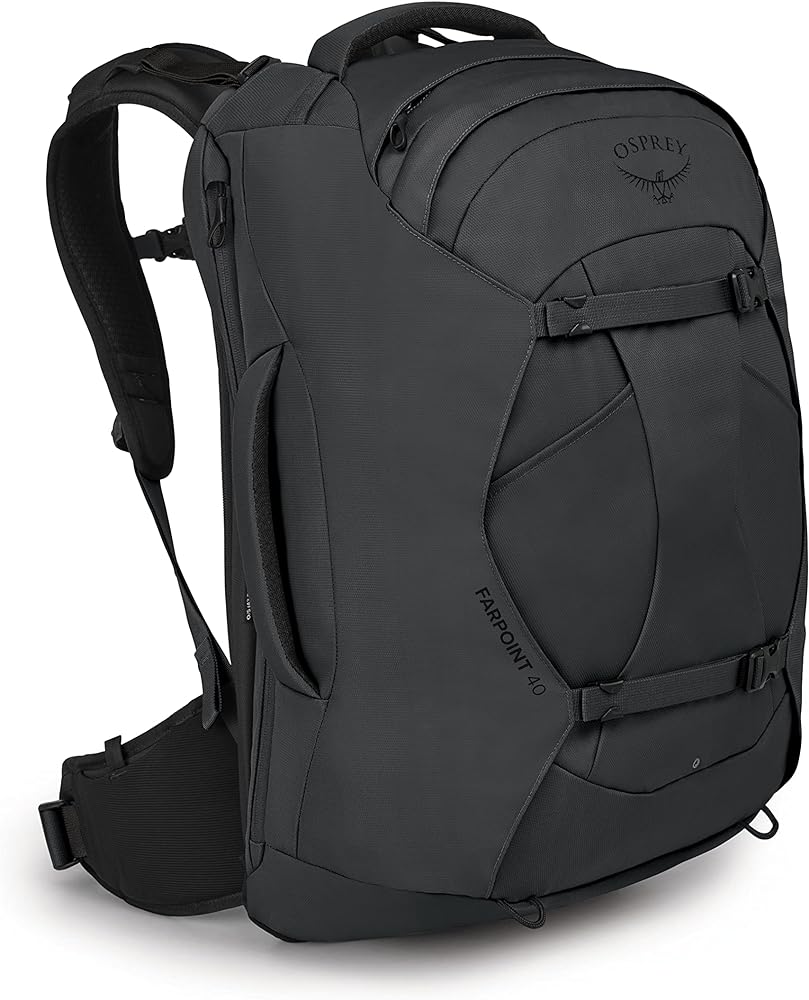
The classic one-bag travel backpack with a 40-liter capacity that meets most airline carry-on limits. It features front-panel loading for easy packing, a padded laptop sleeve, and an included stowaway daypack that attaches to the front. The trade-off is a rigid frame that doesn't fit under a seat and a heavier weight when fully packed.
Main limitation: The laptop compartment sits in the main compartment, making airport security checks a bit slower, and the harness might be overkill for lighter trips.
Skip if: Minimalists who prefer a simple duffel or those who won't use the organization will find it bulky.
A lightweight 20-liter pack that's best for day trips and as a companion to larger Osprey packs. It has a hydration sleeve, trekking pole attachment, and a comfortable harness. The trade-off is a small capacity and limited organization compared to urban backpacks.
Main limitation: The main compartment is a single bucket with a few small pockets, making it less ideal for commuting or school.
Skip if: You need to carry a 15-inch laptop or require a dedicated padded sleeve for tech.
An iconic Scandinavian daypack with a unique top handle and a simple open-top design. It's durable, waterproof (with a wax finish), and fits tablets and small notebooks. However, the thin shoulder straps are notoriously uncomfortable with heavier loads, and there's no laptop sleeve in the classic version.
Main limitation: The rigid straps and lack of back padding make it unsuitable for carrying laptops or books over long distances.
Skip if: Anyone who carries more than a few textbooks will find it uncomfortable; consider the Kånken Laptop or another ergonomic pack.
A modular, customizable backpack that works as a camera bag with built-in FlexFold dividers and a MagLatch top closure. It also has side access for cameras and a dedicated laptop sleeve. The high cost and heavier weight are the main trade-offs for everyday use.
Main limitation: The complex interior organization can be overkill if you don't carry camera equipment, and the fabric shows scratches over time.
Skip if: If you're not a photographer or need a simple commuter pack, the features are wasted and the price is hard to justify.
Compare key specs and features of all our recommendations side-by-side
| Product | Recommendation | Rating | Price |
|---|---|---|---|
The North Face Recon (2026 Edition) Rank #1 | 🏆 Top Pick | 9.0/10 | Around $110 Check current price → |
SwissGear 1900 Scansmart Laptop Backpack Rank #2 | 💰 Budget Pick | 8.0/10 | Around $45 Check current price → |
Aer City Pack Pro (2026 Edition) Rank #3 | ⭐ Editor's Choice | 8.7/10 | $185–$210 Check current price → |
Osprey Farpoint 40 Travel Backpack Rank #4 | — | 8.8/10 | $180–$220 Check current price → |
Osprey Daylite Plus Rank #5 | — | 8.3/10 | Around $90 Check current price → |
Fjällräven Kånken Classic Rank #6 | — | 7.8/10 | $90–$110 Check current price → |
Peak Design Everyday Backpack V2 (20L or 30L) Rank #7 | — | 8.5/10 | $250–$300 Check current price → |
Common questions buyers have about this category.
For daily commuters and students, 20 to 30 liters is the sweet spot—enough to fit a laptop, lunch, and a change of clothes. If you often carry extra gear like a bulky camera, consider a 30-liter pack. Capacity alone isn't the main factor; look for a harness that fits your back length.
Technically, yes, but it's often not ideal. Hiking packs have ventilated frames and hip belts that can be overkill for city use, and they lack the dedicated laptop sleeves and organizational pockets commuters need. A better approach is to pick a pack designed for commuting—like the Aer City Pack Pro—or a hybrid like the Osprey Daylite Plus that works for both light hikes and office days.
No. You're not always paying for quality; a high price tag can reflect brand markups or niche features. That said, premium packs often use more durable fabrics and better zippers, which pay off over years of heavy use. For most people, the sweet spot is between $100 and $200 for a pack that will last five years or more.
Use a soft brush and mild detergent—never machine wash, as it can break down the padding and coatings. For spot cleaning, a damp cloth works for most stains. For deeper cleaning, you can wipe the inside with a damp rag and allow it to air dry fully. Check your pack's care label; most can be hand-washed in a tub with cold water.
Look for a carry-on-compliant size (usually under 22 x 14 x 9 inches), a clamshell or front-panel opening for easy packing, and a laptop compartment that lies against your back for better protection. Also consider a stowaway hip belt and weight: a 40-liter travel pack should weigh less than 3.5 pounds to avoid airline weight penalties.
Use a flexible tape measure and bend forward at the hips. Have a friend measure from the bony bump at the base of your neck down to the top of your hip bones (the iliac crest). Compare that to the pack's torso length range. Many outdoor backpacks come in sizes or have adjustable suspensions, while urban packs often have a single fixed length to fit 5'4" to 6'2".
Products we evaluated but did not recommend — and why.
