Get the App
Better experience on mobile
From budget champions to dual-basket workhorses, these air fryers handle dinners for four without the greasy mess.
The air fryer is no longer a gadget that only makes frozen fries. Today’s models are full-fledged convection ovens that can roast an entire chicken, bake biscuits, and reheat leftovers—all while promising a crisp texture with a fraction of the oil. But for a family of four, the biggest mistake isn’t choosing the wrong brand; it’s choosing the wrong capacity. A 3-quart basket might be fine for a couple, but it becomes a constant juggling act when you need sides and a main dish at the same time.
The real differentiators come down to how a model handles its cooking program: measured airflow, temperature accuracy, and how much babysitting you have to do. Our research shows that the most satisfying family-size models are the 6-quart class, which easily fits a whole chicken, a pound of wings, or a sheet-pan dinner without overcrowding. Beyond size, consider power output (wattage affects preheat speed and crisping), the number of presets you actually use, and whether the basket is dishwasher-safe.
We looked at a broad range of air fryers, from budget performers to premium flagship models. We compared spec sheets, read hundreds of verified owner reviews, and relied on testing published by major outlets to separate the genuinely even-cooking models from the ones that scorch the bottom of the basket. We also kept an eye on durability—how the nonstick surface holds up after months of use.
What follows are six air fryers that meet the needs of a typical family of four, each chosen for a specific role: the best all-around performer, the best value under $80, a dual-basket option for simultaneous meals, a premium pick that sets the gold standard for crisping, and two more specialized picks that solve particular pain points—simple controls and extra-large capacity. Whether you’re upgrading from a toaster oven or buying your first air fryer, these recommendations will help you skip the trial-and-error.
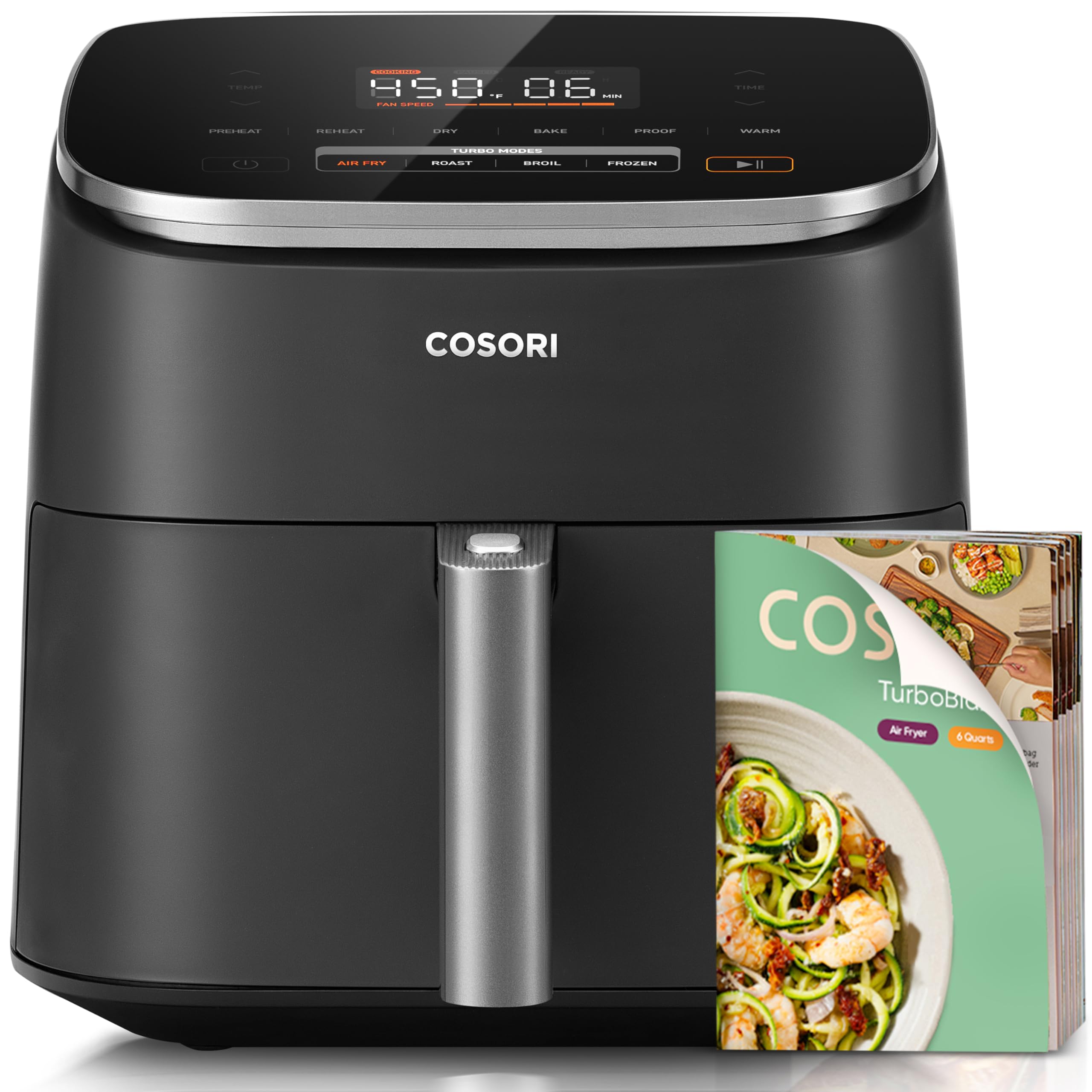
The TurboBlaze combines a generous 6-quart capacity, even crisping, and one-touch presets in an intuitive package. Its fast preheat and extended temperature range handle everything from frozen snacks to roasts, but the nonstick basket requires careful handling to avoid scratching.
Main limitation: The basket's nonstick coating isn't as durable as enameled steel baskets on premium models.
Skip if: Anyone who prefers a dishwasher-safe basket that can survive heavy scrubbing.
It’s hard to beat this 5.3-quart model for under $80, especially with simple controls and a vivid display that makes settings easy to read. It browns food well for the price, though the basket capacity is a touch smaller than pricier 6-quart rivals and the presets are basic.
Main limitation: Its preset buttons are basic and the timer increments are coarse.
Skip if: Families who need precise temperature control for delicate foods.
Cook two dishes at different temperatures and times simultaneously—a lifesaver for family dinners where chicken and fries need different settings. The dual-basket design is genuinely flexible, but it’s large and you’ll need to plan around the separate zones.
Main limitation: The two baskets take up a lot of counter space and each side holds only 3.8 quarts.
Skip if: Anyone with very limited counter space who rarely cooks two things at once.
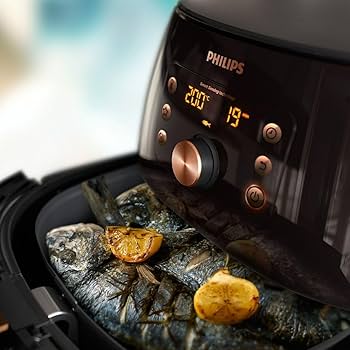
Philips is the category’s premium standout, with patented Starfish design and fat-removal technology that delivers consistently crispy, evenly browned results. Its 7.3-quart capacity is generous, but the price is steep and the user interface isn’t as modern as cheaper competitors.
Main limitation: The high price and bar-style control panel are hard to justify if you don’t air-fry several times a week.
Skip if: Budget buyers and anyone who wants a large touchscreen or app connectivity.
Instant Pot’s Vortex Plus streamlines operation with a clear dial, a one-touch start, and a see-through window that lets you check food without opening the basket. Its 6-quart size fits family portions well, but the window requires more frequent cleaning to stay transparent.
Main limitation: The clear lid and mesh basket are more of a hassle to clean thoroughly than a plain nonstick basket.
Skip if: Anyone who prefers dishwasher-safe, low-maintenance parts over visual feedback.
If you need even more room than most family-size models, this 6.8-quart unit often sells for around $70 and includes eight presets, Rack baking accessories, and a wide temperature range. The build quality and cooking consistency aren’t on par with mid-range names, but for the size it’s fantastic.
Main limitation: Temperature accuracy can drift, and the nonstick surface has been noted to chip with heavy use.
Skip if: Cooks who expect precise, repeatable results or plan to use it multiple times daily.
Compare key specs and features of all our recommendations side-by-side
| Product | Recommendation | Rating | Price |
|---|---|---|---|
Cosori TurboBlaze 6-Quart Air Fryer Rank #1 | 🏆 Top Pick | 9.0/10 | Around $120–$140 Check current price → |
Chefman TurboFry 5.3 Quart Digital Air Fryer Rank #2 | 💰 Budget Pick | 8.0/10 | Around $60–$80 Check current price → |
Ninja Foodi DualZone AF300 6 Quart Air Fryer Rank #3 | ⭐ Editor's Choice | 8.5/10 | Around $160–$200 Check current price → |
Philips Premium Airfryer XXL HD9867/90 Rank #4 | — | 8.7/10 | Around $280–$350 Check current price → |
Instant Pot Vortex Plus 6-Quart Air Fryer Rank #5 | — | 8.3/10 | Around $110–$130 Check current price → |
GoWISE USA 6.8 Quart 8-in-1 Digital Air Fryer Rank #6 | — | 7.5/10 | Around $65–$85 Check current price → |
Common questions buyers have about this category.
A 5.5 to 6 quart basket is the sweet spot. It holds a 4-pound chicken, a large tray of roasted vegetables, or about 20 frozen chicken wings without overcrowding, which is crucial for even crisping. Smaller baskets around 4 quarts work if you don't mind cooking in batches, but they'll feel cramped on busy weeknights.
Stacking is possible with accessories like a multicooker rack or by using a parchment liner with holes, but avoid piling food so high that airflow is blocked. For best results, shake the basket halfway through or flip the top layer; otherwise, food at the top may over-brown while the bottom stays pale.
Air fryers draw roughly 1500 to 1800 watts when running, but because they preheat in 3-5 minutes and cook faster than a conventional oven, they often consume less energy than a full-size oven for a single meal. Over a year, using one regularly might add about $30–$60 to your electric bill, depending on your rates.
Let it cool down, then wash the basket and tray in the sink with warm soapy water or place them in the dishwasher if they're marked dishwasher-safe. For stubborn residue, soak the basket for 10 minutes in hot water and baking soda. To preserve the nonstick coating, avoid metal utensils and abrasive scrubbers.
Yes, and it's one of the best uses for an air fryer. Set it to 350°F and heat food for 3-5 minutes; this restores crisper textures better than a microwave. For saucy foods like pasta or rice, add a splash of water and cover with foil to prevent drying out.
Only if you often cook two components at different temperatures—like fish and fries. A single 6-quart basket can handle both foods by cooking the item that takes longer first, then adding the quicker-cooking item later. A dual-basket model like the Ninja Foodi lets you cook them from start to finish simultaneously, but it costs more and takes up more counter space.
Products we evaluated but did not recommend — and why.
