
Quick Verdict
The Instant Pot Duo Plus 6-Quart is a good rice cooker for general use, especially brown rice and batch cooking, but it falls short of dedicated rice cookers in texture consistency and variety-specific presets. It's a versatile appliance that can meet most rice needs with a few tweaks.
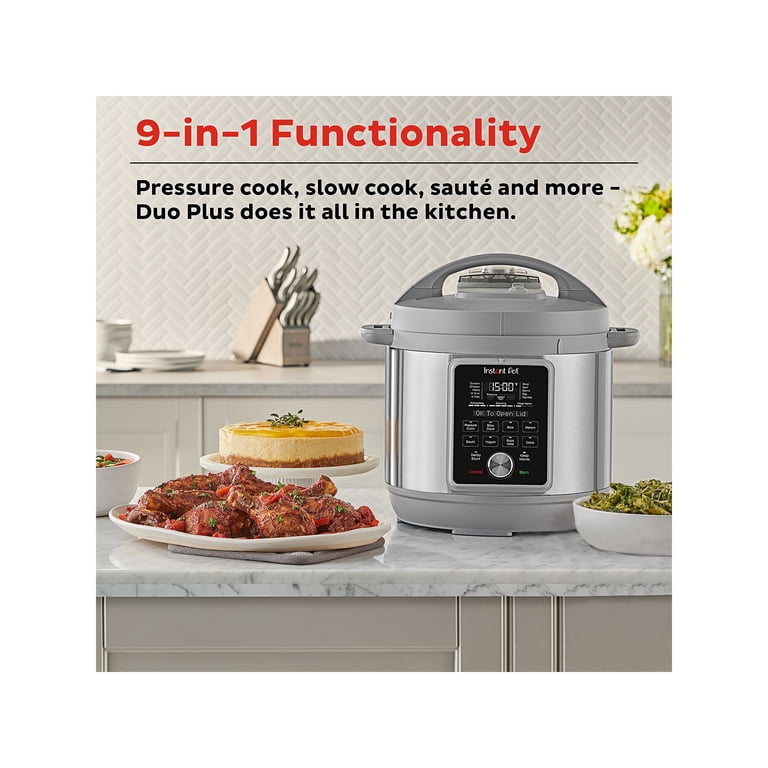
Instant Pot Duo Plus 6-Quart
$129.95

✓ Key Strengths
- •Versatile 7-in-1 functionality: pressure cooker, slow cooker, rice cooker, steamer, sauté pan, yogurt maker, and warmer.
- •6-quart capacity: cook up to 10 cups of uncooked rice, perfect for big families and meal prep.
- •Faster brown rice: pressure cooking reduces cooking time from 50-60 minutes to about 25-30 minutes.
- •Keep-warm function: rice stays ready until you're ready to eat.
- •Sauté function: toast rice in butter or oil before cooking to add depth of flavor.
- •One-touch programs and sterilizer: a simple 'Rice' button starts the process with minimal fuss.
✗ Key Weaknesses
- •Lack of fuzzy logic: doesn't automatically adjust for different rice types or textures like high-end rice cookers.
- •Pressure cooking can make white rice stickier or mushier than stovetop or dedicated rice cooker results.
- •No preset for different rice varieties: jasmine, basmati, sushi, and brown rice all require custom timing and ratios.
- •Keep-warm can dry out rice if left for hours without the precise moisture control of a dedicated cooker.
- •Large and heavy: takes up significant counter space; impractical for small kitchens or single users.
- •Potential odor transfer: if you use the Instant Pot for savory dishes, the sealing ring can absorb smells and taint the rice.
What is Instant Pot Duo Plus 6-Quart?
What is rice cooking?
Detailed Analysis
👍 Perfect For
- ✓Meal preppers who cook large batches of rice for weekly lunches and want speed and volume.
- ✓Families that already own an Instant Pot and prefer a single appliance to save storage space.
- ✓Brown rice enthusiasts who appreciate pressure-cooked brown rice's nutty texture and short cook time.
- ✓Campers or RVer's looking for a portable, all-in-one cooker (with 12V adapter) for off-grid cooking.
👎 Not Ideal For
- ✗Rice purists who demand perfect, separate grains of jasmine, basmati, or sushi rice every time.
- ✗Daily rice eaters who want a set-and-forget dedicated rice cooker that handles all rice types automatically.
- ✗Those with extremely limited kitchen counter space and no room for a bulky multi-cooker.
- ✗People who prefer minimal gadgets and won't invest time in learning the Instant Pot's rice quirks.
Use Case Scenarios
Family Daily Rice
Cooking white or brown rice multiple times a week for a family of four, typically 2-3 cups of uncooked rice per meal.
✓ Strengths
- Large enough for up to 10 cups uncooked, so cooking 2-4 cups is simple.
- Set the delay timer to have rice ready when you come home.
- Keep-warm holds rice for an hour or so without over-drying.
✗ Weaknesses
- White rice can be slightly sticky if not measured carefully.
- No quick setting for 'rice with vegetables'—you have to add extras manually.
💡 Workarounds
- Master the 1:1 ratio and use the 5-minute natural release before opening.
- Fluff rice with a fork and let it rest 5 minutes off the keep-warm setting.
- Add a bay leaf or garlic to the cooking water for aromatic flavor.
Handles the daily workload well with learning curve, but texture is not always perfect.
Batch Cooking for Meal Prep
Cooking 6-8 cups of uncooked rice on Sunday to portion out for healthy lunches during the week.
✓ Strengths
- Huge capacity: up to 10 cups of uncooked rice, perfect for weekly prep.
- Pressure cooking saves significant time for brown and wild rice.
- Even heating across the pot prevents unevenly cooked rice.
✗ Weaknesses
- Keep-warm may dry out the entire batch if left on long after cooking.
- You might be tempted to cook too much—think through storage space.
💡 Workarounds
- Portion rice immediately after cooking and refrigerate within an hour.
- For quick cool-down, spread rice on a baking sheet and refrigerate.
- Reheat with a damp paper towel over the container in a microwave.
One-pot, high-volume cooking with consistent results is this appliance's sweet spot.
Cooking Gift Rice (Jasmine, Basmati, Sushi)
Preparing premium jasmine, aromatic basmati, or sticky sushi rice for special dishes and entertaining.
✓ Strengths
- Sauté function lets you toast basmati in butter for a nutty flavor.
- Adequate for a party batch if you don't mind slightly less texture.
✗ Weaknesses
- No automatic presets for rice types beyond generic 'Rice'.
- Pressure cooking can overcook basmati and break down jasmine's delicate grains.
- Sushi rice rarely achieves the right clinginess; it may turn to paste.
💡 Workarounds
- Use the sauté function to toast basmati briefly before adding water.
- For sushi rice, try the pot-in-pot method with a steamer basket, but expect trial and error.
- Consider buying a compact dedicated rice cooker for sushi rice only.
Delicate premium rice often ends up overcooked; dedicated rice cookers' fuzzy logic is required for these types.
One-Pot Meals with Rice
Using the pot-in-pot technique to cook rice and a curry, stew, or chicken dish simultaneously, all in the Instant Pot.
✓ Strengths
- Saves time by cooking rice and entrée together.
- Adds flavor to rice from the steam of the main dish.
- Reduces cleanup: one pot, two compartments.
✗ Weaknesses
- Takes practice to nail the water ratio and cooking time for both components.
- The rice may absorb flavors that clash with later uses—for example, if you cook spicy fish, the rice becomes spicy too.
💡 Workarounds
- Use a covered bowl to control moisture; cover with foil or a silicone lid.
- Keep the rice's water ratio at 1:1, and rely on the main dish's steam for additional moisture.
- Start with the rice bowl on a tall trivet to avoid the bubbling liquid from the main dish reaching the rice.
A creative and time-saving method, but the consistency is not as reliable as separate rice cooking.
Cooking Rice for a Crowd
Preparing a huge batch of rice for a party, potluck, or feeding 10+ guests.
✓ Strengths
- Capacity up to 10 cups uncooked—perfect for large gatherings.
- Even pressure-heating prevents patches of undercooked rice.
- Keep-warm feature lets you serve directly from the pot.
✗ Weaknesses
- Rice can become sticky if you use too much water, especially at scale.
- Natural pressure release takes 15+ minutes; plan ahead.
💡 Workarounds
- Use 1:1 ratio for fluffier rice at scale.
- After natural release, fluff immediately with a fork to separate grains.
- If serving later, stir in a little butter or oil to keep grains glossy.
Easy to make abundant, consistent rice for large groups—this is a clear win.
Related Products You Should Consider
Zojirushi Micom Rice Cooker & Warmer 5.5-Cup (NS-LGC05XB)
$199.99
Why recommend: Top-tier rice texture and presets for every rice variety, completely hands-off.
Best for: Rice enthusiasts and families who want set-and-forget perfection.
Aroma Housewares 8-Cup Cooked Rice Cooker and Food Steamer (ARC-363NGB)
$29.99
Why recommend: Affordable and reliable for everyday rice without the Instant Pot's learning curve.
Best for: Budget-conscious cooks who eat rice continuously.
Instant Pot Steamer Rack with Silicone Sling 2-Pack
$12.99
Why recommend: Essential for pot-in-pot rice and main-dish cooking.
Best for: Instant Pot owners who want to speed up complete meal prep.
Yum Asia Saraya Rice Cooker
$149.99
Why recommend: Excellent dedicated rice cooker with presets, without the premium price tag.
Best for: Home cooks who want a middle ground between budget and premium rice cookers.
Prepworks by Progressive Collapsible Multi-Use Colander
$10.95
Why recommend: A simple colander safeguards your rice texture by enabling thorough rinsing.
Best for: Anyone who cooks rice, especially Instant Pot users aiming for fluffier grains.
Instant Pot Silicone Sealing Rings 2-Pack
$11.99
Why recommend: Protect your rice from unwanted flavor transfer from previous savory dishes.
Best for: Frequent Instant Pot users who cook a wide variety of dishes.
The Ultimate Instant Pot Cookbook: 200 Easy Recipes for Pressure Cooker, Slow Cooker, and More!
$14.99
Why recommend: Learn expert tips and ratios for rice and beyond.
Best for: New Instant Pot owners who want a structured guide.
Bottom Line
Ready to get the Instant Pot Duo Plus 6-Quart? Check the latest price on Amazon.
🛒 Buy on AmazonAs an Amazon Associate we earn from qualifying purchases.
Frequently Asked Questions
Is Instant Pot Duo Plus 6-Quart good for rice cooking?
Yes, it's good for many rice types, especially brown rice and large batches of white rice, but it's not as precise as a dedicated rice cooker with fuzzy logic. You'll need to tweak water ratios and cooking times for perfect texture, especially for delicate jasmine or sushi rice.
Can you use Instant Pot Duo Plus 6-Quart for rice cooking?
Absolutely. It has a dedicated Rice button that takes the guesswork out of timing. Just add rice and water, press the button, and let the pot work. You can also use the sauté function to toast rice before cooking for added flavor.
Is Instant Pot Duo Plus 6-Quart suitable for rice cooking?
Suitable, yes, for everyday rice like standard white, long-grain, and brown rice. It's less suitable for delicate aromatic rices (jasmine, basmati) and sticky sushi, where you need customized programs that dedicated rice cookers provide.
What's better than Instant Pot Duo Plus 6-Quart for rice cooking?
Dedicated rice cookers like the Zojirushi Micom or Neuro Fuzzy series outperform the Instant Pot in texture consistency and ease—thanks to fuzzy logic that automatically adjusts temperatures. They also have dedicated settings for jasmine, sushi, brown, and more.
Does Instant Pot Duo Plus 6-Quart work for rice cooking?
Yes, it works very well for cooking 1 to 10 cups of rice. Brown rice, in particular, turns out excellent due to the pressure, and many users prefer it to stovetop. For quick one-pot meals, the pot-in-pot method is a game-changer.
Instant Pot Duo Plus 6-Quart vs Zojirushi for rice cooking – which is better?
For rice texture and automation alone, Zojirushi wins easily. But the Instant Pot is a 7-in-1 appliance, so it's more versatile. If you only care about rice, go Zojirushi; if you need a multi-cooker that makes decent rice, the Instant Pot is the better value.
What are the best accessories for Instant Pot Duo Plus 6-Quart for rice cooking?
A steamer rack with silicone sling enables pot-in-pot meals. A dedicated sealing ring prevents flavor transfer, and a simple collapsible colander helps rinse rice. These accessories work together to improve your results.
How to use Instant Pot Duo Plus 6-Quart for rice cooking?
Rinse the rice thoroughly, add it to the pot with a 1:1 water-to-rice ratio (for white rice), press the 'Rice' button, and set the timer. For brown rice, use a 1:1.5 ratio and allow 25 minutes. After the cycle, let the pressure release naturally for 10 minutes before opening. Fluff and serve—simple as that.
What is the correct water ratio for rice in the Instant Pot?
For white rice, use 1:1 white rice to water. For brown rice, use 1:1.5. For basmati, 1:1.2, and for jasmine, 1:1. For sushi rice, 1:1 but less water can help. The exact ratio may vary depending on the age and type of rice.
Does Instant Pot rice stick to the bottom of the pot?
Sometimes, if you use too little water or cook on high pressure without natural release. To prevent sticking, always rinse the rice (or add a little oil/butter), use the correct ratio, and allow a natural pressure release. Fluff immediately after opening.
Can I cook brown rice in the Instant Pot Duo Plus 6-Quart?
Yes! Brown rice is one of the best things to cook in a pressure cooker. It takes about 22-25 minutes on manual pressure, compared to 50-60 minutes on the stovetop. The pressure helps soften the bran, resulting in a chewy, tender grain.
Is it worth buying an Instant Pot just for rice cooking?
No. A dedicated rice cooker costs $30-100 and does the job better with zero effort. The Instant Pot is only worth it if you also plan to use pressure cooking, slow cooking, yogurt making, or other functions—then the rice function is a nice bonus.