Is Best Tire Inflator for beginners Worth It? Honest Review (202…
Everything beginners need to know to choose their first tire inflator with confidence.
Choosing your first tire inflator can feel overwhelming. With countless options, confusing jargon, and varying price points, it's easy to worry about making a mistake. This guide is designed to simplify the process, helping you understand exactly what to look for, avoid common pitfalls, and feel confident in your purchase. Whether you drive a car, SUV, or truck, we'll help you find the perfect beginner-friendly inflator.
📋 In This Guide
• Why Beginners Struggle with Tire Inflator
• What to Look For (Key Features)
• Top 4 Beginner-Friendly Tire Inflator
• Essential Accessories for Beginners
• Common Beginner Mistakes to Avoid
• Your Progression Path
• FAQ & Learning Resources
😰 Why Beginners Struggle with Tire Inflator
Many beginners struggle with technical terms like PSI, CFM, and duty cycle. They often don't know which features actually matter and end up either buying a cheap, slow inflator that frustrates them or an expensive, heavy-duty model they don't need. The sheer number of choices—from analog to digital, corded to cordless—can be paralyzing. Beginners also worry about damaging their car's battery or tire, and often overlook crucial accessories like tire gauges and extension hoses.
🔍 What to Look For: Key Beginner-Friendly Features
For beginners, focus on ease of use: clear digital display, auto-shutoff (to prevent overinflation), and simple controls. Look for a unit that plugs into the 12V car outlet (cigarette lighter) or has a built-in rechargeable battery. A long power cord and air hose make it easy to reach all four tires. You don't need high CFM (airflow)—most passenger cars need only 1-2 CFM for occasional top-offs. Avoid inflators that lack auto-shutoff, as guessing correct pressure is tricky for beginners. Also, a bright LED light and storage case are nice bonuses.
•Long power cord (10+ ft) and air hose (2+ ft) – reaches all tires
•Cigarette lighter plug (12V) – no battery hassle
•Bright LED light – useful at night
•Compact and lightweight – easy to store in trunk
•Simple one-button operation – no complex settings
🏆 Top 4 Best Tire Inflator for Beginners
#1
💰 Budget
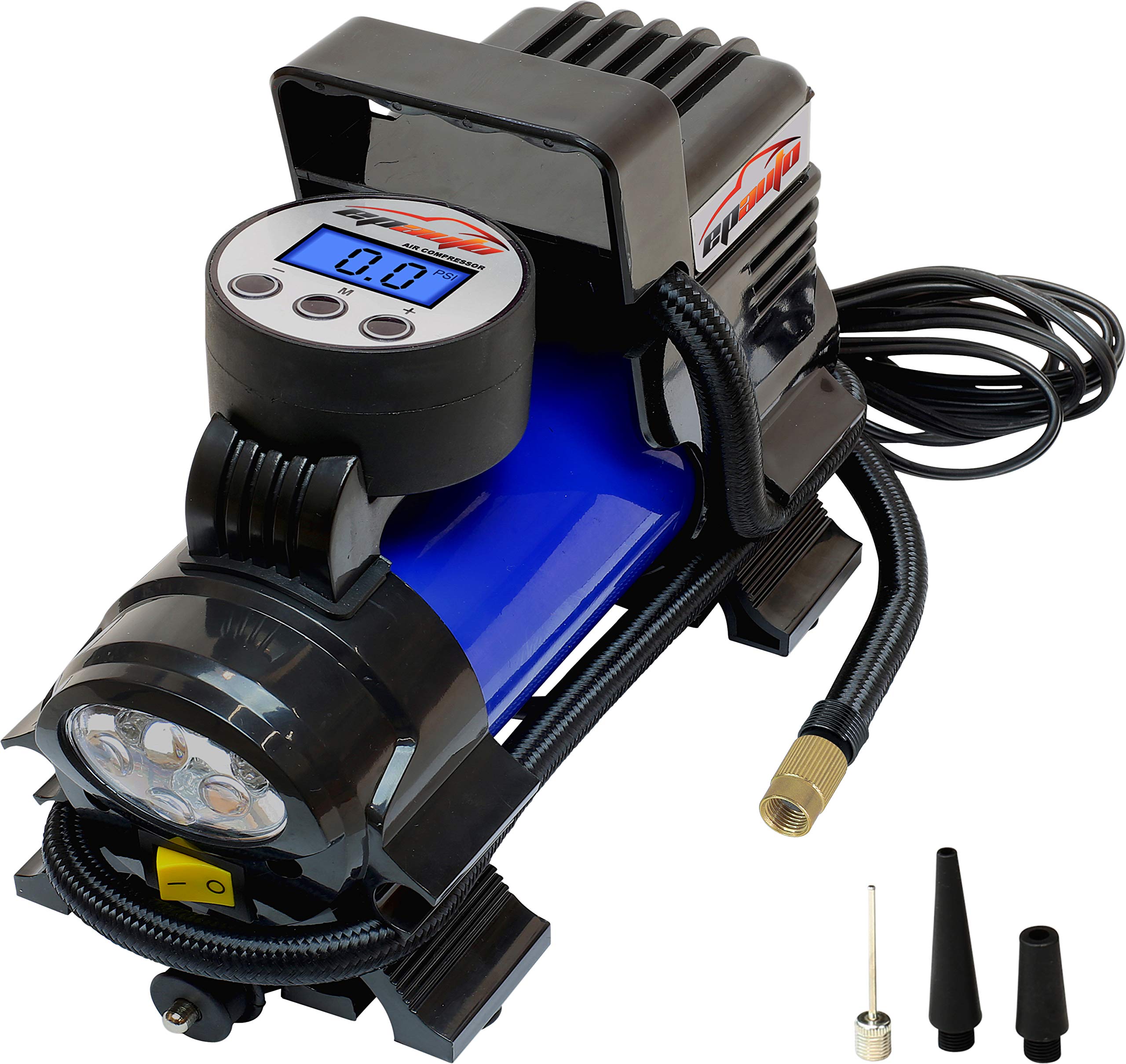
EPAuto 12V DC Portable Air Compressor Pump (Blue)
Learning Curve: Easy
$23.99
Difficulty: 1/5
Why Great for Beginners:
This is the quintessential beginner inflator. It's affordable, simple to use, and has auto-shutoff so you don't overinflate. The digital display is clear, and the built-in LED light helps at night. It's compact enough to fit in any trunk and includes a storage bag.
✓ Beginner Pros
+Very affordable
+Auto-shutoff and digital gauge
+LED light for night use
+Compact and easy to store
✗ Beginner Cons
-Short power cord (about 6 ft) may require extension
-Not for large tires or continuous use
-Can blow a fuse if used with engine off
👍 Best for: Complete beginners with small to mid-size cars who want a reliable, no-fuss inflator for occasional top-offs.
👎 Not for: Truck/SUV owners who need faster inflation or heavy-duty use.
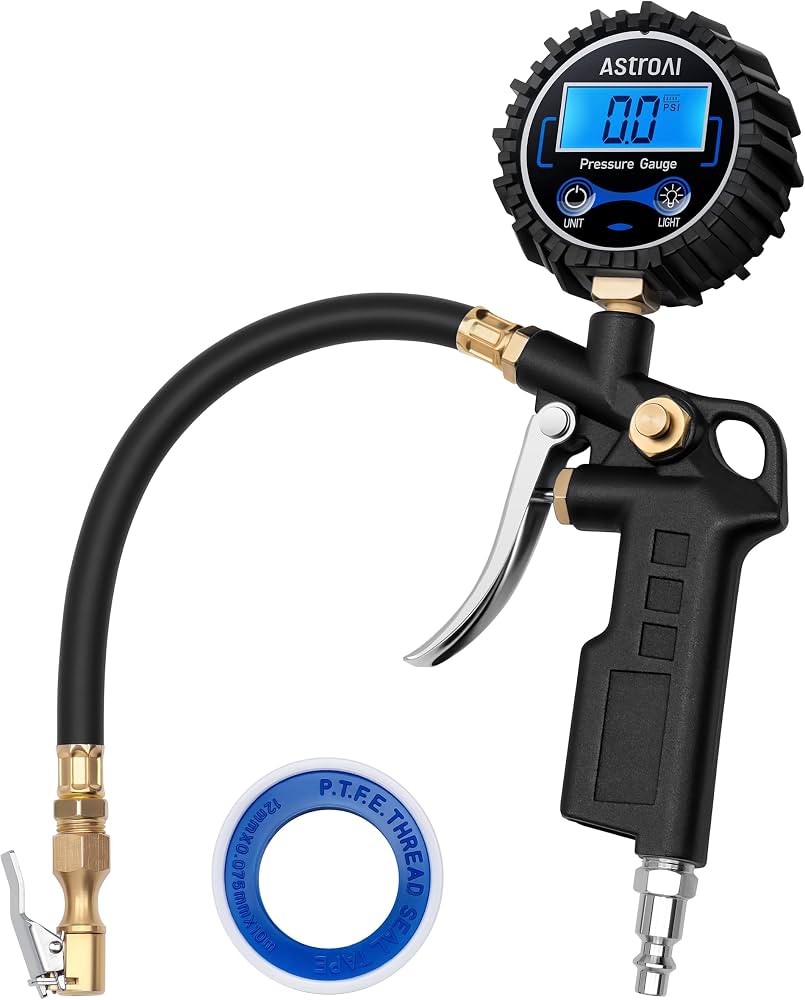
Step up from the basic budget model, this inflator offers a longer hose and power cord, making it easier to reach all four tires. The backlit digital display is very readable, and the auto-shutoff works accurately. It also includes multiple nozzle adapters for other inflatables like balls and air mattresses.
✓ Beginner Pros
+Longer 10 ft power cord and 2 ft hose
+Backlit display for dim conditions
+Multiple adapters included
+Accurate pressure reading
✗ Beginner Cons
-Slightly bulkier than basic models
-No cordless option
-May get warm with extended use
👍 Best for: Beginners who want a slightly more versatile inflator with better reach and reliability.
👎 Not for: Those who need a cordless inflator or high CFM for large tires.
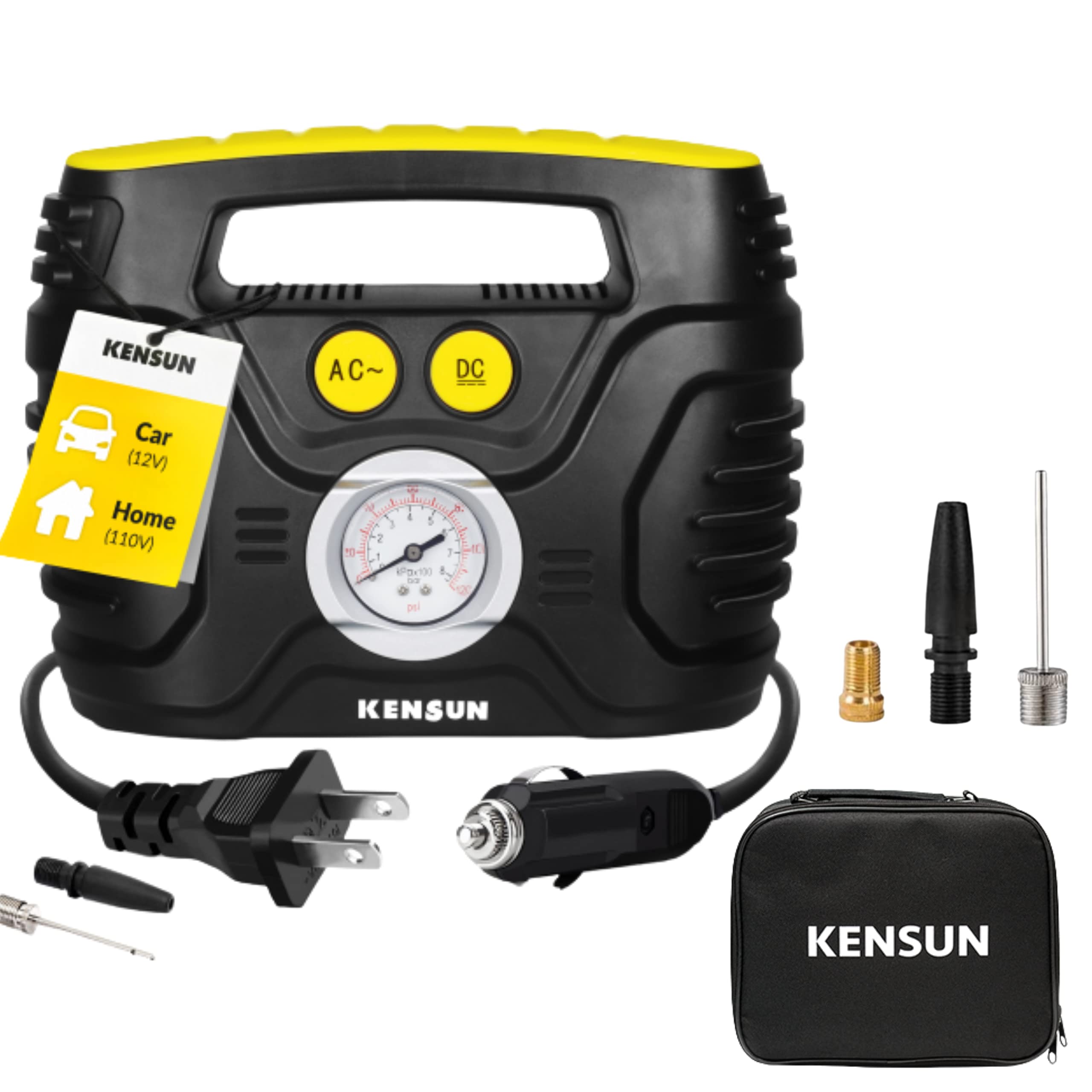
The Kensun is a favorite among beginners for its balance of speed and ease. It has a higher CFM than budget models, so it fills tires faster. The automatic shutoff works well, and the included storage bag keeps everything organized. It also has a brighter LED light.
✓ Beginner Pros
+Faster inflation than budget models
+Automatic shutoff
+Bright LED light
+Good build quality
✗ Beginner Cons
-Heavier than basic models
-Cord storage could be better
-Slightly more expensive
👍 Best for: Beginners who want faster inflation without breaking the bank, ideal for sedans and small SUVs.
👎 Not for: Those on a very tight budget or who need cordless operation.
The VIAIR 85P is a step up in durability and performance. It has a longer duty cycle (30 min at 40 PSI) so you can inflate multiple tires without worrying about overheating. The analog gauge is supplemented by an included digital gauge for accuracy. It's built to last and is still easy to use.
✓ Beginner Pros
+Long duty cycle for extended use
+High build quality and reliability
+Includes both analog and digital gauges
+Can inflate larger tires
✗ Beginner Cons
-Analog gauge can be harder to read precisely
-Heavier and larger than budget models
-No auto-shutoff (requires monitoring)
👍 Best for: Beginners who plan to inflate truck or SUV tires, or want a compressor that will last for years.
👎 Not for: Those who want auto-shutoff or prefer a fully digital experience.
A tire inflator is essentially a small air compressor that plugs into your car's 12V power outlet or runs on a battery. The most beginner-friendly type is the 12V DC portable inflator—simple, affordable, and widely available. These typically have a digital gauge, pre-set pressure function, and automatic shutoff. Setting the desired PSI and letting the inflator stop on its own takes the guesswork out of inflation. Cordless rechargeable models offer convenience but require charging. Analog dials are less accurate and harder for beginners. For most drivers, a 12V digital inflator under $40 is the perfect start. Realistic expectations: you won't fill a flat truck tire quickly, but for topping off passenger car tires (30-35 PSI), it takes 3-5 minutes per tire.
🔧 Essential Accessories for Beginners
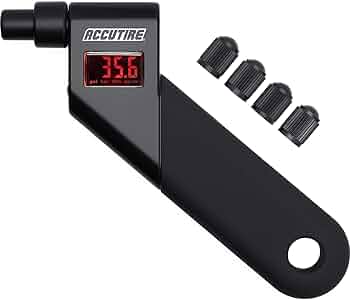
Digital Tire Pressure Gauge (Accutire MS-4001B)
⚠️ Essential
$13.99
When to buy:
Day one
Most built-in inflator gauges are less accurate than a dedicated gauge. Using this digital gauge to double-check pressure ensures you're at the correct PSI, extending tire life and improving safety.
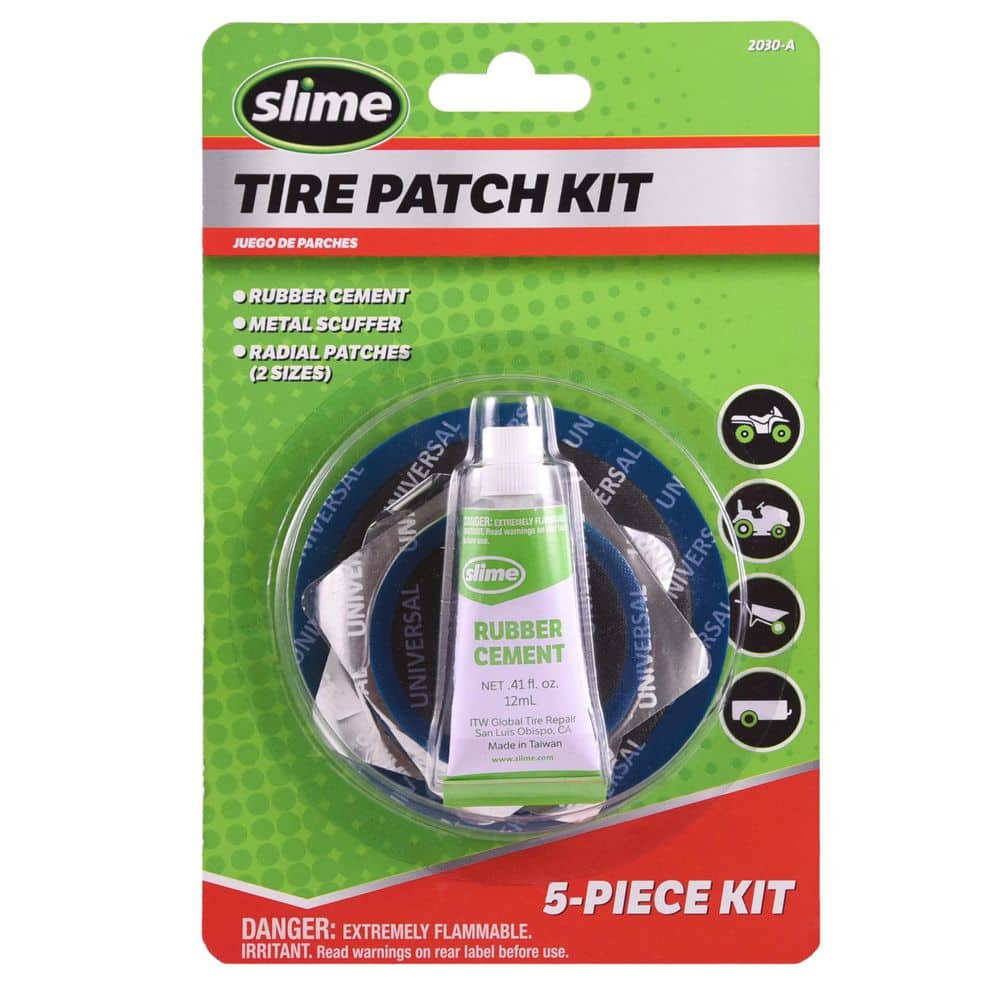
A puncture can happen anytime. A repair kit with plugs and a reaming tool lets you temporarily fix a flat without removing the tire, giving you confidence on the road.
Start by asking: What type of vehicle do I have? How often will I use it? For occasional use (a few times a year), a budget digital inflator ($20-$30) is fine. For monthly maintenance or road trips, the sweet spot ($30-$50) offers better build quality and speed. If you need to inflate multiple vehicles or larger tires (trucks/SUVs), consider a premium unit ($60+) with higher duty cycle and CFM. Avoid inflators with glass fuses that blow easily. Also, check cord length—at least 10 feet for the power cord and 2 feet for the hose. Red flags: no auto-shutoff, unclear instructions, or poor customer reviews about overheating.
💰 Budget Guide for Beginners
80+
Professional entry – serious hobbyists or large vehicles
30 - $50
Sweet spot – best value for most beginners, reliable features
50 - $80
Premium beginner – faster, more durable, often cordless
Under $ - $30
Entry level – good for occasional use, may have shorter lifespan
⚠️ Common Beginner Mistakes to Avoid
Beginners often buy the cheapest inflator that may be unreliable or blow fuses. Others buy a heavy-duty compressor that is bulky and overkill for a sedan. Many skip essential accessories like a tire pressure gauge or extension cord, only to find the inflator doesn't reach the rear tires. Another mistake is not reading the manual—some units require the car engine to be running to avoid draining the battery. Beginners also forget to check the inflator's duty cycle (how long it can run before needing to cool down), leading to overheating.
×Buying the cheapest inflator that may overheat or blow fuses
×Getting a model without auto-shutoff, leading to over/under inflation
×Ignoring cord length, making it impossible to reach some tires
×Forgetting to check the duty cycle (inflator may shut off during use)
×Buying a heavy-duty compressor for a small car (waste of money)
×Skipping a tire pressure gauge to verify accuracy
×Not reading the manual about running the engine while inflating
📈 Your Progression Path: Beginner to Intermediate
Start by learning how to properly set your tire pressure using the vehicle's recommended PSI (usually on the driver's door jamb). Practice inflating from 30 PSI to 35 PSI to build familiarity. Once you're comfortable, learn about tire tread depth and seasonal PSI adjustments. After a few months, you might want to upgrade to a cordless inflator for convenience or a dual-cylinder model for faster inflation. Signs you've outgrown your beginner inflator: it takes too long to inflate truck tires, the fuse keeps blowing, or you need to inflate more than one vehicle regularly.
📚 Learning Resources for Beginners
📖Online tutorials on YouTube (e.g., ChrisFix's 'How to Inflate Car Tires')
📖Vehicle owner's manual for recommended PSI
📖Basic tire repair and pressure guidebooks (search on Amazon)
🎯 Bottom Line: Our Recommendations
For most beginners, the EPAuto 12V DC Portable Air Compressor (around $20-$25) is the best overall pick—reliable, easy to use, and affordable. If you have a slightly bigger budget, the AstroAI Digital Tire Inflator ($30-$35) offers better accuracy and a longer hose. For those who want cordless freedom, the Kensun Portable Tire Inflator ($40-$50) is a great premium choice. Don't forget to buy a digital tire gauge and a tire repair kit as essential companions. With the right inflator, you'll save trips to the gas station and keep your tires safe. Happy inflating!
❓ Frequently Asked Questions
The EPAuto 12V DC Portable Air Compressor is the top pick for most beginners due to its low price, auto-shutoff, and digital display. For a slightly higher budget, the AstroAI Digital Tire Inflator offers a longer cord and better ergonomics.
For occasional use, $20-$35 is enough. For regular use and faster inflation, budget $35-$50. Beginners with trucks or SUVs may want to spend $50-$80 for a premium model.
Auto-shutoff (pre-set pressure stop), digital display, long power cord (10+ ft) and air hose (2+ ft), 12V plug, and LED light. Avoid analog models without auto-shutoff.
Any model with auto-shutoff and digital display is easiest. The EPAuto and AstroAI are very straightforward—just set the PSI and press start.
A digital tire pressure gauge to verify accuracy is essential. A tire repair kit is highly recommended. A 12V extension cord is helpful if the inflator's cord is short.
Consider your vehicle type (car, SUV, truck) and frequency of use. For sedans, a budget digital inflator is fine. If you have a truck or inflate often, go for a higher CFM model. Always check cord lengths and duty cycle.
Not at all. Most digital models have simple one-button operation. The main thing is to know your car's recommended PSI (usually on the driver's door jamb) and to set that pressure on the inflator.
Common mistakes include: not checking the duty cycle (leading to overheating), using the inflator with the engine off (can drain battery), buying a cheap model without auto-shutoff, and forgetting a tire gauge to double-check pressure.
Yes, but check the CFM rating. For large tires (LT or 35+ inch), you'll want a model with at least 2.0 CFM and a longer duty cycle. The VIAIR 85P is a good entry for trucks.
With proper use and storage, a budget inflator can last a few years. Premium models like VIAIR can last a decade. Avoid leaving the inflator in extreme temperatures and never exceed the duty cycle.