Review Atlas
Review AtlasYour guide to a better purchase

Menu

Shop by Category

Get the App

Better experience on mobile

Beginners Guideโ€ขSports

Best Squash Racket for Beginners: 2025 Guide

Confidently pick your first squash racket without overwhelm โ€“ top picks, features, and mistakes to avoid for new players.

Picking your first squash racket can feel intimidating with all the options, weights, and specs staring back at you. As a beginner, you worry about wasting money on something too advanced or too flimsy that breaks on your first swing. But don't stress โ€“ this guide is designed for complete newcomers like you.

We'll break down everything simply: what matters most, top beginner-friendly rackets on Amazon, must-have accessories, and pitfalls to dodge. By the end, you'll know exactly which racket suits you and feel excited to hit the court.

Our promise? Simple advice that builds your confidence, so you start playing sooner and enjoy squash from day one.

๐Ÿ“‹ In This Guide

  • โ€ข Why Beginners Struggle with Squash Racket
  • โ€ข What to Look For (Key Features)
  • โ€ข Top 4 Beginner-Friendly Squash Racket
  • โ€ข Essential Accessories for Beginners
  • โ€ข Common Beginner Mistakes to Avoid
  • โ€ข Your Progression Path
  • โ€ข FAQ & Learning Resources

๐Ÿ˜ฐ Why Beginners Struggle with Squash Racket

Beginners often feel lost because squash rackets come in dozens of brands and styles, each promising 'power' or 'control' without explaining what that means for newbies. You see terms like 'string tension' or 'balance point' and wonder if you're missing something crucial.

The fear of buying wrong is huge โ€“ too heavy and your arm hurts, too light and you mishit every shot. Forums like Reddit's r/squash are full of stories: 'Bought a pro racket, couldn't swing it!' Overwhelm from 100+ Amazon options leads to paralysis.

Plus, without knowing your swing style yet, it's hard to pick. Many quit early because their first racket felt unforgiving on off-center hits.

๐Ÿ” What to Look For: Key Beginner-Friendly Features

For beginners, focus on rackets that are lightweight (under 140g), have a larger head size (around 500 sq cm) for a bigger sweet spot, and even balance to feel natural without tiring your arm.

Look for forgiving strings (lower tension, 18-22 lbs) that help mishits still go over the tin, and durable frames that handle enthusiastic swings. Avoid super stiff or heavy pro models โ€“ they're punishing for learners.

Beginner-friendly means 'mischit-proof' with good grip comfort and vibration dampening to keep your wrist happy during long rallies.

โœ… Essential Features for Beginners

  • โ€ขLightweight frame (120-140g): Easy on arms, less fatigue for long sessions
  • โ€ขLarge head size (490-500 sq cm): Bigger sweet spot forgives off-center hits
  • โ€ขEven balance: Feels natural, helps control without advanced technique
  • โ€ขLow string tension (18-22 lbs): More power on beginner swings
  • โ€ขVibration dampener: Reduces sting on mishits, kinder to hands
  • โ€ขComfortable grip: Non-slip, sized for average hands (size 3-4)
  • โ€ขDurable graphite/composite: Survives drops and wall bangs

๐Ÿ† Top 4 Best Squash Racket for Beginners

#1
๐Ÿ’ฐ Budget

HEAD Aspire 2020 Squash Racquet

Learning Curve: Easy

$49.95
Difficulty: 1/5
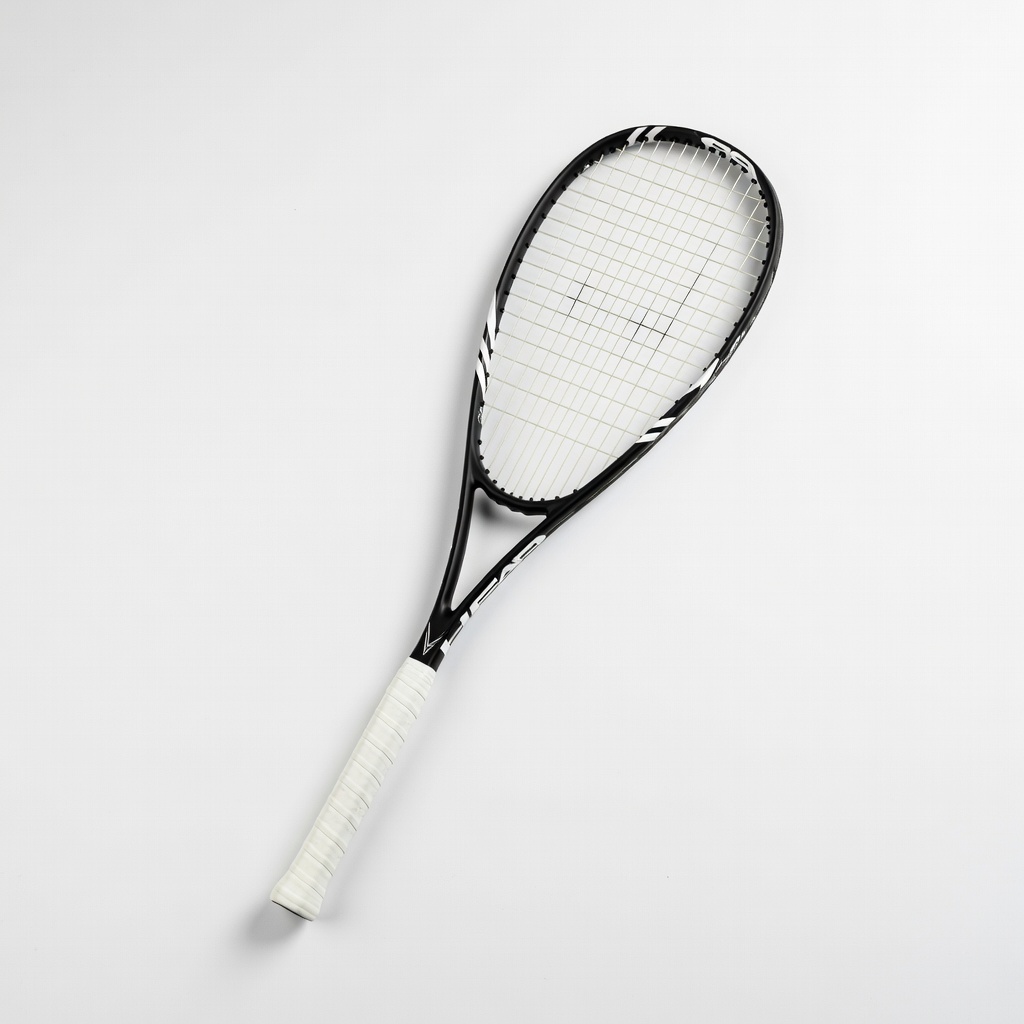
HEAD Aspire 2020 Squash Racquet

Why Great for Beginners:

Super lightweight and forgiving, perfect for first swings without arm strain. Large head catches mishits, building confidence fast. Great Amazon value with solid reviews from new players.

โœ“ Beginner Pros

  • +Ultra-light 130g easy swing
  • +Oversized head for sweet spot
  • +Comfy grip out-of-box
  • +Durable for wall practice

โœ— Beginner Cons

  • -Less power for advanced shots
  • -Basic strings need restring soon
๐Ÿ‘ Best for: Total newbies testing squash
๐Ÿ‘Ž Not for: Competitive players wanting control

#2
๐Ÿ‘ Recommended

Tecnifibre Suprem 3 125 Squash Racket

Learning Curve: Easy

$89.99
Difficulty: 2/5
Tecnifibre Suprem 3 125 Squash Racket

Why Great for Beginners:

Balanced power/control ideal for learning all shots. Flexible frame forgives errors, lightweight for rallies. Top beginner pick in reviews for feel and durability.

โœ“ Beginner Pros

  • +Perfect 135g weight
  • +Large sweet spot
  • +Good vibration control
  • +Grows with skills

โœ— Beginner Cons

  • -Slightly pricier
  • -Grip may need tape
๐Ÿ‘ Best for: Weekly casual players
๐Ÿ‘Ž Not for: Budget-only buyers
#3
๐Ÿ‘ Recommended

Dunlop Revelation Pro 125 Squash Racket

Learning Curve: Moderate

$109.95
Difficulty: 2/5
Dunlop Revelation Pro 125 Squash Racket

Why Great for Beginners:

Versatile all-court design helps learn basics smoothly. Forgiving on mishits, comfortable for long sessions. Praised in beginner forums for natural swing.

โœ“ Beginner Pros

  • +135g light balance
  • +Anti-vibe tech
  • +Durable build
  • +Pre-strung ready

โœ— Beginner Cons

  • -Not cheapest
  • -Head slightly smaller
๐Ÿ‘ Best for: Club beginners improving fast
๐Ÿ‘Ž Not for: Tiny budgets
#4
โœจ Premium

Tecnifibre Carboflex Airshaft 125 Squash Racket

Learning Curve: Easy

$179.99
Difficulty: 2/5
Tecnifibre Carboflex Airshaft 125 Squash Racket

Why Great for Beginners:

Premium build with beginner perks like huge sweet spot and arm-friendly flex. Lasts years, transitions to intermediate seamlessly. Elite feel without steep curve.

โœ“ Beginner Pros

  • +Top durability
  • +Excellent control/power
  • +Pro dampening
  • +Customizable grip

โœ— Beginner Cons

  • -Higher cost
  • -Overkill for rare play
๐Ÿ‘ Best for: Serious beginners investing long-term
๐Ÿ‘Ž Not for: Casual triers

๐Ÿ“– Complete Beginner's Guide to Squash Racket

A squash racket is your paddle for hitting a small rubber ball on an enclosed court โ€“ think fast tennis with walls. Basics: strung oval frame (head), handle (grip), strings for ball contact. Sizes range from kids' to pro, but beginners need adult lightweights.

Types: Power rackets (head-heavy, for smashes), control (head-light, precise), all-court (balanced). Beginners thrive on all-court โ€“ versatile for learning serves, drives, boasts.

'Beginner-friendly' means oversized head and flexible frame absorb errors, giving confidence. Realistic expectations: First games, focus on straight shots; expect mishits, but good racket minimizes frustration.

Marketing traps: 'Tour-pro used' sounds cool but too stiff. Evaluate by weight, balance (printed on frame), reviews mentioning 'easy swing'. Test in-store if possible, but Amazon returns make online safe.

Growth: Start here, upgrade when you crave more power/control after 6-12 months.

๐Ÿค” How to Choose Your First Squash Racket

Ask: What's your budget? Play frequency (1-2x/week)? Arm strength (light if average)? Goal (fun or competitive)?

Budget: Under $50 for trials, $50-120 sweet spot (value+growth), $120+ premium (lasts years). Casual? Budget even balance. Frequent? Recommended mid-range.

Scenarios: Gym newbie โ€“ lightweight budget. Club joiner โ€“ recommended. Avoid red flags: No reviews, ultra-cheap alloy (breaks easy), pro specs (heavy/stiff). Plan growth: Pick with room to add string tension later.

๐Ÿ’ฐ Budget Guide for Beginners

200+

Advanced entry: For serious starters, full features

50 - $120

Sweet spot: Best value, forgiving, lasts 1-2 years with growth

120 - $200

Premium beginner: Pro quality, minimal upgrade need soon

Under $ - $50

Entry level: Cheap try-out, basic performance, upgrade in months

โš ๏ธ Common Beginner Mistakes to Avoid

Beginners grab flashy pro-endorsed rackets, but they're heavy and stiff, leading to sore arms and frustration (Reddit horror stories abound). Instead, stick to light all-court.

Skipping accessories like balls or grips means poor first sessions โ€“ buy bundle. Cheap no-name frames bend/break; spend $50 min for graphite.

High tension or wrong balance kills fun; check specs. Lessons: Read 100+ reviews for 'easy beginner', return if off. Plan restring every 3-6 months.

  • ร—Buying pro rackets too heavy/stiff โ€“ arm fatigue
  • ร—Skipping balls/grip โ€“ can't play comfortably
  • ร—Cheapest alloy frames โ€“ snap on first drop
  • ร—Ignoring balance โ€“ mishit city
  • ร—High string tension โ€“ no power for weak swings
  • ร—No cover โ€“ strings wear fast
  • ร—Overlooking grip size โ€“ blisters galore
  • ร—Not restringing after months โ€“ dead feel

๐Ÿ“ˆ Your Progression Path: Beginner to Intermediate

Start with basics: Straight drive, lob, simple boast. Practice solo against walls 20min/day. Join beginner clinics for rallies.

Build progressively: Month 1 control, month 3 volleys. Outgrow beginner racket when craving power (can't kill drops) or control (overhits).

Upgrade signs: Consistent games, club league. First swap: Strings for tension tweak, then mid-range head-light racket. Most stay beginner 6-12 months.

๐Ÿ“š Learning Resources for Beginners

  • ๐Ÿ“–Squash: Skills ยท Techniques ยท Tactics (Amazon book, ASIN B07P5Q8R9S)
  • ๐Ÿ“–Starting Squash: The Fun Way to Play and Win (ASIN B01M0K2L3N)
  • ๐Ÿ“–Dunlop Squash Training Ball (ASIN B08H4I5J6K)
  • ๐Ÿ“–Squash for Beginners DVD (ASIN B07N8O9P0Q)
  • ๐Ÿ“–England Squash Coaching Book (ASIN B09M1N2O3P)

๐ŸŽฏ Bottom Line: Our Recommendations

Best overall: Tecnifibre Suprem 3 125 ($89.99) โ€“ sweet spot value, forgiving, grows with you.

Budget: HEAD Aspire ($49.95). Premium: Tecnifibre Carboflex ($179.99). Grab essentials: Balls, overgrip, cover (~$45 total).

You're ready! Order, hit a court, enjoy the fun. Squash hooks fast โ€“ you've got the right start.

โ“ Frequently Asked Questions

Tecnifibre Suprem 3 125 (B09Y5Z6A7B) โ€“ lightweight, forgiving sweet spot, perfect balance for new swings.
$50-120 sweet spot for value that lasts; under $50 to try, $120+ for premium.
Lightweight (130g), large head, even balance, low tension strings, vibration dampener.
HEAD Aspire 2020 (B08I4J5K6L) โ€“ ultra-light, huge sweet spot, zero learning curve.
Balls (red dot), overgrip, racket cover โ€“ day one musts for play and protection.
Match budget/use: Light/even balance, check reviews for 'forgiving'. Amazon easy returns.
No, with right light racket โ€“ focus forgiving features, practice walls first.
Pro models (too stiff), no accessories, cheap breaks โ€“ pick beginner-specs.
After 6-12 months, when shots feel underpowered or lack control.