Is Best Paint Sprayer for beginners Worth It? Honest Review (202…
Everything beginners need to know to choose their first paint sprayer with confidence
Choosing your first paint sprayer can feel overwhelming with all the technical terms and options out there. But don't worry—this guide is designed to cut through the noise and help you pick the right sprayer for your projects, budget, and skill level. Whether you're painting furniture, fences, or an entire room, we'll show you exactly what to look for, which models are best for beginners, and how to avoid common mistakes. By the end, you'll feel confident and ready to start spraying.
📋 In This Guide
• Why Beginners Struggle with Paint Sprayer
• What to Look For (Key Features)
• Top 5 Beginner-Friendly Paint Sprayer
• Essential Accessories for Beginners
• Common Beginner Mistakes to Avoid
• Your Progression Path
• FAQ & Learning Resources
😰 Why Beginners Struggle with Paint Sprayer
Many beginners struggle because paint sprayers come in confusing categories like HVLP, airless, and handheld. Terms like PSI, CFM, and tip size add to the confusion. There's also the fear of making a mess, wasting paint, or buying a machine that's too complex. With hundreds of options on Amazon, it's easy to get paralyzed. This guide simplifies everything so you can focus on what matters: getting great results with minimal frustration.
🔍 What to Look For: Key Beginner-Friendly Features
As a beginner, you want a sprayer that is easy to set up, clean, and use. Look for features like adjustable flow control (so you can start slow), a clear paint cup so you see how much paint is left, and a simple cleaning method (many handhelds can be rinsed under water). Avoid sprayers that require high-pressure adjustments or specialized tools. The best beginner sprayer is one that forgives mistakes—like inconsistent speed or distance—and still delivers a smooth finish.
✅ Essential Features for Beginners
•Adjustable flow control: lets you start low and increase gradually.
•Easy cleaning: quick rinse under water or with included cleaning tools.
•Clear paint cup: always know how much paint is left.
•Included viscosity cup: ensures paint is thinned correctly.
•Lightweight design: reduces fatigue during long sessions.
•Multiple spray patterns: vertical, horizontal, and round for different surfaces.
•Spare tips: for different paint types and thicknesses.
🏆 Top 5 Best Paint Sprayer for Beginners
#1
💰 Budget
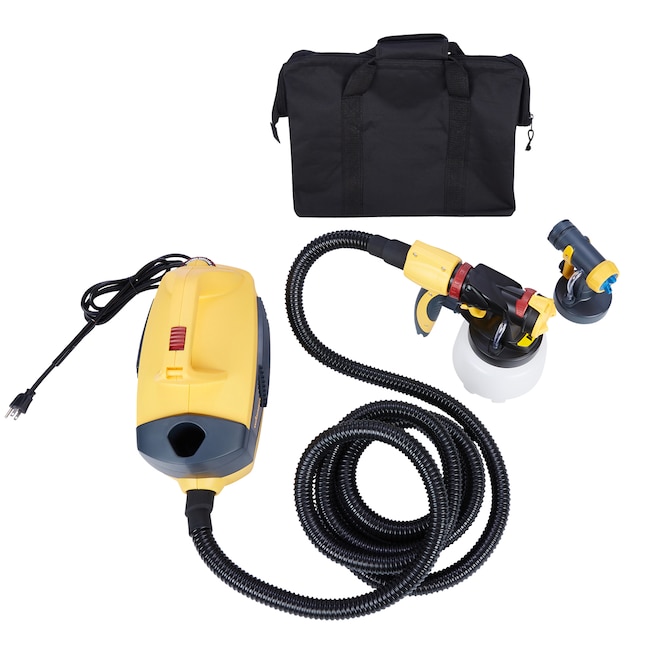
Wagner FLEXiO 4000 HVLP Paint Sprayer
Learning Curve: Easy
$79.99
Difficulty: 2/5
Why Great for Beginners:
The Wagner FLEXiO 4000 is incredibly easy to use and clean. Its X-Boost turbine provides adjustable power, and the iSpray nozzle handles both thin and thick paints without clogs. Perfect for beginners painting furniture or crafts.
✓ Beginner Pros
+Easy cleaning with water
+Adjustable air flow
+Lightweight at under 4 lbs
+Works with latex, chalk, and stain
✗ Beginner Cons
-Small 1-quart cup for larger projects
-Not ideal for exterior walls
👍 Best for: Beginners with small to medium indoor projects like furniture, cabinets, and crafts.
👎 Not for: Those planning to paint large rooms or fences regularly.
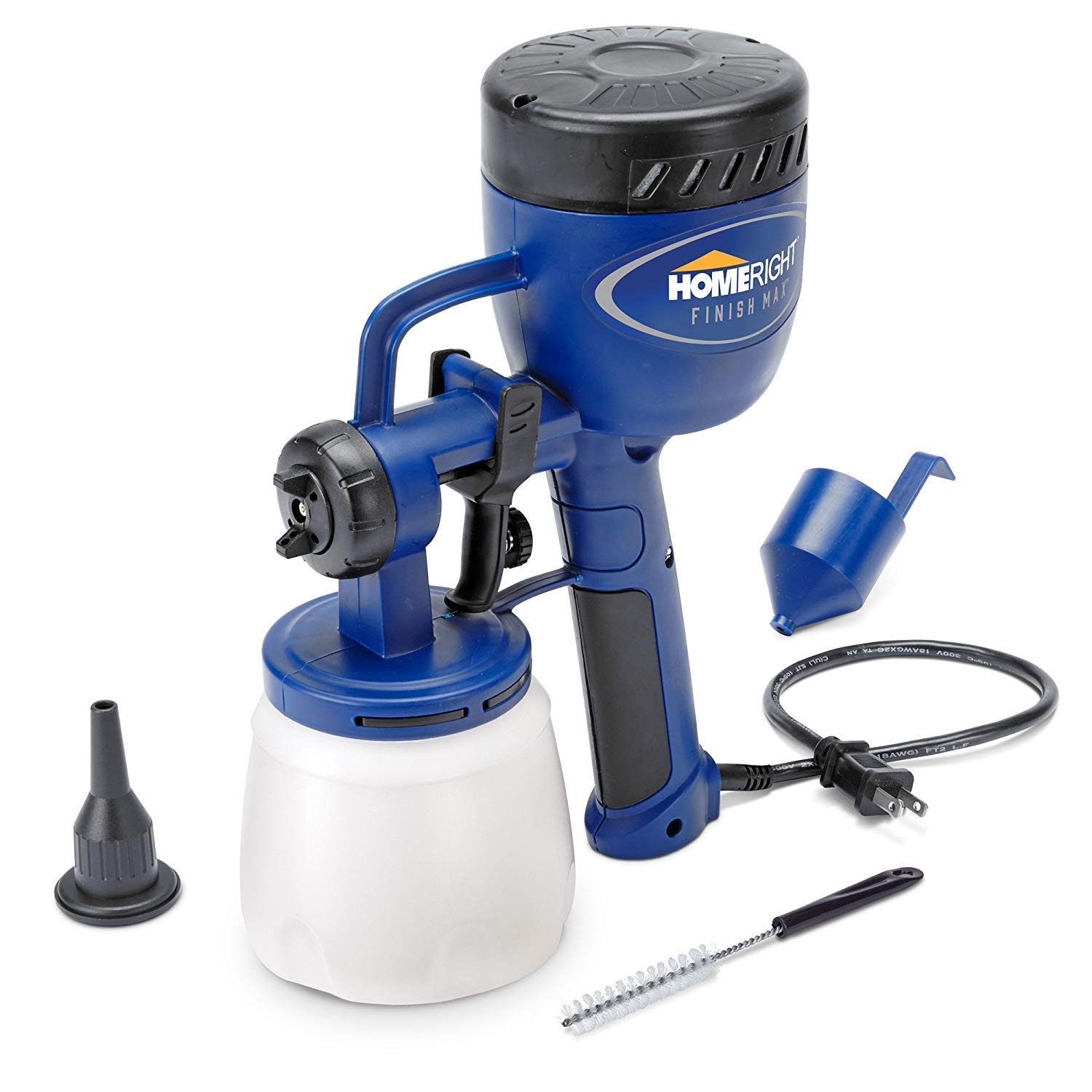
The HomeRight C800766 is a handheld HVLP sprayer with a 1.5-quart cup and a powerful 900W motor. It comes with three spray tips and a viscosity cup, making it easy to start. The cleaning process is straightforward, and users love its reliability.
✓ Beginner Pros
+Large 1.5-quart cup
+Three tip sizes included
+Powerful motor for thick paints
+Easy to adjust pattern
✗ Beginner Cons
-Heavier than some rivals
-Cleaning can be messy if not careful
👍 Best for: Beginners who want a bit more power and capacity for projects like doors, tables, or small fences.
👎 Not for: Those seeking a ultra-lightweight sprayer for very fine detail work.
The Graco TrueCoat 360 is a bestseller for good reason. It’s a handheld airless sprayer that handles both interior and exterior projects. The 360-degree hose allows any position, and the control is intuitive. Cleanup is fast with the included cleaning tool.
✓ Beginner Pros
+Flexible 360-degree hose
+Works with unthinned paint
+Fast coverage for large areas
+Easy adjustment for pattern and flow
✗ Beginner Cons
-Slightly heavier on extended use
-Need to keep tip clean to avoid drips
👍 Best for: Beginners who want to paint both furniture and outdoor fences or sheds with one tool.
👎 Not for: Those who only do fine detail work (better with HVLP).
The Fuji Semi-Pro 2 offers professional quality with beginner-friendly features like a non-bleed gun that stops paint flow instantly. The turbine has variable speed, and the included T-70G spray gun is ergonomic. It's a step up in performance but still accessible with a bit of practice.
✓ Beginner Pros
+Pro-level finish right away
+Non-bleed trigger for easy control
+Smooth, even spray pattern
+Durable build that lasts
✗ Beginner Cons
-More expensive
-Larger turbine unit takes up space
-Requires learning thinning for different materials
👍 Best for: Serious beginners who plan to paint frequently or want the best possible finish from the start.
👎 Not for: Budget-conscious or occasional users who paint once a year.
The Wagner Control Pro 150 uses a ‘Power Tank’ system that allows you to spray at any angle—even upside down. It's designed for large surfaces with its quart cup and adjustable settings. The cleaning is simple, and it works well with most paints right out of the box.
✓ Beginner Pros
+Any-angle spraying
+Large quart cup
+Easy cleanup
+Great for outdoor projects
✗ Beginner Cons
-Not as refined for fine furniture
-Can be messy if not used on appropriate surfaces
👍 Best for: Beginners focused on painting fences, decks, and large walls where easy angle spraying helps.
👎 Not for: Those looking for a furniture-grade finish.
Paint sprayers come in three main types for beginners: handheld HVLP, stationary HVLP, and airless. Handheld HVLP (like the Wagner Flexio) is the most beginner-friendly because it's lightweight, easy to clean, and works well for small to medium projects like furniture or cabinets. Stationary HVLP units (like the Fuji Semi-Pro) offer more power and precision but have a steeper learning curve. Airless sprayers (like Graco TrueCoat) are great for large surfaces but require careful technique to avoid drips. For most beginners, a handheld HVLP sprayer offers the best balance of ease, affordability, and good results. Realistic expectations: paint sprayers are faster than brushes but require practice to master. Start with a simple project like a piece of furniture or a fence.
🤔 How to Choose Your First Paint Sprayer
Ask yourself: What will I paint most? Small projects (furniture, cabinets) → handheld HVLP. Large projects (fences, walls) → handheld airless or stationary HVLP. What's my budget? Under $100 for occasional use, $100–$200 for a good all-rounder, $200+ if you plan to paint regularly. Think about storage: handheld units take up little space. Also consider cleanup time—some models can be cleaned in 5 minutes. Red flags: avoid sprayers that require special tools to clean or don't come with extra tips and a viscosity cup.
💰 Budget Guide for Beginners
350+
Professional entry - excellent finish and durability, for serious hobbyists or small businesses.
100 - $200
Sweet spot for most beginners - reliable performance, easy cleaning, versatile features.
Entry level - good for trying out, may need upgrade soon. Suitable for small projects.
⚠️ Common Beginner Mistakes to Avoid
Beginners often buy the cheapest sprayer and get frustrated with clogs and poor finish. Others buy a high-end airless sprayer thinking it's better, but it's overkill and hard to control. Skipping essential accessories like paint strainers and cleaning kits leads to more trouble. Many also ignore the importance of thinning paint properly (using a viscosity cup). Finally, rushing through projects without testing on scrap first results in wasted paint and time.
×Buying the cheapest model and getting frustrated with clogs and poor finish.
×Skipping paint strainers, leading to nozzle blockages.
×Not thinning paint (using a viscosity cup) and getting splatter.
×Choosing an airless sprayer for small indoor projects.
×Forgetting to test on scrap cardboard first.
×Neglecting proper cleanup, ruining the sprayer over time.
×Buying a gun-only system without a turbine (for HVLP).
📈 Your Progression Path: Beginner to Intermediate
Start with small, simple projects like painting a chair or a picture frame using a handheld HVLP. Once you're comfortable with the flow and cleaning, try painting a set of kitchen cabinets or a dresser. When you consistently get good results and feel limited by the small cup size or slower speed, consider upgrading to a larger HVLP unit with a turbine or an airless sprayer for bigger jobs. Most beginners stay in the handheld realm for 6–12 months before feeling ready to move up.
📚 Learning Resources for Beginners
📖The Complete Guide to Paint Sprayers by James Smith (book on Amazon)
📖YouTube tutorials from channels like 'Paint Sprayer Pro'
📖Instructional DVD: 'Paint Spraying 101'
📖Practice project kits (like small wooden panels)
🎯 Bottom Line: Our Recommendations
For most beginners, the best overall pick is the Graco TrueCoat 360 (recommended tier) because it works on both small and large projects, cleans easily, and has a proven track record. If you're on a tight budget, the Wagner FLEXiO 4000 is excellent for smaller tasks. For those willing to invest more from the start, the Fuji Semi-Pro 2 provides pro-level results with a manageable learning curve. Pair your sprayer with a cleaning kit and a set of extra tips, and you're ready to go. Remember: practice makes perfect—start with a small project and enjoy the process!
❓ Frequently Asked Questions
For most beginners, the Graco TrueCoat 360 DS is the best all-around choice because it's versatile, easy to clean, and handles both small and large projects. If you're on a budget, the Wagner FLEXiO 4000 is excellent for smaller jobs.
A good beginner sprayer costs between $80 and $180. Spending under $100 gets you a capable unit for small projects, while $120-$180 offers better features and durability for larger or more frequent use.
Key beginner features include adjustable flow control, easy cleaning (preferably with water), a clear paint cup, a viscosity cup for thinning, and multiple spray patterns. Avoid models that require special tools to clean.
The Wagner FLEXiO 4000 is often cited as the easiest to use due to its simple controls, lightweight design, and quick-clean features. It's great for beginners who want to start with minimal fuss.
Essential accessories include a cleaning kit, extra spray tips, a viscosity cup, paint strainers, and protective gear (mask, goggles, gloves). These will save you time and improve your results.
Consider what you'll paint most (small items → handheld HVLP; large surfaces → airless), your budget (under $100 for occasional use, $100+ for regular use), and how much time you want to spend cleaning (some models clean in 5 minutes). Read reviews from other beginners.
No, modern paint sprayers are designed with beginners in mind. Handheld HVLP models are especially user-friendly. The main challenges are learning to thin paint properly and cleaning the sprayer after use—both are easy with a little practice.
Common mistakes include buying the cheapest model, skipping paint strainers, not thinning paint, using the wrong spray pattern, neglecting cleanup, and not testing on scrap first. Avoiding these will save you frustration.
Yes, many sprayers handle latex. For thick latex, you may need to thin it slightly (use a viscosity cup) or choose a sprayer with a larger tip. Airless sprayers like the Graco TrueCoat work great with unthinned latex.
First, empty the paint cup and run clean water or solvent through the system until it runs clear. Then disassemble the nozzle and tip, clean them with the included brush, and reassemble. Most handheld sprayers can be flushed in under 10 minutes.
For beginners, corded sprayers are recommended because they provide consistent power and won't run out of battery mid-project. Battery-powered sprayers offer portability but add weight and potential downtime.
HVLP (High Volume Low Pressure) uses a turbine to create a soft spray with less overspray, ideal for fine finishes and small projects. Airless sprayers use high pressure to atomize paint, covering large areas quickly but with more overspray. Beginners often start with HVLP.