Is Best MIDI Controller for beginners Worth It? Honest Review (2…
Everything beginners need to know to choose their first MIDI controller with confidence.
Choosing your first MIDI controller can feel overwhelming. With dozens of options, confusing technical terms, and a wide price range, it's easy to worry about making the wrong choice. But it doesn't have to be complicated. This guide will help you understand exactly what to look for, avoid common mistakes, and pick a controller that fits your needs and budget. Whether you're producing beats, composing melodies, or learning piano, we'll make the process simple and confidence-building.
📋 In This Guide
• Why Beginners Struggle with MIDI Controller
• What to Look For (Key Features)
• Top 5 Beginner-Friendly MIDI Controller
• Essential Accessories for Beginners
• Common Beginner Mistakes to Avoid
• Your Progression Path
• FAQ & Learning Resources
😰 Why Beginners Struggle with MIDI Controller
Many beginners get stuck because they don't know what features they really need. Terms like 'velocity-sensitive', 'aftertouch', and 'daw integration' sound intimidating. There are also dozens of brands and models, each claiming to be the best. Beginners often fear buying something too basic (and outgrowing it quickly) or too advanced (and wasting money on features they never use). Plus, budget constraints make it hard to know where to invest. The good news: most modern entry-level controllers are designed with beginners in mind, and with a little guidance, you can make a confident choice.
🔍 What to Look For: Key Beginner-Friendly Features
For beginners, the most important factor is ease of use. Look for a controller that plugs right into your computer via USB and works with your music software (DAW) without complicated setup. Key features include velocity-sensitive keys (they respond to how hard you press), a decent number of keys (25 to 49 is ideal for portability and space), and basic controls like pitch bend and modulation wheel. You don't need aftertouch, drum pads (unless you want them), or deep integration yet. Most importantly, choose a controller from a reputable brand with good beginner tutorials and a supportive community. Avoid controllers with steep learning curves or software that is hard to configure.
✅ Essential Features for Beginners
•USB plug-and-play: Connects directly to your computer without extra drivers.
•Velocity-sensitive keys: Responds to touch—press harder for louder sounds.
•Pitch bend and modulation wheel: Essential for expressive playing.
•Easy DAW integration: Works seamlessly with popular software like Ableton, FL Studio, or GarageBand.
•Lightweight and portable: Easy to move around or store when not in use.
•Built-in arpeggiator: Helps create patterns automatically (fun and educational).
•Clear labeling: Buttons and controls are labeled intuitively.
•Affordable price: Under $200 is typical for quality beginner controllers.
🏆 Top 5 Best MIDI Controller for Beginners
#1
⭐ Top Pick👍 Recommended
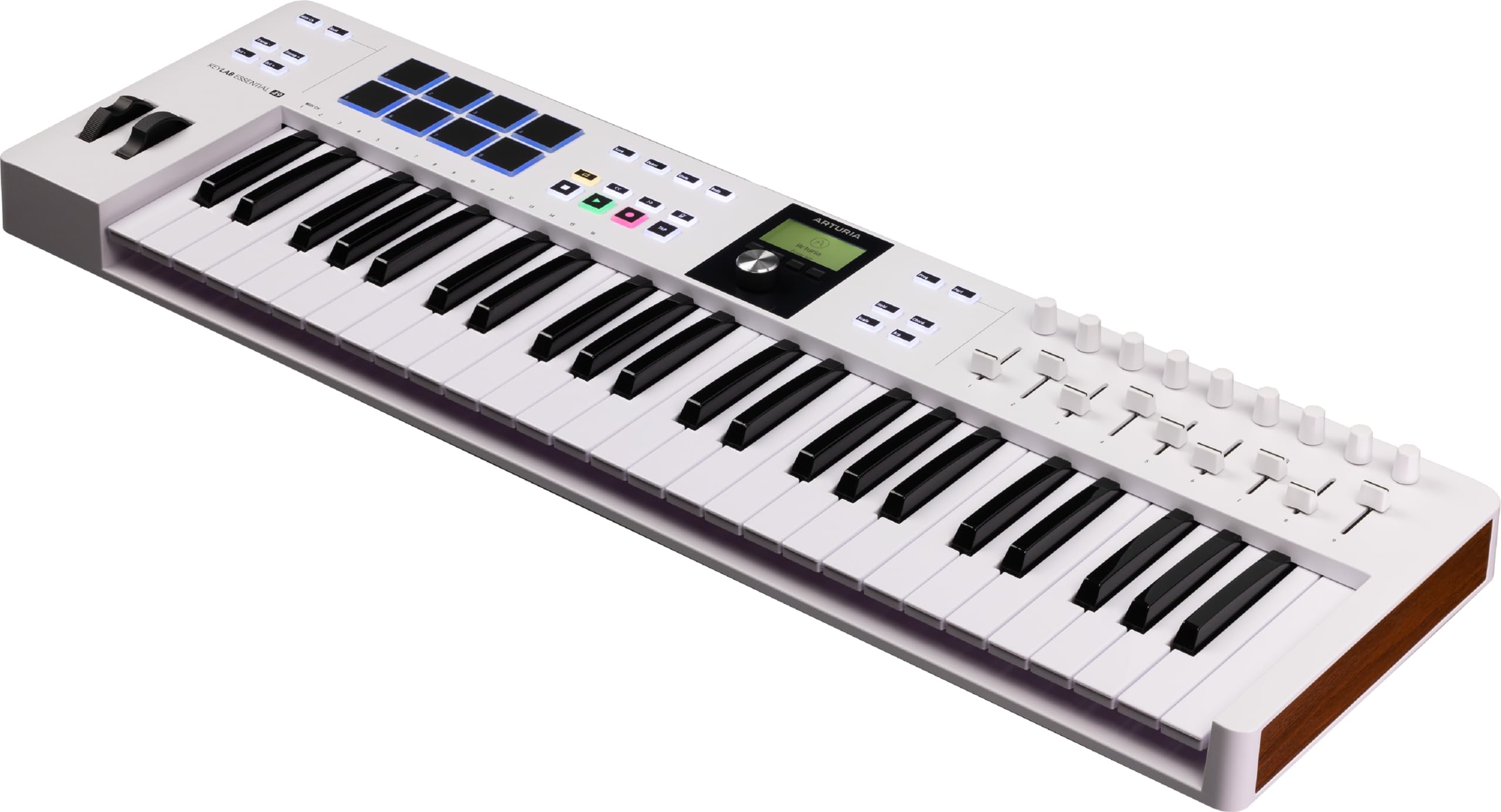
Arturia KeyLab Essential 49
Learning Curve: Easy
$149.99
Difficulty: 1/5
Why Great for Beginners:
Arturia KeyLab Essential offers great key feel, extensive software bundle (Analog Lab intro), and easy integration with any DAW. The layout is intuitive with clear color coding.
✓ Beginner Pros
+Excellent velocity-sensitive keys with aftertouch
+Comes with Analog Lab Lite (hundreds of sounds)
+Clear, well-labeled controls
+Solid build quality for the price
+Easy to set up with any DAW
✗ Beginner Cons
-No drum pads (if you need them)
-Slightly larger than some 49-key competitors
👍 Best for: Beginners who want a traditional keyboard feel with great software and ease of use.
👎 Not for: Those who need built-in drum pads or a very compact controller.
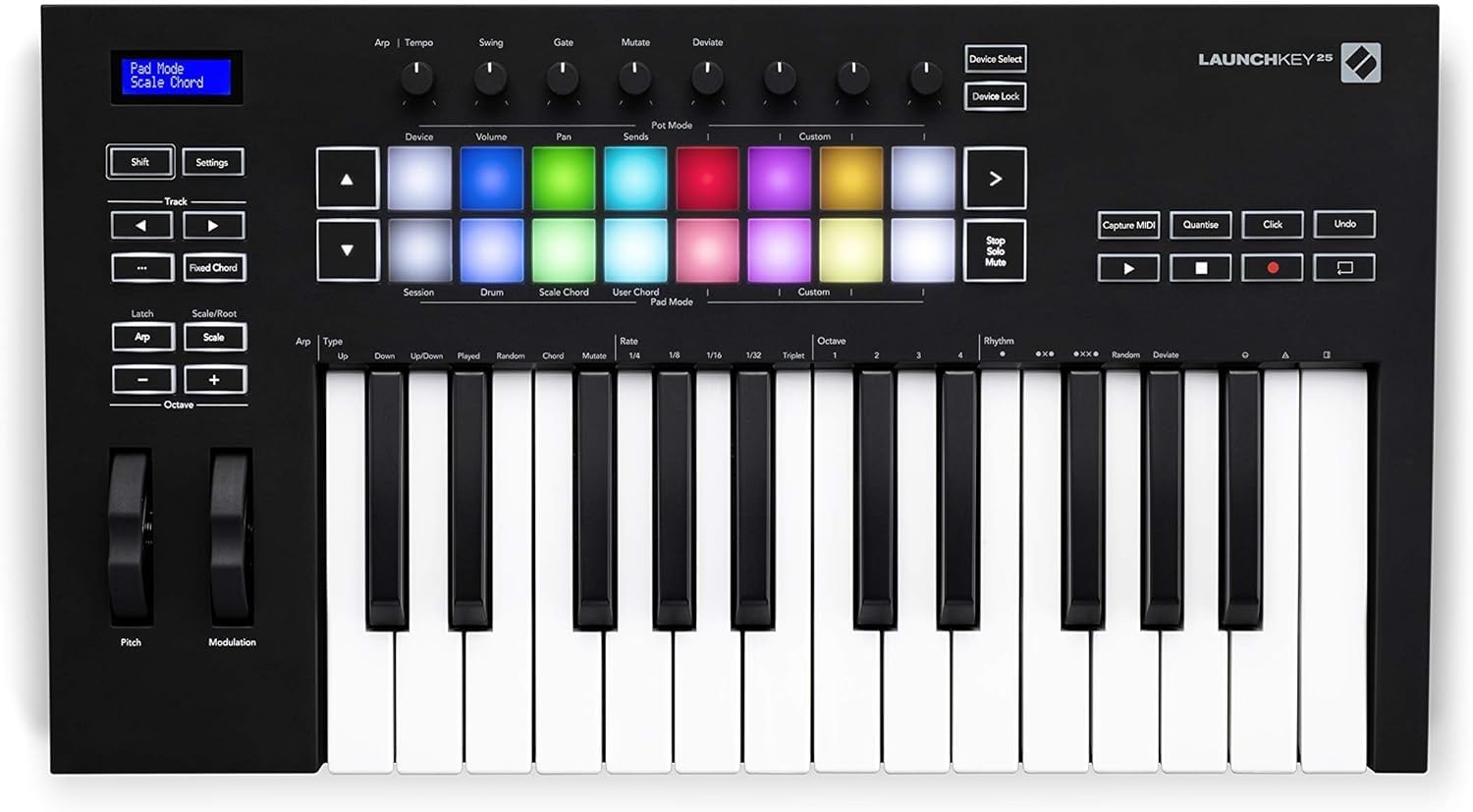
Novation Launchkey is designed for Ableton Live but works with any DAW. It has 16 velocity-sensitive drum pads, knobs, and a built-in arpeggiator – all very beginner-friendly.
✓ Beginner Pros
+16 responsive drum pads perfect for beat-making
+Built-in arpeggiator and chord mode
+Excellent Ableton integration (out of box)
+Compact and portable
+Includes Ableton Live Lite and other software
✗ Beginner Cons
-25 keys may feel limiting for two-hand playing
-Plastic build could feel less premium
👍 Best for: Beginners into beat-making and electronic music who use Ableton or FL Studio.
👎 Not for: Pianists or those wanting a larger key range.
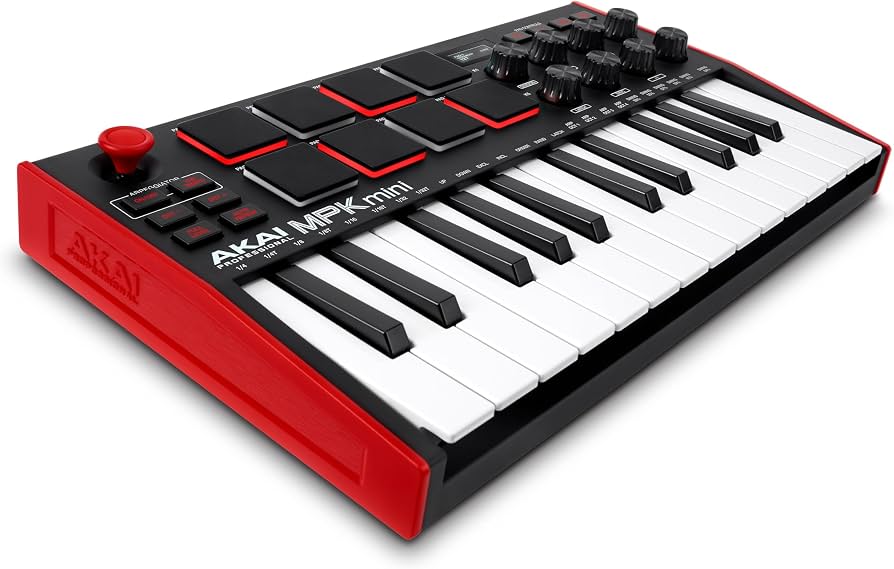
The MPK Mini is the most popular beginner controller. It's ultra-portable, affordable, and includes drum pads, knobs, and a joystick for pitch/mod. Great for producers on a tight budget.
✓ Beginner Pros
+Very affordable and portable
+Has drum pads and knobs
+Works with any DAW
+Includes MPC Beats software
✗ Beginner Cons
-Mini keys may feel small for some
-Limited to 25 keys
-Joystick instead of wheels (not everyone likes it)
👍 Best for: Beginners on a budget who produce beats and need portability.
👎 Not for: Those who prefer full-size keys or need more keys for piano-style playing.
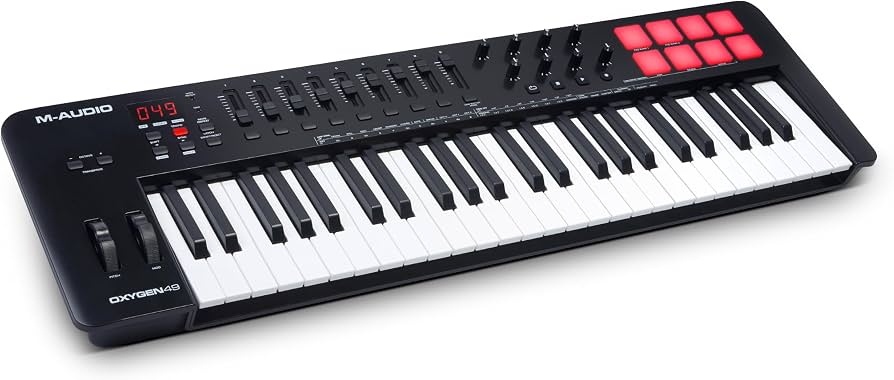
M-Audio Oxygen 49 offers full-size keys, 8 drum pads, and plenty of controls at a reasonable price. It's known for easy setup and good compatibility with all major DAWs.
✓ Beginner Pros
+Full-size velocity-sensitive keys
+8 drum pads and 8 knobs
+Direct integration with Pro Tools, Ableton, etc.
+Includes software (Pro Tools First, Ableton Live Lite)
✗ Beginner Cons
-Build is mostly plastic, can feel light
-Pads are not as responsive as higher-end models
👍 Best for: Beginners who want full-size keys, drum pads, and lots of controls without breaking the bank.
👎 Not for: Those needing premium build or deep DAW integration beyond basics.
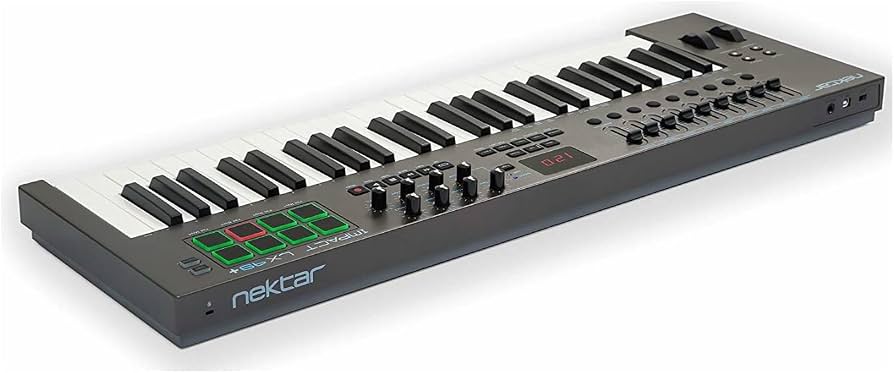
Nektar Impact LX49+ is designed with beginners in mind – it automatically maps to any DAW (Bitwig, Studio One, etc.) without manual setup. The keys have a great feel, and it includes an LED display for easy navigation.
✓ Beginner Pros
+Auto-maps to many DAWs (no manual setup)
+Excellent key feel with aftertouch
+LED display shows parameter names
+Includes Bitwig 8-Track software
+Durable build
✗ Beginner Cons
-Slightly higher price
-No drum pads (but version with pads exists)
👍 Best for: Beginners who want a premium experience with zero setup hassle and great software.
👎 Not for: Those needing drum pads or on a strict budget.
A MIDI controller is a keyboard that sends note and control data to your computer or synthesizer. It doesn't produce sound on its own—it triggers virtual instruments in your DAW. Most beginners start with a 25-key or 49-key USB controller. These are compact, affordable, and enough for making melodies and chords. Full-size 88-key controllers are heavier and more expensive, usually for pianists. For beginners, a 25-key model is great for portability and beat-making, while a 49-key offers more range for both hands. Look for 'synth-action' keys (like a keyboard) rather than 'weighted' keys (like a real piano). Synth-action is easier to play for most beginners. Many controllers also include drum pads, knobs, and faders, which can be fun but not necessary when starting. The key is to get a controller that works out of the box with your DAW, requires minimal setup, and feels comfortable to play.
🤔 How to Choose Your First MIDI Controller
Start by asking yourself: What do I want to make? Beats? Melodies? Full songs? For beat-making, a 25-key controller with drum pads is ideal. For melody and chords, a 49-key is better. Next, consider your DAW: many controllers have built-in integration for Ableton, FL Studio, or Logic Pro. Check online if the controller maps well to your software. Budget-wise, $100–$150 is the sweet spot for quality beginner controllers. Avoid the absolute cheapest ($50) as they often feel cheap and lack features. Also, don't overspend on a premium controller until you're sure you'll stick with it. Finally, read beginner reviews and watch setup tutorials to ensure it's beginner-friendly. Red flags: complicated software installation, poor build quality, or lack of customer support.
💰 Budget Guide for Beginners
350+
Professional entry: Full-featured controllers with weighted keys and deep DAW control. For serious beginners with larger budgets.
100 - $200
Sweet spot: Most beginners should aim here. Great build quality, responsive keys, good integration, and room to grow.
200 - $350
Premium beginner: Excellent controllers with more keys (49-61), better key feel, and advanced features. Ideal if you want to avoid upgrading soon.
Under $ - $100
Entry level: Functional but often smaller keys, fewer features. Best for trying out, but may leave you wanting more soon.
⚠️ Common Beginner Mistakes to Avoid
Many beginners buy an 88-key weighted controller thinking they need a 'real piano feel,' but these are heavy, expensive, and often unnecessary for production. Others pick a controller without checking if it works well with their DAW, leading to frustrating manual mapping. The cheapest controllers often have poor key feel and limited software, making learning harder. On the other hand, overspending on a flagship controller before you've even learned basic music theory is wasteful. Beginners also often forget accessories like a sustain pedal or a longer USB cable. To avoid these pitfalls, first decide what kind of music you want to make, research whether the controller integrates with your DAW, and stick to the $100–$200 range until you're sure you need more.
×Buying a controller with too many keys (88-key) thinking bigger is better – it's heavy and expensive
×Ignoring DAW compatibility and ending up with a controller that doesn't map well
×Buying the cheapest model and getting frustrated with poor feel or limited features
×Spending too much on a premium controller before knowing if you'll stick with music production
×Not considering portability if you plan to produce in different places
×Overlooking software bundles – some controllers come with great software that saves money
×Skipping a sustain pedal – it dramatically improves piano-style playing
×Assuming you need drum pads – many beginners never use them
📈 Your Progression Path: Beginner to Intermediate
As a beginner, start by learning basic scales, chords, and how to use your controller with a DAW. Focus on playing simple melodies and using the included software sounds. After a few months, you'll likely outgrow a 25-key controller if you want to play with both hands – that's when a 49- or 61-key upgrade makes sense. Signs you're ready to move up: you find yourself wanting more keys, better key action, or more control surfaces (faders, knobs). Many beginners stay with a 49-key controller for 1–2 years before considering an upgrade to a high-end model. When upgrading, look for weighted keys if you want piano feel, or more advanced DAW integration like motorized faders.
📚 Learning Resources for Beginners
📖Music Production for Beginners (Book) - Lynda.com / Amazon
📖Piano for Producers (Book) - by Jonathan Aron
📖Ableton Live 11 Beginner Course (DVD) - by Udemy (available via Amazon)
📖MIDI Controller Setup Guide (Booklet) - often included with Arturia controllers
📖Online tutorials on YouTube – channels like 'You Suck at Producing' and 'Piano for Producers'
🎯 Bottom Line: Our Recommendations
For most beginners, the Arturia KeyLab Essential 49 or Novation Launchkey 25 Mk3 are excellent choices – they're affordable, easy to use, and come with great software. If you're on a tight budget, the Akai MPK Mini Mk3 is a fantastic entry point. Don't forget a sustain pedal and a longer USB cable. The most important thing is to start making music – your first controller doesn't have to be perfect. You'll learn what you need as you go. Happy producing!
❓ Frequently Asked Questions
The Arturia KeyLab Essential 49 and Novation Launchkey 25 are top choices. They're easy to set up, have great key feel, and include powerful software bundles.
Most beginners should spend between $100 and $200. This range offers quality keys, good DAW integration, and software bundles. Avoid spending under $60 (poor quality) or over $300 (unnecessary features).
Velocity-sensitive keys, pitch bend/mod wheel, USB plug-and-play, and basic DAW controls. Drum pads and an arpeggiator are nice but not essential.
The Nektar Impact LX49+ is extremely beginner-friendly because it auto-maps to many DAWs. The Arturia KeyLab Essential is also very intuitive.
A sustain pedal, a longer USB cable, and a padded case or cover. An audio interface is not required if you're using a USB controller.
Consider what music you want to make, what DAW you use, and your budget. For beat-making, a 25-key with pads (e.g., Launchkey 25). For melodies, a 49-key (e.g., KeyLab Essential). Check that it works with your DAW out of the box.
No – most modern controllers are plug-and-play. You'll need to learn basic music theory and DAW skills, but the controller itself is straightforward.
Buying too many keys (88-key), ignoring DAW compatibility, buying too cheap, overspending, and forgetting accessories like a sustain pedal.
No. Most USB controllers connect directly to your computer and do not require a separate MIDI interface. Only if you have 5-pin DIN MIDI devices would you need an interface.
Some controllers work with iOS devices via USB adapter. For standalone use with hardware synths, you need a controller with 5-pin MIDI out and a sound module/synth.