Choose your first lockpicking set with confidence – top picks, tips, and mistakes to avoid for total newbies.
Picking your first lockpicking set can feel intimidating – so many tools, strange names, and worries about wasting money on junk. As a complete beginner, you might wonder if you'll ever pop open a lock or if it's too hard to start. Don't worry; this guide is made for you.
Lockpicking is a fun, rewarding hobby that teaches patience and problem-solving, using practice locks (totally legal!). Beginners often get overwhelmed by shiny 'professional' kits that are way too advanced. This guide simplifies everything.
We'll cover what matters, top Amazon picks with links, accessories, mistakes to dodge, and your growth path. By the end, you'll confidently buy your first set and start practicing like a pro.
📋 In This Guide
• Why Beginners Struggle with Lockpicking Sets
• What to Look For (Key Features)
• Top 4 Beginner-Friendly Lockpicking Sets
• Essential Accessories for Beginners
• Common Beginner Mistakes to Avoid
• Your Progression Path
• FAQ & Learning Resources
😰 Why Beginners Struggle with Lockpicking Sets
Beginners dive into lockpicking excited but quickly hit walls. The biggest issue? Jargon like 'tension wrench,' 'raking,' or 'single pin picking' – it sounds like a secret code. Without clear explanations, you don't know what's essential.
Options overwhelm: cheap no-name sets that bend or break, or pricey 'pro' kits with 100 tools you'll never use. Reviews mix expert praise with newbie frustration: 'Snapped on day one!' or 'No instructions!'. Fear of illegal use scares some off, but practice-only sets are safe and legal in most places.
Many buy without practice locks, staring at real padlocks with no feedback. Result? Frustration and quitting before fun begins. This guide fixes that.
🔍 What to Look For: Key Beginner-Friendly Features
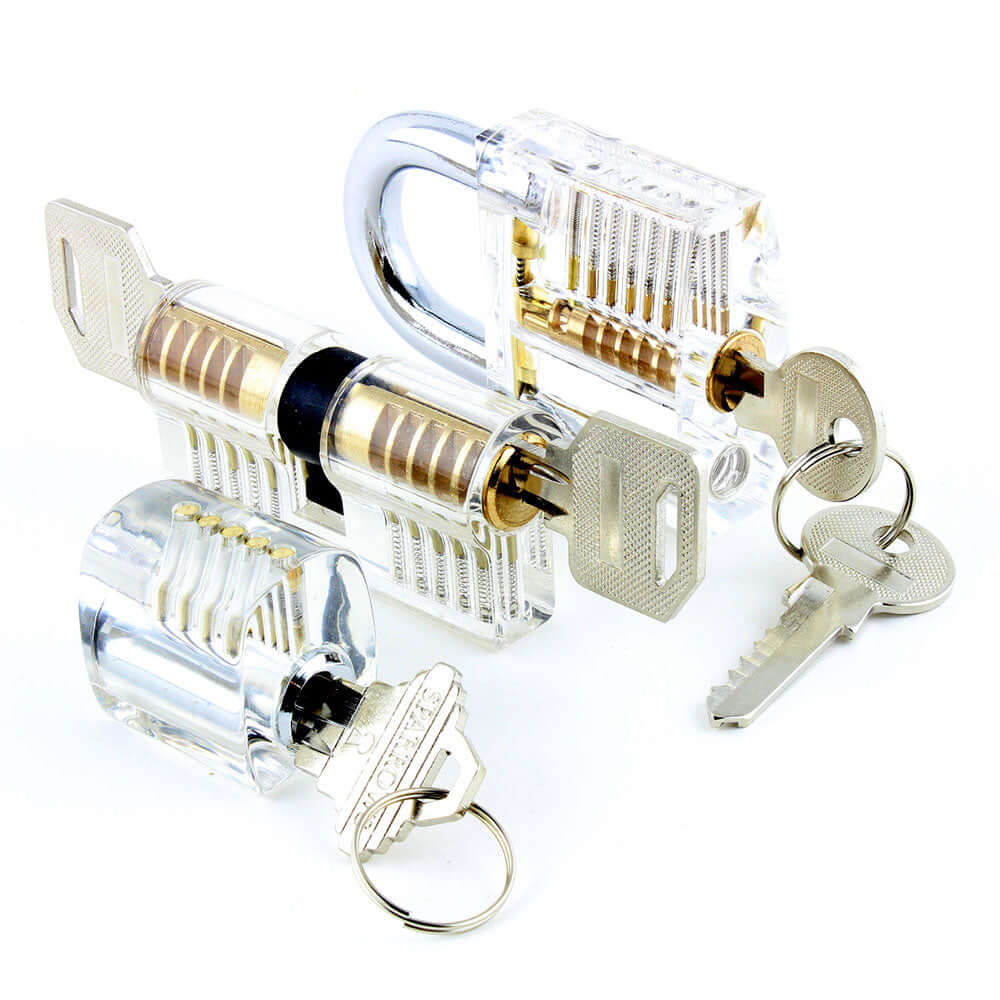
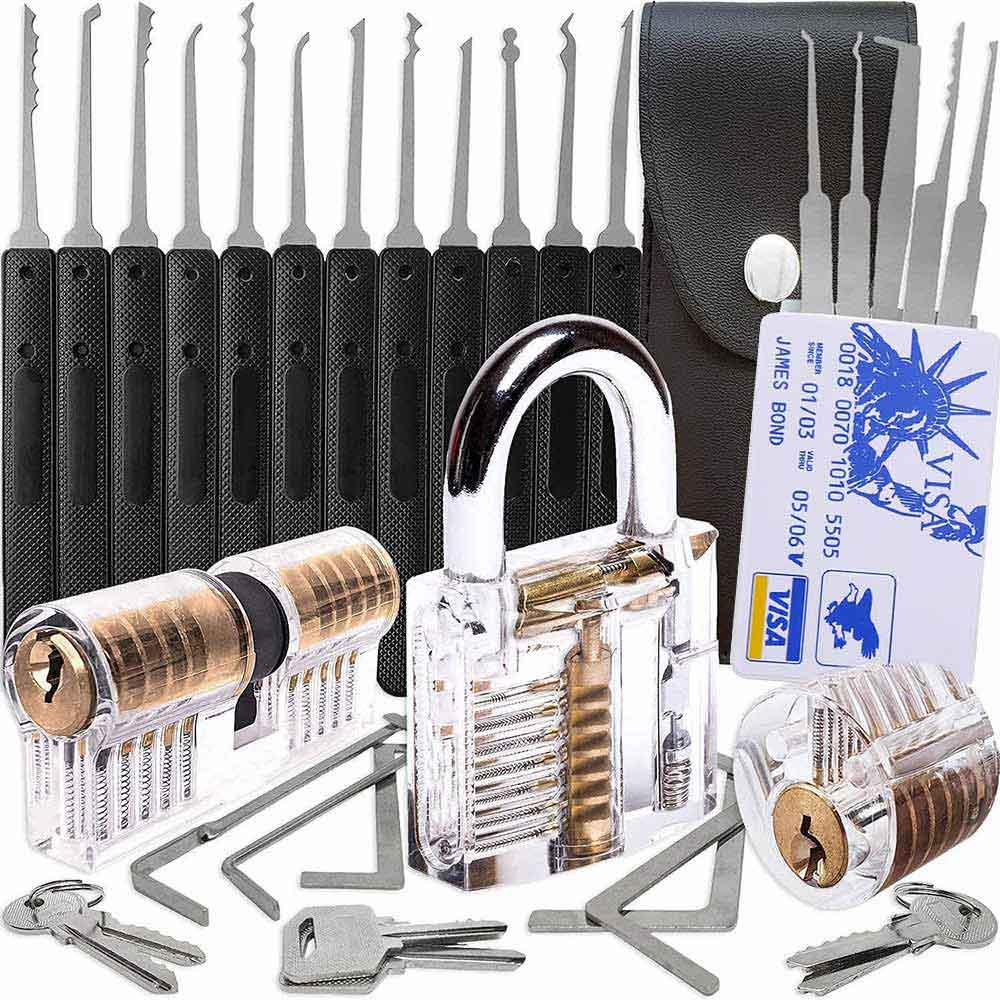
Focus on sets that make learning easy, not pro-level complexity. Must-haves: 6-12 basic picks (hook, rake, diamond shapes), 3+ tension wrenches (to apply turning pressure), and transparent practice locks so you see pins move inside – game-changer for newbies.
Nice-to-haves: carrying case, basic instructions or QR code tutorials, steel tools (not soft metal that bends). Skip sets with exotic 'advanced' picks or decoders – overwhelming and useless early on.
Beginner-friendly means forgiving: tools that tolerate clumsy grips, clear practice feedback, and room to grow without instant upgrade. Look for 4+ star reviews from 'first-timers' mentioning 'popped my first lock fast!'
✅ Essential Features for Beginners
•Transparent practice locks: See pins lift inside – instant feedback reduces guesswork
•Basic pick shapes (hook, rake, diamond): Covers 90% of beginner techniques without confusion
•Multiple tension wrenches: Different sizes fit various locks; forgiving for heavy/light pressure
•Stainless steel construction: Won't bend or snap on mistakes, lasts for hundreds of practices
•Carrying case: Keeps tools organized and protected – no lost pieces
•Beginner instructions or videos: Step-by-step guides build confidence fast
•Compact size: Easy to handle with beginner grip strength
🏆 Top 4 Best Lockpicking Sets for Beginners
#1
💰 Budget
Beginner Lock Pick Set, 15 Piece with Transparent Practice Lock
Learning Curve: Easy
$24.99
Difficulty: 1/5
Why Great for Beginners:
Perfect entry point with see-through lock to watch pins move. Basic tools only – no overwhelm. Affordable way to test if you love it.
✓ Beginner Pros
+Super cheap to start
+Visual feedback speeds learning
+Compact and portable
+Includes case
✗ Beginner Cons
-Fewer tools limit variety
-May bend with rough use
-Basic instructions only
👍 Best for: Total newbies testing the hobby on tight budget
👎 Not for: Serious learners needing more practices
Lockpicking basics: Insert tension wrench to turn lock slightly, use pick to push pins up until they 'set' – click, it opens! Types: Basic sets (10-25 tools), training kits (with clear locks), pro sets (50+ tools). Beginners need training kits – they include see-through locks for visual learning.
Best for newbies: Sets with 1-3 practice locks, avoiding pin tumbler complexity at first. Realistic expectations: First lock in 30-60 mins with practice; full skills in weeks. 'Beginner-friendly' = visual feedback, simple tools, tutorials – not 'pro-grade steel' hype.
Marketing traps: '51 pieces!' sounds great but buries essentials. Evaluate by: Practice locks included? Tool quality reviews? Video demos? Start here to build skills without frustration.
🤔 How to Choose Your First Lockpicking Sets
Ask: Budget? (under $25 try-it, $25-50 sweet spot). Hobby only or serious? Casual = basic set; keen learner = with multiple locks. Practice space? Apartment-friendly compact kits.
Budgets: Under $25 for test waters; $25-50 gets quality + practices; $50+ premium durability. Go budget if unsure; recommended for commitment. Future: Good beginner sets grow with you 6-12 months.
Red flags: No practice locks, cheap alloy (bends), vague reviews, no case. Prioritize sets with transparent locks and 4.5+ stars from beginners.
💰 Budget Guide for Beginners
100+
Advanced entry: Too many tools for pure beginners; wait till intermediate
25 - $50
Sweet spot: Quality steel, 1-3 practice locks, case – perfect for most beginners, lasts months
Another: Pro kits for 'future-proofing' – 50 tools paralyze you. Instead: Start basic, upgrade later. Example: Forum newbie spent $80, sold it unused. Lesson: Match to skill.
No case? Tools scatter, bend in pockets. Buy day one. Real locks early? Pins invisible, rage-quit. Stick to transparent. Plan ahead, save frustration.
×Buying sets without practice locks – can't see progress
×Choosing super-cheap alloy tools that bend/break
×Overbuying 100-piece pro kits – too confusing
×Skipping tension wrenches or extras
×Ignoring instructions – assuming it's intuitive
×Practicing on real locks too soon – frustrating/no feedback
×Not getting a case – tools get lost/damaged
×Forgetting legality: Only use on your practice locks
📈 Your Progression Path: Beginner to Intermediate
Start with raking (fast wiggle technique) on clear locks – 1st week wins. Then single pin picking (precise lifts) – month 1. Practice 15-30 mins daily.
Outgrow beginner gear when: Pop most locks <5 mins, want real/disc locks, need advanced picks. Typically 3-6 months. Upgrade: Better steel set, opaque practices first.
Intermediate: Dimple/padlocks, courses. Build progressively: Master basics before complexity. Most stay beginner 1-3 months.
📚 Learning Resources for Beginners
📖Practical Lock Picking Book (ASIN: B0044U4O5G) – Step-by-step photos for newbies, $19.99
📖Locks, Safes and Security Book (ASIN: B0013A5E5K) – Beginner basics explained simply, $25
📖Lock Pick Practice Padlock Set (ASIN: B07Z5K7L3M) – Extra visuals, $16.99
📖Beginner Lockpicking DVD (ASIN: B00J5K2L3M) – Watch-and-learn videos, $22
📖Sparrows Lock Picks Practice Guide (ASIN: B08N4O5P6Q) – Free PDF companion book, $15
🎯 Bottom Line: Our Recommendations
Best overall for most beginners: B0B5E6F7G8 (24-piece) – balanced, effective, grows with you. Budget: B09X8Y9Z0A. Premium: B0A1B2C3D4.
Grab essentials: Transparent padlock (B08H9I0J1K), case, tension set. Total starter kit under $60.
You're ready! Order, practice daily, celebrate first 'click.' It's easier than it looks – thousands of newbies succeed yearly. Next: 15 mins tonight.
❓ Frequently Asked Questions
The 24 Piece Lockpicking Set (B0B5E6F7G8) – transparent locks, durable tools, easy start. Sweet spot at $34.99.
$25-50 sweet spot for quality + practices. Under $25 tests hobby; over $50 for serious commitment.