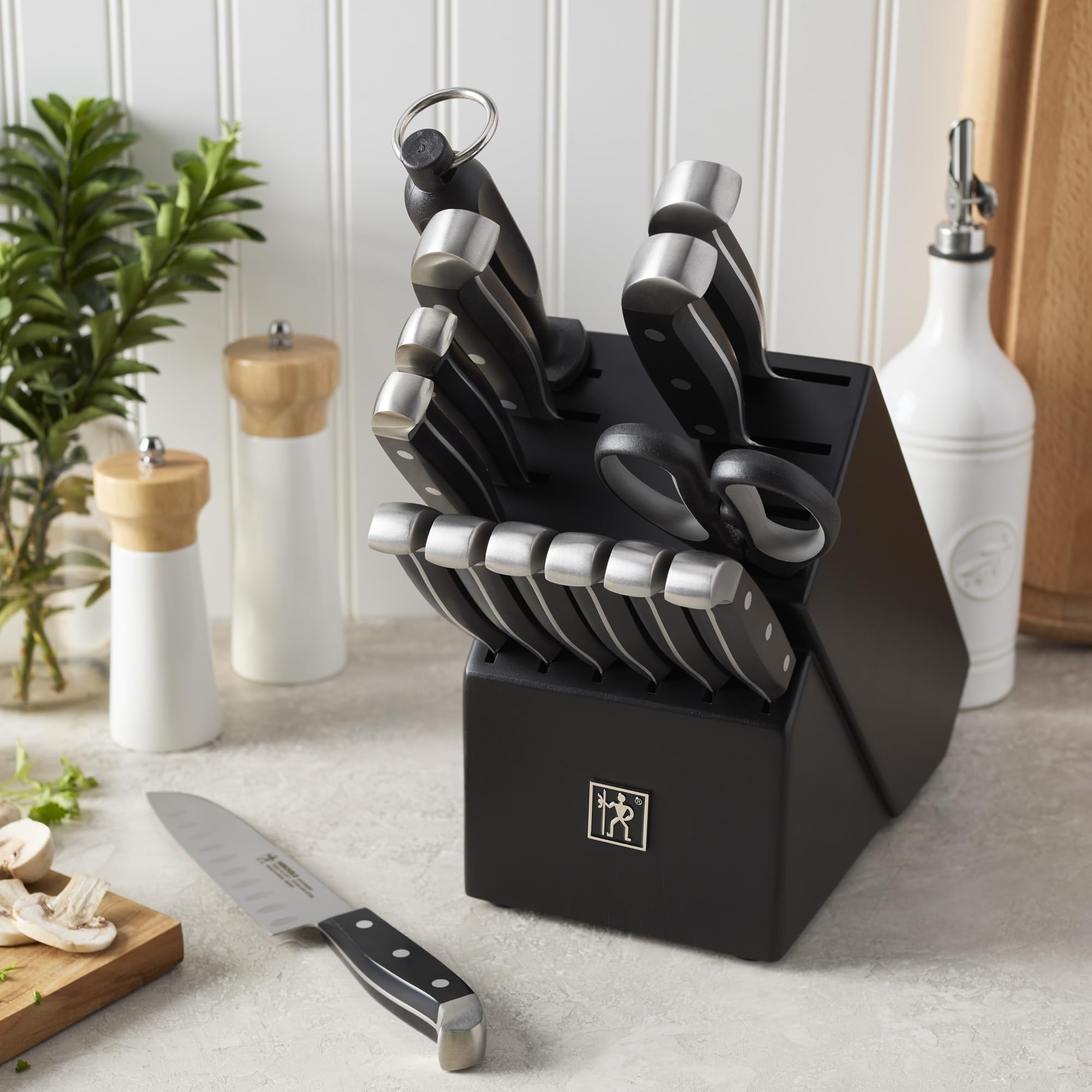
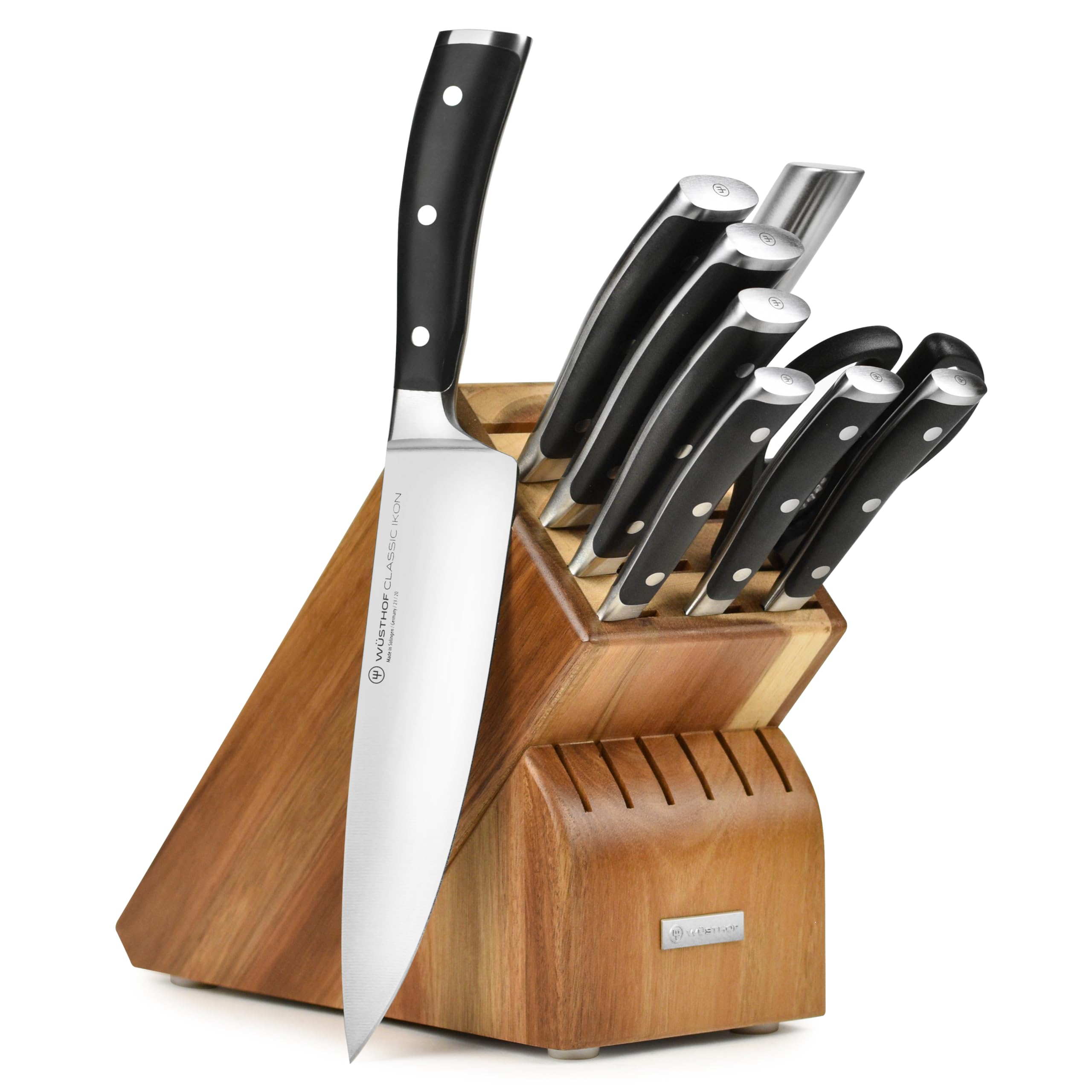
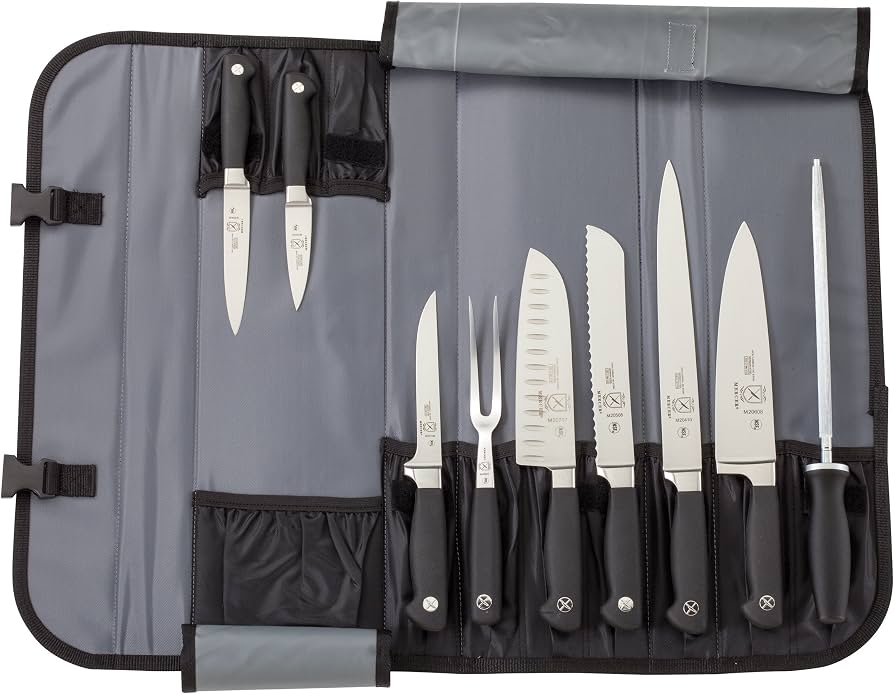
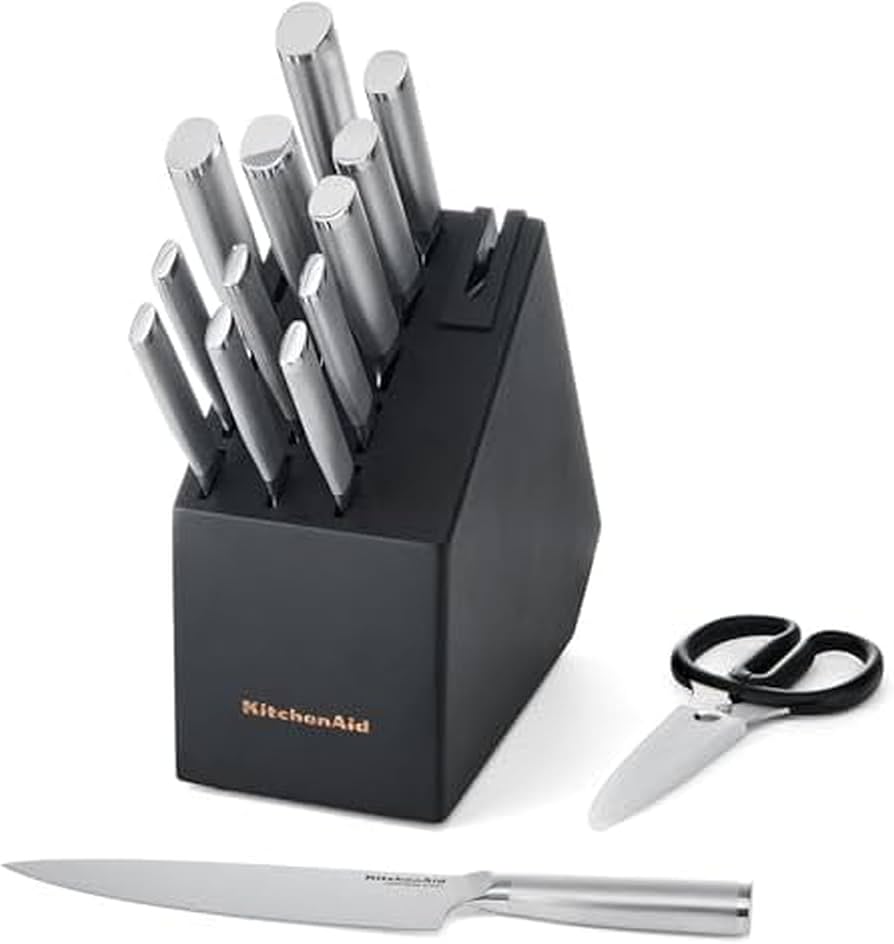
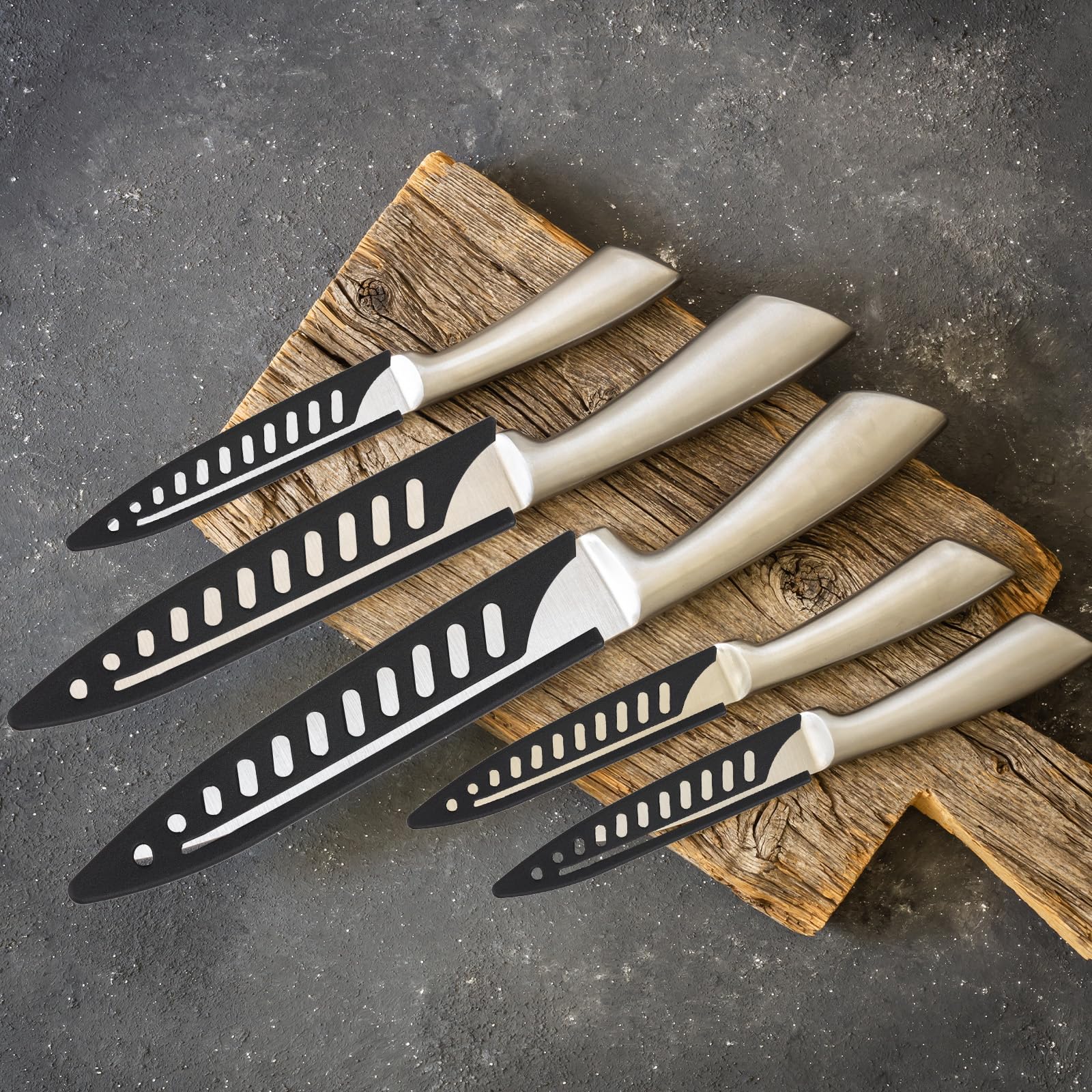
Let's strip away the jargon. A knife set is simply a collection of blades you use for different kitchen tasks. The most common knives in a beginner set are a chef's knife (for chopping and slicing most foods), a paring knife (for peeling and small detail work), a serrated bread knife (for bread and soft fruits), and sometimes a utility knife and kitchen shears. Each shape serves a purpose, but you don't need all of them on day one.
There are two main knife construction styles to know: stamped and forged. Stamped blades are cut from a sheet of steel and are lighter, thinner, and generally less expensive. Forged blades are heated, shaped, and often have a full tang, making them heavier, more balanced, and more durable. Beginners can absolutely start with a quality stamped set; the important thing is that the steel takes and holds a sharp edge and the handle feels comfortable.
German-style knives are known for durable, flexible blades and a slightly heavier feel, while Japanese-style knives are often sharper and harder but can chip if used carelessly. For most beginners, a German-style or hybrid set is more forgiving. If you love precision and have a gentle touch, a Japanese-style could work, but it usually requires more careful use and maintenance.
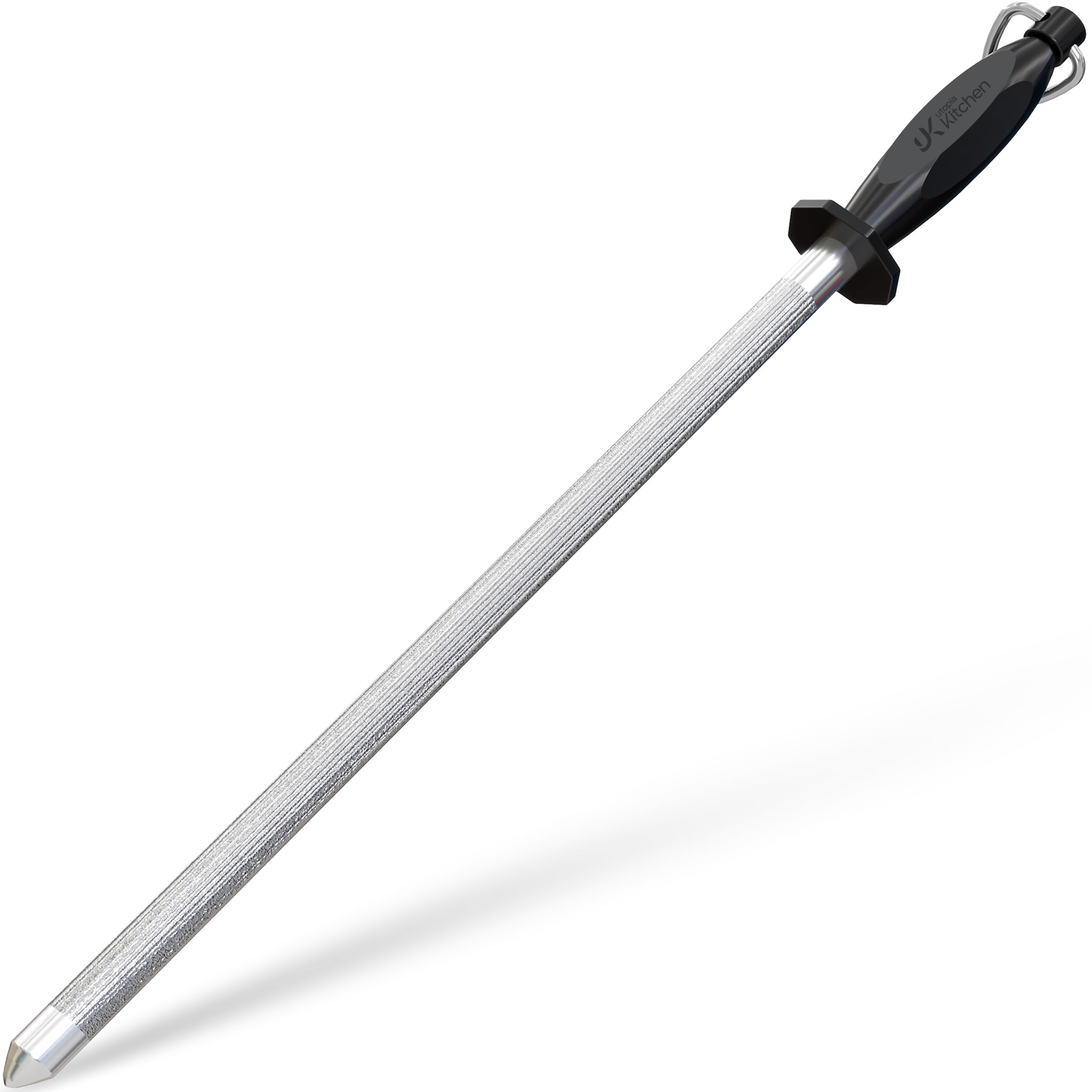
Realistic expectations are key. No set will stay razor-sharp forever, and even a quality blade will need occasional honing or sharpening. A beginner-friendly set is not one that stays sharp forever, but one that is easy to sharpen and not too fragile. Expect to hone your chef's knife every few uses and sharpen it every few months, depending on how much you cook.
When evaluating options, do the 'hand test': hold a kitchen knife by the handle and mimic chopping a few times. If the handle digs into your palm or the blade feels flimsy, that set isn't beginner-friendly for you. Since you're buying online, read customer reviews that mention 'comfortable grip,' 'sharp out of the box,' and 'easy to sharpen,' and watch for red flags like 'chipped easily' or 'rust spots.'