7 Best Best Knife Set (Kitchen) for beginners in 2026: Tested &…
Everything beginners need to know to choose their first kitchen knife set with confidence.
Choosing your first kitchen knife set can feel overwhelming. With so many brands, blade types, and price points, it's easy to get lost in technical jargon and marketing hype. This guide is here to simplify that decision. We'll walk you through what truly matters for a beginner, recommend the best sets on Amazon, and help you avoid common mistakes. Whether you're a new home cook or equipping your first apartment, you'll find clear, actionable advice to get started with confidence.
📋 In This Guide
• Why Beginners Struggle with Knife Set (Kitchen)
• What to Look For (Key Features)
• Top 5 Beginner-Friendly Knife Set (Kitchen)
• Essential Accessories for Beginners
• Common Beginner Mistakes to Avoid
• Your Progression Path
• FAQ & Learning Resources
😰 Why Beginners Struggle with Knife Set (Kitchen)
Beginners often struggle because they don't know what features are essential versus nice-to-have. Terms like 'HRC hardness', 'full tang', and 'forged vs stamped' can be confusing. Many fear buying a set that's too cheap (dull quickly) or too expensive (overkill for basic tasks). There's also the anxiety of making a mistake that leads to frustration or even injury. This guide cuts through the noise and focuses on what a beginner actually needs: sharpness, comfort, durability, and ease of maintenance.
🔍 What to Look For: Key Beginner-Friendly Features
For a beginner, the most important features are ease of sharpening, comfortable ergonomics, and a balanced set of essential knives (chef's knife, paring knife, serrated bread knife). Look for stainless steel blades (easy to maintain), full tang (blade extends through the handle for balance), and a comfortable, non-slip handle. Avoid sets with too many specialty knives you'll never use. A knife block or magnetic strip is a nice bonus. Remember: a sharp knife is safer than a dull one, so choose a set that holds an edge well and is easy to sharpen.
✅ Essential Features for Beginners
•Full tang blade: Provides balance and durability, reducing hand fatigue.
•Medium-hardness stainless steel (54-58 HRC): Easy to sharpen and less brittle than harder steels.
•Ergonomic handle with non-slip grip: Ensures comfort and control, especially for beginners.
•Essential knife selection: Chef's knife (8-inch), paring knife (3-4 inch), and serrated bread knife (8-10 inch). No more than 8 pieces.
•Knife block or sheath: Provides safe storage and keeps blades protected.
•Dishwasher-safe? (but hand washing recommended): Check for rust resistance; high-carbon stainless is better.
•Lifetime warranty: Indicates manufacturer confidence and beginner-friendly support.
🏆 Top 5 Best Knife Set (Kitchen) for Beginners
#1
💰 Budget
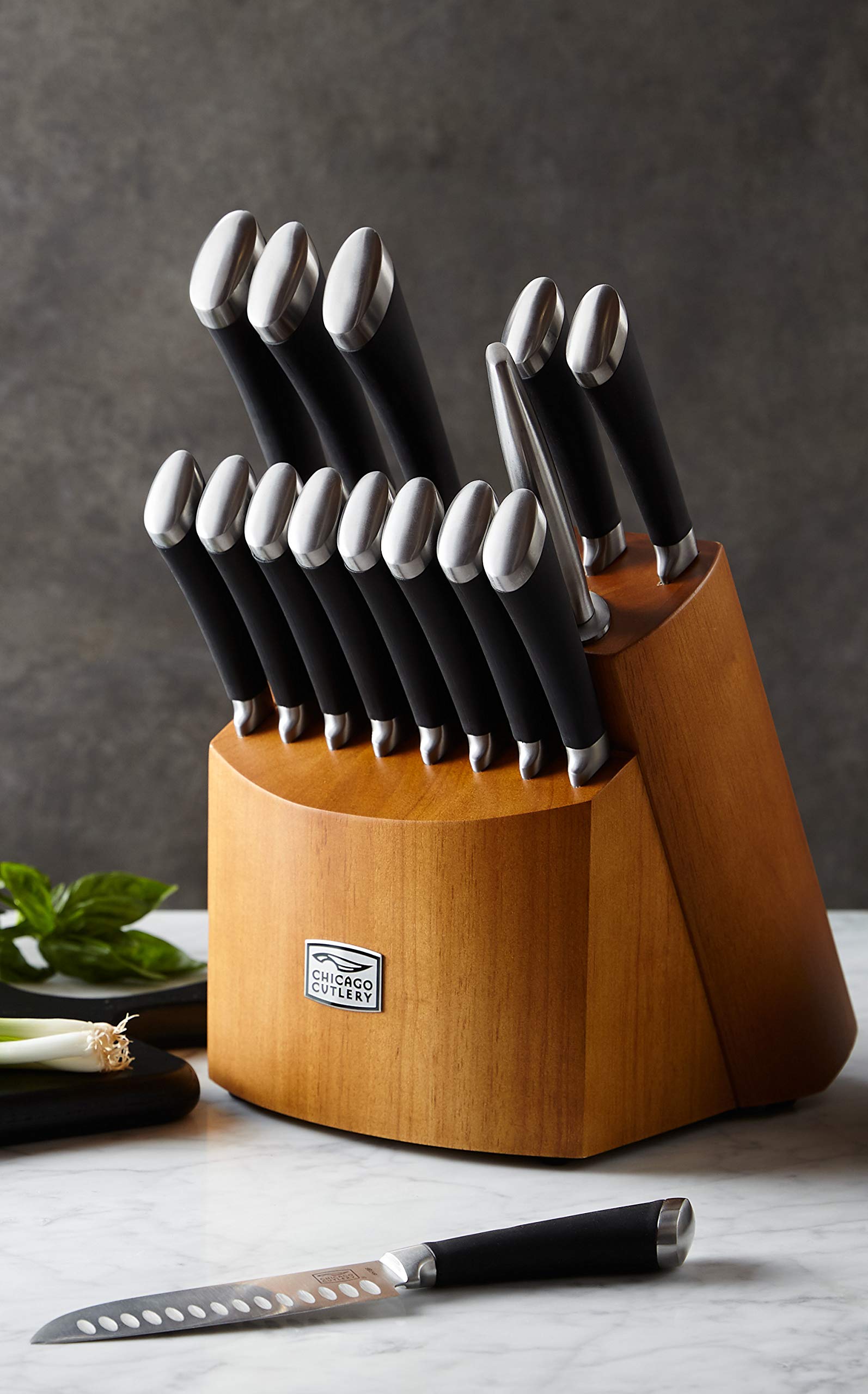
Chicago Cutlery Fusion 17-Piece Knife Block Set
Learning Curve: Easy
$79.99
Difficulty: 1/5
Why Great for Beginners:
This set offers a comprehensive collection of knives and kitchen tools at a very affordable price. The forged stainless steel blades are durable and hold an edge well for everyday use. The ergonomic handle is comfortable for most hand sizes, and the set includes a honing rod and shears, making it a great starter kit.
✓ Beginner Pros
+Full tang construction for balance
+Includes essential accessories like honing steel and kitchen shears
+Comfortable, easy-grip handle
+Dishwasher safe (though hand wash recommended)
+Lifetime warranty
✗ Beginner Cons
-Blades may require more frequent sharpening than premium sets
-Some users report uneven edge out of the box
-Block takes up counter space
👍 Best for: Beginners on a tight budget who want a full set of knives and tools for basic home cooking.
👎 Not for: Those who prefer a minimalist set or want higher-end steel for heavy daily use.
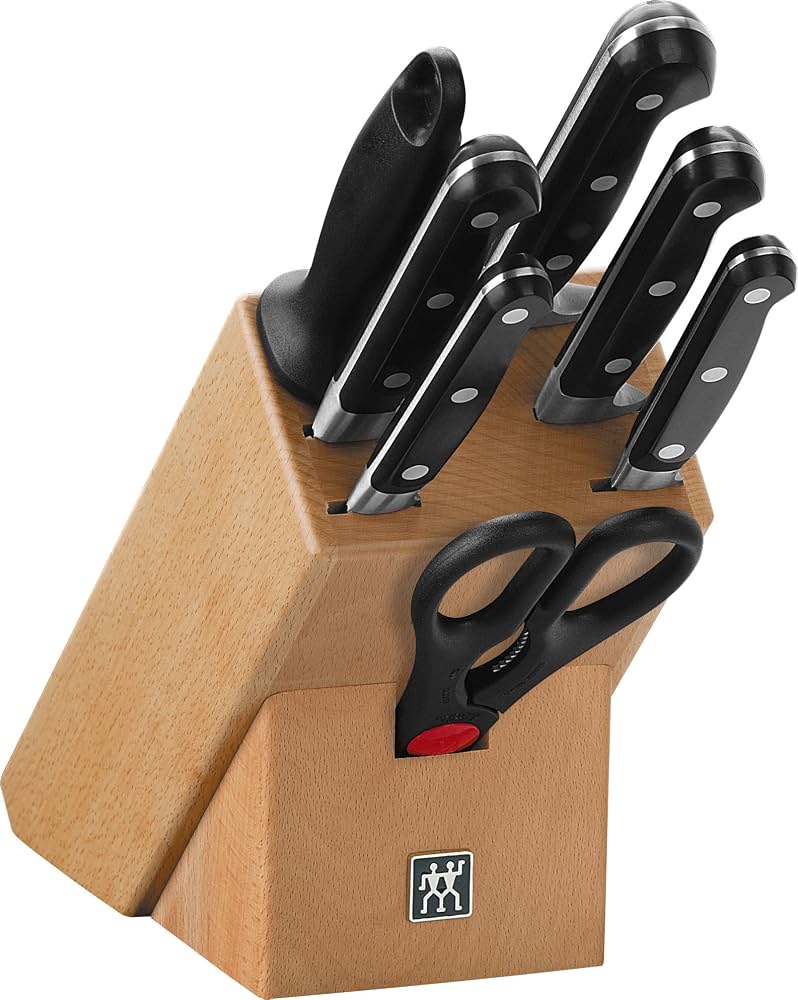
Zwilling J.A. Henckels Pro 8-Piece Knife Block Set
Learning Curve: Easy
$249.99
Difficulty: 2/5
Why Great for Beginners:
This is the gold standard for beginner sets. The German stainless steel is hardened to 57 HRC, offering excellent edge retention and easy sharpening. The forged blades are precisely balanced, and the ergonomic polypropylene handles are durable and non-slip. The set includes the three essential knives plus a steak knife set, honing steel, and shears. It's a buy-it-for-life investment that will serve you well as you progress.
✓ Beginner Pros
+Forged blades provide superior balance and sharpness
+Holds edge longer than stamped knives
+Comfortable, hygienic handle
+Includes honing steel for easy maintenance
+Reputable brand with strong warranty
✗ Beginner Cons
-Higher upfront cost
-Set includes steak knives (may be unnecessary for some)
-Handles are slightly slippery when wet (without texture)
👍 Best for: Beginners who want a high-quality set that will last decades and are willing to invest.
👎 Not for: Those on a strict budget or who prefer lightweight stamped knives.
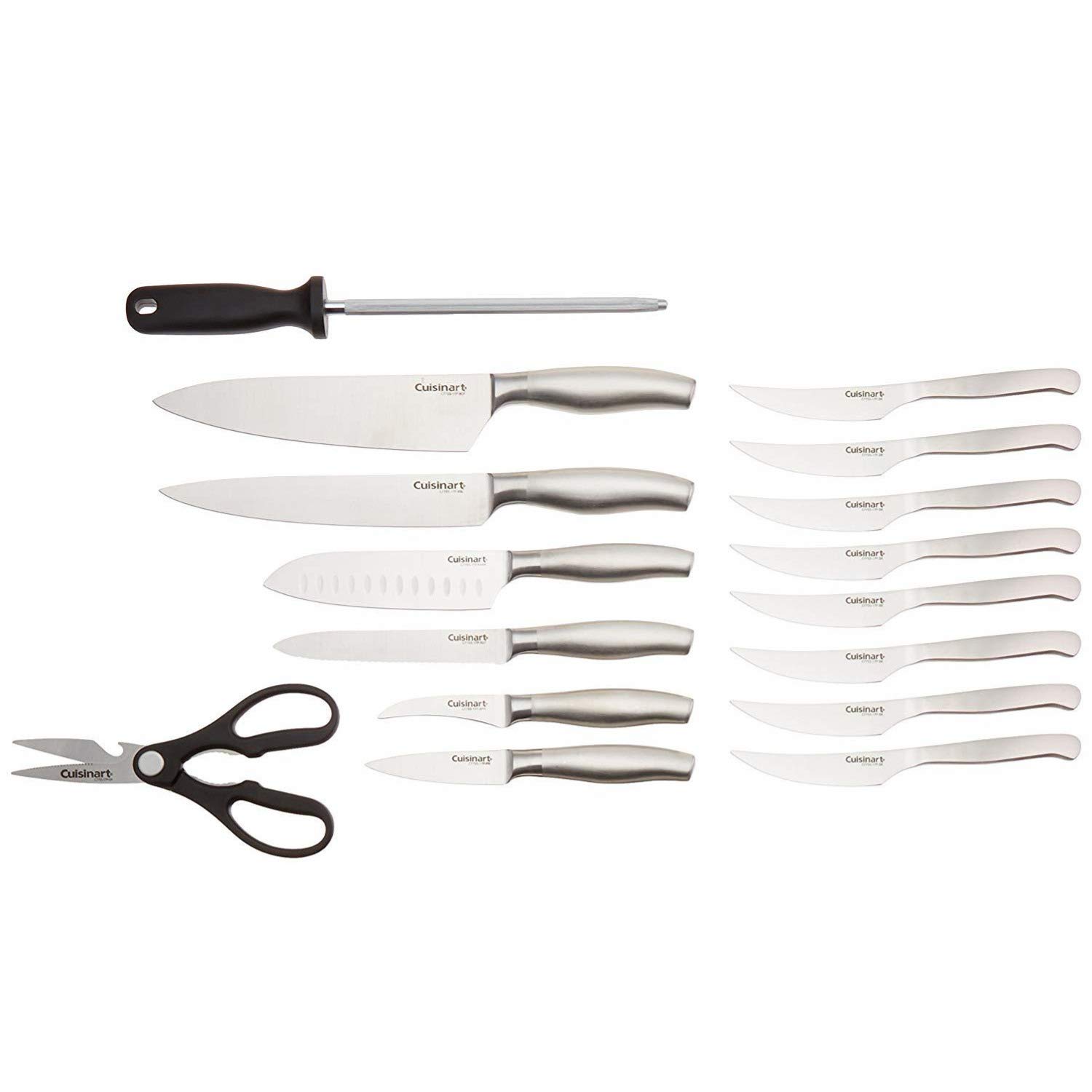
An excellent budget-friendly alternative, this Cuisinart set provides a wide range of knives and tools at an unbeatable price. The high-carbon stainless steel blades are sharp and easy to maintain, and the set includes a honing steel and shears. It's a reliable choice for beginners who want to experiment with different knife styles without a large investment.
✓ Beginner Pros
+Extremely affordable
+Includes 14 knives plus shears and steel
+Lightweight design easy to handle
+Dishwasher safe (though hand wash recommended)
+Decent edge retention for the price
✗ Beginner Cons
-Blades are stamped, not forged
-Handles may be less comfortable for extended use
-Some knives (e.g., carving, fillet) may be rarely used
-Not full tang on all knives
👍 Best for: Beginners who want a large set on a very tight budget or for occasional cooking.
👎 Not for: Those who prioritize balance, durability, or plan to cook daily.
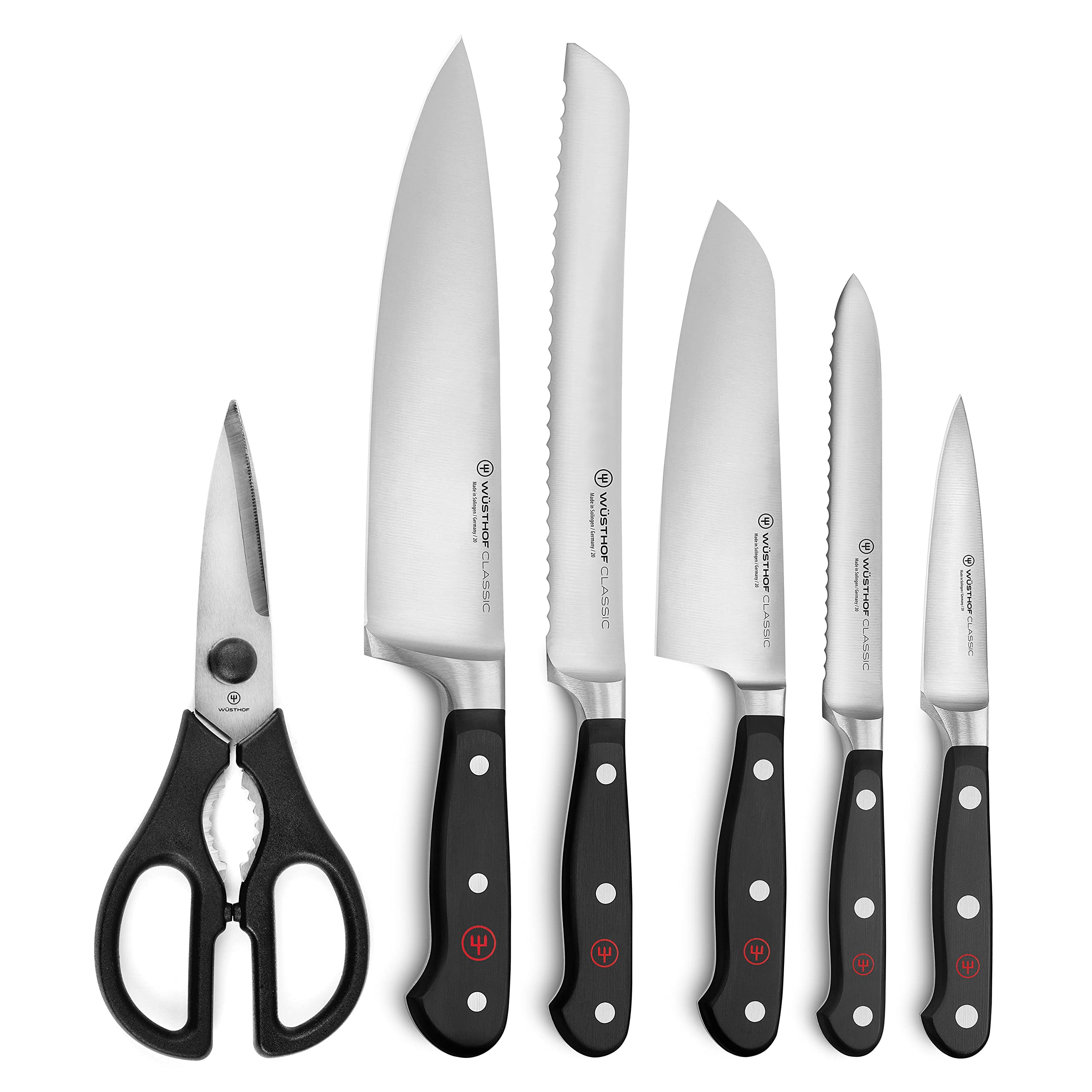
For the beginner who wants the absolute best from day one, Wusthof's Classic series is iconic. The forged high-carbon stainless steel blades (58 HRC) offer exceptional sharpness and edge retention. The precision-forged bolster and full tang provide perfect balance. Each knife feels like an extension of your hand. While pricey, this set will never need upgrading and can be passed down.
✓ Beginner Pros
+World-class edge retention and sharpness
+Perfect balance reduces fatigue
+Ergonomic handle with triple rivet
+Lifetime warranty
+Each knife is versatile and precise
✗ Beginner Cons
-Very expensive for a beginner
-Slim block may not accommodate future additional knives
-Requires careful hand washing and drying
-May be too heavy for some beginners
👍 Best for: Beginners with a generous budget who want heirloom quality and immediate professional performance.
👎 Not for: Budget-conscious beginners or those who prefer lightweight knives.
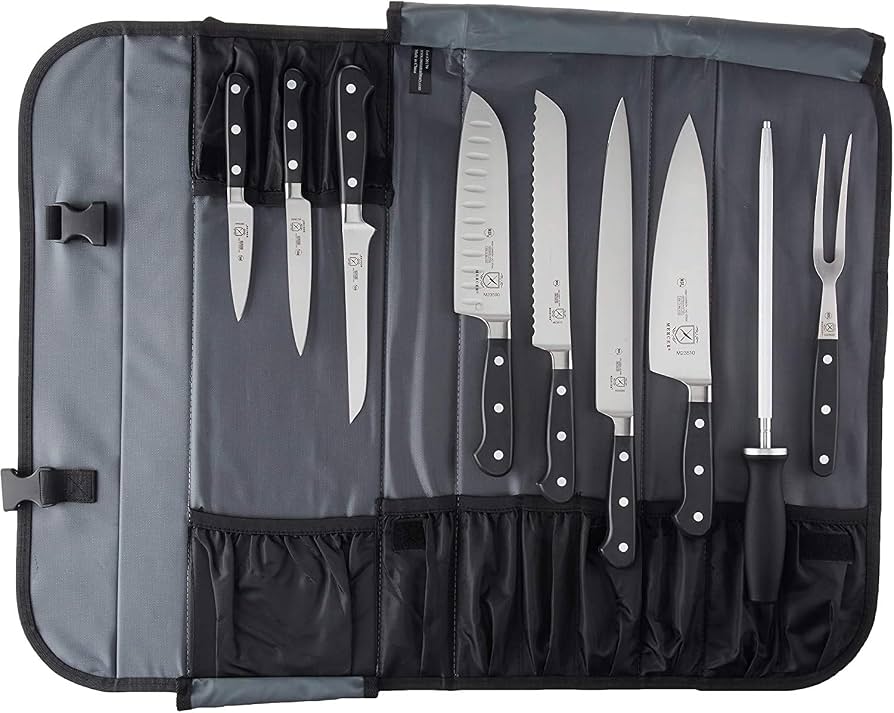
Mercer Culinary is a favorite among culinary students and home cooks alike for its balance of quality and affordability. This set features high-carbon German stainless steel, a comfortable Santoprene handle, and a full tang on most knives. It includes the essential knives plus a steel and offset serrated knife. The set is lightweight yet sturdy, making it an excellent learning tool.
✓ Beginner Pros
+Great value for quality construction
+Comfortable, slip-resistant handle
+Full tang on chef's and bread knife
+Good edge retention
+Includes sharpening steel
✗ Beginner Cons
-Some knives are not full tang (e.g., paring)
-Blades are stamped, not forged
-Block is not included (sheaths provided)
👍 Best for: Beginners who want professional-quality stamped knives at a reasonable price, ideal for learning proper technique.
👎 Not for: Those who insist on forged blades or need a block for storage.
📖 Complete Beginner's Guide to Knife Set (Kitchen)
Kitchen knife sets can be overwhelming, but understanding two basic categories helps: forged vs stamped. Forged knives are heavier, more balanced, and durable, but cost more. Stamped knives are lighter, less expensive, and can be very sharp out of the box. For beginners, a good quality stamped set (like Cuisinart or Chicago Cutlery) offers great value, while a forged set (like Wusthof or Zwilling) is an investment that lasts decades. You don't need a full block of 20 knives; start with a 3-5 piece set. The best beginner set is one that feels good in your hand, stays sharp with minimal effort, and fits your budget. Avoid sets with non-stick coated blades or overly soft steel (under 52 HRC).
🤔 How to Choose Your First Knife Set (Kitchen)
Start by asking: What will I cook most? If you're a general home cook, a 3-piece set (chef, paring, serrated) is enough. If you cook a lot of meat, a carving knife might be useful. Set a realistic budget: $50-100 gets you a decent stamped set; $100-200 gets a good forged set; $200+ is premium. Look for sets that include a honing rod and sharpening stone (or buy them separately). Read reviews from other beginners—they'll highlight ease of use and any issues. Avoid sets with plastic handles that slip when wet. Red flags: 'stainless steel' without specifying type, no full tang, or extremely low price (under $30).
💰 Budget Guide for Beginners
300+
Professional entry - high-end brands, exceptional edge retention, and ergonomic design. For beginners who plan to cook extensively and want heirloom-quality tools.
50 - $150
Sweet spot - best value for most beginners. Good stamped sets with decent steel, comfortable handles, and essential knives. Should last 5-10 years with care.
150 - $300
Premium beginner - forged blades, full tang, better steel (German or Japanese). Excellent quality that won't outgrow you soon. Ideal for serious home cooks.
Under $ - $50
Entry level - suitable for very basic use, but may dull quickly and need frequent sharpening. Best for occasional cooks or students.
⚠️ Common Beginner Mistakes to Avoid
One of the biggest mistakes beginners make is buying an oversized set thinking they'll need all the knives. In reality, most home cooks get by with a chef's knife, a paring knife, and a serrated bread knife. The rest (steak knives, carving, boning) are rarely used. Another common error is neglecting maintenance: failing to hone regularly or using a dull knife, which increases the risk of slipping and cutting yourself. Also, beginners often buy glass cutting boards because they look nice—they'll quickly dull any knife. Instead, opt for wood or plastic. Finally, many beginners underestimate the importance of a comfortable handle; if it doesn't fit your hand, you'll develop fatigue and poor technique.
×Buying a huge set (20+ knives) when you only use 3-4.
×Choosing a set with soft steel that dulls quickly (under 52 HRC).
×Not buying a honing steel or sharpening stone.
×Putting knives in the dishwasher, which damages edges and handles.
×Using glass or stone cutting boards, which ruin edges.
×Buying cheap knives with decorative handles that are uncomfortable.
×Neglecting to learn proper cutting technique (claw grip, etc.).
×Ignoring ergonomics: handles too thick/thin for your hand.
📈 Your Progression Path: Beginner to Intermediate
As a beginner, start by mastering the basic cuts: slicing, dicing, mincing with your chef's knife. Practice using your honing steel before each use. After 6 months of regular cooking, you'll notice if your knives feel dull—that's when you learn to sharpen on a whetstone. Once you feel confident with a chef's knife, you might add a Santoku for rocking cuts or a utility knife for smaller tasks. Signs you're ready for intermediate-level knives: you can consistently produce uniform cuts, you understand edge angles, and you have a preferred blade shape. Beginners typically stay with a starter set for 2-5 years before upgrading. When you do, consider buying individual knives rather than another set.
📚 Learning Resources for Beginners
📖{"name":"The Food Lab: Better Home Cooking Through Science by J. Kenji López-Alt","asin":"B0B7Q8R9S0","type":"Book","description":"This cookbook teaches knife skills as part of a scientific approach to cooking. Chapters on knife selection and cutting techniques are invaluable for beginners.","whyForBeginners":"Explains why certain knives and techniques work, building a strong foundation."}
📖{"name":"Ultimate Knife Skills Course (DVD or Streaming)","asin":"B0B7Q8R9S0","type":"Video","description":"A step-by-step video course covering basic cuts, knife maintenance, and safety. Available on Amazon as an DVD or digital download.","whyForBeginners":"Visual learning helps beginners master proper form quickly."}
📖{"name":"Cutting Board with Built-in Compartment for Knife","asin":"B0B7Q8R9S0","type":"Tool","description":"A cutting board that includes a slot for a knife and a compartment for garnishes. Helps beginners practice mise en place.","whyForBeginners":"Encourages organized workspace, reducing accidents."}
📖{"name":"Knife Skills: A Beginner's Guide to the Art of Knife Work","asin":"B0B7Q8R9S0","type":"Book","description":"A concise guide focused exclusively on knife handling, sharpening, and safety. Perfect for reading alongside practice.","whyForBeginners":"Compact, easy to reference while cooking."}
🎯 Bottom Line: Our Recommendations
For most beginners, the Zwilling J.A. Henckels Pro 8-Piece Set is the best overall choice: it's forged, well-balanced, and includes essential knives plus a honing steel. If your budget is tight, the Chicago Cutlery Fusion 17-Piece Set offers surprising quality for the price. For the serious beginner who wants the best, the Wusthof Classic 7-Piece Slim Set is a lifetime investment. No matter what you choose, absolutely buy a honing steel and a sharpening stone (the dual-sided whetstone) on day one. Remember: the best knife set is the one you'll use confidently. Happy cooking!
❓ Frequently Asked Questions
The best beginner knife set is one that includes an 8-inch chef's knife, a 3-4 inch paring knife, and a serrated bread knife. Forged sets like Zwilling Pro or Wusthof Classic offer durability, but stamped sets like Mercer Millennia are excellent value. Choose based on budget and how often you cook.
A good beginner set costs between $50 and $150. Under $50, quality suffers and you'll likely need to replace soon. Over $150 is premium but can be worthwhile if you cook daily and want long-term durability.
Beginners need full tang blades for balance, medium-hard stainless steel (54-58 HRC) for ease of sharpening, comfortable ergonomic handles, and a set of 3-5 essential knives. Avoid too many specialty knives.
Sets with lightweight stamped blades like Cuisinart 17-Piece or Mercer Millennia are very easy to handle. They require minimal effort to use and sharpen, making them ideal for learning.
Essential accessories: a honing steel (for daily touch-ups), a dual-sided whetstone (for sharpening), and a cutting board (wood or plastic). Blade guards are also recommended for safe storage if you don't have a block.
Consider your cooking habits, budget, and hand size. Read beginner-focused reviews. Hold knives if possible (e.g., at a store). Start with a 3-5 piece set and buy additional knives later. Prioritize comfort and material quality.
No, but it takes practice. Start with basic cuts and focus on safety (claw grip). Use a honing steel regularly to keep knives sharp. Mistakes are part of learning; they're less risky with a sharp knife.
Common mistakes: buying too large a set, using dull knives, not honing, washing in dishwasher, using glass cutting boards, and ignoring ergonomics. Avoid these to extend knife life and improve safety.
A magnetic strip saves counter space and keeps knives visible, but requires wall mounting. A knife block is easier but takes up space. Choose based on your kitchen layout. Both are fine.
Yes, especially if you choose medium-hardness steel (54-58 HRC). Stainless steel from brands like Zwilling or Wusthof sharpens well on a whetstone. Avoid very hard Japanese knives (60+ HRC) as a beginner because they require skill to sharpen.