7 Best Best Home Gym Equipment for beginners in 2026: Tested & R…
Everything you need to confidently choose your first home gym equipment and start your fitness journey.
Walking into the world of home gym equipment can be overwhelming. With endless options, confusing jargon, and varying price tags, it’s easy to feel lost. But don’t worry—this guide is designed for complete beginners like you. We’ll cut through the noise, explain what actually matters, and help you pick the first piece of equipment that fits your goals, space, and budget. By the end, you’ll feel confident and ready to start your strength training journey at home.
📋 In This Guide
• Why Beginners Struggle with Home Gym Equipment
• What to Look For (Key Features)
• Top 4 Beginner-Friendly Home Gym Equipment
• Essential Accessories for Beginners
• Common Beginner Mistakes to Avoid
• Your Progression Path
• FAQ & Learning Resources
😰 Why Beginners Struggle with Home Gym Equipment
Many beginners struggle because they don’t know what equipment they really need. The internet is flooded with choices: all-in-one machines, power racks, adjustable dumbbells, benches, resistance bands—it’s a lot. Plus, technical terms like 'Smith machine,' 'cable crossover,' and 'olympic barbell' can be intimidating. Fear of wasting money or buying something too complex often leads to analysis paralysis. Another common challenge is underestimating the space required or overestimating how much you'll use a bulky machine. Beginners also often overlook safety features and the importance of adjustability as they progress.
🔍 What to Look For: Key Beginner-Friendly Features
As a beginner, focus on simplicity and versatility. Look for equipment that is easy to assemble, compact enough for your space, and offers multiple exercise options. Key beginner-friendly qualities include: adjustable resistance (to start light and progress), clear instructions or video tutorials, sturdy construction with safety locks, and a weight range that allows you to grow for at least 6–12 months. Avoid overly complex machines with dozens of cables and pulleys—they can be frustrating to set up and maintain. Instead, consider starting with a quality adjustable bench and a set of adjustable dumbbells, or a compact all-in-one gym that guides your movements.
✅ Essential Features for Beginners
•Adjustable resistance – lets you start light and increase difficulty as you get stronger
•Compact footprint – fits in a bedroom or corner without dominating the room
•Multi-functionality – allows multiple exercises (chest press, rows, squats) from one device
•Safety features – spotter arms, locking pins, or safety straps to prevent accidents
•Easy assembly – minimal tools and clear instructions to avoid frustration
•Good weight range – at least 150–200 lbs total for steady progression
•Positive user reviews from beginners – a sign that the product is forgiving and straightforward
🏆 Top 4 Best Home Gym Equipment for Beginners
#1
💰 Budget
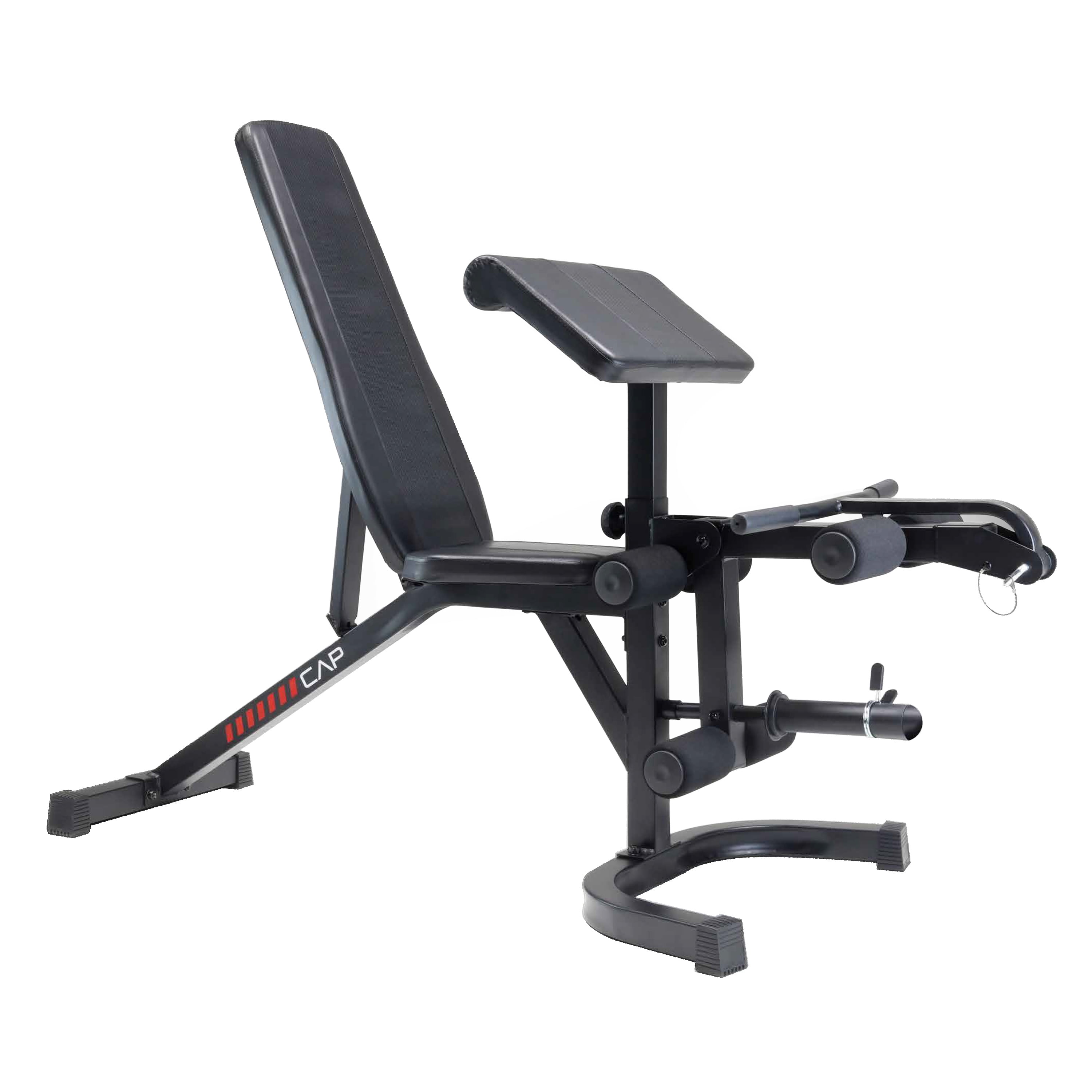
CAP Barbell Deluxe Utility Bench (Adjustable)
Learning Curve: Easy
$79.99
Difficulty: 1/5
Why Great for Beginners:
This simple, sturdy bench offers adjustable incline/decline positions and supports up to 300 lbs. It’s a perfect pairing with dumbbells or bands for a full-body workout without breaking the bank.
✓ Beginner Pros
+Very affordable
+Easy to assemble (10 minutes)
+Solid steel frame provides stability
+Multiple positions for chest, shoulders, and core exercises
✗ Beginner Cons
-Does not include weights (bench only)
-Max weight capacity may be limiting for heavier lifters
-No leg hold-down attachment
👍 Best for: Beginners on a strict budget who already have or plan to buy adjustable dumbbells or resistance bands.
👎 Not for: Those wanting a complete all-in-one solution or needing high weight capacity.
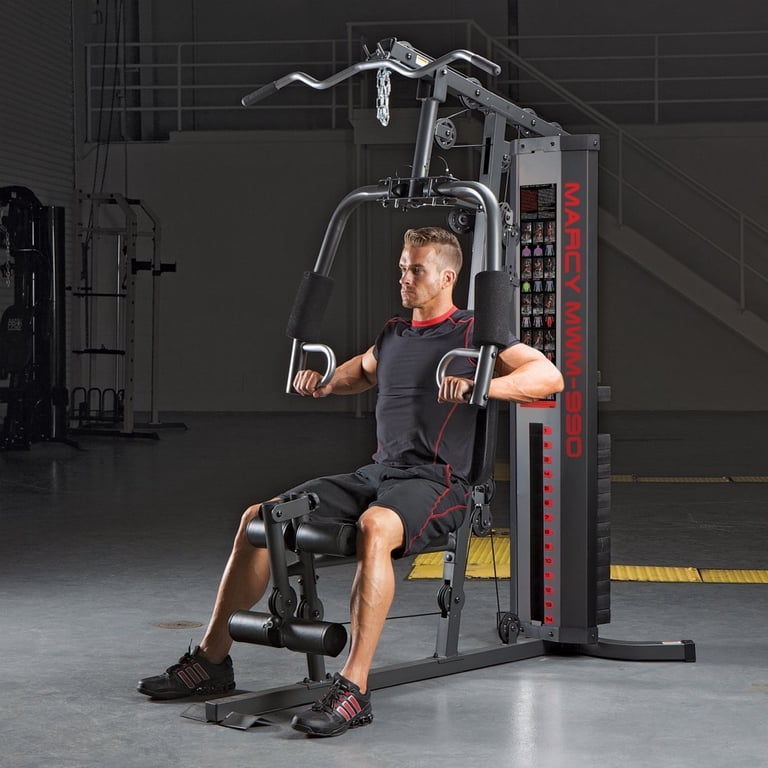
Marcy Smith Cage Workout Machine with Pulley System (MWM-990)
Learning Curve: Easy
$399.99
Difficulty: 2/5
Why Great for Beginners:
The Marcy Smith Cage combines a Smith machine with cables and a pull-up bar, guiding your movements for safe lifting. Beginners love the safety stops and the ability to do squats, bench presses, and rows in one unit.
✓ Beginner Pros
+Smith machine guides bar path, reducing injury risk
+Includes high and low cable pulleys for versatile exercises
+Safety catches allow confident solo lifting
+Solid build with 200 lb weight stack
+Cost-effective compared to separate rack + cables
✗ Beginner Cons
-Large footprint (about 6’ x 3’)
-Assembly can take 2–3 hours
-Smith machine restricts natural bar path for advanced lifters
-Weight stack may not be enough for leg exercises later
👍 Best for: Beginners who want a guided, safe, and complete home gym solution in a small to medium space.
👎 Not for: Those with very limited space (under 6’ ceiling height) or who prefer free weight barbell training.
The Bowflex Revolution uses SpiraFlex resistance (no heavy stacks) and offers over 100 exercises with a smooth feel. It’s compact and comes with a built-in movement guide, making it ideal for beginners who want a premium, space-saving machine.
✓ Beginner Pros
+No weight stack to maintain or move – resistance is instant and quiet
+Compact (under 4’ wide) and no cables to fray
+Multiple attachments for full-body workouts
+Excellent build quality and 15-year warranty
+Seat and arm adjustments are intuitive
✗ Beginner Cons
-High price point
-Resistance plate upgrades are expensive
-Some users miss the feel of free weights
-Larger than basic bench/dumbbell setup
👍 Best for: Beginners with a generous budget who want a premium, long-lasting machine with minimal maintenance.
👎 Not for: Budget-conscious beginners or those who prefer traditional barbell training.
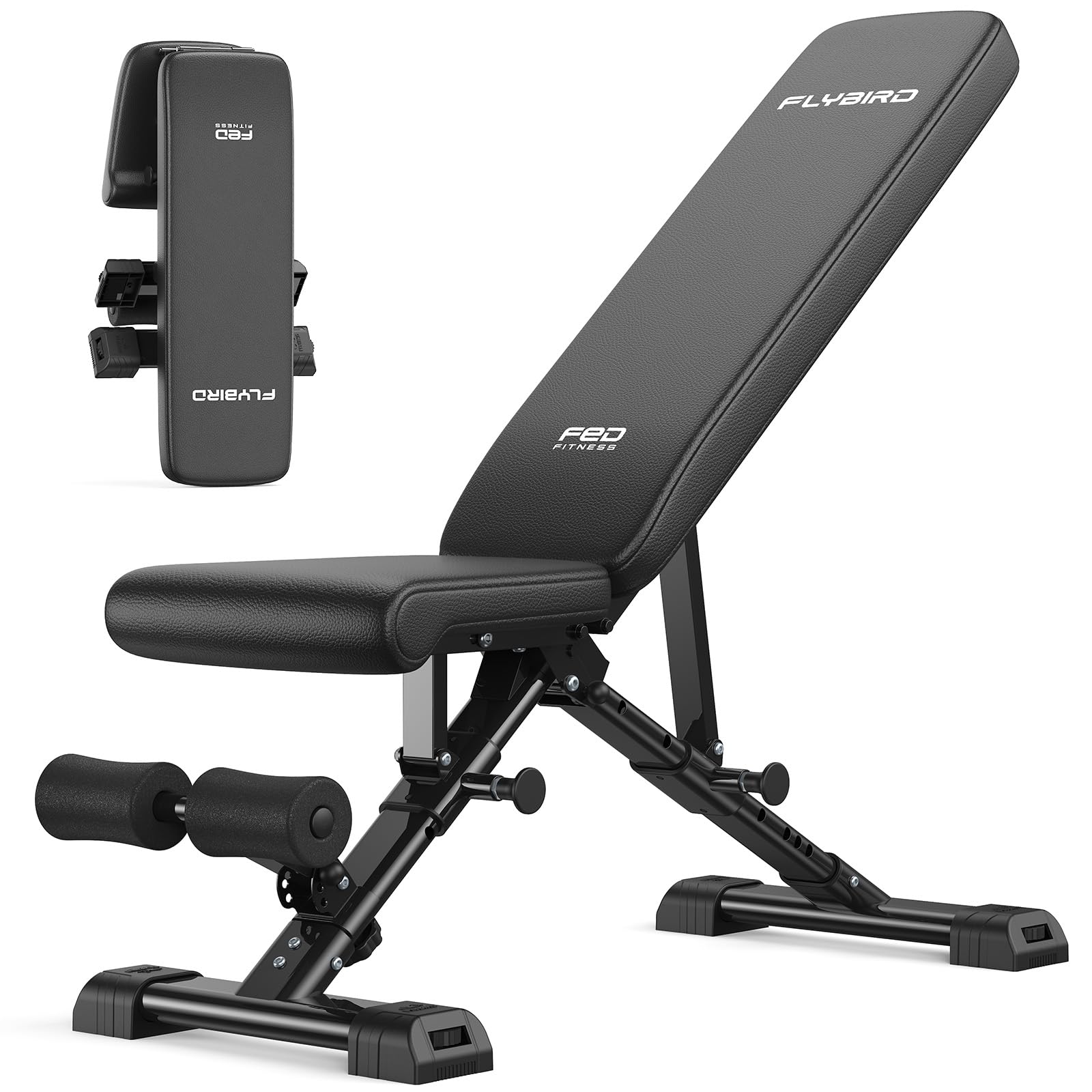
This bench offers a wide range of positions, an ergonomic design, and a high weight capacity (500 lbs). It’s perfect for beginners who want a reliable bench to pair with dumbbells or a barbell, with easy assembly and a comfortable foam pad.
✓ Beginner Pros
+Multiple positions (-90° to 90°) covering decline, flat, incline, and upright
+High weight capacity supports heavy dumbbells
+Non-slip foam and textured handles
+Compact when stored vertically
+Easy setup (under 20 minutes)
✗ Beginner Cons
-Does not include leg hold-down or preacher curl attachment
-Not compatible with all power rack safety bars
-Some users report slight wobble at highest incline
👍 Best for: Beginners who want a quality bench for dumbbell and barbell work as they progress, without needing a full machine.
👎 Not for: Those wanting an all-in-one solution or who need built-in cable systems.
Home gym equipment for strength training falls into several categories. The most common are all-in-one gyms (like Smith machines or cable stations), power racks with a barbell, adjustable dumbbells and benches, and resistance bands. For absolute beginners, an adjustable dumbbell set plus a flat/incline bench is often the best starting point. It’s space-efficient, doesn’t require bolting to the floor, and lets you learn basic movements. Another great option is a compact all-in-one unit that uses a cable system or weight stack, such as the Marcy Smith Cage. These guide your motion and reduce the risk of improper form.
Realistic expectations: you won’t look like a bodybuilder in a month, and you don’t need a full gym. Start with 2–3 pieces that cover pushing, pulling, and leg exercises. As you get comfortable, you can add accessories like a pull-up bar or resistance bands. Remember, consistency matters more than equipment quality. A simple set-up used three times a week will yield better results than an expensive machine sitting unused.
🤔 How to Choose Your First Home Gym Equipment
Begin by asking yourself these questions: (1) How much space do I have? Measure a corner or a spare room. (2) What’s my budget? Be realistic about what you’re willing to spend—it’s better to save longer for quality than buy junk. (3) What are my goals? For general fitness and muscle tone, adjustable dumbbells and a bench are enough. For serious strength, you might want a power rack later. (4) How much time do I want to spend on setup and learning? Some machines take hours to build and have a learning curve.
Once you have answers, match them to a product tier. If you’re unsure, start with the “recommended” tier—it balances cost and quality well. Red flags to avoid: equipment with very low weight capacity (under 100 lbs), poor reviews mentioning wobbling or breakage, and companies with no customer support. Also, avoid buying “all-in-one” machines that claim to do everything but do everything poorly.
💰 Budget Guide for Beginners
800+
Professional entry – high-end all-in-one units like Bowflex Revolution. Excellent build quality, smooth resistance, and minimal learning curve, but a significant investment.
100 - $300
Sweet spot – you can get a quality adjustable bench and a pair of adjustable dumbbells (like the Flybird bench + Bowflex SelectTech 552). Best value for most beginners.
300 - $800
Premium beginner – includes compact all-in-one machines (e.g., Marcy Smith Cage) or a power rack with a barbell and weights. Great for those who want structure and ability to grow.
Under $ - $100
Entry level – limited to a basic bench or resistance bands. Good for trying out, but you’ll likely outgrow it quickly.
⚠️ Common Beginner Mistakes to Avoid
Many beginners make the mistake of buying the cheapest option, only to find it wobbles, breaks, or cannot support their growing strength. Others go all-in on a premium machine that they never use because it's too complex or intimidating. Another common error is ignoring the importance of adjustment – if a bench only has two positions, you'll quickly outgrow it. Also, beginners often forget to account for the need to maintain equipment (lubricating cables, tightening bolts). The best approach is to start simple: a good adjustable bench and a pair of quality adjustable dumbbells. This combo allows you to perform dozens of exercises safely, takes up minimal space, and can be enhanced later with accessories like a pull-up bar or dip station.
×Buying a cheap, low-weight capacity bench that becomes unsafe as you progress.
×Purchasing a huge all-in-one gym without measuring ceiling height or available space.
×Ignoring the need for safety features (spotter arms, locking pins).
×Overestimating how much weight you need – starting with 20 lb dumbbells is often fine.
×Skipping essential accessories like a mat or resistance bands, then buying them later at extra cost.
×Choosing equipment with a steep learning curve (e.g., Olympic barbell + power rack) without learning proper form first.
×Not factoring in the time required for assembly – some machines take 3+ hours.
×Assuming one machine can replace a full gym – versatility often comes with compromise.
📈 Your Progression Path: Beginner to Intermediate
As a beginner, you don’t need to be perfect. Start with bodyweight exercises to build a foundation, then add resistance bands or light dumbbells. Once you’re comfortable with basic movements (squats, presses, rows), invest in a quality adjustable bench and a set of adjustable dumbbells that go up to at least 50 lbs each. This setup will carry you through your first 6–12 months. When you can easily complete your sets with the heaviest dumbbells, it’s time to upgrade. Signs you’re ready: you’re increasing weight every week, you can do multiple pull-ups, and you feel limited by your current equipment. Next steps include adding a barbell and plates, a power rack, or upgrading to a cable machine. Most beginners stay in the 'adjustable dumbbells + bench' phase for about a year before needing more.
📚 Learning Resources for Beginners
📖Strength Training for Beginners by Jeff Cavaliere (Book on Amazon)
📖Starting Strength: Basic Barbell Training by Mark Rippetoe (Book on Amazon)
📖Bodybuilding.com's 'Beginner's Guide to Strength Training' (Free online resource)
📖YouTube channels like Jeremy Ethier or Athlean-X (follow along workouts)
📖Resistance band workout poster (on Amazon, for technique reference)
🎯 Bottom Line: Our Recommendations
For most beginners, the best start is a quality adjustable bench and a set of adjustable dumbbells. This combo offers the most value, versatility, and room to grow. If you have a larger budget and limited space, consider a compact all-in-one like the Marcy Smith Cage. For those who want top-tier build quality and can spend more, the Bowflex Revolution is an excellent long-term investment. Whatever you choose, don’t forget essential accessories: a mat, resistance bands, and maybe a foam roller. Remember, consistency is key. Start simple, focus on form, and you’ll build strength and confidence quickly. You’ve got this!
❓ Frequently Asked Questions
The best option for most beginners is a good adjustable weight bench and a set of adjustable dumbbells (e.g., the Flybird bench and Bowflex SelectTech 552 dumbbells). This combo is versatile, space-efficient, and allows you to perform dozens of exercises with safe, incremental weight increases.
Plan to spend between $200 and $500 for a solid starter setup (bench + adjustable dumbbells). If you want an all-in-one machine, expect $400–$1,500. Avoid going too cheap—below $100 you’ll likely get flimsy gear that won’t last.
Prioritize adjustability (multiple positions/incline/decline), safety features (like spotter arms or safety stops), a weight range that allows progression, and a compact footprint. Also look for easy assembly and positive beginner reviews.
Adjustable dumbbells plus a flat bench are the easiest to use and learn. Resistance bands are also very beginner-friendly. Among machines, Smith machines (like the Marcy Smith Cage) guide your movements and reduce injury risk.
Essential: an exercise mat to protect floors, resistance bands for warm-ups and extra exercises, and a foam roller for recovery. Nice-to-have: lifting gloves and straps as you increase weight.
Assess your space, budget, and goals. Measure your room, set a realistic budget, and decide if you prefer free weights or guided machines. Read beginner-focused reviews and focus on versatility and safety. Start simple and avoid complexity.
Not if you choose wisely. Many pieces are designed with beginners in mind and come with instructions or video tutorials. The key is to start with equipment that has a low learning curve, like adjustable dumbbells and a bench. Avoid overly complex machines until you’re comfortable.
Common mistakes include buying too cheap (and upgrading soon), buying too expensive without using it, ignoring space requirements, skipping safety features, and not considering assembly difficulty. Also, many beginners buy a machine that doesn’t match their fitness level—e.g., a heavy power rack when they aren’t ready for barbell lifts.
Absolutely. Dumbbells allow for all major compound movements (chest press, rows, shoulder press, squats, deadlifts) and isolation exercises. With a quality bench that adjusts to different angles, you can target every muscle group effectively.
A simple dumbbell + bench setup needs about 6’ x 4’ of floor space. An all-in-one machine like a Smith cage might require 6’ x 4’ as well, but ensure ceiling height of at least 7.5’ for overhead moves. Measure before buying.
Smith machines are safer for solo lifting because they guide the bar, making them great for beginners. Free weights (barbells and dumbbells) require more balance and form but build functional strength. Many beginners start with a Smith machine and later add free weights.
Weight stack gyms have a built-in stack of plates you select via a pin—fast and convenient. Plate-loaded gyms require you to add/remove weight plates manually—cheaper but slower. Beginners often prefer weight stacks for ease.