Everything beginners need to brew their first great beer at home with simple kits, top picks, and tips to avoid frustration.
Choosing your first home brewing kit can feel overwhelming—like you're diving into a world of tubes, temperatures, and mysterious ingredients. Beginners often worry about wasting money on the wrong gear, making bad beer, or dealing with complicated setups that end in failure. But it doesn't have to be that way.
This guide is designed for complete newcomers to craft beer brewing. We'll break down the basics, highlight what really matters for your first brews, and recommend real Amazon kits that are forgiving, easy to use, and fun. By the end, you'll have the confidence to pick a kit and start brewing tasty beer right away.
Our picks focus on simplicity: kits with clear instructions, pre-packaged ingredients, and equipment that tolerates beginner slip-ups. No more guessing—let's get you brewing!
📋 In This Guide
• Why Beginners Struggle with Home Brewing Kit
• What to Look For (Key Features)
• Top 4 Beginner-Friendly Home Brewing Kit
• Essential Accessories for Beginners
• Common Beginner Mistakes to Avoid
• Your Progression Path
• FAQ & Learning Resources
😰 Why Beginners Struggle with Home Brewing Kit
Home brewing seems exciting until you hit the wall of choices: dozens of kits promising 'professional results' but loaded with confusing terms like 'wort,' 'OG,' or 'fermentation vessels.' Beginners often feel lost reading reviews full of jargon or stories of exploded bottles and sour beer.
The fear of buying the wrong kit is huge—too cheap and it leaks or lacks parts; too fancy and you're overwhelmed. Forums like Reddit's r/Homebrewing are packed with newbies frustrated by missing instructions, hard-to-clean gear, or kits that assume prior knowledge. Plus, the process involves sanitation, timing, and patience, which can intimidate those just wanting to try one batch.
Without guidance, it's easy to pick a kit that's not beginner-proof, leading to bad batches and quitting too soon.
🔍 What to Look For: Key Beginner-Friendly Features
For beginners, skip the hype and focus on kits that make brewing foolproof. Look for all-in-one kits with everything included: fermenter, bottles, siphon, sanitizer, and pre-hopped ingredient mixes (no measuring grains yet).
Key qualities: Easy-to-follow instructions with pictures, small batch sizes (1-5 gallons) to reduce waste, and durable, food-safe plastic that's forgiving if you bump it. Nice-to-haves: a thermometer and hydrometer for basic checks without complexity. Avoid: glass carboys (breakable), advanced grain kits, or anything needing extra buys.
Beginner-friendly kits have 'no-boil' options or simple steps, clear labels, and video tutorials linked. They tolerate imperfect temps or sanitation, helping you succeed on brew #1.
✅ Essential Features for Beginners
•All-in-one kit with pre-measured ingredients
•Clear, step-by-step instructions with pictures
•Included sanitizer and basic tools (siphon, thermometer)
•Small batch size (1-5 gallons) for low commitment
•Durable plastic fermenter that's easy to clean
•No-boil or simplified process
•Hydrometer for easy gravity checks
🏆 Top 4 Best Home Brewing Kit for Beginners
#1
💰 Budget
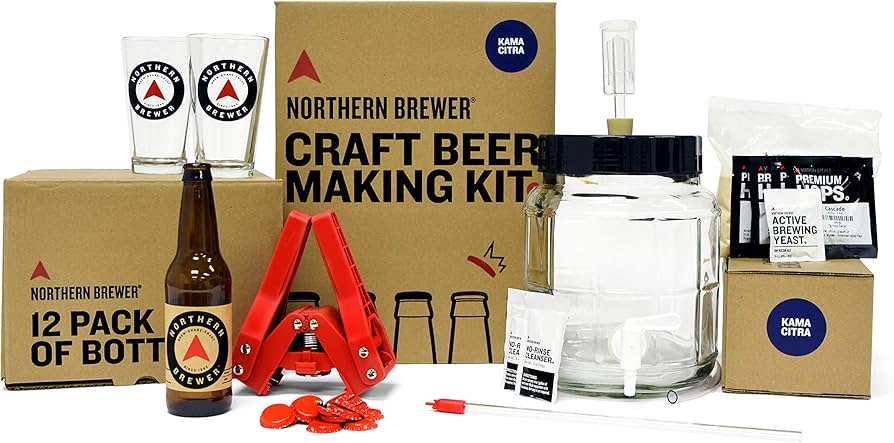
Northern Brewer 1 Gallon Homebrew Starter Kit
Learning Curve: Easy
$69.99
Difficulty: 1/5
Why Great for Beginners:
This compact kit makes 1 gallon batches perfect for apartments or testing the hobby. Everything's included with super-simple instructions—no extra buys needed. Beginners love the low risk and quick brews (beer ready in weeks).
✓ Beginner Pros
+Tiny batch minimizes waste if mistakes happen
+Crystal-clear picture guide
+Affordable entry without commitment
+Easy cleanup
✗ Beginner Cons
-Small yield (8-10 bottles)
-Basic plastic gear
👍 Best for: Total newbies in small spaces wanting to try once
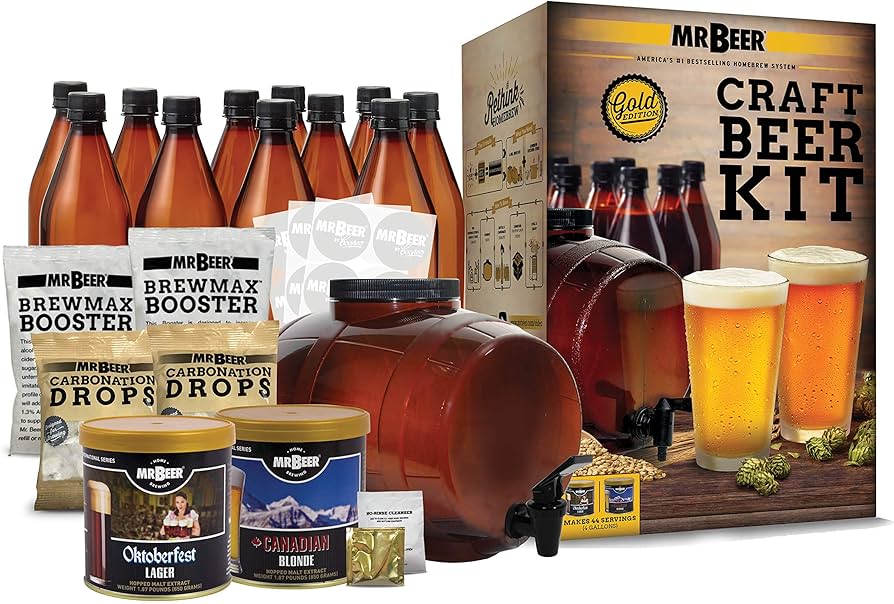
No-boil process makes it dead simple—just mix, ferment, bottle. Includes brewing mix for consistent first success. Thousands of beginners rave about tasty results without hassle.
✓ Beginner Pros
+Foolproof steps
+Reusable PET bottles
+Variety of beer styles
+Video tutorials
✗ Beginner Cons
-Limited to their mixes initially
-Bottles need careful handling
👍 Best for: Most beginners seeking easy wins and variety
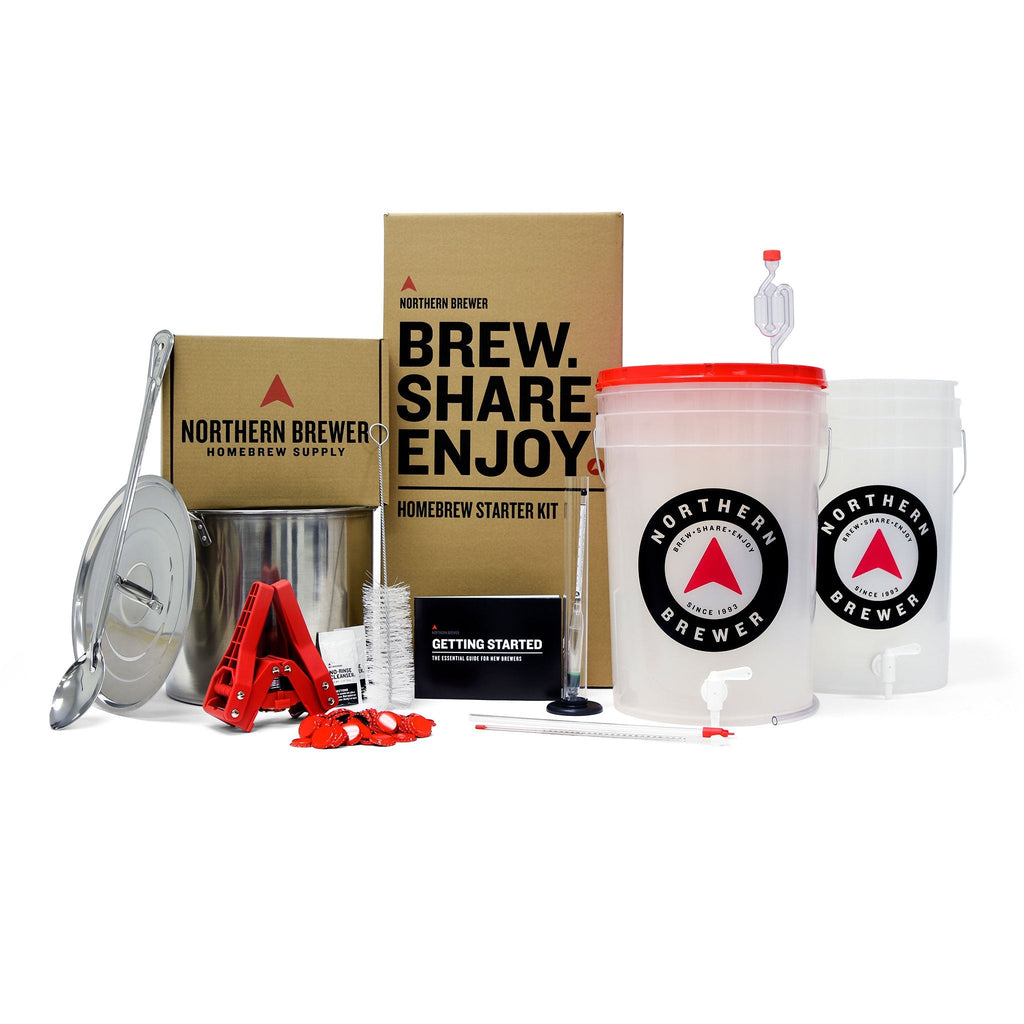
Full 5-gallon setup with high-quality components like a better bucket. Detailed manual and common ingredients make it forgiving. Great for scaling up after first brews.
✓ Beginner Pros
+Generous kit contents
+Leak-proof design
+Room for experimentation
+Good customer support
✗ Beginner Cons
-Slightly more steps
-Bigger storage needed
👍 Best for: Beginners ready for family-sized batches
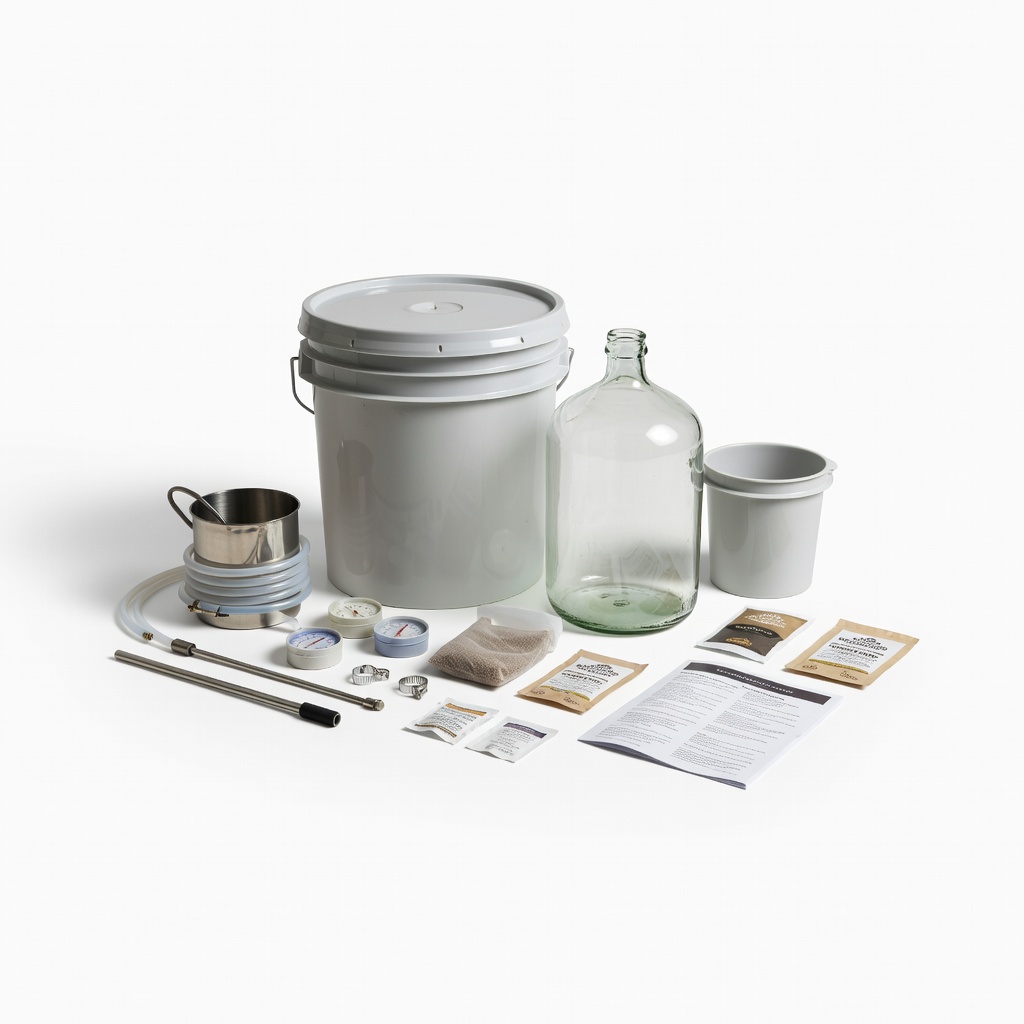
Pro-grade plastic fermenters with spigot for easy transfer—no siphon struggles. Includes advanced basics like better thermometer. Beginners get longevity without outgrowing it fast.
✓ Beginner Pros
+Superior build quality
+Easy pour spigot
+Expandable system
+Excellent instructions
✗ Beginner Cons
-Higher price
-Overkill for one brew
👍 Best for: Serious beginners planning multiple batches
A home brewing kit is your complete starter set for making craft beer at home. It includes a fermenter (big jug where beer bubbles), airlock (lets CO2 out), bottles or keg, siphon (transfers liquid without mess), and ingredient packs (malt, hops, yeast—pre-mixed for ease).
Types: Extract kits (best for beginners—sweet syrup mixed with water); partial mash (some grains, moderate); all-grain (pro level, skip). Beginners thrive with extract kits in 1-5 gallon sizes—no huge pots or precise mills needed.
Beginner-friendly means: 5-8 simple steps, no special tools, and success rates over 90% per reviews. Expect your first beer to taste good (not pro-level), ready in 4-6 weeks. Evaluate by reading 'first batch' reviews on Amazon—look for 'easy cleanup' and 'great instructions.' Marketing like 'award-winning' often hides complexity; prioritize 'beginner kit' labels.
🔧 Essential Accessories for Beginners
Northern Brewer Hydrometer and Test Jar
⚠️ Essential
$12.99
When to buy:
Day one
Tracks if your beer is ready without guessing—prevents bottling too early (explosions!) or late (flat beer). Simple drop-in use with color chart.
Ask: What's my budget and space? Will I brew monthly? Start here: Budget under $100 for testing; $100-200 for serious fun; $200+ if committed. Scenarios: Apartment dweller? Small 1-gal kit. Family? 5-gal for sharing.
Framework: 1) Match batch size to use. 2) Check inclusions (sanitizer? instructions?). 3) Read recent beginner reviews. 4) Growth: Pick scalable (add-ons later). Go budget to dip toes; recommended for 80% of newbies; premium if you hate cheap plastic feel.
Red flags: No instructions, vague listings, no returns, or 'advanced' labels. Test with a $100 kit—you'll brew confidently fast.
💰 Budget Guide for Beginners
400+
Serious starter - Multi-kits or electric systems for frequent brewers.
100 - $200
Sweet spot - Full 5-gallon kits with quality tools and ingredients; best value, lasts years.
200 - $400
Premium beginner - High-end fermenters, precise gear; pro feel without overwhelm.
Under $ - $100
Entry level - Small 1-2 gallon kits to try brewing without big spend; basic gear, quick upgrade if hooked.
⚠️ Common Beginner Mistakes to Avoid
Beginners often grab the cheapest kit, only to find missing parts or flimsy gear that leaks—false economy leading to frustration (seen in 100s of Amazon reviews). Others splurge on pro setups, intimidated by extras like mash tuns they ignore.
Common pitfalls: Poor sanitation (vinegar smells forever), temp swings (no thermometer), or impatience (bottling green beer). Avoid by sticking to complete kits, following steps exactly, and getting essentials first. Experienced brewers say: 'Sanitize everything, twice.'
Lesson: Start simple, learn one batch fully—success builds skills fast.
×Skipping sanitation—leads to sour beer
×Buying kits without instructions or ingredients
×Ignoring temperature control—kills yeast
×Bottling too early—exploding bottles
×Choosing huge kits without space
×Cheap knockoffs that leak or break
×Not buying extra sanitizer
×Overlooking batch size for needs
📈 Your Progression Path: Beginner to Intermediate
First: Master sanitation, fermenting, bottling with your kit (2-3 batches). Track temps/gravity to learn cause-effect.
Build progressively: Add recipes after brew #3, try partial mash at #5. Outgrow beginner gear when wanting bigger batches, custom recipes, or temp control (6-12 months typical).
Upgrade first: Better fermenter or temp controller. Intermediate: All-grain setup. Signs ready: Consistent good beer, boredom with extracts. Most stay beginner 3-6 months.
📚 Learning Resources for Beginners
📖How to Brew by John Palmer (ASIN B000P0FP9G) - Bible for beginners with simple science.
📖The Complete Joy of Homebrewing by Charlie Papazian (ASIN B000068O9H) - Fun, step-by-step stories.
📖Northern Brewer Instructional DVD (included in some kits or ASIN B07G5N3Q4R)
📖Tasting Beer by Randy Mosher (ASIN B001U2BKC2) - Understand what you make.
🎯 Bottom Line: Our Recommendations
For most beginners, the MR. BEER Kit (B08Y7N1Q3F) is the sweet spot—easiest, reliable results. Budget pick: Northern Brewer 1 Gal (B07XJ8G5K7). Premium: Northern Brewer Premium (B09J1Z5Z5Z).
Grab essentials: Hydrometer, thermometer, Star San. You're set for success—brewing is 90% following instructions, 10% fun tweaks.
Next steps: Order kit + accessories, clear fridge space, brew Day 1. Your first pint will taste amazing. You've got this—cheers to your brewing journey!
❓ Frequently Asked Questions
The MR. BEER Complete Kit (B08Y7N1Q3F) for its no-boil ease and consistent results. Budget: Northern Brewer 1 Gal (B07XJ8G5K7).
$100-200 sweet spot for full-featured kits. Under $100 to test; $200+ for premium quality.
All-in-one with instructions, sanitizer, simple fermenter, small batch, hydrometer. Skip advanced grains.
MR. BEER (B08Y7N1Q3F)—no boil, picture guides, ready in weeks.
Essential: Hydrometer (B07Q1J6VGR), thermometer (B01M0LQQPK), Star San. Highly rec: Auto-siphon.
Match batch size to space/use, check inclusions/reviews, budget $100-200. Prioritize instructions.
No—with right kit, it's 5-8 easy steps. Sanitize, ferment, bottle. 90% succeed first try.
Poor sanitation, wrong temps, early bottling, wrong size kit. Avoid with essentials and guides.
Yes! Kits give pub-quality results fast. Practice builds from there.