Discover simple, foolproof fermentation crocks that make your first kimchi or sauerkraut batch easy and successful—no experience needed.
Choosing your first fermentation crock can feel intimidating with all the sizes, materials, and confusing options out there. Beginners often worry about picking the wrong one, ending up with spoiled food or a frustrating experience. But fermenting at home—like making kimchi, sauerkraut, or pickles—is simpler than you think with the right starter crock.
This guide cuts through the confusion, focusing only on beginner-friendly crocks that are easy to use, forgiving of mistakes, and perfect for small batches. We'll show you exactly what to look for, top Amazon picks with links, must-have accessories, and how to avoid common pitfalls. By the end, you'll feel confident starting your fermentation journey.
📋 In This Guide
• Why Beginners Struggle with Fermentation Crocks
• What to Look For (Key Features)
• Top 4 Beginner-Friendly Fermentation Crocks
• Essential Accessories for Beginners
• Common Beginner Mistakes to Avoid
• Your Progression Path
• FAQ & Learning Resources
😰 Why Beginners Struggle with Fermentation Crocks
Beginners diving into fermentation crocks face a flood of choices: stoneware vs. glass, liters vs. gallons, weights or no weights—it's overwhelming. Many get confused by terms like 'airlock' or 'water seal,' not realizing these keep bad bacteria out while good ones thrive. Reviews on Amazon and Reddit forums show newbies frustrated by crocks that crack, leak, or are too big for fridge space.
The biggest fear? Wasting food or time on failed batches because the crock wasn't right. Without guidance, beginners buy cheap imports that chip easily or oversized ones they can't manage, leading to intimidation and giving up. You don't need pro-level gear; you just need something simple that tolerates messy first tries.
🔍 What to Look For: Key Beginner-Friendly Features
For beginners, prioritize crocks that are small (1-2 gallons/5-10 liters) for easy handling and small batches you can finish quickly. Look for thick stoneware or ceramic that's unglazed inside to allow natural fermentation without chemicals leaching in—avoid shiny glazed interiors that can harbor bacteria.
Must-haves: A heavy lid for a water seal (moat around the edge keeps air out), included weights to keep veggies submerged, and a sturdy handle or knob for easy lifting. Nice-to-haves like a lid lifter make it forgiving. Skip fancy add-ons like spigots (they leak for newbies) or huge sizes. Beginner-friendly crocks feel solid but not heavy, clean easily, and fit in your fridge door.
✅ Essential Features for Beginners
•Water seal lid: Creates a simple moat to block oxygen without fancy gadgets
•Included weights: Keeps food under brine so beginners don't worry about mold
•Small size (1-2 gallons): Perfect for 1-2 batches a week, easy to store and monitor
•Thick stoneware: Forgiving material that won't crack from beginner handling
•Wide mouth: Easy to pack veggies and clean without scrubbing frustration
•Lid lifter tool: Makes removing wet, heavy lid simple—no slips or spills
•Unglazed interior: Safe for natural fermentation, no weird tastes
🏆 Top 4 Best Fermentation Crocks for Beginners
#1
💰 Budget
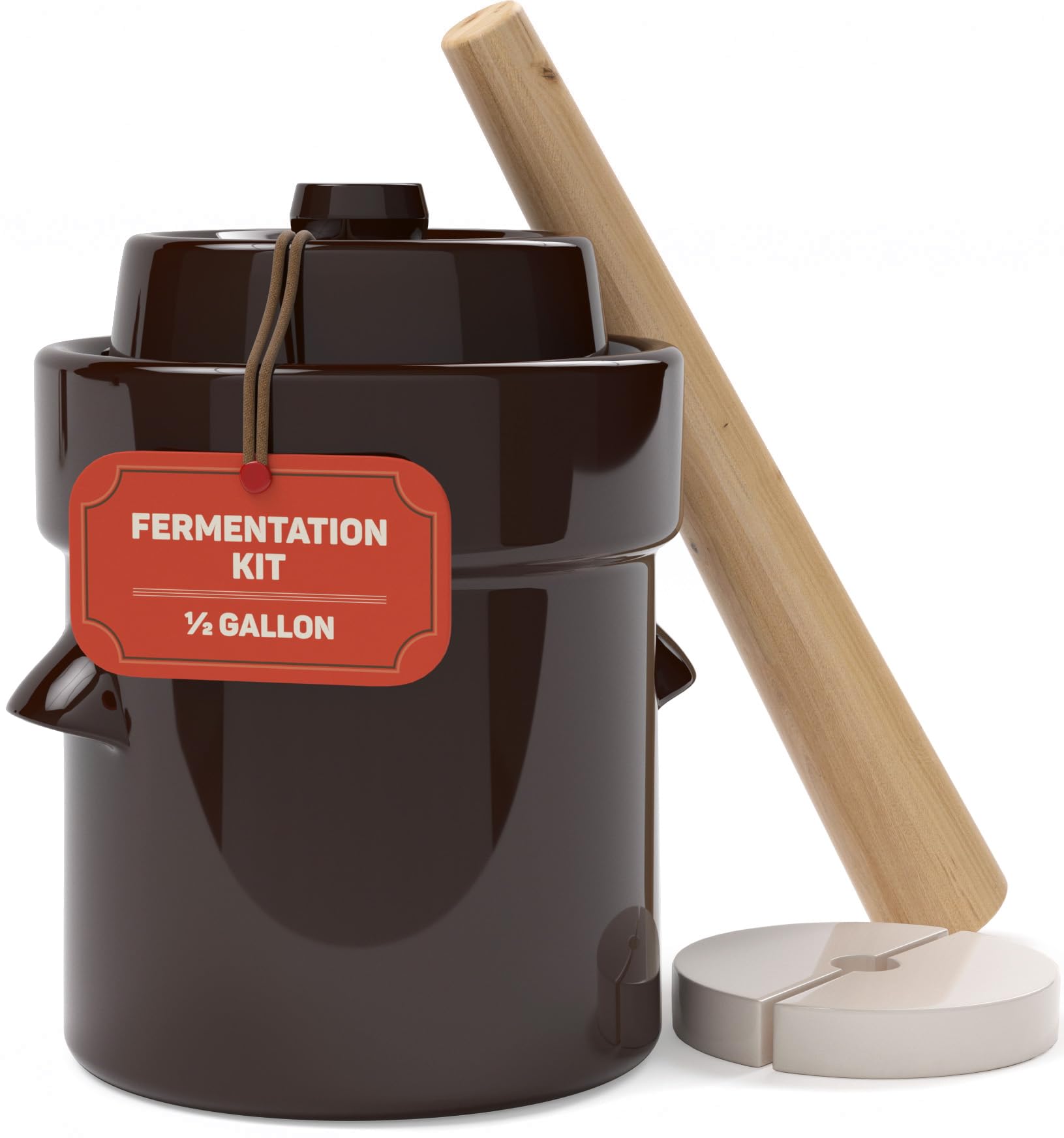
Kenley Pottery Fermenting Crock - 2 Liter Pickle Pot
Learning Curve: Easy
$49.99
Difficulty: 1/5
Why Great for Beginners:
This compact 2L crock is perfect for solo beginners making small kimchi batches without overwhelming space. Includes lid, weights, and mallet—everything for day-one success. Stoneware is forgiving and easy to clean after messy first tries.
✓ Beginner Pros
+Super small and light—fits anywhere
+Complete kit saves shopping hassle
+Wide mouth for easy packing
+Affordable trial without commitment
✗ Beginner Cons
-Tiny batches only (1-2 jars worth)
-Lid knob small for big hands
👍 Best for: Solo beginners or apartment dwellers testing fermentation
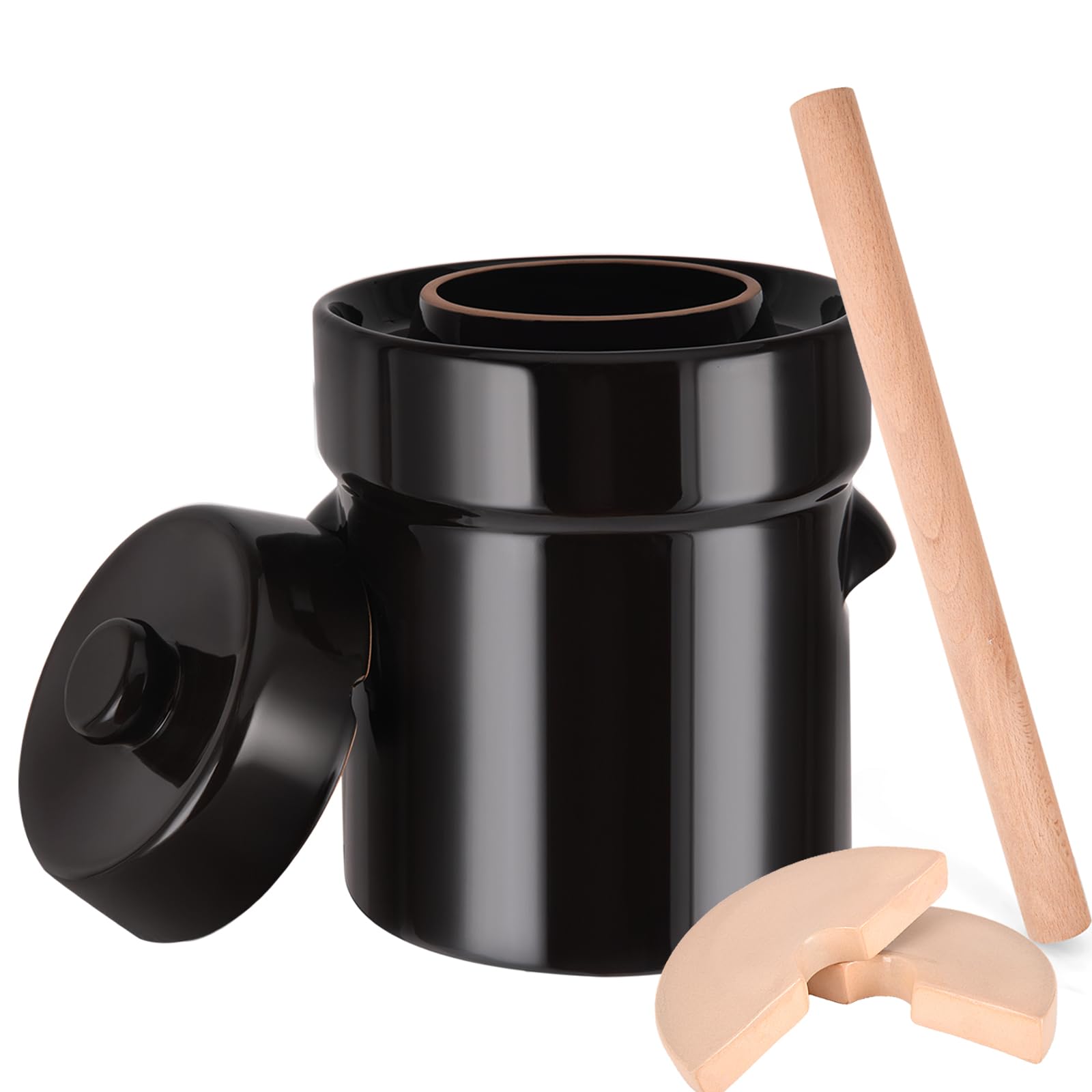
Fermentaholics Ceramic Fermentation Crock - 5 Liter with Lid & Weights
Learning Curve: Easy
$79.99
Difficulty: 1/5
Why Great for Beginners:
Top pick for most beginners—5L size handles family kimchi or kraut perfectly. Thick ceramic with reliable water seal and heavy weights keeps things submerged effortlessly. Lid lifter included makes it spill-proof for new hands.
✓ Beginner Pros
+Full kit with lifter tool
+Perfect beginner size
+Durable—no chips in reviews
+Easy fridge fit
✗ Beginner Cons
-Heavier when full
-Needs occasional moat refill
👍 Best for: Couples or small families fermenting weekly
Great middle-ground size for growing beginners. Solid stoneware kit prevents common submersion fails. Budget-friendly upgrade from tiny crocks without premium price.
✓ Beginner Pros
+Good capacity for 4-6 servings
+Includes all basics
+Stable base
✗ Beginner Cons
-No lifter (buy separate)
-Slightly thinner walls
👍 Best for: Beginners wanting more capacity on budget
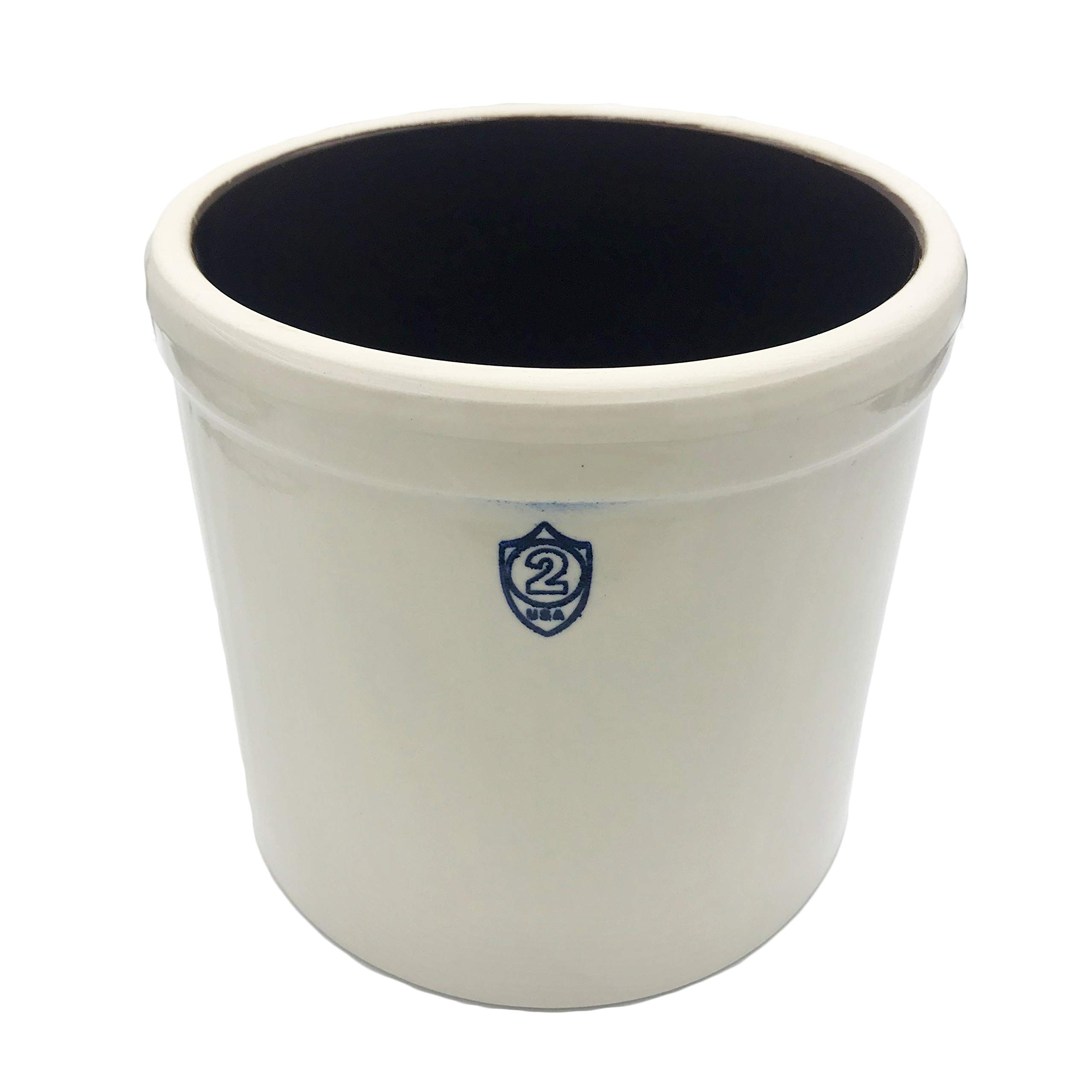
Premium quality stoneware that's built to last—ideal for beginners committing to fermenting. Exceptional seal and weight distribution for flawless first batches. Made in USA with lifetime durability.
✓ Beginner Pros
+Rock-solid build
+Perfect seal every time
+Grows with your skills
✗ Beginner Cons
-No weights included
-Higher price
👍 Best for: Serious beginners planning long-term hobby
📖 Complete Beginner's Guide to Fermentation Crocks
Fermentation crocks are traditional stoneware pots designed for lacto-fermentation, where veggies like cabbage turn into kimchi or sauerkraut using their own natural bacteria—no cooking or electricity needed. Just chop, salt, pack, and wait 1-4 weeks while it bubbles happily.
Types include basic open crocks (too exposed for beginners), water-seal crocks (best for newbies with moat lid), and modern glass jars (good alternative but less traditional). Stoneware water-seal crocks win for beginners: forgiving, consistent temps, and authentic results without plastic tastes.
Expect your first batches to take 7-14 days, with simple monitoring (check submersion daily). 'Beginner-friendly' means no leaks, easy cleaning, and sizes for 4-8 servings. Marketing like 'German-style' just means quality clay—focus on reviews mentioning 'first-time success.'
🤔 How to Choose Your First Fermentation Crocks
Ask: What's your space? Fridge room for 1-gallon? Batch size—family of 4 needs 1.5-2 gallons max. Budget: Start under $100. Will you ferment weekly? Get stoneware for longevity.
Framework: 1) Match size to needs (small for solo). 2) Check for water seal + weights. 3) Read reviews for 'easy clean' and 'no cracks.' Budget? Under $50 for trial, $50-100 sweet spot (durable, grows with you), $100+ if committing long-term. Avoid: Thin walls, no weights, spigot models (clog). Red flags: Cheap imports cracking in reviews, oversized for beginners.
💰 Budget Guide for Beginners
150+
Pro entry: Large or sets for serious hobbyists expanding quickly
50 - $100
Sweet spot: Best for most beginners—complete kit with lid/weights, room to grow skills
100 - $150
Premium beginner: Heavy-duty stoneware, excellent seal, lasts years without upgrades
Under $ - $50
Entry level: Basic trial crock—good for 1-2 batches, may lack weights or feel flimsy
⚠️ Common Beginner Mistakes to Avoid
Beginners often grab the cheapest crock, only to find thin walls crack when packing tightly, as seen in Amazon Q&A. Or they skip weights, letting veggies float and mold—forum horror stories abound. Another trap: Huge 5-gallon crocks that overwhelm small kitchens and go unused.
Avoid by sticking to kits under 2 gallons with weights. Clean with hot soapy water post-use (no dishwasher yet). Experienced fermenters say: Start simple, master basics before spigots or multiples. Lesson: Quality over quantity prevents quitting early.
×Buying too small/large—can't fit recipes or store
×Skipping weights—leads to moldy failures
×Cheap thin crocks that crack on first use
×Glazed interiors causing off-flavors
×No water seal—oxygen ruins batches
×Oversized for fridge, forgotten and spoiled
×Ignoring cleaning—buildup causes smells
×No lid lifter—slippery spills frustrate
📈 Your Progression Path: Beginner to Intermediate
Start with daily checks: Pack cabbage, submerge, wait 7 days tasting. Master one recipe (kimchi) before veggies. Build by trying hot sauce or kombucha after 1-2 months.
Outgrow beginner crock when doing 3+ batches weekly or larger family servings—upgrade to 5L set or dual crocks. Signs: Consistent successes, wanting variety. Most stay beginner 3-6 months; intermediate means custom recipes, no monitoring needed. First upgrade: Extra weights or temp mat.
📚 Learning Resources for Beginners
📖{"name":"The Art of Fermentation by Sandor Katz","asin":"1603583188","type":"book","whyForBeginners":"Bible for newbies—simple recipes, science explained plainly."}
📖{"name":"Fermented Vegetables by Kirsten and Christopher Shockey","asin":"1611801015","type":"book","whyForBeginners":"Step-by-step kimchi/sauerkraut with photos—zero overwhelm."}
📖{"name":"Fiery Ferments by Kirsten Shockey","asin":"160774866X","type":"book","whyForBeginners":"Spicy beginner recipes to level up safely."}
📖{"name":"Masontops Complete Mason Jar Fermentation Kit","asin":"B01N7R7Z4Z","type":"tool","whyForBeginners":"Jar alternative for practice before crocks."}
📖{"name":"Wild Fermentation by Sandor Katz","asin":"1931498786","type":"book","whyForBeginners":"Inspiring stories and easy starters."}
🎯 Bottom Line: Our Recommendations
For most beginners, the Fermentaholics 5L Crock (B08L5M7Q2S) is the sweet-spot winner—complete, forgiving, and batch-perfect. Budget? Kenley 2L. Premium committed? Ohio Stoneware.
Grab weights and lid lifter day one. You'll nail your first kimchi in weeks—fermenting builds confidence fast. Next step: Buy your pick, chop cabbage tomorrow, join r/fermentation for support. You've got this!
❓ Frequently Asked Questions
The Fermentaholics 5L Ceramic Crock (B08L5M7Q2S)—includes weights, lifter, perfect size, and easy seal for foolproof first batches.
$50-100 sweet spot for durable kits with all basics. Under $50 for trials, avoid super-cheap cracks.
Water seal lid, weights, 1-2 gallon size, thick stoneware—keeps it simple and successful.
Kenley 2L (B07N1S6Z3Q)—tiny, complete kit, zero learning curve.
Weights (essential), lid lifter (highly recommended), tamper for packing.
Match size to batches (1-2 gal), ensure water seal + weights, check reviews for durability.
No—with a good crock, it's just pack, wait, taste. Forgiving process, quick wins.
No weights (mold), wrong size, cheap cracks—stick to kits under 2 gal.
Yes—prevents floating food and mold. Get glass ones like B07P5Y5Z3N.
Stoneware crocks—better seal, temp stable. Glass jars ok for tiny tests.