Is Best Drone for Kids for beginners Worth It? Honest Review (20…
Everything beginners need to know to choose their first drone for kids with confidence.
Buying your first drone for a child can feel overwhelming. With so many options, technical specs, and price ranges, it's hard to know where to start. This guide is designed to make it simple. We'll explain what features actually matter for kids, what to avoid, and recommend the best beginner drones available on Amazon. By the end, you'll feel confident choosing a drone that's fun, safe, and frustration-free.
📋 In This Guide
• Why Beginners Struggle with Drone for Kids
• What to Look For (Key Features)
• Top 5 Beginner-Friendly Drone for Kids
• Essential Accessories for Beginners
• Common Beginner Mistakes to Avoid
• Your Progression Path
• FAQ & Learning Resources
😰 Why Beginners Struggle with Drone for Kids
Many parents buy a drone that's too advanced, leading to crashes and frustration. Jargon like '6-axis gyro', 'headless mode', and 'altitude hold' confuses newcomers. There's also a fear of wasting money on a cheap drone that breaks quickly or a pricey one the child outgrows too fast. With hundreds of options, it's easy to get lost. This guide cuts through the noise and focuses on what kids actually need: simplicity, durability, and safety.
🔍 What to Look For: Key Beginner-Friendly Features
For kids, the most important features are ease of use and safety. Look for drones with 'one-key takeoff/landing' so kids can get started instantly. 'Altitude hold' keeps the drone steady at a height without constant adjustment. 'Headless mode' means the drone always moves relative to the pilot, not its own orientation—perfect for young beginners. Plastic propeller guards are essential to protect little fingers and furniture. Flight time should be at least 5 minutes, and you'll want replacement parts available. Avoid drones with no beginner modes; a simple remote with large buttons is best.
✅ Essential Features for Beginners
•One-key takeoff and landing - starts and lands with a single button press
•Altitude hold - the drone hovers automatically, making it easier to control
•Headless mode - drone moves in the direction the joystick is pushed, regardless of its orientation
•Propeller guards - plastic rings around propellers to prevent injuries and damage
•Low battery warning - the drone returns or lands automatically when battery is low
•Beginner speed mode - limits how fast the drone can fly, ideal for learning
🏆 Top 5 Best Drone for Kids for Beginners
#1
⭐ Top Pick👍 Recommended
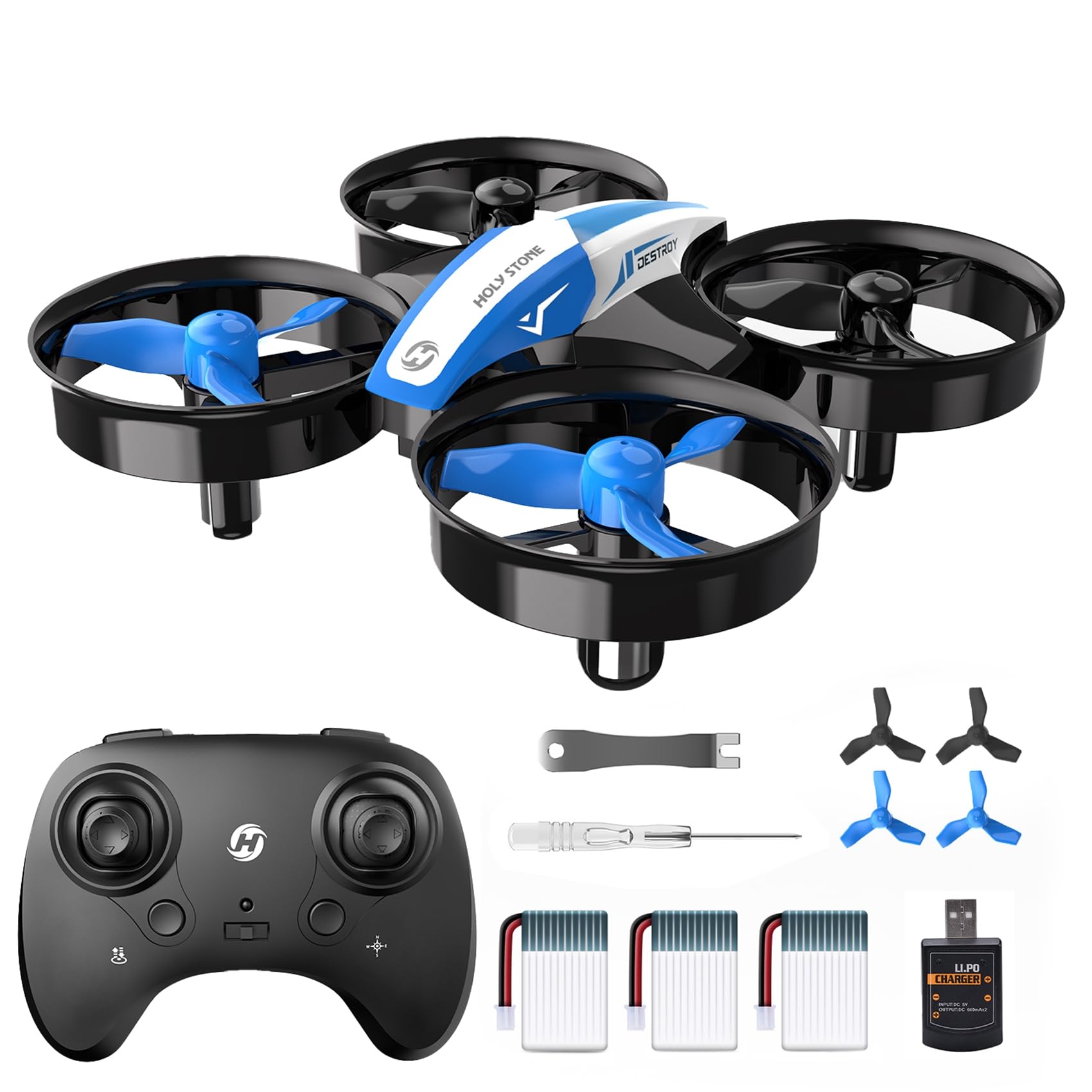
Holy Stone HS210 Mini Drone
Learning Curve: Easy
$39.99
Difficulty: 1/5
Why Great for Beginners:
The HS210 is a top-rated mini drone with three speeds, altitude hold, and propeller guards. It comes with three batteries for 21 minutes of flight. Perfect for kids ages 6+.
✓ Beginner Pros
+Comes with three batteries for longer flight time
+Altitude hold and headless mode make it easy to fly
+Durable plastic and propeller guards withstand crashes
+Small and light, safe for indoor use
✗ Beginner Cons
-No camera (but that's better for learning)
-Short flight range (about 50 meters)
-Battery charging takes 60 minutes
👍 Best for: Kids ages 6–12 starting out, especially for indoor flying.
👎 Not for: Teens wanting a camera or outdoor flight in wind.
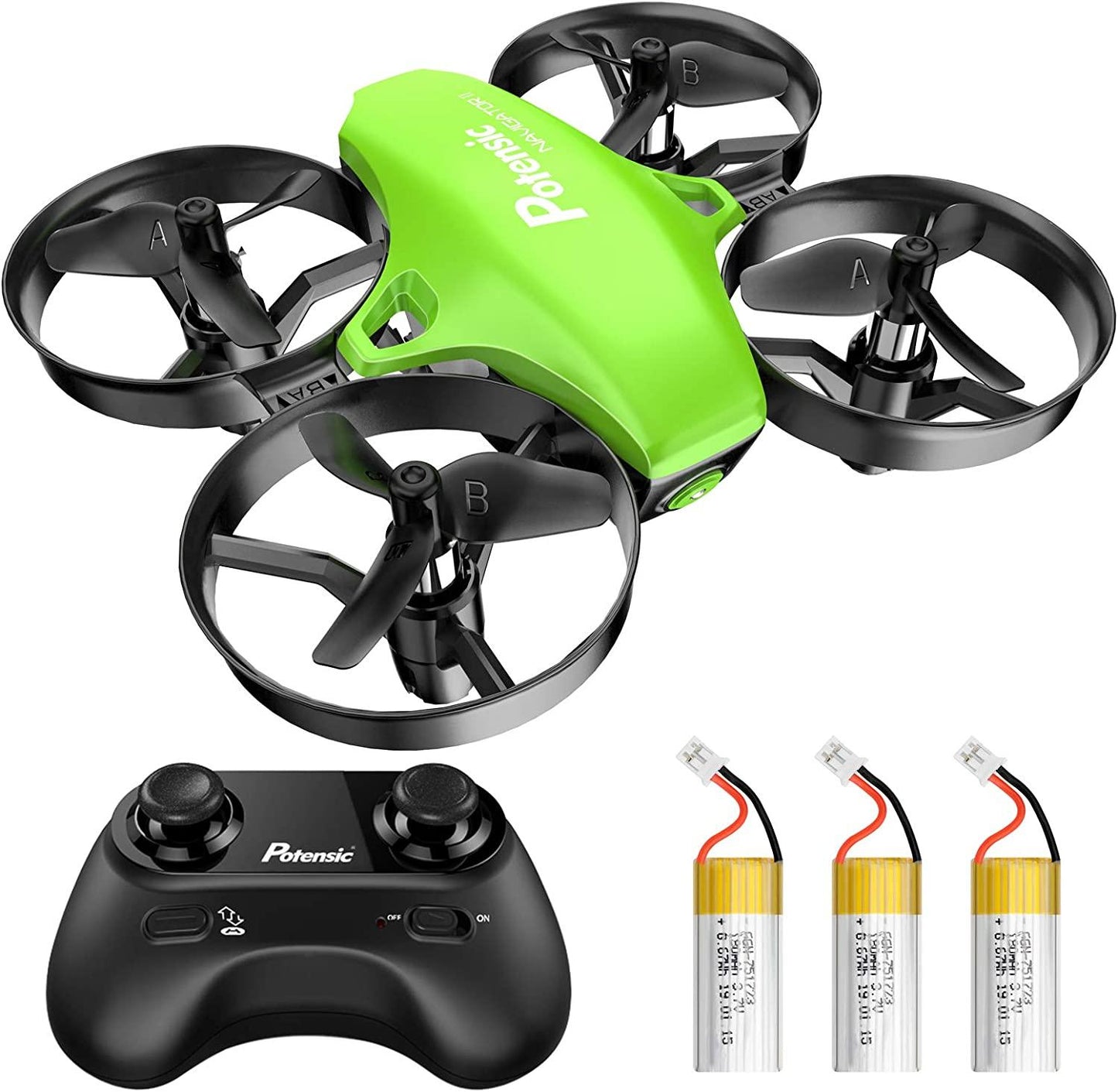
The Potensic A20 is one of the most affordable beginner drones. It's extremely lightweight, simple to operate, and includes propeller guards. Great for very young kids (ages 4+).
✓ Beginner Pros
+Very low price point
+Ultra-light and safe for indoor use
+Simple one-button takeoff/landing
+Durable enough for many crashes
✗ Beginner Cons
-Short flight time (about 5 minutes per battery)
-Only one battery included
-No altitude hold - requires constant control
👍 Best for: Preschoolers and very young kids who just want to see a drone fly.
👎 Not for: Older kids who want more features or longer flight time.
The A15H offers 1080p HD video, altitude hold, and auto-follow mode. It's a great step up for kids who master basic flying and want to take photos. Includes two batteries for 18 minutes flight.
✓ Beginner Pros
+Easy altitude hold and headless mode
+Decent 1080p camera for kids' first aerial videos
+Auto-follow and voice control features
+Two batteries included
✗ Beginner Cons
-Slightly larger, not as crash-resistant as mini drones
-Camera quality is basic but fine for kids
-More expensive, but still beginner-friendly
👍 Best for: Kids ages 8+ who want to try a camera drone.
👎 Not for: Very young kids or those who only fly indoors.
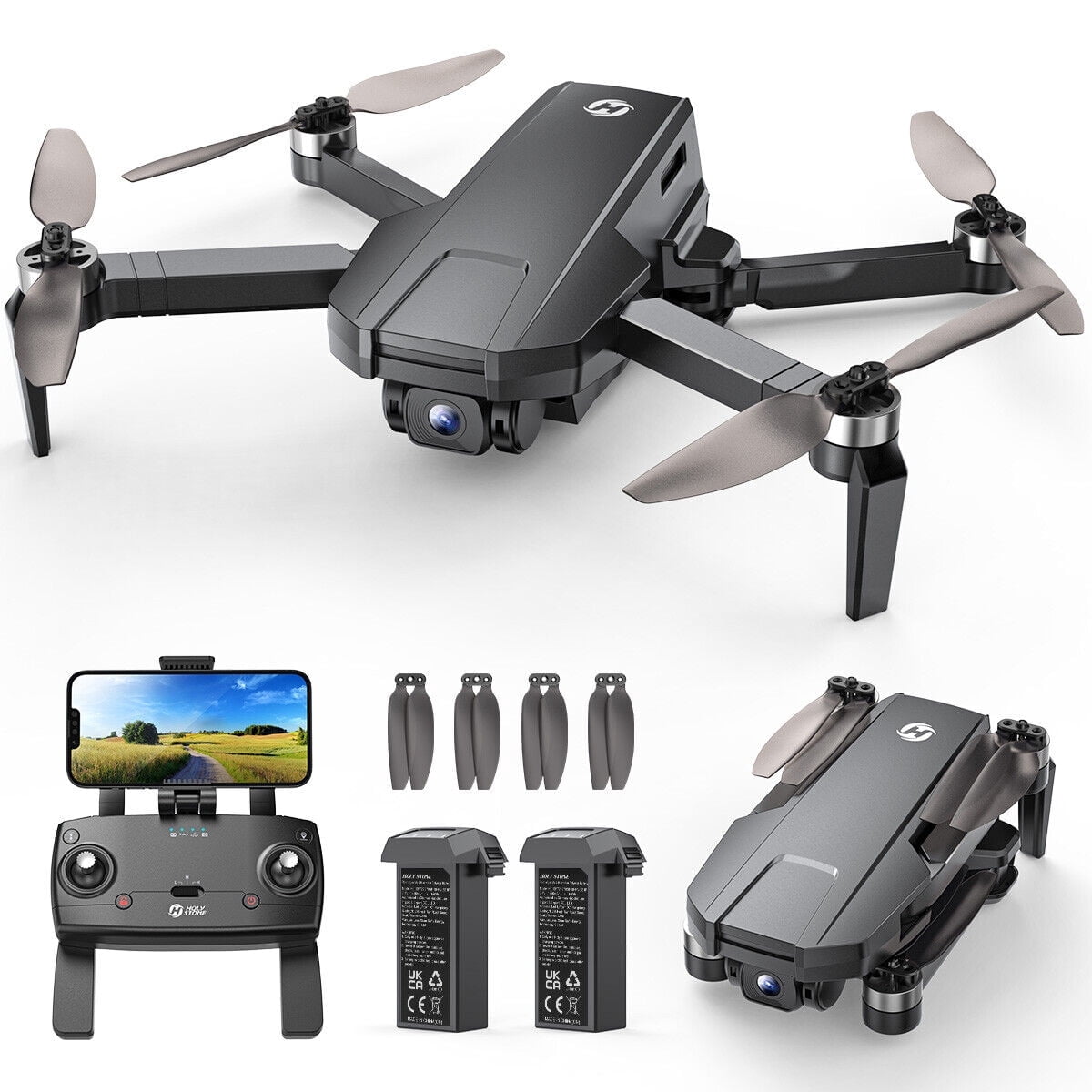
The HS720 is a more advanced drone but still beginner-friendly with GPS, altitude hold, and one-key return. It features a 4K camera and longer flight time. For older kids or those with a bigger budget.
✓ Beginner Pros
+GPS-assisted flight and automatic return
+4K camera for great photos/video
+Long flight time (26 minutes) and stable
+Foldable design for easy portability
✗ Beginner Cons
-Higher price point
-Larger and heavier, requires more space
-Replacement parts are more expensive
👍 Best for: Teens or kids who have flown before and want a serious hobby drone.
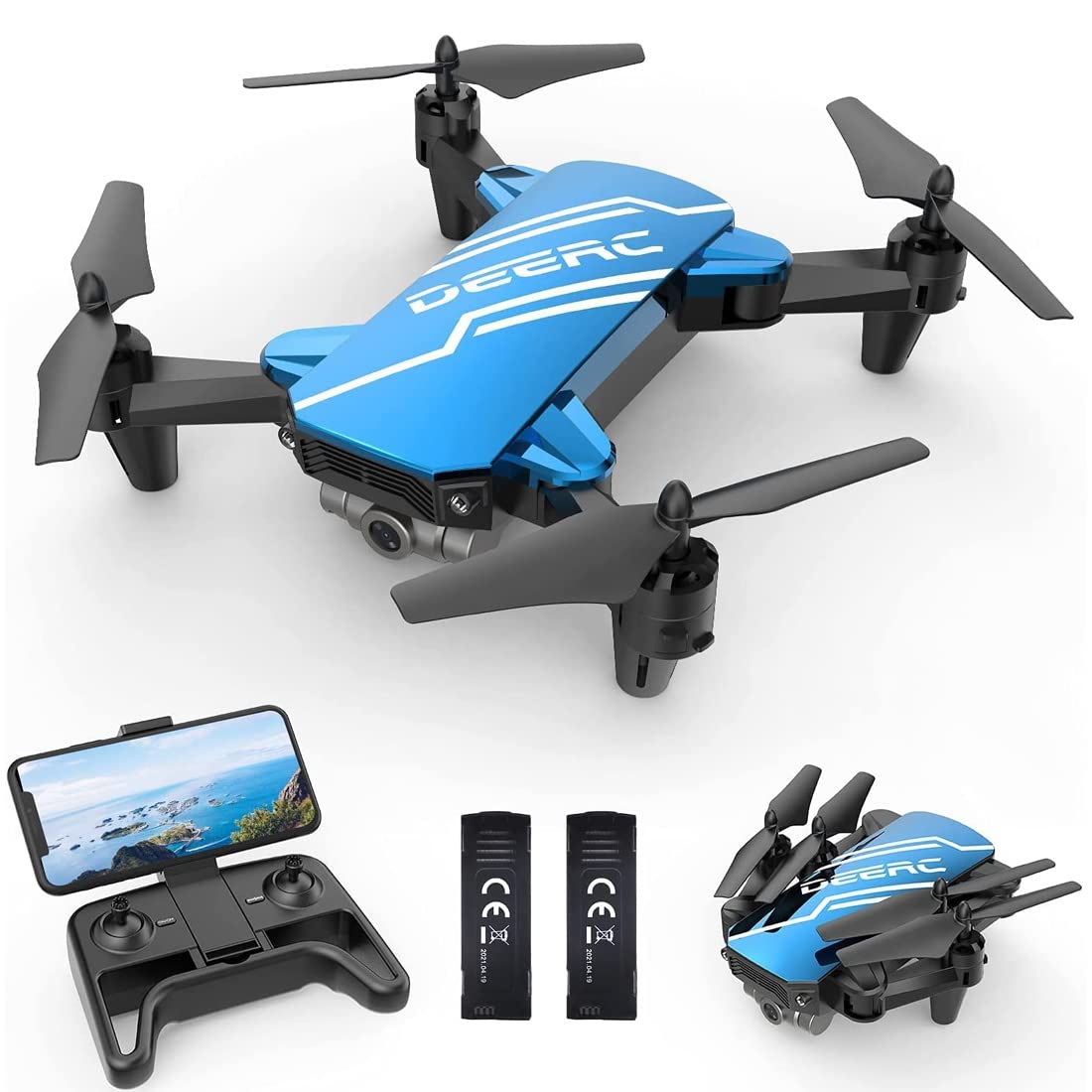
The D20 is a popular alternative to the HS210, with similar features: altitude hold, headless mode, and propeller guards. It comes with two batteries and is very durable.
✓ Beginner Pros
+Affordable with good feature set
+Durable design withstands crashes
+Two batteries for 14 minutes flight
+Simple remote control
✗ Beginner Cons
-No camera
-Range limited to about 50 meters
-Batteries take 40 minutes to charge
👍 Best for: Kids ages 6–10 looking for a reliable, crash-friendly drone.
👎 Not for: Those wanting a camera or longer flight time.
Drone for kids are small, lightweight quadcopters designed to be safe and easy to fly. They usually come with features like altitude hold, headless mode, and propeller guards. The best type for beginners are 'toy drones' under $100. They are forgiving when crashed (most are made of flexible plastic) and come with simple controllers. Avoid camera drones initially; kids often get distracted by the screen. Focus on flying skills first. A beginner-friendly drone should have at least 10 minutes of total flight time (two batteries) and be able to fly indoors and outdoors in calm weather. Tested customer reviews emphasize that drones with a 'controller' (not smartphone-only) are better for kids because they feel more like a video game controller.
🤔 How to Choose Your First Drone for Kids
First, decide the child's age and experience. For ages 4-7, pick a tiny indoor-only micro drone with guards. For ages 8-12, a small outdoor drone with altitude hold is great. Budget: plan to spend $30-$80 for a quality beginner drone. Ask yourself: Will they fly indoors or outdoors? Do they need a camera? (Skip it for the first drone). Do you want spare parts? Look for drones that sell replacement propellers and batteries. Red flags: drones with 4+ channel 'manual' mode only, no propeller guards, or very short flight time (under 4 minutes).
💰 Budget Guide for Beginners
100+
Advanced beginner - more like hobby drones. Usually not needed for first drone; buy only if child is serious and mature.
30 - $60
Sweet spot - best value for most beginners. Durable, with beginner modes and spare parts available.
60 - $100
Premium beginner - includes camera, better build, longer flight time. For older kids or those with prior experience.
Under $ - $30
Entry level - very basic, often fragile, limited features. Good for testing interest, but expect short lifespan.
⚠️ Common Beginner Mistakes to Avoid
Many beginners buy a drone with a camera thinking it's essential, but cameras on cheap drones are often low quality, add weight, and drain the battery. Another mistake is buying too cheaply: a $15 drone may break on the first crash. Also, skipping extra batteries is a common error; kids want to fly more than 5 minutes at a time. Lastly, not buying propeller guards leads to broken propellers and frustrated kids.
×Buying a drone with a camera too soon - adds complexity and poor video quality
×Choosing the cheapest drone - often breaks easily, leading to disappointment
×Not buying extra batteries - flight times are short (5-8 minutes) and kids want more
×Ignoring propeller guards - essential for safety and crash protection
×Buying a drone without a physical controller - smartphone-only controls are less intuitive for kids
×Not checking replacement parts availability - broken propellers are inevitable
📈 Your Progression Path: Beginner to Intermediate
Start with a basic toy drone indoors to learn throttle, pitch, and yaw. Once the child can fly in circles and through hoops, move to a slightly larger drone with a camera for outdoor flights. After mastering basic maneuvers, consider a 'mini' drone with a stabilized camera like the Holy Stone HS720. Most kids spend 3-6 months on a beginner drone before wanting more features. Signs they've outgrown: they fly confidently in wind, can perform tricks, or want to film friends.
📚 Learning Resources for Beginners
📖Drone Flying for Kids - A Parent's Guide (Book on Amazon)
📖Drone Flight Simulator for Kids (App, not Amazon resource, but can mention)
📖Micro Drone Training Hoops (Set of 3 rings for obstacle course)
📖The Official Beginner's Guide to Drones (eBook on Amazon)
🎯 Bottom Line: Our Recommendations
For most beginners, the best choice is the Holy Stone HS210 Mini Drone. It's durable, easy to fly, and comes with three batteries for extended play. If you want something even simpler, the Potensic A20 is great for very young kids. For a premium beginner drone with a camera, the Snaptain A15H offers 1080p video and altitude hold at a reasonable price. Don't forget extra batteries and propeller guards. Your child will have a blast learning to fly with the right gear.
❓ Frequently Asked Questions
The Holy Stone HS210 Mini Drone is widely considered the best beginner drone for kids. It's affordable, durable, and includes beginner-friendly features like altitude hold, headless mode, and three batteries.
$30 to $60 is the sweet spot. For that price, you get a durable drone with beginner modes and spare parts. Avoid drones under $15 as they break easily.
Essential features: one-key takeoff/landing, altitude hold, headless mode, propeller guards, and low battery warning. A camera is not necessary for the first drone.
The Potensic A20 Mini Drone is one of the easiest. It's tiny, simple, and has one-button takeoff. However, it lacks altitude hold, so the Holy Stone HS210 is easier for steady flying.
Extra propellers, extra batteries, and a multi-battery charger are essential. Propeller guards (if not included) are also highly recommended.
Consider the child's age: under 7 get a micro indoor drone; 7-12 get a mini outdoor drone with altitude hold. Set a budget under $60, prioritize durability and simple controls, and skip cameras initially.
With modern beginner drones, no. Features like altitude hold and headless mode make it almost like playing a video game. Most kids can hover and turn within 10 minutes.
Buying a camera drone too soon, buying the cheapest option, not getting extra batteries, and skipping propeller guards. Also, flying outdoors in windy conditions can lead to crashes.
Ages 4-6 can use micro drones like the Potensic A20 with supervision. Ages 6+ can handle mini drones like the Holy Stone HS210 independently.
Typically 5-8 minutes per battery. That's why buying extra batteries is crucial for longer play.
Yes, mini drones with propeller guards are safe for indoor flight in open spaces. Avoid hard-to-maneuver corners and fragile objects.
For a first drone, no. Cameras add weight, cost, and complexity. Let the child learn to fly first; then upgrade to a camera drone like the Snaptain A15H.