Review Atlas
Review AtlasYour guide to a better purchase

Menu

Shop by Category

Get the App

Better experience on mobile

Beginners GuideDIY Home Improvement

Is Best Cordless Drill for beginners Worth It? Honest Review (20…

Everything beginners need to know to choose their first cordless drill with confidence.

Choosing your first cordless drill can feel overwhelming with so many options, technical specs, and price points. Will it be too complicated? Too expensive? Too weak? This guide cuts through the noise and helps you pick a beginner-friendly cordless drill that matches your skill level and budget. We focus on ease of use, forgiving features, and real-world value so you can start your DIY journey with confidence.

📋 In This Guide

  • • Why Beginners Struggle with Cordless Drill
  • • What to Look For (Key Features)
  • • Top 5 Beginner-Friendly Cordless Drill
  • • Essential Accessories for Beginners
  • • Common Beginner Mistakes to Avoid
  • • Your Progression Path
  • • FAQ & Learning Resources

😰 Why Beginners Struggle with Cordless Drill

Many beginners are intimidated by terms like volts, torque, brushless vs brushed, and chuck size. The sheer number of brands and models leaves people unsure what actually matters. Fear of buying the wrong tool, wasting money, or getting something too complex is common. Beginners often don't know what features they'll actually use versus what's marketing hype. Without guidance, many end up with a drill that's either underpowered (frustrating) or overkill (expensive and heavy).

🔍 What to Look For: Key Beginner-Friendly Features

As a beginner, focus on drills that are lightweight, have adjustable speed (usually a variable-speed trigger), and come with a clutch to prevent stripping screws. Look for a keyless chuck for easy bit changes. A drill with a built-in LED light helps in dark spaces. Don't get hung up on high voltage or brushless motors initially – a 12V or 18V brushed drill is plenty for light to medium DIY. Brands with good battery systems (like Ryobi or DeWalt) let you expand your tool collection later. Avoid kits with only one battery – get at least a second battery or a kit that includes two.

✅ Essential Features for Beginners

  • Variable speed trigger – lets you go slow for screws or fast for holes
  • Adjustable clutch – prevents over-tightening screws and stripping
  • Keyless chuck – easy bit change without tools
  • Lightweight design – less fatigue during use
  • Built-in LED – illuminates work area
  • Lithium-ion battery – holds charge and lasts longer than NiCd
  • Ergonomic grip – comfortable for extended use

🏆 Top 5 Best Cordless Drill for Beginners

#1
💰 Budget

Black+Decker 20V Max Cordless Drill (BDCDD12C)

Learning Curve: Easy

$49.99
Difficulty: 1/5
Black+Decker 20V Max Cordless Drill (BDCDD12C) - Image 1 of 4

Why Great for Beginners:

Lightweight, simple, and very affordable. Perfect for assembling furniture and light home repairs. Comes with 20V battery and charger.

Beginner Pros

  • +Very low price
  • +Lightweight (3.5 lbs)
  • +Easy to use single speed
  • +Good for small tasks

Beginner Cons

  • -No clutch – can strip screws
  • -Battery life shorter than pricier models
  • -Only one speed
  • -Not for heavy drilling
👍 Best for: Absolute beginners on a tight budget doing occasional light tasks
👎 Not for: Anyone needing to drill into concrete or dense wood regularly

#2
👍 Recommended

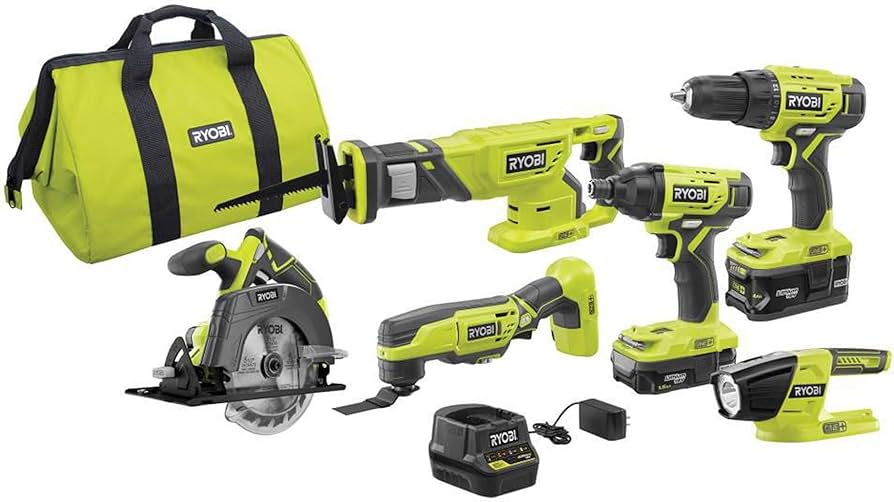
Ryobi 18V One+ Cordless Drill (P1819)

Learning Curve: Easy

$79.99
Difficulty: 2/5
Ryobi 18V One+ Cordless Drill (P1819)

Why Great for Beginners:

Affordable entry to the Ryobi One+ platform (over 280 tools). Variable speed and 24-position clutch give beginner-friendly control. Two-battery kit included.

Beginner Pros

  • +Great value with two batteries
  • +Variable speed
  • +Adjustable clutch prevents stripping
  • +Huge tool ecosystem

Beginner Cons

  • -Heavier than premium drills
  • -Brushes may wear over time
  • -Battery not compatible with other brands
👍 Best for: Beginners who want to expand to other power tools without breaking the bank
👎 Not for: Professionals needing daily heavy use
#3
👍 Recommended

DEWALT 20V MAX Cordless Drill (DCD771C2)

Learning Curve: Easy

$119.99
Difficulty: 2/5
DEWALT 20V MAX Cordless Drill (DCD771C2)

Why Great for Beginners:

Trusted brand, durable, and has a high-speed transmission. Two-speed settings allow beginners to switch between drilling and driving. Comes with two batteries.

Beginner Pros

  • +Two-speed range (0-450/0-1500 RPM)
  • +High torque for its class
  • +Durable build
  • +Good warranty

Beginner Cons

  • -Heavier than Ryobi
  • -No built-in LED on base model
  • -Battery costs high for extras
👍 Best for: Beginners willing to invest a bit more for a rugged drill that handles tough jobs
👎 Not for: Those on a tight budget or prefer lighter tools
#4
✨ Premium

Makita 18V LXT Cordless Drill (XFD101)

Learning Curve: Easy

$149.99
Difficulty: 2/5
Makita 18V LXT Cordless Drill (XFD101) - Image 1 of 8

Why Great for Beginners:

Brushless motor offers longer runtime and less maintenance. Compact and lightweight but powerful. Beginners appreciate the smooth variable speed and easy bit changes.

Beginner Pros

  • +Brushless motor – more efficient, longer life
  • +Compact and lightweight (3.4 lbs)
  • +Excellent battery life
  • +Dual LED lights

Beginner Cons

  • -Higher price
  • -Only one battery included
  • -Chuck can be tight initially
👍 Best for: Beginners with a larger budget who want a premium tool that lasts
👎 Not for: Budget-conscious or occasional users
#5
✨ Premium

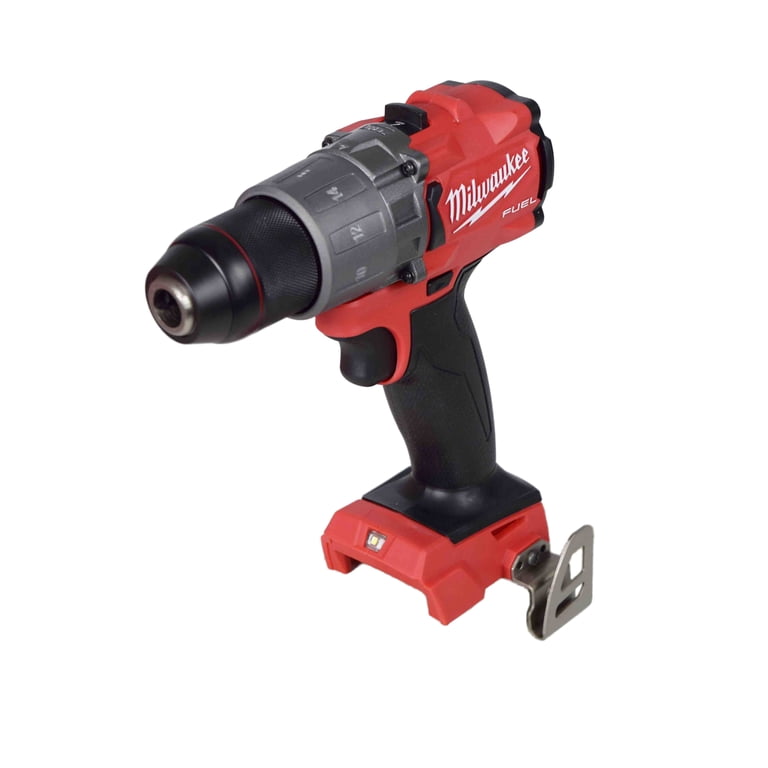
Milwaukee M18 FUEL Compact Drill (2803-20)

Learning Curve: Moderate

$179.99
Difficulty: 3/5
Milwaukee M18 FUEL Compact Drill (2803-20)

Why Great for Beginners:

Top-tier brushless drill with best-in-class power-to-size ratio. Auto-stop clutch settings help beginners avoid overdriving. Compact design fits tight spaces.

Beginner Pros

  • +Very compact and lightweight
  • +High torque yet manageable
  • +Auto-stop clutch for precision
  • +Excellent durability

Beginner Cons

  • -Expensive
  • -Batteries sold separately (tool only)
  • -Overkill for simple tasks
👍 Best for: Serious beginners who want the best and plan heavy DIY or light professional use
👎 Not for: Occasional users or tight budgets

📖 Complete Beginner's Guide to Cordless Drill

A cordless drill is a portable tool that uses a rechargeable battery to rotate a drill bit or screwdriver bit. The two main types are brushed (older tech, cheaper, less efficient) and brushless (newer, more efficient, more expensive, longer battery life). For beginners, a brushed drill is perfectly fine – it's forgiving and affordable. Key specs: Voltage (12V-20V) determines power – 12V is for light tasks like furniture assembly, 18V/20V handles drilling into wood and light masonry. Torque (measured in inch-pounds) tells you twisting force. More torque means better for tougher materials, but beginners rarely need max torque. Chuck size (3/8" or 1/2") – 1/2" is standard and accepts larger bits. Battery amp-hours (Ah) affect runtime – 1.5Ah is entry, 2.0Ah+ gives longer life. A good beginner drill costs $50-$150. Don't overspend on features you won't use.

🔧 Essential Accessories for Beginners

DEWALT Titanium Drill Bit Set (21-Piece) - Image 1 of 8

DEWALT Titanium Drill Bit Set (21-Piece)

⚠️ Essential

$29.99

When to buy:
Day one

A good set of drill bits is essential for making holes. Titanium coating lasts longer and reduces friction, making drilling easier for beginners.

Beginner Benefits:

  • Covers most hole sizes needed
  • Durable coating prevents dulling
  • Easy storage and organization
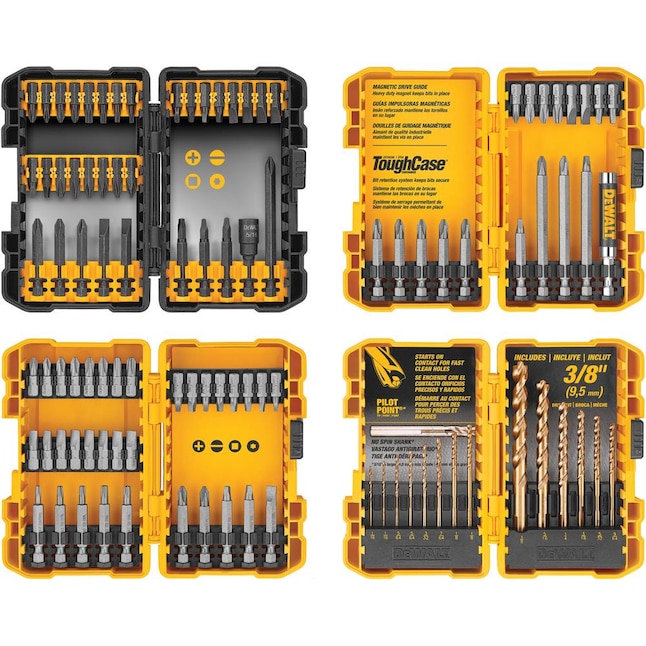
DEWALT Screwdriver Bit Set (100-Piece)

DEWALT Screwdriver Bit Set (100-Piece)

⚠️ Essential

$24.99

When to buy:
Day one

Driving screws is the most common use for a drill. This set includes Phillips, flathead, hex, and Torx bits for almost any screw.

Beginner Benefits:

  • Versatile for all screw types
  • Magnetic holder keeps bits secure
  • Reduces stripping risk with correct fit
WORKPRO Magnetic Drill Bit Holder - Image 1 of 9

WORKPRO Magnetic Drill Bit Holder

👍 Recommended

$9.99

When to buy:
First month

Keeps your bits organized and within reach. Magnetic mount attaches to the drill or a metal surface.

Beginner Benefits:

  • Prevents lost bits
  • Speeds up bit changes
  • Adds convenience
DEWALT TSTAK Tool Box - Image 1 of 7

DEWALT TSTAK Tool Box

💡 Nice to Have

$39.99

When to buy:
After you're comfortable

Keeps your drill, bits, and accessories organized and portable. Stackable with other TSTAK boxes for tool expansion.

Beginner Benefits:

  • Protects tools
  • Easy transport
  • Modular for future tools

NoCry Safety Glasses (Clear)

⚠️ Essential

$12.99

When to buy:
Day one

Safety is paramount when drilling – debris and dust can harm eyes. These meet ANSI Z87.1 standards.

Beginner Benefits:

  • Protects eyes from debris
  • Comfortable for extended wear
  • Essential for any DIY project

🤔 How to Choose Your First Cordless Drill

Ask yourself: What will I mainly drill? (wood, drywall, metal) How often? (monthly vs weekly) What is my budget? For light home use (shelves, furniture), a 12V drill is fine. For medium tasks (decking, drilling into studs), go with 18V/20V. If you plan to buy other power tools later, choose a brand with a shared battery platform (Ryobi, DeWalt, Makita). Avoid no-name brands; good warranty and parts support matters. Red flags: very cheap ($20-30) kits that may overheat quickly, or single-speed drills (only one speed) that lack control.

💰 Budget Guide for Beginners

60 - $120

Sweet spot – best value for most beginners, good power and features, room to grow.

120 - $200

Premium beginner – excellent build, often brushless, longer battery life, won't outgrow soon.

200 - $plus

Prosumer – serious beginners with higher budget, best performance and durability.

Under $ - $60

Entry level – good for very occasional light tasks, may lack power for tougher jobs.

⚠️ Common Beginner Mistakes to Avoid

Many beginners grab the cheapest drill, only to find it can't handle basic tasks like drilling into studs, leading to frustration. Without a clutch, screws get stripped or buried too deep. Another big mistake is ignoring the battery system – buying a drill from a brand with limited tool selection means you can't expand later. Also, beginners often buy a single-speed drill, which lacks control for driving screws. The golden rule: invest in a decent 18V/20V drill with a clutch and variable speed, and buy a second battery if not included.

  • ×Buying the cheapest drill – often underpowered and frustrating
  • ×Ignoring clutch – stripping screws and damaging materials
  • ×Choosing wrong voltage – too low for tasks or too heavy for simple jobs
  • ×Not buying a second battery – downtime waiting for charge
  • ×Buying a drill without a variable speed trigger – limited control
  • ×Overlooking battery platform – stuck with one brand for future tools
  • ×Assuming more power is always better – heavier and pricier
  • ×Skipping essential accessories like bits and safety glasses

📈 Your Progression Path: Beginner to Intermediate

Start by mastering basic drilling into wood and drywall, and driving screws with clutch settings. Practice on scrap wood to learn speed and pressure. After a few months, you can tackle small projects like shelves or birdhouses. Once you feel confident, you might add an impact driver for faster screw driving, or a drill with more torque for tougher materials. Signs you've outgrown your beginner drill: you need more power for thicker woods or metal, or you're drilling frequently and want faster charging/better ergonomics. Most beginners stay at this level for 1-2 years before upgrading.

🎯 Bottom Line: Our Recommendations

For most beginners, the best pick is the Ryobi 18V One+ Cordless Drill (P1819) or the DEWALT DCD771C2 – both offer great value, variable speed, clutch, and two batteries. If budget is tight, the Black+Decker BDCDD12C works for light tasks. If you want premium quality, the Makita XFD101 is compact and brushless. Don't forget to buy a good drill bit set, a screwdriver bit set, and safety glasses. Start with small projects, take your time, and enjoy the satisfaction of DIY.

❓ Frequently Asked Questions

For most beginners, the Ryobi 18V One+ (P1819) offers the best balance of price, features, and expandability. It has a variable speed trigger, 24-position clutch, and includes two batteries. It's lightweight and part of a huge tool system.
Expect to spend $50-$120 for a good beginner drill. The under-$60 range is for very light use, while $60-$120 hits the sweet spot with essential features. Premium models over $120 offer better build and brushless motors but aren't necessary for most beginners.
Must-haves: variable speed trigger, adjustable clutch (at least 10+ positions), keyless chuck, built-in LED light, and a comfortable grip. A lithium-ion battery (12V-20V) and at least one spare battery are recommended.
The Black+Decker 20V Max (BDCDD12C) is the simplest – single speed, lightweight, and very affordable. However, because it lacks a clutch, the Ryobi P1819 is easier to use correctly.
Essential: a drill bit set (titanium coated), a screwdriver bit set (Phillips, flathead, Torx), and safety glasses. Highly recommended: a magnetic bit holder and a second battery. Nice-to-have: a tool box for organization.
Decide your main tasks (light assembly vs drilling into studs). Choose a voltage (12V for light, 18/20V for medium). Look for a drill with a clutch and variable speed. Pick a brand with a good battery platform (Ryobi, DeWalt, Makita). Read beginner-friendly guides like this one.
Not at all. With a beginner-friendly drill that has a clutch and variable speed, you'll get the hang of it in minutes. Practice on scrap wood first. Start with drilling holes and driving screws with light pressure.
Common mistakes: buying too cheap (frustration), skipping the clutch (stripped screws), getting a single-speed drill (lack of control), not buying spare batteries, and ignoring safety glasses.
18V or 20V Max is ideal – it's powerful enough for most DIY tasks yet not too heavy. 12V is fine for light work like furniture assembly but may struggle with drilling into solid wood.
Brushed is fine and cheaper; brushless offers longer battery life and less maintenance but costs more. For occasional use, brushed is adequate. If you plan heavy use, go brushless.
No. A cordless drill is versatile for drilling and driving. An impact driver is for heavy screw driving and can be added later if needed. Start with just a drill.
Very important if you plan to buy more power tools. Brands like Ryobi, DeWalt, Makita, and Milwaukee have extensive tool lines that use the same batteries. Sticking with one platform saves money long-term.

Related Articles