Review Atlas
Review AtlasYour guide to a better purchase

Menu

Shop by Category

Get the App

Better experience on mobile

Beginners GuideScience

Best Compound Microscope for Beginners 2025

Discover the easiest Compound Microscopes for beginners, with top picks, accessories, and tips to start exploring tiny worlds confidently.

Choosing your first Compound Microscope can feel intimidating with all the numbers, lenses, and tech terms thrown around. As a beginner, you might worry about wasting money on something too complicated or picking the wrong one that frustrates you from day one. Don't stress—this guide is designed just for newcomers like you, making the process simple and fun.

Compound Microscopes let you see tiny things like cells, bacteria, and pond critters up close—perfect for home science experiments. We'll break down what matters, share real recommendations from Amazon, and help you avoid pitfalls so you can dive in with excitement.

By the end, you'll know exactly which model to buy, what extras you need, and how to get started without overwhelm. Let's turn 'microscope confusion' into 'microscope mastery'!

📋 In This Guide

  • • Why Beginners Struggle with Compound Microscope
  • • What to Look For (Key Features)
  • • Top 4 Beginner-Friendly Compound Microscope
  • • Essential Accessories for Beginners
  • • Common Beginner Mistakes to Avoid
  • • Your Progression Path
  • • FAQ & Learning Resources

😰 Why Beginners Struggle with Compound Microscope

Beginners often feel lost because Compound Microscopes come with specs like '40X-1000X magnification' or 'achromatic objectives' that sound like secret code. You might not know if higher numbers mean better or if a monocular (one eyepiece) is easier than binocular (two). Forums like Reddit's r/microscopy are full of newbies frustrated by blurry images or fragile builds that break easily.

Another big hurdle is the fear of buying wrong—too cheap and it feels like a toy; too pricey and it's overkill for simple home viewing. Overwhelming Amazon options (hundreds!) make research exhausting, and without guidance, you miss key beginner needs like easy focusing or LED lights for clear views.

Many also underestimate setup: preparing slides or cleaning lenses seems tricky, leading to smudges and disappointment. Real reviews show beginners quitting after poor first experiences due to these struggles.

🔍 What to Look For: Key Beginner-Friendly Features

For beginners, focus on simplicity: look for models with LED illumination (bright, even light without hot bulbs), coarse and fine focus knobs (easy zooming in/out), and magnification starting at 40X up to 400X-1000X (enough for cells without excess). Mechanical stages are a plus—they let you move slides smoothly without fumbling.

Skip fancy extras like digital cameras or oil immersion lenses; they're for pros. Prioritize metal builds over plastic (more durable, forgiving of knocks) and included slides or kits (jumpstart learning). Good customer support and video tutorials make a huge difference.

Beginner-friendly means 'forgiving'—scopes that tolerate shaky hands, give sharp images quickly, and have simple instructions. Check reviews for 'easy to use' from other starters.

✅ Essential Features for Beginners

  • LED Lighting: Bright, cool light for clear views without burning samples
  • Coarse & Fine Focus: Quick rough adjust + precise tweaks for sharp images
  • 40X-400X Starting Magnification: Perfect for cells and critters, not overwhelming
  • Mechanical Stage: Easy slide movement without fingers in the way
  • Achromatic Lenses: Color-corrected for crisp, true-color images
  • Durable Metal Body: Handles beginner drops and daily use
  • Included Accessories: Slides and tools to start experimenting immediately

🏆 Top 4 Best Compound Microscope for Beginners

#1
💰 Budget

National Geographic Dual LED Student Microscope

Learning Curve: Easy

$69.99
Difficulty: 1/5
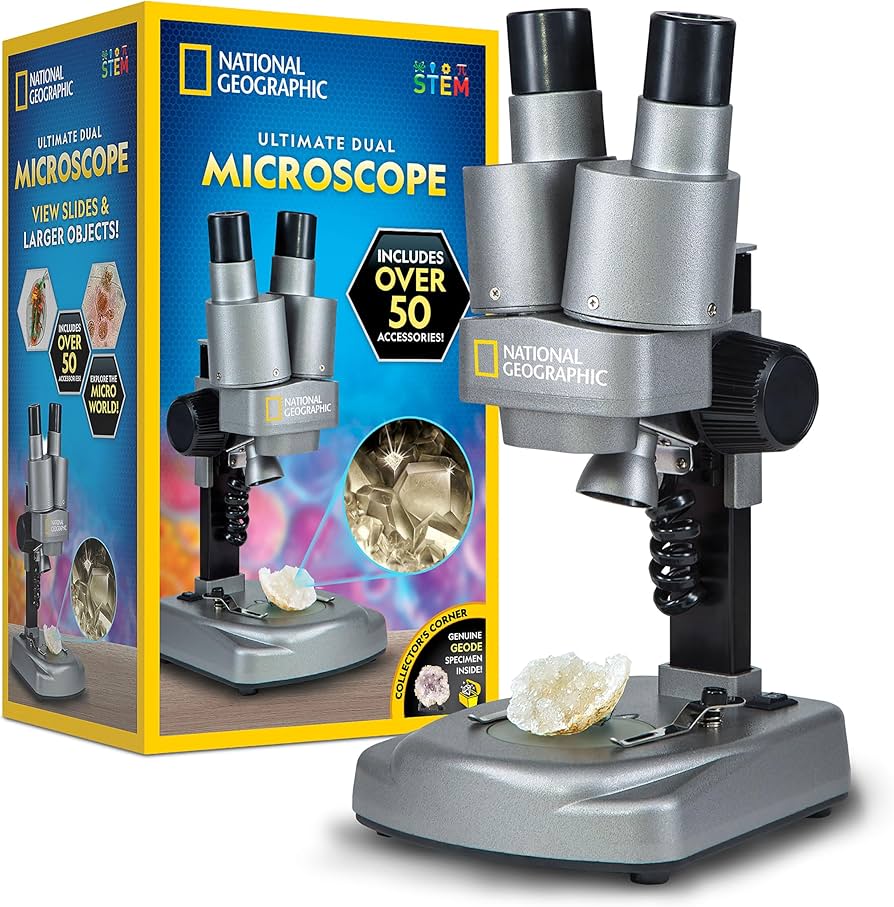
National Geographic Dual LED Student Microscope

Why Great for Beginners:

This affordable kit includes prepared slides and tools, letting you start viewing right away without extra buys. Simple controls and dual lights (top/bottom) make it forgiving for shaky hands and various samples. Perfect first scope to spark curiosity without overwhelm.

Beginner Pros

  • +Includes 10 prepared slides + blanks
  • +Dual LED lights for easy setup
  • +Compact and lightweight
  • +Colorful design engages kids

Beginner Cons

  • -Magnification tops at 400X
  • -Plastic parts less durable
  • -Basic focus may need practice
👍 Best for: Kids, casual home explorers, or budget testers
👎 Not for: Serious lab work needing high power

#2
👍 Recommended

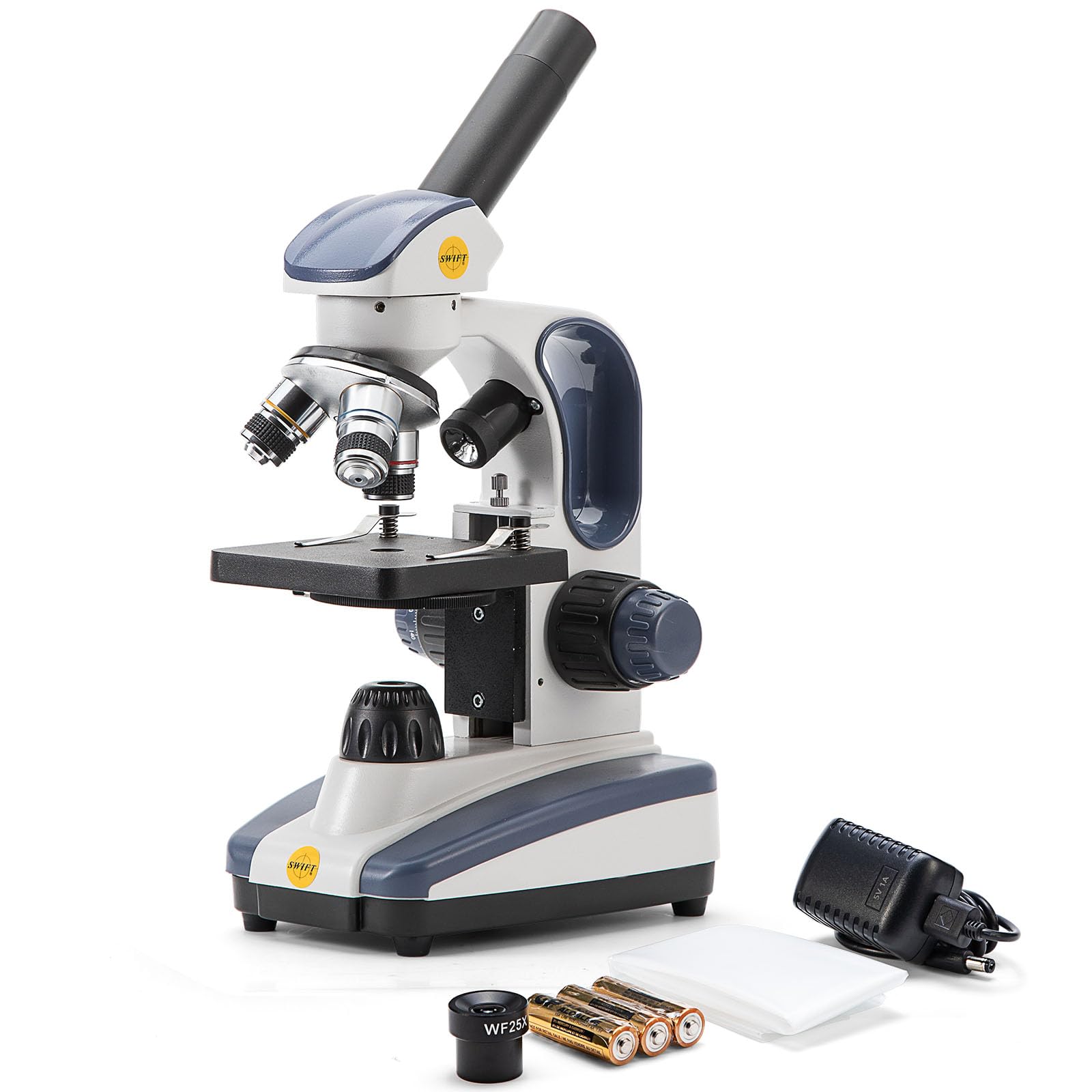
Swift SW200DL Compound Monocular Microscope, 40X-1000X

Learning Curve: Easy

$139.99
Difficulty: 2/5
Swift SW200DL Compound Monocular Microscope, 40X-1000X

Why Great for Beginners:

Balanced features like LED light and mechanical stage make smooth, clear viewing simple. Comes with slides and case for immediate use. Metal frame withstands beginner handling while delivering sharp cell-level detail.

Beginner Pros

  • +Mechanical stage for easy navigation
  • +4 objectives including 100X
  • +Carrying case included
  • +Abbe condenser for better light

Beginner Cons

  • -Monocular may tire eyes longer sessions
  • -Assembly takes 5-10 mins
👍 Best for: Homeschoolers and entry home labs
👎 Not for: Those wanting binocular comfort
#3
👍 Recommended

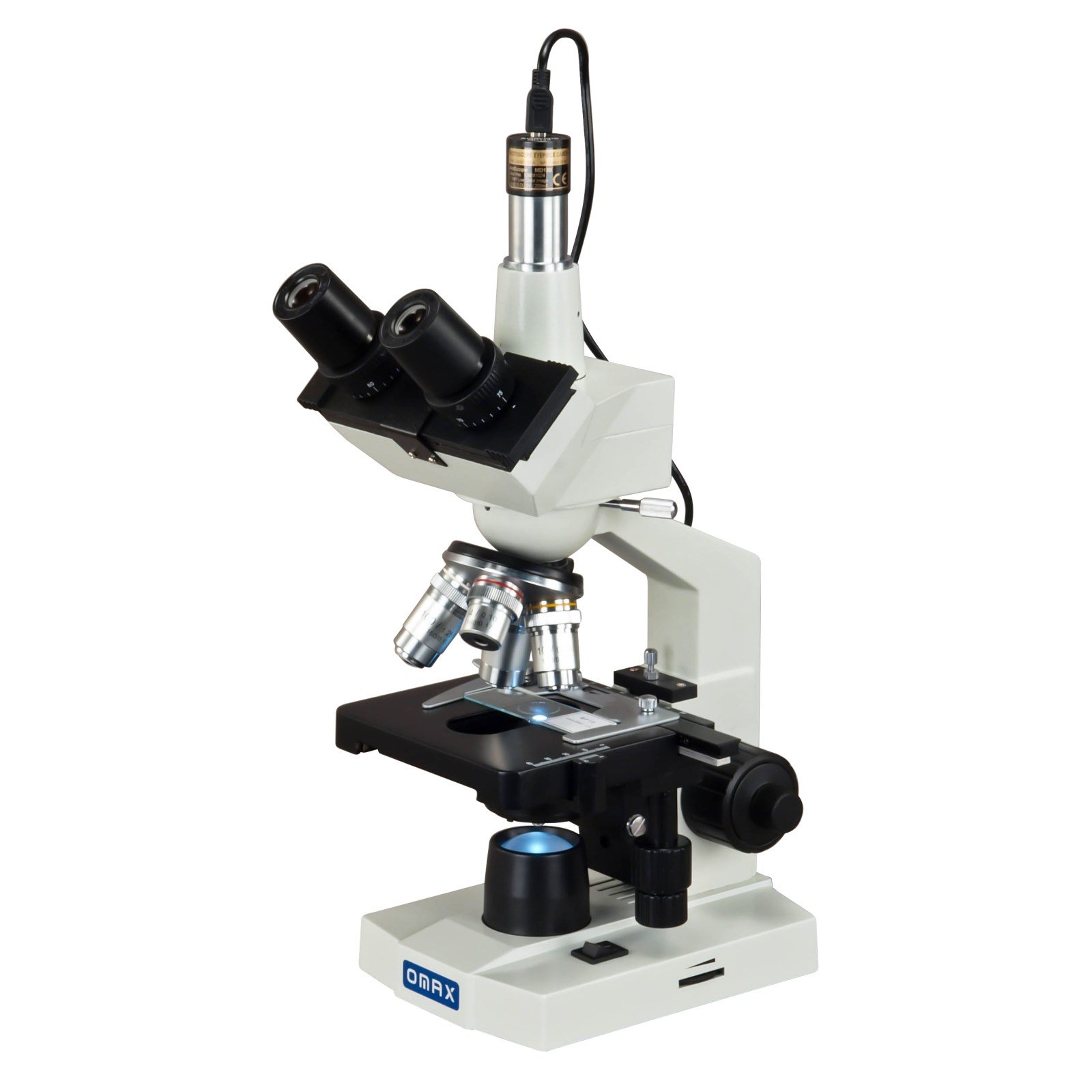
OMAX 40X-2500X LED Digital Lab Trinocular Compound Microscope

Learning Curve: Moderate

$229.99
Difficulty: 2/5
OMAX 40X-2500X LED Digital Lab Trinocular Compound Microscope

Why Great for Beginners:

Trinocular design allows phone/photo attachment for sharing discoveries easily. High-quality optics and fine focus give crisp images fast. Includes tons of slides—ideal for motivated beginners transitioning to intermediate.

Beginner Pros

  • +Digital camera compatible
  • +5 objectives for versatility
  • +Large slide set (50+)
  • +Sturdy metal build

Beginner Cons

  • -Slightly heavier
  • -More features to learn
👍 Best for: Tech-savvy beginners wanting photos
👎 Not for: Purely budget-focused
#4
✨ Premium

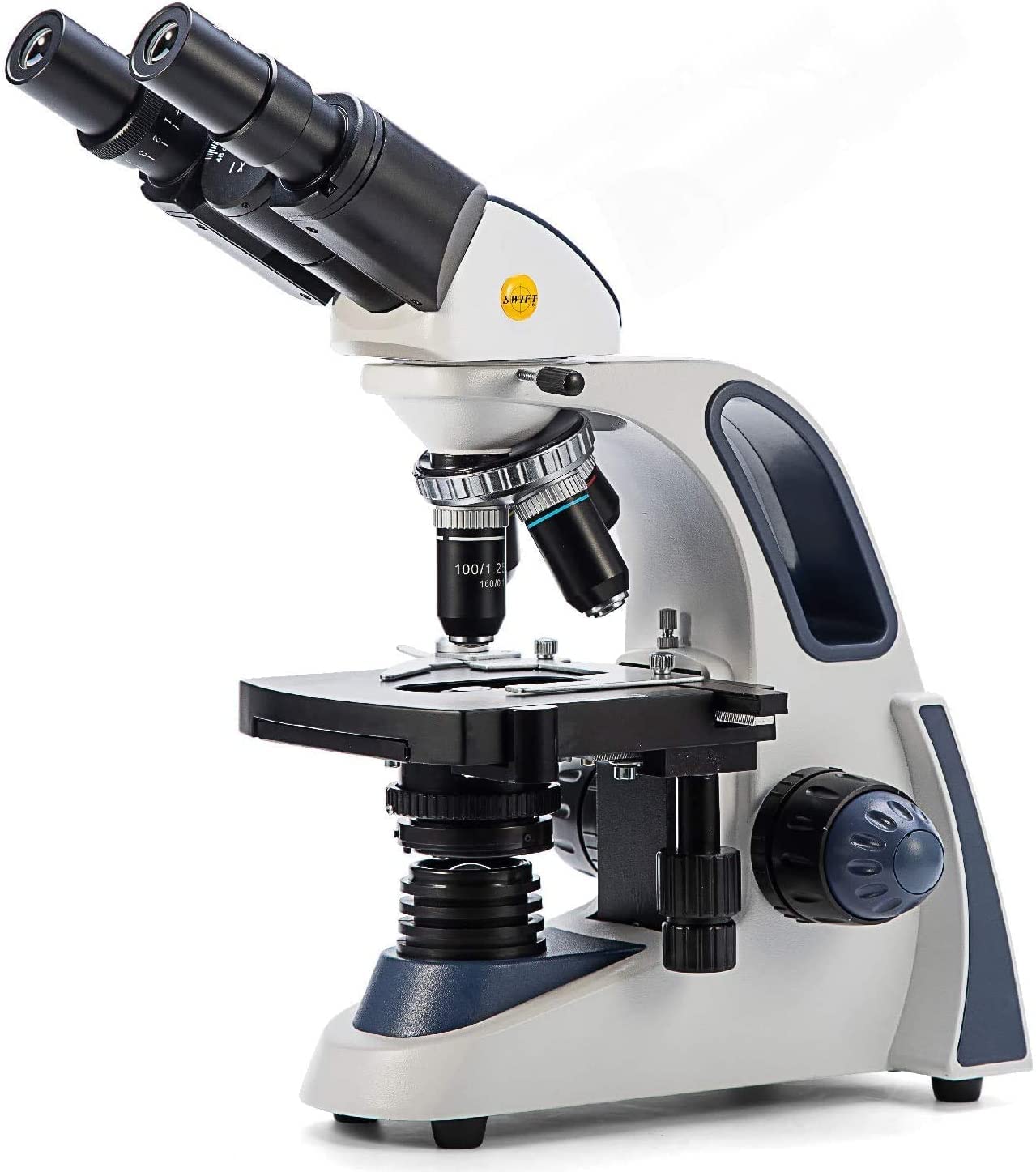
Swift SW380B 40X-2500X Binocular Compound Microscope

Learning Curve: Moderate

$349.99
Difficulty: 3/5
Swift SW380B 40X-2500X Binocular Compound Microscope

Why Great for Beginners:

Binocular viewing reduces eye strain for longer sessions, with superior optics for pro-level clarity from day one. Mechanical stage and precise focus forgive errors. Built to last, perfect for beginners planning long-term hobby.

Beginner Pros

  • +Comfortable binocular eyepieces
  • +Siedentopf head for easy adjust
  • +High-res 1000X oil-free
  • +Professional feel

Beginner Cons

  • -Higher price
  • -Bulkier for storage
👍 Best for: Serious home scientists
👎 Not for: Casual or kid use

📖 Complete Beginner's Guide to Compound Microscope

A Compound Microscope uses multiple lenses to magnify tiny objects by up to 1000X, ideal for viewing prepared slides of onion cells, blood, or pond water. It's 'compound' because light passes through objective lens (near sample) then eyepiece (near eye), bending light twice for high power.

Types include student (basic, affordable), lab-grade (precise), and digital (with screens)—beginners want student models: simple, sturdy, with 3-4 objectives (4X, 10X, 40X, 100X). Binocular eyepieces feel natural like binoculars; monocular saves money and weight.

Best for beginners: LED-lit, all-metal student scopes with mechanical stages. Expect to see bacteria at 400X, cells at 100X—realistic first wins build excitement. 'Beginner-friendly' means plug-and-play setup under 10 minutes, forgiving focus, and no need for darkrooms.

Marketing traps: 'Digital zoom' sounds cool but optical is sharper; 'professional' often means steep curve. Evaluate by beginner reviews: clear images, easy assembly. Start with prepared slides for instant success.

Growth potential: Good beginner scopes handle intermediate use like staining samples, delaying upgrades.

🤔 How to Choose Your First Compound Microscope

Ask: What's your budget? Under $100 for testing, $100-250 sweet spot, $300+ for lasting quality. What will you view? Home science/kids—simple student model; serious hobby—binocular with extras.

Use cases: Kids' experiments? Colorful, included kits. Home lab? Higher mag, better light. Consider space (compact) and growth (expandable eyepieces). Go budget if unsure, recommended for confidence, premium if committed.

Red flags: All-plastic (breaks easy), no fine focus (blurry frustration), poor reviews on focus/image quality. Test via Amazon previews/videos. Prioritize ease over max specs.

💰 Budget Guide for Beginners

400+

Advanced entry - For serious starters wanting extras like digital integration

100 - $250

Sweet spot - Best value for most beginners, sharp views, room to grow into home lab use

250 - $400

Premium beginner - Excellent optics and build, feels professional without complexity

Under $ - $100

Entry level - Fun toy-like intro, great for kids or trying out, but limited clarity and durability

⚠️ Common Beginner Mistakes to Avoid

Beginners grab cheapest options thinking 'microscope is microscope,' but plastic toys frustrate with poor clarity—avoid by checking metal builds and reviews. Many skip accessories, wasting potential; always bundle slides.

Chasing '2500X' ignores reality: without good light/stage, it's useless. Pros advise starting simple. Don't neglect cleaning—fingerprints kill views; use kits from day one.

Lessons from forums: Plan growth, test focus in videos. Instead of overwhelm, focus 3 keys: light, focus, durability.

  • ×Buying all-plastic toys that break or blur easily
  • ×Ignoring fine focus—leads to endless blurry frustration
  • ×Skipping slides/accessories, staring at empty stage
  • ×Chasing max magnification without good light/lenses
  • ×Not cleaning lenses, causing permanent smudges
  • ×Overlooking mechanical stage, fumbling slides
  • ×Buying digital too soon, distracting from basics

📈 Your Progression Path: Beginner to Intermediate

Start with viewing prepared slides: learn focus, light adjust (week 1). Progress to pond water, cheek cells (month 1)—master prep techniques.

Outgrow beginner gear when needing 1000X+ clarity, staining, or photos (3-6 months). Signs: blurry highs, eye strain, craving more power.

Upgrade to binocular/digital first; typical beginner phase: 6-12 months. Build skills via daily 15-min sessions for steady growth.

📚 Learning Resources for Beginners

  • 📖Book: 'The World of the Microscope' by Chris Thomas (ASIN: B0000CNY2V) - Simple intro with photos
  • 📖'Microscope Book' by Shar Levine (ASIN: B000Q38ZJ8) - Hands-on projects for beginners
  • 📖AmScope Beginner Microscope Experiments Book (ASIN: B08N5K2L3P) - 50 easy activities
  • 📖'Biology Through a Microscope' by Chris Thomas (ASIN: B07G9K2P5Q) - Cell viewing guide
  • 📖National Geographic Kids Ultimate Microscope Activity Kit (ASIN: B07H4J5K2M)

🎯 Bottom Line: Our Recommendations

For most beginners, the Swift SW200DL (recommended) hits the sweet spot: easy, capable, great value. Budget pick: National Geographic for fun entry. Premium: Swift SW380B for lasting quality.

Grab essential slides and prep kit day one. You're ready—start small, enjoy discoveries, grow confidently.

Next: Unbox, view included slides, explore backyard samples. Science awaits!

❓ Frequently Asked Questions

The Swift SW200DL (ASIN B09KLY2Z3S) for most—easy focus, slides included, sharp 1000X views under $150. Budget: National Geographic B07L4T6Z3B.
$100-250 sweet spot for value/durability. Under $100 tests waters; $300+ for premium optics.
LED light, coarse/fine focus, mechanical stage, 40X-1000X mag, included slides. Metal body for forgiveness.
National Geographic Dual LED (B07L4T6Z3B)—plug-play, kid-proof, minimal setup.
Prepared/blank slides (B01N5QOAQW), prep kit (B07H8QJQ5Z), lens cleaner (B08L3Z5JRK).
Match budget/use: kids=budget kit; home lab=mech stage/LED. Check beginner reviews.
No—with right model (easy focus/LED), setup <10 mins. Practice 15 mins/day builds skill fast.
Cheap plastic buys, no accessories, poor cleaning, ignoring focus quality.
Nice for comfort, but monocular fine to start—save $50-100.
Yes! Budget kits like B07L4T6Z3B are durable, fun with slides.