Is Best Camping Stove for beginners Worth It? Honest Review (202…
Everything beginners need to know to choose their first camping stove with confidence
Choosing your first camping stove can feel overwhelming. With so many brands, fuel types, and features, it's easy to get lost in technical specs and forget that cooking outdoors should be fun, not stressful. This guide is designed to cut through the noise and help you pick a stove that matches your needs, skill level, and budget. By the end, you'll know exactly what to look for and which stove will make your camping meals a joy.
📋 In This Guide
• Why Beginners Struggle with Camping Stove
• What to Look For (Key Features)
• Top 5 Beginner-Friendly Camping Stove
• Essential Accessories for Beginners
• Common Beginner Mistakes to Avoid
• Your Progression Path
• FAQ & Learning Resources
😰 Why Beginners Struggle with Camping Stove
Many beginners struggle because they don't know the difference between stove types (canister, liquid fuel, wood-burning) and worry about safety or complexity. Jargon like 'BTU output,' 'simmer control,' and 'regulator' can be intimidating. There's also fear of buying something too cheap that fails on a trip or too expensive with features they'll never use. The sheer number of options on Amazon—hundreds of stoves ranging from $20 to $200+—paralyzes decision-making. This guide simplifies everything by focusing on what truly matters for a beginner: ease of setup, stable cooking, and forgiving performance.
🔍 What to Look For: Key Beginner-Friendly Features
As a beginner, prioritize stoves that are simple to set up, stable on uneven ground, and easy to light. Look for those with a wide base to prevent tipping, built-in igniters (piezo or push-button) so you don't need matches, and adjustable flame control for simmering. Avoid stoves with complicated pump systems or that require priming. Fuel availability matters: propane/isobutane canisters are the most beginner-friendly because they're pre-filled and disposable. Ensure the stove has a reliable wind protection—built-in windscreens are a huge plus. Don't worry about high BTU (British Thermal Units) numbers; a stove with 7,000–10,000 BTUs is plenty for boiling water and cooking meals. Features like 'simmer control' allow you to cook more than just instant noodles, so look for a valve that can dial down to a low flame.
✅ Essential Features for Beginners
•Easy Ignition: Built-in push-button or piezo igniter eliminates the need for matches or lighters.
•Stable Base: Wide legs or a low center of gravity prevent tipping on uneven ground.
•Simmer Control: A smooth flame adjuster lets you cook delicate foods without burning.
•Wind Protection: Built-in windscreens or a support system for windscreens keep the flame steady.
•Fuel Compatibility: Use pre-filled propane/isobutane canisters—no pumping or messy fuel bottles.
•Compact & Lightweight: Easy to pack and carry; many stoves fold into a small size.
•Heat Output Around 7,000–10,000 BTUs: Sufficient for boiling water quickly without being overkill.
🏆 Top 5 Best Camping Stove for Beginners
#1
💰 Budget
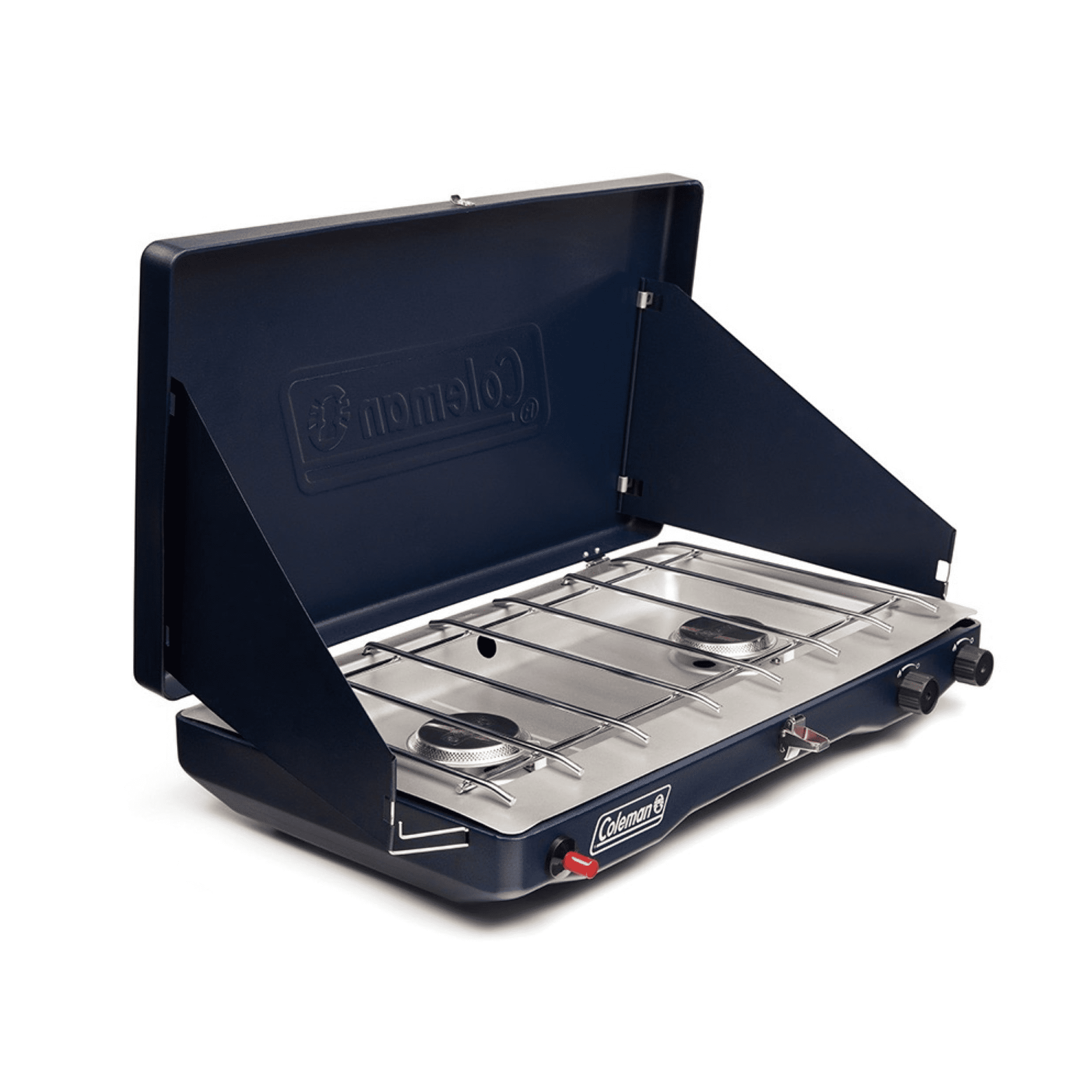
Coleman Classic Propane Stove
Learning Curve: Easy
$49.99
Difficulty: 1/5
Why Great for Beginners:
The Coleman Classic is the most popular entry-level camping stove. It has two burners, an easy-to-use propane attachment, and a large cooking surface. The price is low, but it performs reliably for car camping.
✓ Beginner Pros
+Very affordable
+Two burners for cooking multiple items
+Easy to set up and use
+Stable base
+Widely available parts and fuel
✗ Beginner Cons
-No built-in igniter (need matches/lighter)
-Simmer control is average
-Bulky for backpacking
-Can be affected by wind
👍 Best for: Car campers and families on a budget who want a simple, reliable stove.
👎 Not for: Backpackers needing ultralight gear or those who want precise simmer control.
The Everest 2X offers better simmer control than the Coleman, while remaining easy to use. It has a powerful burner and a built-in regulator for consistent performance. The legs are wide and sturdy, making it less likely to tip.
✓ Beginner Pros
+Excellent simmer control
+Wind-resistant design
+Piezo igniter included
+Sturdy and stable
+High heat output (20,000 BTUs)
✗ Beginner Cons
-Slightly heavier than basic models
-More expensive than Coleman
-Canister not included
👍 Best for: Campers who want to cook real meals and appreciate temperature control.
👎 Not for: Ultralight backpackers or those on a tight budget.
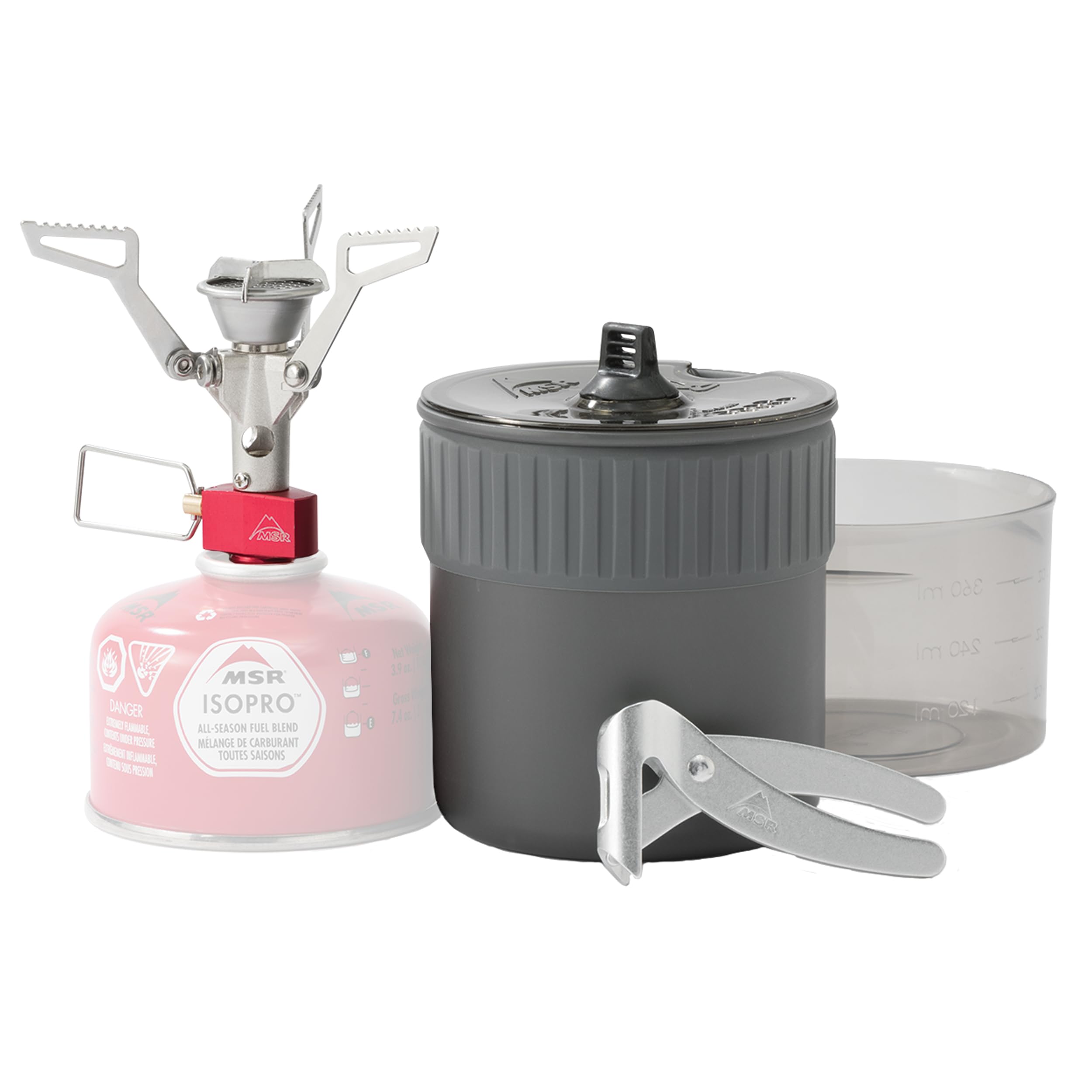
The PocketRocket 2 is the go-to backpacking stove for beginners. It's tiny, weighs only 2.6 ounces, and attaches directly to a fuel canister. Boils water in about 3 minutes. Despite its size, it has decent simmer control.
✓ Beginner Pros
+Ultralight and compact
+Fast boil time
+Easy twist-on connection
+Good simmer control for its size
+Durable construction
✗ Beginner Cons
-Stability depends on pot size (narrow pots tippy)
-No built-in windscreen
-Not suitable for large groups
-Canister must be purchased separately
👍 Best for: Backpackers and solo campers who prioritize weight and space.
👎 Not for: Car campers or those who cook for more than one person.
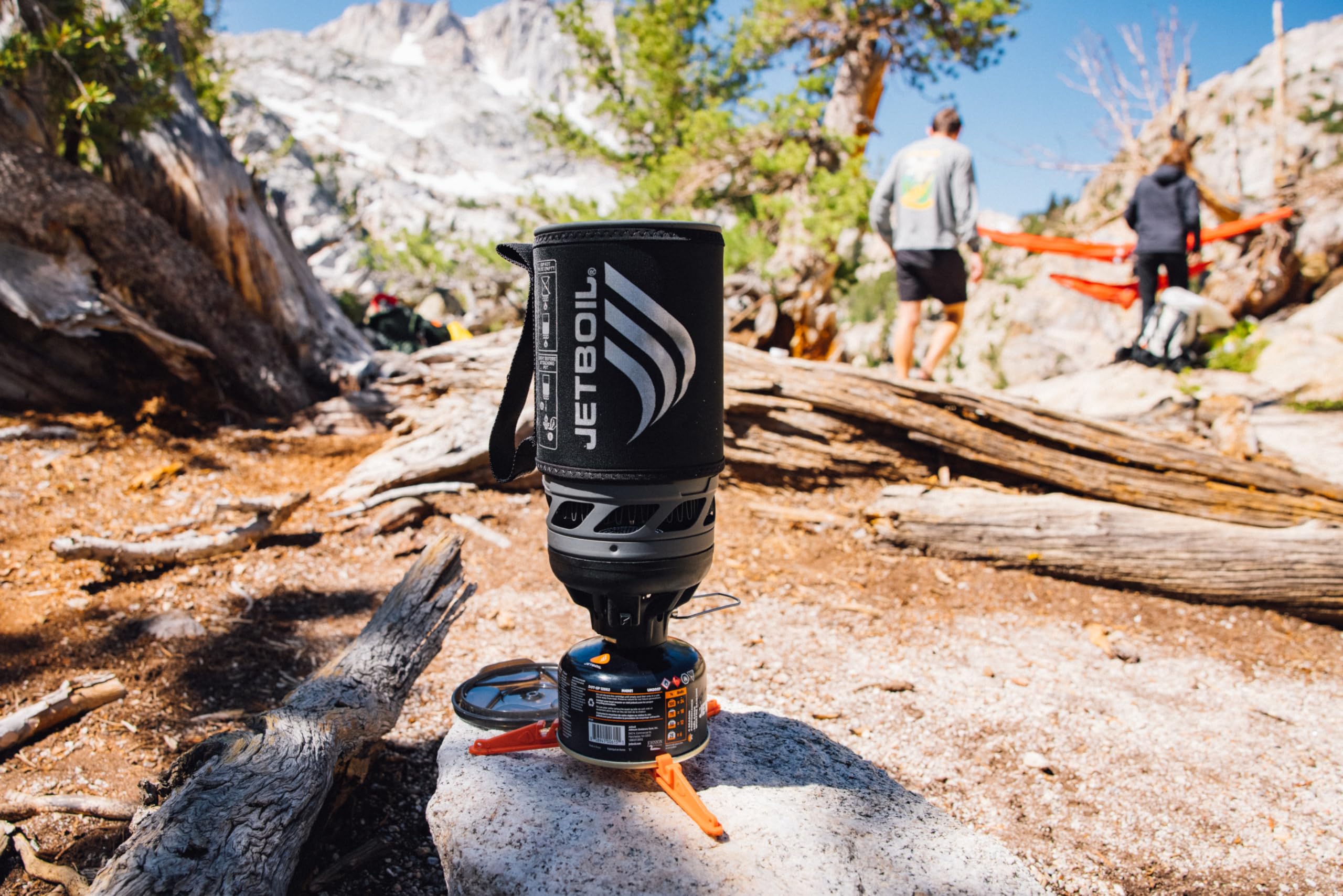
The Jetboil Flash is an integrated system that combines a stove, pot, and heat exchanger. It boils water incredibly fast (about 2 minutes) and is very fuel efficient. The built-in igniter and color-changing heat indicator make it foolproof for beginners.
✓ Beginner Pros
+Super fast boil
+Fuel efficient
+All-in-one design (no separate pot needed)
+Easy to use – just push a button
+Stable and well-designed
✗ Beginner Cons
-Expensive
-Limited to boiling water mainly (not great for simmering)
-Bulky for backpacking if you don't need the large pot
-Pot is non-stick and may scratch
👍 Best for: Campers who primarily boil water for coffee, tea, dehydrated meals, and want speed and simplicity.
👎 Not for: Campers who want to cook elaborate meals or need a versatile stove.
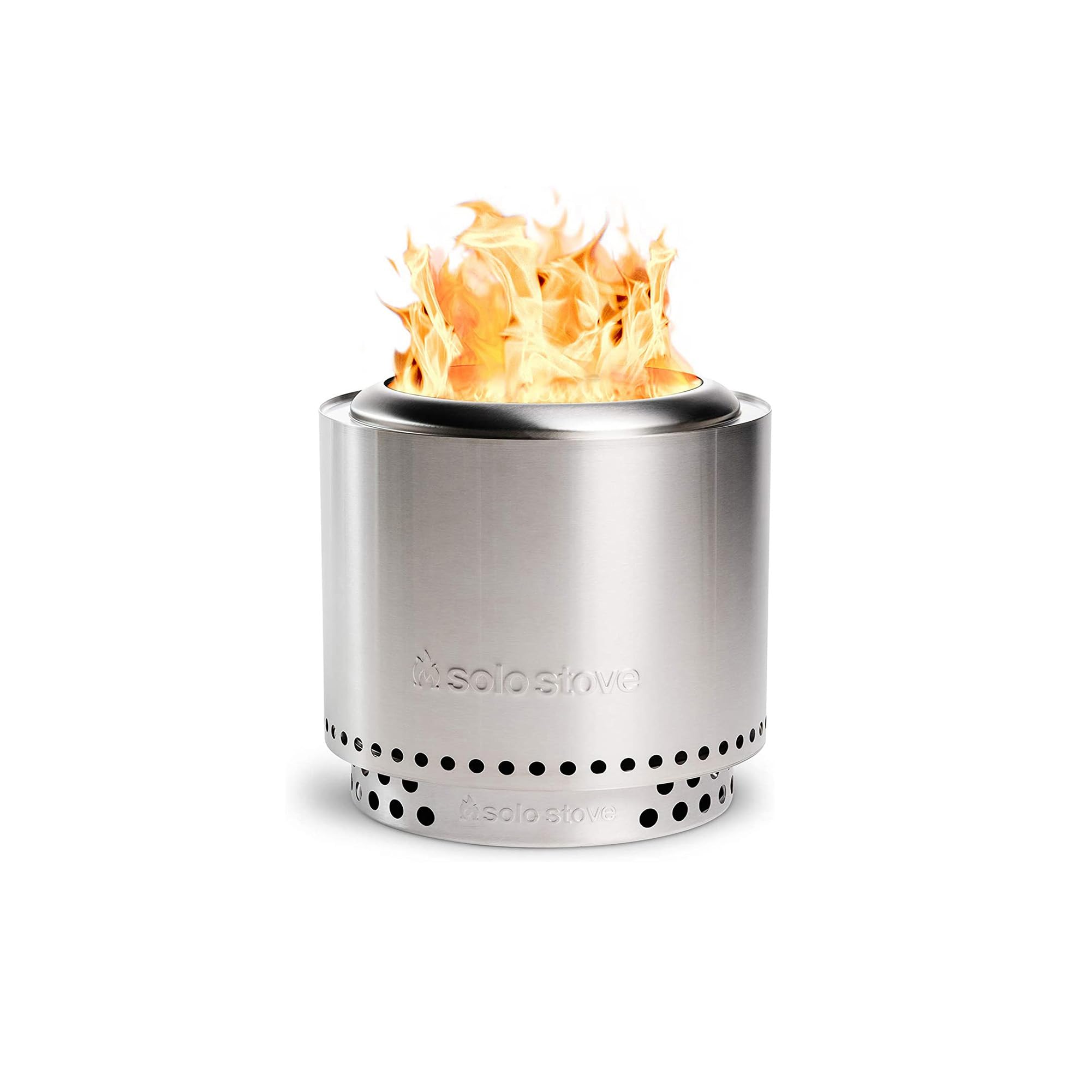
Solo Stove Ranger Fire Pit & Camp Stove (Wood-Burning)
Learning Curve: Moderate
$129.99
Difficulty: 3/5
Why Great for Beginners:
The Solo Stove Ranger is a wood-burning stove that doubles as a fire pit. It's great for beginners who want to cook without carrying fuel canisters. It uses twigs and pinecones, so fuel is free and abundant. The secondary combustion technology reduces smoke.
✓ Beginner Pros
+No fuel canisters needed
+Creates a campfire atmosphere
+Doubles as a fire pit
+Efficient burn with less smoke
+Sturdy stainless steel construction
✗ Beginner Cons
-Heavier and bulkier than canister stoves
-Requires collecting wood and kindling
-Cannot simmer – it's all or nothing
-Needs a flat, non-flammable surface
👍 Best for: Campers who enjoy an authentic campfire cooking experience and don't want to carry fuel.
👎 Not for: Those who need quick, controlled cooking or who camp in wet or wood-scarce areas.
Camping stoves come in three main types: canister stoves (using disposable fuel canisters), liquid fuel stoves (using refillable bottles of white gas or kerosene), and wood-burning stoves (using twigs and leaves). For beginners, canister stoves are the undisputed best choice: they require no assembly, no pumping, and no priming—just screw on the canister and turn on the gas. Within canister stoves, there are two subtypes: top-mount (the stove sits atop the canister) and remote canister (the stove connects via a hose and sits on the ground). Top-mount stoves are simpler and more compact, but can be tippy on large pots. Remote canister stoves are more stable and offer better simmer control, making them a slightly better choice for beginners who plan to cook real meals. A popular beginner-friendly configuration is a two-burner propane camp stove (like the Coleman Classic) for car camping, or a small backpacking canister stove (like the MSR PocketRocket) for hiking. Realistic expectations: your first stove won't produce restaurant-quality meals, but with proper simmer control and some practice, you can cook pasta, eggs, pancakes, and more. Beginner-friendly means it should take less than 5 minutes to set up and start cooking.
🤔 How to Choose Your First Camping Stove
Ask yourself: Where will I camp? Car camping? Then a large two-burner propane stove is best. Backpacking? Choose a lightweight canister stove. How many people will I cook for? One-person stoves are tiny and efficient; family stoves have two burners and large cooking surfaces. What's my budget? A good beginner stove can cost between $30 and $100; spending more than $150 is unnecessary unless you want features like simmer control or a built-in piezo igniter. Avoid liquid fuel stoves as a first choice—they require maintenance and can be frustrating. Red flags: stoves with no safety certifications (look for CSA or CE marks), extremely low prices ($10-15) that are often poorly made, and stoves that require special fuel not available at common retailers.
💰 Budget Guide for Beginners
150+
Enthusiast beginner – high-end canister or even liquid fuel stoves with extensive features. Not necessary for most beginners, but ideal if you want a stove that lasts for years.
50 - $100
Sweet spot – best value for most beginners. Includes reliable two-burner propane stoves (like Coleman Classic) and quality backpacking canister stoves (like MSR PocketRocket).
100 - $150
Premium beginner – stoves with better build quality, superior simmer control, and more stable designs. Recommended for those who plan to cook regularly.
Under $ - $50
Entry level – basic canister top-mount stoves or very simple propane stoves. Good for trying out camping cooking, but may lack simmer control and stability.
⚠️ Common Beginner Mistakes to Avoid
Buying too cheap (a $15 stove may fail, leak, or be impossible to simmer) or too expensive (spending $200 on a high-end liquid fuel stove when you only car camp once a year). Forgetting essential accessories like fuel canisters, a windscreen, or a lighter. Not testing the stove at home before your trip. Ignoring wind resistance—many beginners cook in the open and wonder why their stove won't boil water. Choosing a stove based solely on weight without considering stability (ultralight stoves can be tippy). Buying a stove that uses an odd fuel type (like alcohol) that's hard to find.
×Buying a stove without fuel canisters included or forgetting to purchase them.
×Not testing the stove at home before the first camping trip.
×Choosing a stove that is too heavy or bulky for their intended use.
×Ignoring wind conditions and not using a windscreen.
×Purchasing a liquid fuel stove for a simple car camping trip.
×Overlooking simmer control—ending up with a stove that only has high heat.
📈 Your Progression Path: Beginner to Intermediate
Start with a simple canister stove. Learn to boil water, then cook simple meals like pasta or instant rice. Practice using simmer control to avoid burning. After 10-15 trips, you'll know if you need more burner output, better wind protection, or a larger cooking surface. Signs you've outgrown your beginner stove: you often wish for more precise flame control, you cook for more people than your stove can handle, or you want to use different fuel types for cold-weather camping. Next step: a remote canister stove with a hose (like the Kovea Spider) or a two-burner propane stove with a lid that protects from wind. Most beginners stay at the beginner level for 1-2 years before upgrading.
📚 Learning Resources for Beginners
📖{"resourceName":"The Complete Camping Cookbook by Adam Harris","type":"Book","description":"Over 100 recipes designed for one-burner stoves, with beginner-friendly instructions.","amazonLink":"https://www.amazon.com/s?k=The+Complete+Camping+Cookbook+Adam+Harris&linkCode=gg3&tag=ra075-20"}
📖{"resourceName":"Camp Cooking: A Practical Handbook by Rene Redzepi","type":"Book","description":"Covers stove types, fuel management, and cooking techniques for outdoor enthusiasts.","amazonLink":"https://www.amazon.com/s?k=Camp+Cooking+Practical+Handbook&linkCode=gg3&tag=ra075-20"}
📖{"resourceName":"REI Camping Stove Basics Video Course","type":"Online Course","description":"Free video series available on REI's website covering stove setup, safety, and cooking tips.","amazonLink":null}
🎯 Bottom Line: Our Recommendations
For most beginners, the best all-around pick is the Coleman Classic Propane Stove (budget-friendly, easy, and reliable). If you want something more compact and fuel-efficient, the Camp Chef Everest 2X is a great step up with better simmer control. For backpackers, the MSR PocketRocket 2 is lightweight and simple. Essential accessories include a propane adapter (for bulk tanks), a windscreen, and extra fuel canisters. Don't overthink it—any of the recommended stoves will get you cooking outdoors with confidence. Your first stove is just the beginning of your camping cooking journey; focus on enjoying the experience and learning what works for you.
❓ Frequently Asked Questions
For most beginners, the Coleman Classic Propane Stove or the Camp Chef Everest 2X are excellent choices. They are easy to use, affordable, and reliable for car camping. For backpackers, the MSR PocketRocket 2 is a top pick.
A good beginner stove costs between $30 and $100. Spending more than $150 is usually unnecessary for your first stove, as cheaper models are easy to use and forgiving.
Key features include an easy igniter (piezo or push-button), a stable base, simmer control, and wind resistance. Compactness and fuel availability are also important.
An integrated system like the Jetboil Flash is incredibly easy—just push a button and water boils in minutes. The Coleman Classic is also very simple: attach a propane canister and turn the knob.
Essential accessories include fuel canisters, a windscreen, and a lightweight pot. A backup lighter or firesteel is also recommended. Optional but useful: a cook set and a fuel adapter for bulk tanks.
Decide where you'll camp (car or backpack), how many you'll cook for, and your budget. For car camping, choose a two-burner propane stove. For backpacking, choose a lightweight canister stove. Prioritize ease of use and stability.
Not at all. With a beginner-friendly stove, you can boil water for pasta or coffee in minutes. Start with simple meals and practice at home first. The learning curve is very short.
Common mistakes include buying too cheap (stoves that fail or leak), forgetting fuel, not using a windscreen, and choosing a stove that is too heavy for backpacking. Always test your stove before your trip.
No. Camping stoves produce carbon monoxide and should only be used outdoors in well-ventilated areas. Never use them inside a tent, vehicle, or cabin.
Wait for the stove to cool, then wipe the burner and legs with a damp cloth. For gas stoves, clean the jets with a small brush if needed. Avoid submerging in water.