Is Best Camping Stove for beginners Worth It? Honest Review (202…
Everything beginners need to know to choose their first camping stove with confidence.
Choosing your first camping stove can feel overwhelming with all the options, jargon, and price ranges. You might worry about buying something too complicated, too cheap that fails on your trip, or spending too much on features you'll never use. This guide simplifies everything. We'll walk you through exactly what to look for, recommend the best stoves for beginners, and help you avoid common mistakes so you can start cooking outdoors with confidence.
📋 In This Guide
• Why Beginners Struggle with Camping Stove
• What to Look For (Key Features)
• Top 5 Beginner-Friendly Camping Stove
• Essential Accessories for Beginners
• Common Beginner Mistakes to Avoid
• Your Progression Path
• FAQ & Learning Resources
😰 Why Beginners Struggle with Camping Stove
Beginners often fall into the trap of overthinking. Terms like 'BTU output,' 'simmer control,' 'integrated canister,' and 'liquid fuel' sound intimidating. Many newcomers buy a stove based on price alone, ending up with a model that's hard to light, unstable, or doesn't simmer. Others buy a high-end mountaineering stove that's overkill for car camping. The sheer number of options—from simple butane stoves to multi-fuel systems—paralyzes decision-making. Without clear guidance, it's easy to make a costly mistake.
🔍 What to Look For: Key Beginner-Friendly Features
For your first camping stove, focus on three things: ease of use, stability, and reliable performance. Look for a stove that lights easily (piezo ignition is a big plus), has a wide base to prevent tipping, and offers adjustable flame control for anything from boiling water to gentle simmering. Beginners should avoid liquid fuel stoves that require priming and maintenance; stick to propane/isobutane canister stoves that screw on and off effortlessly. Also consider burn time and heat output—a stove with around 10,000 BTUs is plenty for most camping meals.
✅ Essential Features for Beginners
•Piezo ignition for easy lighting without matches
•Adjustable flame control from simmer to boil
•Wide, stable base to prevent tipping
•Simple canister connection (screw-on or clip-on)
•Compact and lightweight for easy packing
•Wind resistance or compatible with windscreen
🏆 Top 5 Best Camping Stove for Beginners
#1
⭐ Top Pick👍 Recommended
Coleman Triton 2-Burner Propane Stove
Learning Curve: Easy
$59.99
Difficulty: 1/5
Why Great for Beginners:
This two-burner stove is incredibly easy to set up and use. The piezo ignition lights instantly, and the adjustable burners allow you to simmer or boil. Its large cooking surface and sturdy legs make it stable even with heavy pots.
✓ Beginner Pros
+Instant push-button ignition
+Separate heat controls for each burner
+Wide stance prevents tipping
+Carrying handle for easy transport
✗ Beginner Cons
-Heavy for backpacking (20 lbs)
-Wind can affect flame if no shield
👍 Best for: Car campers and families who need a reliable stove for cooking real meals at a campsite.
👎 Not for: Backpackers needing ultralight gear or solo trips.
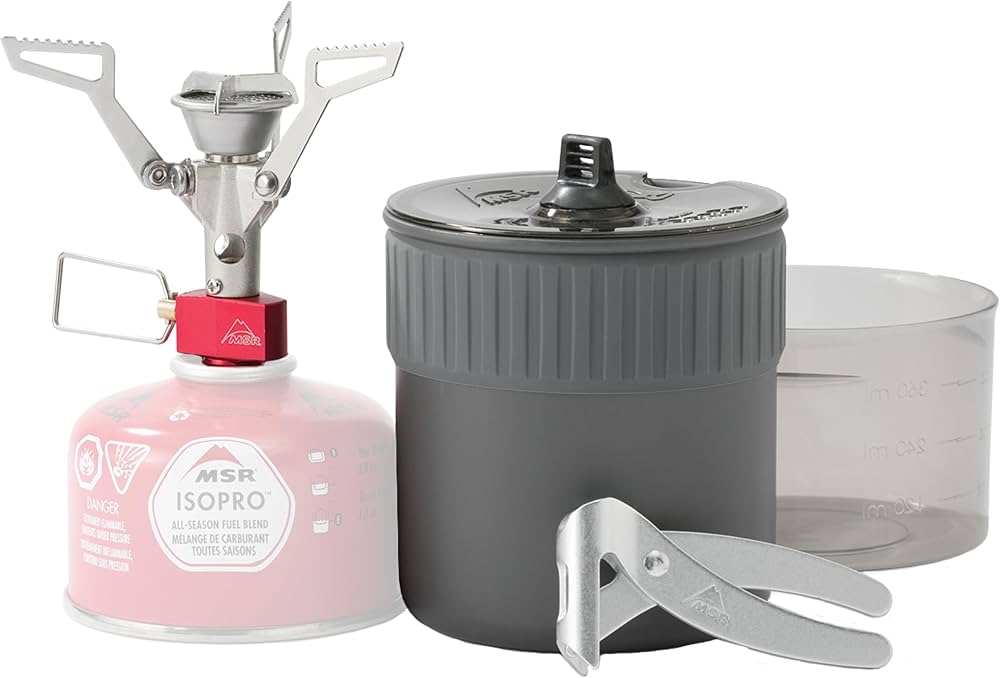
This tiny stove is perfect for backpackers. It twists onto an isobutane canister, lights with a piezo igniter, and boils water in just a few minutes. Very simple and reliable.
✓ Beginner Pros
+Extremely lightweight (2.6 oz)
+Packs down small
+Reliable ignition
+Works with most standard pots
✗ Beginner Cons
-No simmer control (on/off burner)
-Not stable with large pots
👍 Best for: Solo backpackers and hikers who primarily boil water for dehydrated meals.
👎 Not for: Group cooking or anyone wanting to cook complex meals.
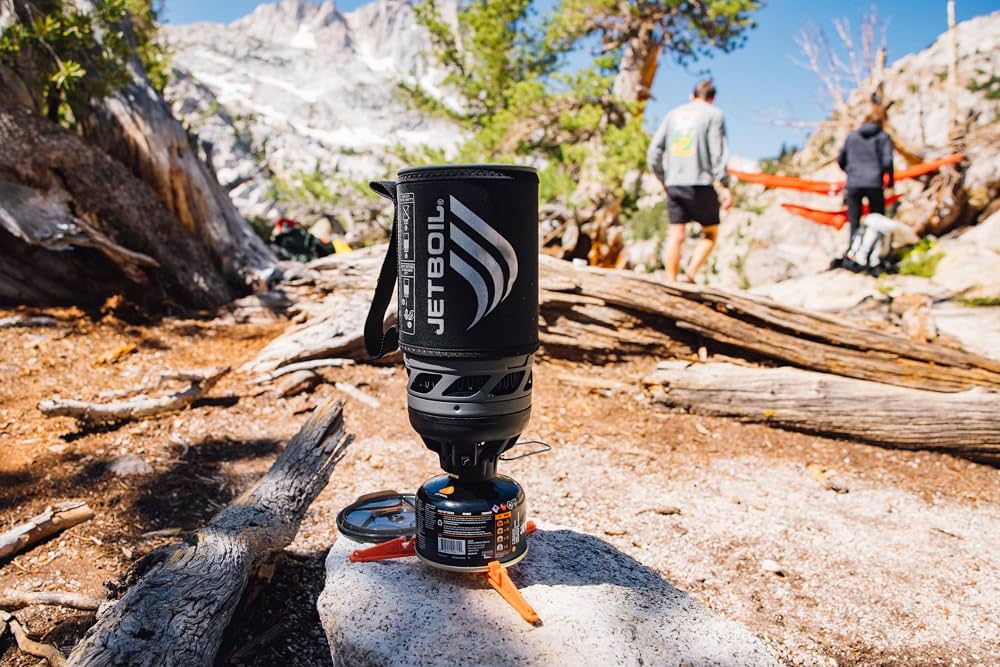
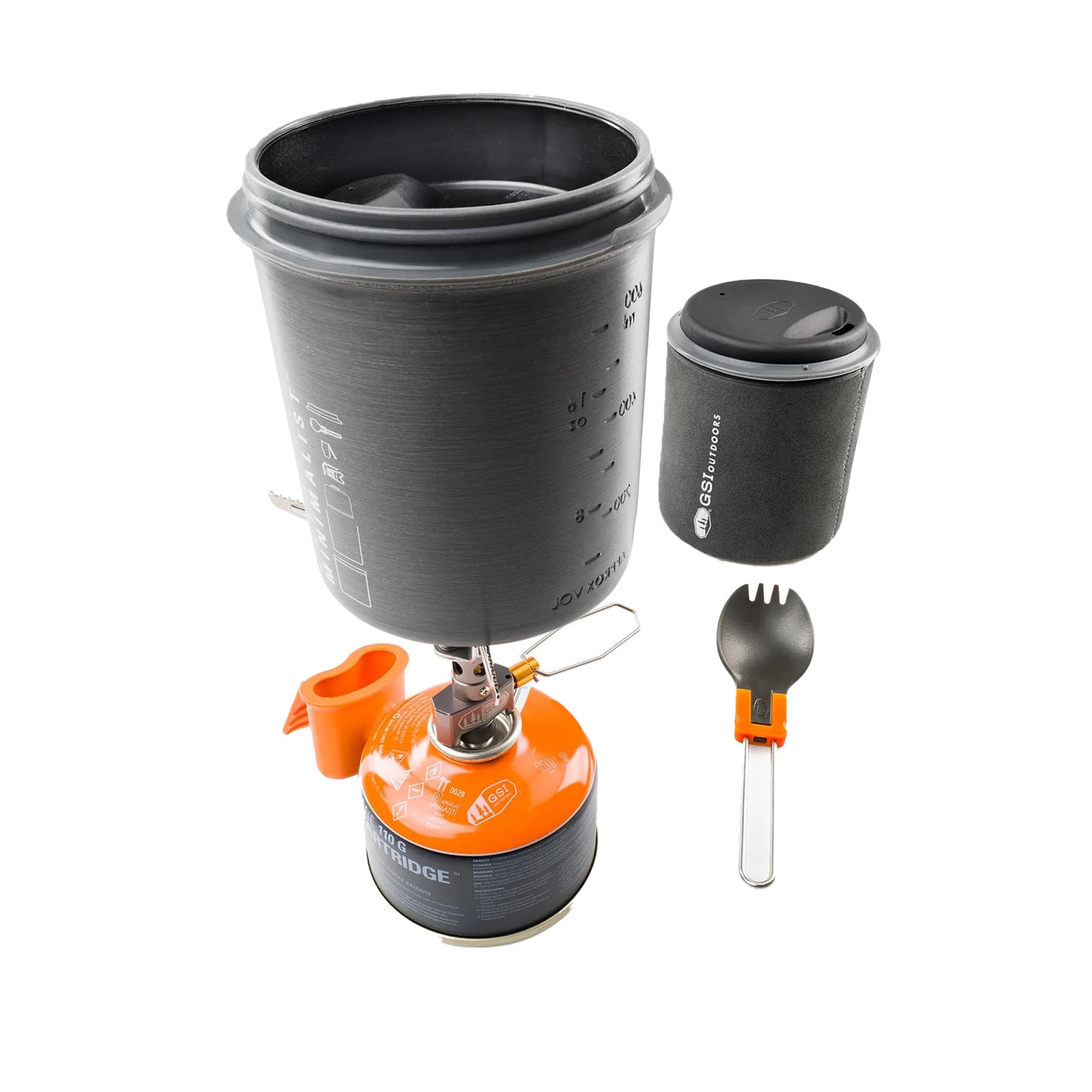
This all-in-one system is incredibly efficient for boiling water. Just clip the pot onto the burner, press the igniter, and you have boiling water in under 2 minutes. The cozy handles keep you from burning your hands.
✓ Beginner Pros
+Fastest boil time
+Fuel-efficient (uses less fuel)
+All-in-one design (pot and stove)
+Durable build
✗ Beginner Cons
-Not for simmering or frying
-Pot is not ideal for cooking other foods
👍 Best for: Campers who prioritize quick boiled water for coffee, tea, and freeze-dried meals.
👎 Not for: Anyone wanting to cook eggs or rice properly.
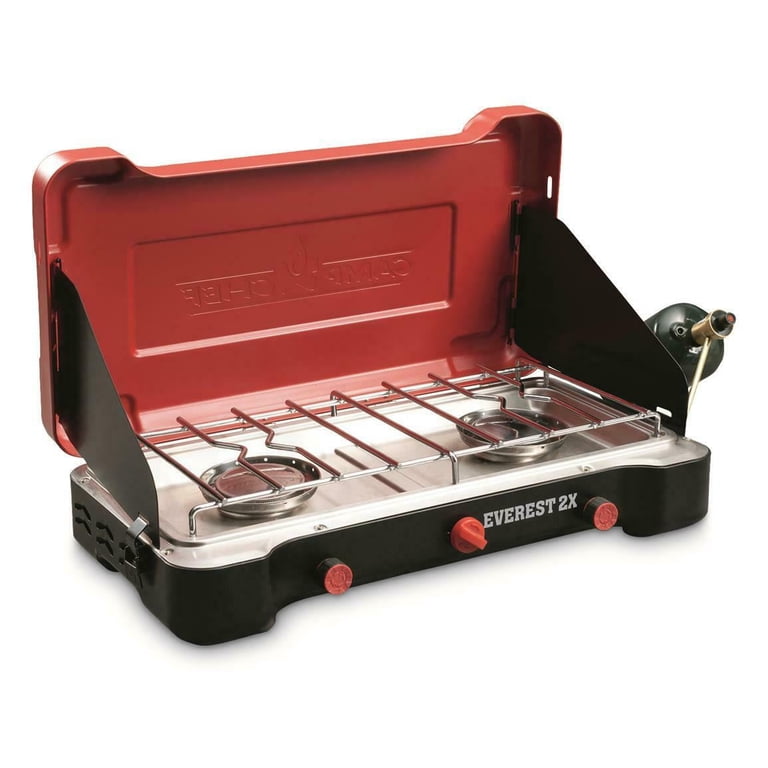
This is a step up in power and durability. It has 20,000 BTUs per burner (very high), wind-blocking technology, and precise flame control. It's built to last and perfect for serious car campers.
✓ Beginner Pros
+High heat output
+Great wind resistance
+Simmer control
+Sturdy and stable
✗ Beginner Cons
-Heavy (24 lbs)
-More expensive
👍 Best for: Car campers who want the best performance and are willing to invest in a long-lasting stove.
👎 Not for: Budget-conscious beginners or backpackers.
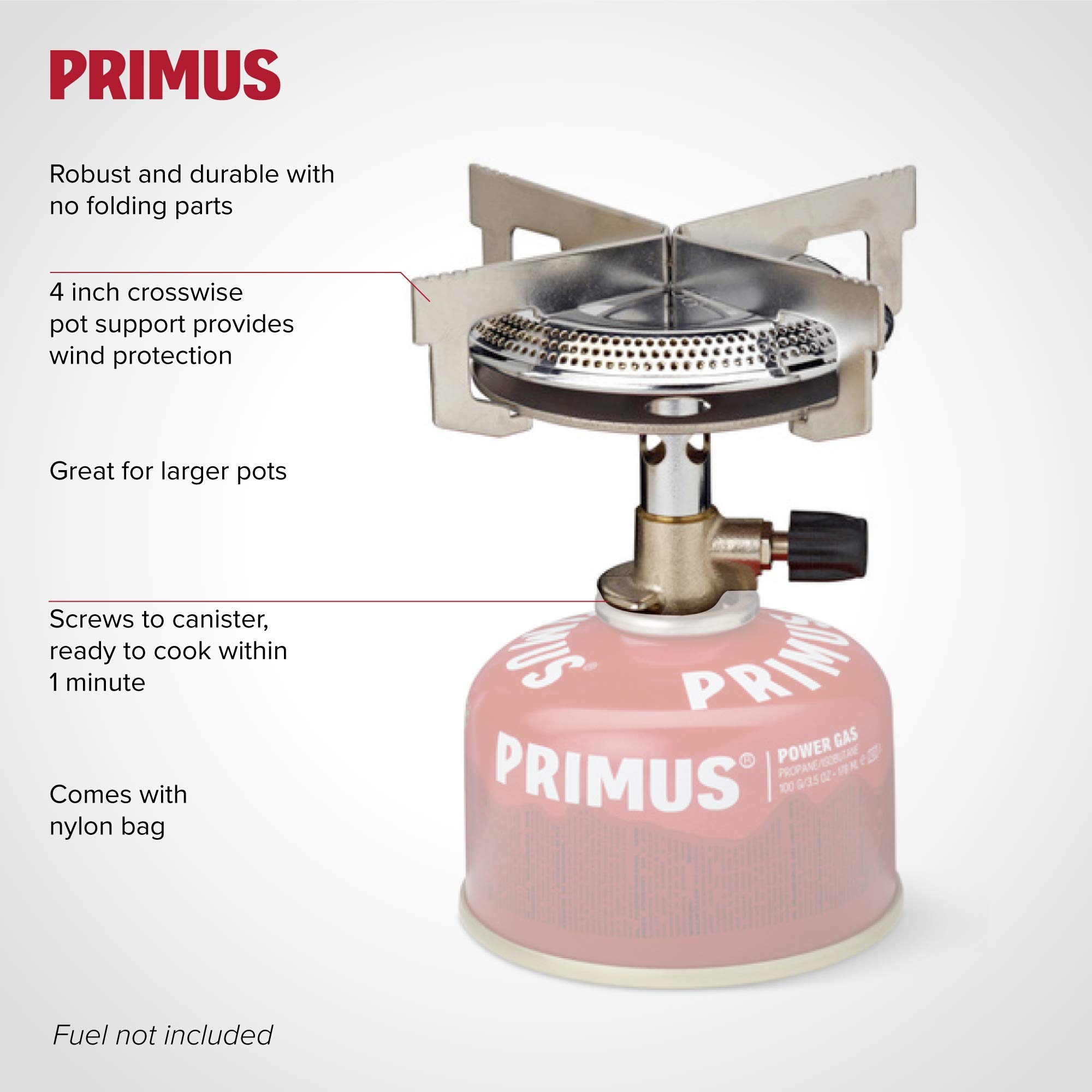
A budget-friendly option that's been around for decades. Simple screw-on design, but requires a separate igniter or matches. It's lightweight and works well for basic boiling.
✓ Beginner Pros
+Very affordable
+Lightweight
+Reliable
✗ Beginner Cons
-No built-in igniter
-Poor simmer control
-Not wind-resistant
👍 Best for: Beginners on a tight budget who don't mind using a lighter and only need to boil water.
👎 Not for: Anyone who wants convenience or cooking flexibility.
Camping stoves come in three main types: canister stoves, liquid fuel stoves, and solid fuel stoves. For beginners, canister stoves are the clear winner. They connect to a small propane/isobutane canister, ignite with a click, and boil water in minutes. No priming, no pumping. Within canister stoves, there are two styles: integrated systems (stove and pot in one, like Jetboil) and separate stove units that attach to a canister. Integrated systems are super efficient for boiling water but less versatile for actual cooking. Separate stoves (like the classic Coleman two-burner or a single burner with a remote canister) are more flexible and easier to clean. Beginners should pick a stove that matches their cooking style: if you plan to just boil water for dehydrated meals, an integrated system is perfect. If you want to fry eggs or simmer sauce, a separate stove with adjustable flame is better.
🔧 Essential Accessories for Beginners
Coleman 16 oz Propane Fuel Canister
⚠️ Essential
$7.99
When to buy:
Day one
Most camping stoves do not come with fuel. You need a canister to use the stove. This propane canister fits the Coleman Triton and many other stoves.
Ask yourself: Where will you camp most? Car camping or backpacking? If car camping, weight and size don't matter much—look for a durable, stable two-burner stove. For backpacking, prioritize lightweight, compact, and fuel efficiency. Next, what's your budget? A decent beginner stove can cost $30-$50, but spending $70-$120 gets you better build quality and features like built-in igniters and simmer control. Also consider fuel availability: propane canisters are easy to find everywhere, while isobutane canisters are lighter but harder to source in remote areas. Finally, read reviews focusing on ease of lighting and flame adjustment. Avoid stoves with many complaints about faulty igniters or tipping.
💰 Budget Guide for Beginners
30 - $70
Sweet spot for solo or duo campers - reliable single burner stoves with basic simmer control and piezo ignition.
70 - $150
Sweet spot for groups - two-burner stoves with more power and stability, perfect for car camping.
150 - $250
Premium beginner - integrated systems or high-end separate stoves with excellent simmer, wind resistance, and durability.
Under $ - $30
Entry level - small single burner, often no simmer control, best for emergency use or ultralight boiling only.
⚠️ Common Beginner Mistakes to Avoid
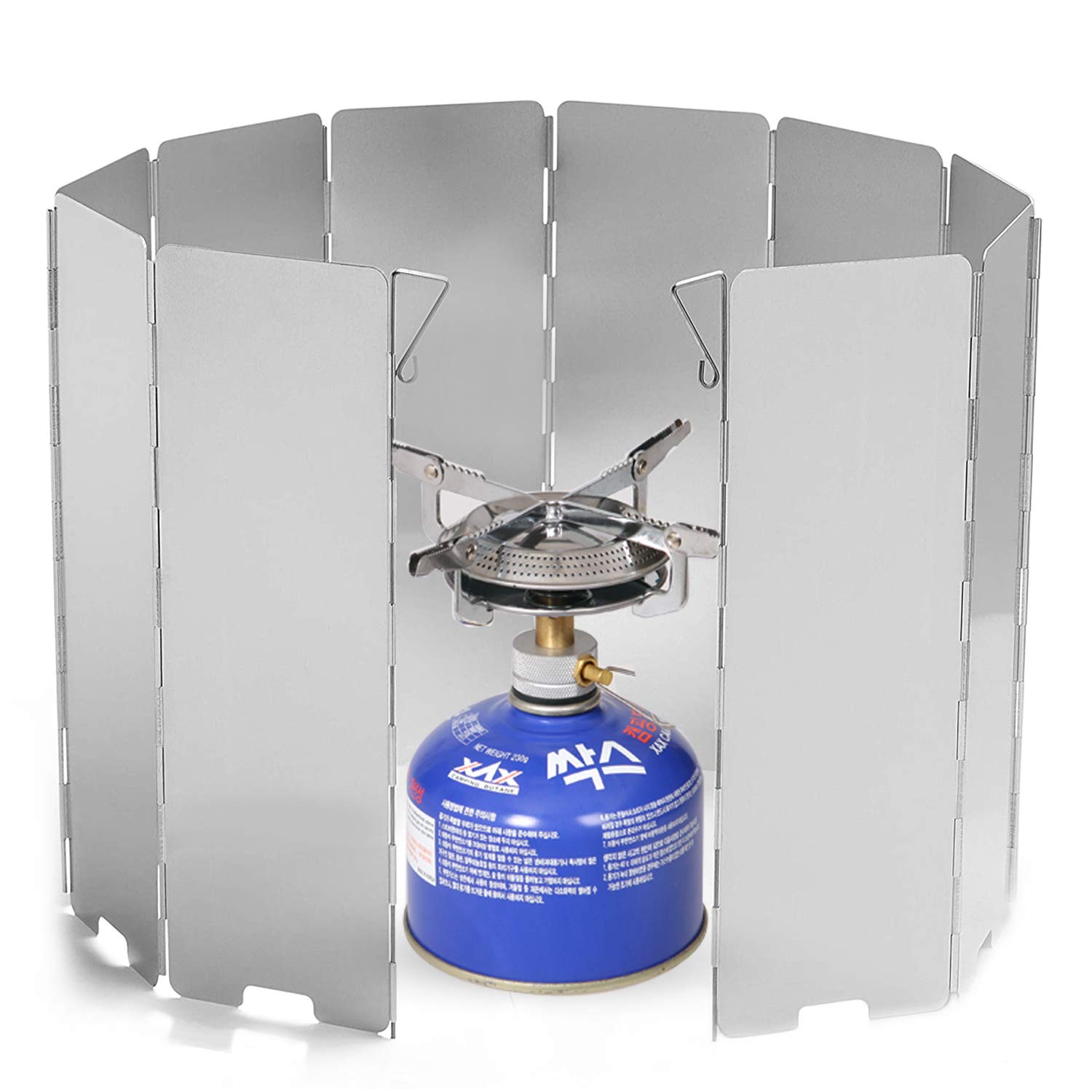
Many beginners buy a stove that's too small or too large. They also forget to buy fuel canisters (which often aren't included). Another mistake is ignoring wind protection—a simple windscreen can make a huge difference. Some beginners skimp on a proper cookset and end up with unbalanced pots that tip over. Lastly, not practicing at home before the trip leads to frustration in the field.
×Not buying a fuel canister separately
×Choosing a stove with poor wind protection
×Overlooking simmer control for real cooking
×Buying a stove too small for group meals
×Forgetting to test the stove before the trip
📈 Your Progression Path: Beginner to Intermediate
Start with a simple canister stove and learn basic techniques like adjusting flame for simmering and boiling. Once comfortable, you might want to try different fuels (e.g., liquid fuel for cold weather) or a more powerful stove for group cooking. You'll know you've outgrown your beginner stove when you find yourself limited by its simmer control or fuel efficiency. Upgrading to a stove with a separate fuel hose and wider burner head can give you more control. Most beginners stay with their first stove for 1-3 years before upgrading.
📚 Learning Resources for Beginners
📖Book: 'The Camping Cookbook' by Helen Graves
📖Book: 'The Outdoor Kitchen' by Eric Rowse
📖YouTube tutorials on stove use and safety
🎯 Bottom Line: Our Recommendations
For most beginners, the best all-around camping stove is a reliable, piezo-ignition canister stove with good simmer control. Our top recommendation is the Coleman Triton 2-Burner for car camping or the MSR PocketRocket 2 for backpacking. If you want simplicity and speed, the Jetboil Flash is unbeatable for boiling water. Pair your stove with a basic cookset, a fuel canister, and a wind shield. Remember, you don't need the most expensive gear to make great meals outdoors. Start simple, practice at home, and enjoy the adventure.
❓ Frequently Asked Questions
For most beginners, the Coleman Triton 2-Burner is the best choice for car camping due to its ease of use and simmer control. For backpackers, the MSR PocketRocket 2 is lightweight and simple.
A good beginner stove costs between $30 and $70. You don't need to spend more than $100 unless you want premium features like wind resistance or integrated systems.
Beginners should prioritize piezo ignition (no matches), adjustable flame for simmering, and a stable base. Avoid stoves that require priming or special fuel.
The Coleman Triton 2-Burner is very easy due to push-button ignition and separate burner controls. The Jetboil Flash is also extremely simple for boiling water.
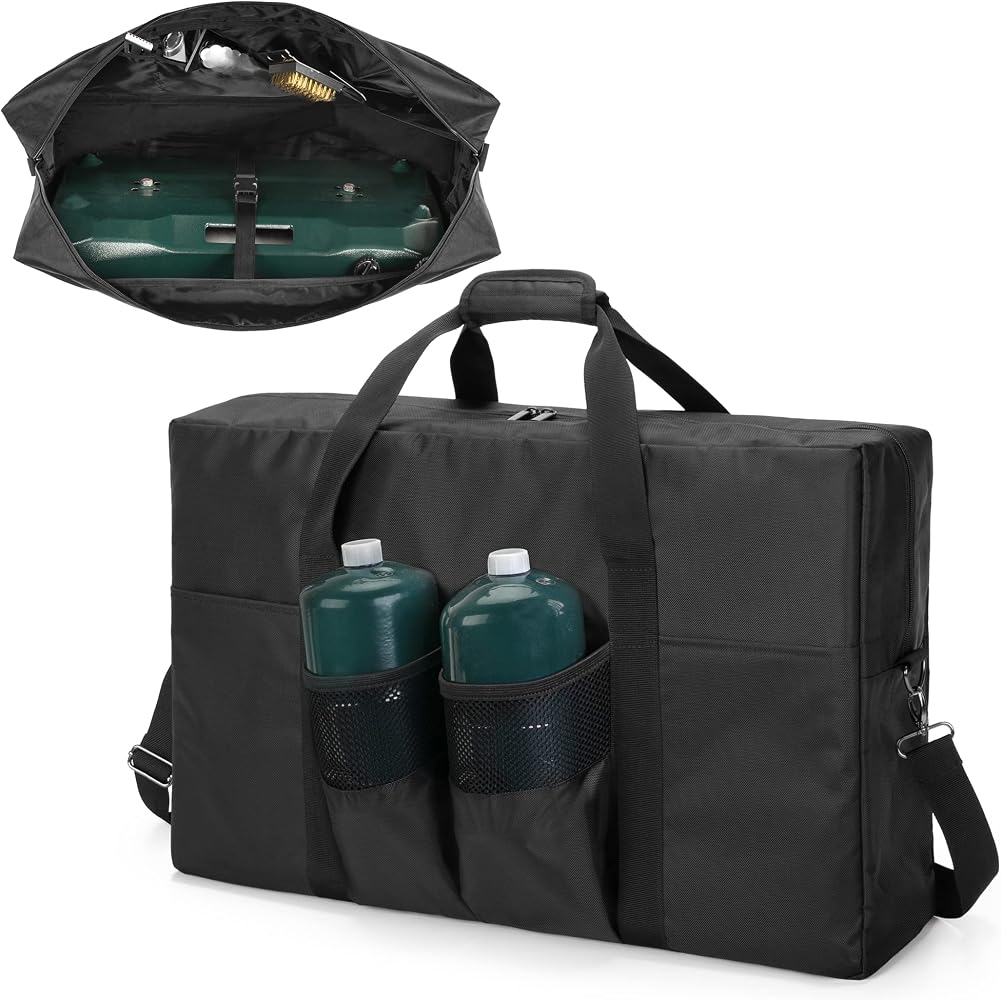
You need fuel canisters (essential), a cookset, and a windscreen. A carrying case is nice but optional.
Consider where you'll camp (car vs. backpacking), how many people you need to cook for, and your budget. Read reviews focusing on ease of lighting and flame control.
No, modern canister stoves are very user-friendly. With a little practice at home, anyone can boil water or cook a meal within minutes.
Not buying a fuel canister, ignoring wind, buying too small or too large, and not testing before the trip. Also, many forget to bring a lighter in case the igniter fails.
Yes, but lightweight pots work best. Avoid pots that are too large for the burner as they can be unstable.
If you cook for 1-2 people and prioritize weight, a single burner is fine. For families or group cooking, a double burner offers more versatility.