7 Best Best Drone with Camera for beginners in 2026: Tested & Ra…
Everything beginners need to know to choose their first drone with camera with confidence.
If you've ever dreamed of capturing stunning aerial photos and videos, you're not alone. But with so many drones on the market, it's easy to feel overwhelmed. You might worry about crashing, not understanding the tech, or spending money on the wrong model. This guide is here to help. We'll simplify the decision, highlight what beginners actually need, and recommend specific models that are easy to fly, forgiving of mistakes, and won't break the bank. By the end, you'll know exactly which drone to buy and how to start flying with confidence.
📋 In This Guide
• Why Beginners Struggle with Drone with Camera
• What to Look For (Key Features)
• Top 4 Beginner-Friendly Drone with Camera
• Essential Accessories for Beginners
• Common Beginner Mistakes to Avoid
• Your Progression Path
• FAQ & Learning Resources
😰 Why Beginners Struggle with Drone with Camera
Many beginners are intimidated by technical jargon like 'GPS stabilization,' 'gimbal,' or '4K 60fps.' They fear that flying a drone requires pilot training or that they'll crash it moments after takeoff. Others buy the cheapest drone only to find it's impossible to control, or they overspend on a professional model with features they'll never use. The sheer number of choices—mini vs. full-size, foldable vs. rigid, camera specs—adds to the confusion. Without clear guidance, many give up before they even start.
🔍 What to Look For: Key Beginner-Friendly Features
For beginners, ease of use and safety features are far more important than raw camera specs or top speed. Look for drones with 'auto-hover' (also called altitude hold) so the drone stays at a set height without constant stick input. GPS-assisted flight modes like 'return to home' (automatically flies back when signal is lost) are essential. A good camera is nice, but 1080p is plenty for a first drone—4K is a bonus. Avoid drones that require manual calibration or assembly. Ideally, the drone should be ready to fly out of the box (RTF).
✅ Essential Features for Beginners
•Altitude hold: keeps the drone steady at a fixed height, so you focus on direction.
•GPS return-to-home: automatically flies back to you if signal is lost or battery low.
•Headless mode: drone moves relative to your orientation, not its own, reducing confusion.
•One-key takeoff/landing: single button to start or stop, great for nervous beginners.
•Propeller guards: protect blades from crashes and bumps, saving repair costs.
•Built-in camera with stabilized mount: smoother video without extra gear.
🏆 Top 4 Best Drone with Camera for Beginners
#1
💰 Budget
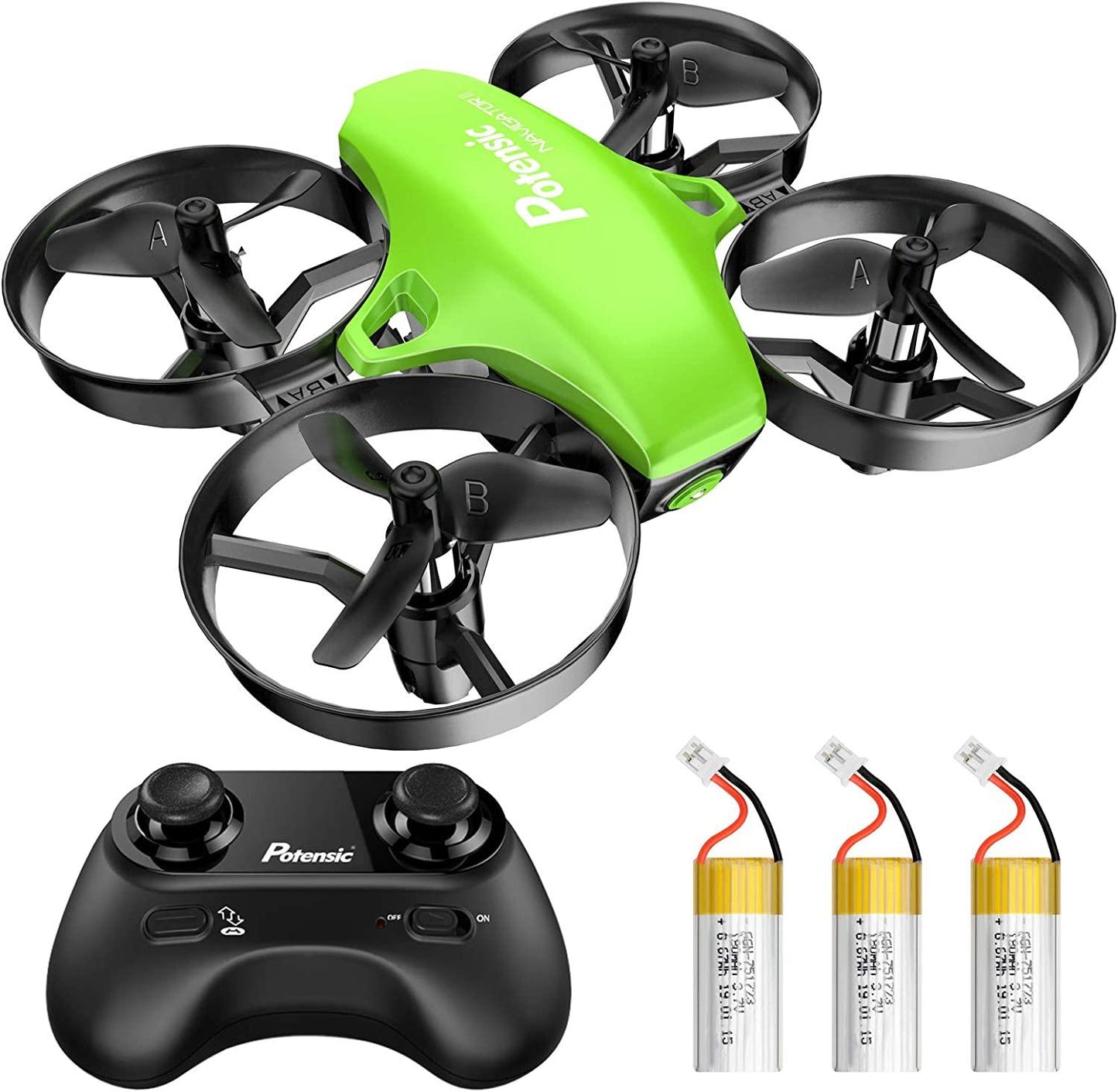
Potensic A20 Mini Drone
Learning Curve: Easy
$45.99
Difficulty: 1/5
Why Great for Beginners:
Ultra-light, durable, and comes with propeller guards. Simple one-key takeoff/landing and altitude hold make it nearly crash-proof for beginners.
✓ Beginner Pros
+Very affordable
+Extremely durable
+Easy to fly indoors
+Includes two batteries
✗ Beginner Cons
-No GPS
-Short range (50m)
-Low-res camera (480p)
-No phone app
👍 Best for: Complete novices on a tight budget, especially for indoor use.
👎 Not for: Anyone wanting decent camera quality or outdoor range.
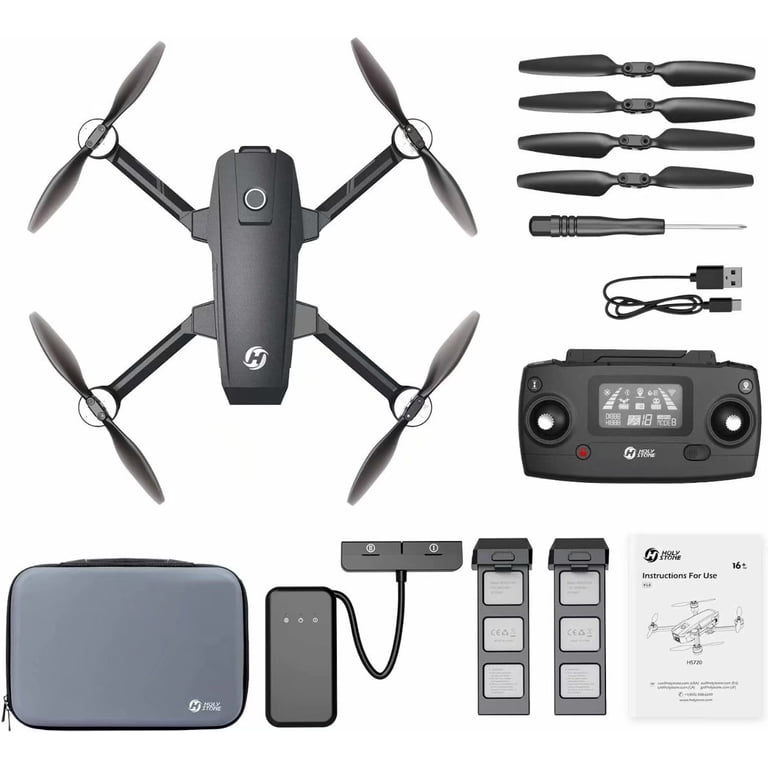
Perfect balance of price, features, and ease. GPS auto-return, 2-axis gimbal for smooth video, and 1080p camera. Robust build with spare parts available.
✓ Beginner Pros
+GPS return-to-home
+2-axis mechanical gimbal
+1080p video
+Decent flight time (20 min)
✗ Beginner Cons
-No 4K
-Controller range adequate but not long
-Slightly larger than mini drones
👍 Best for: Most beginners who want good footage without spending too much.
👎 Not for: Those needing 4K or ultra-portable carry.
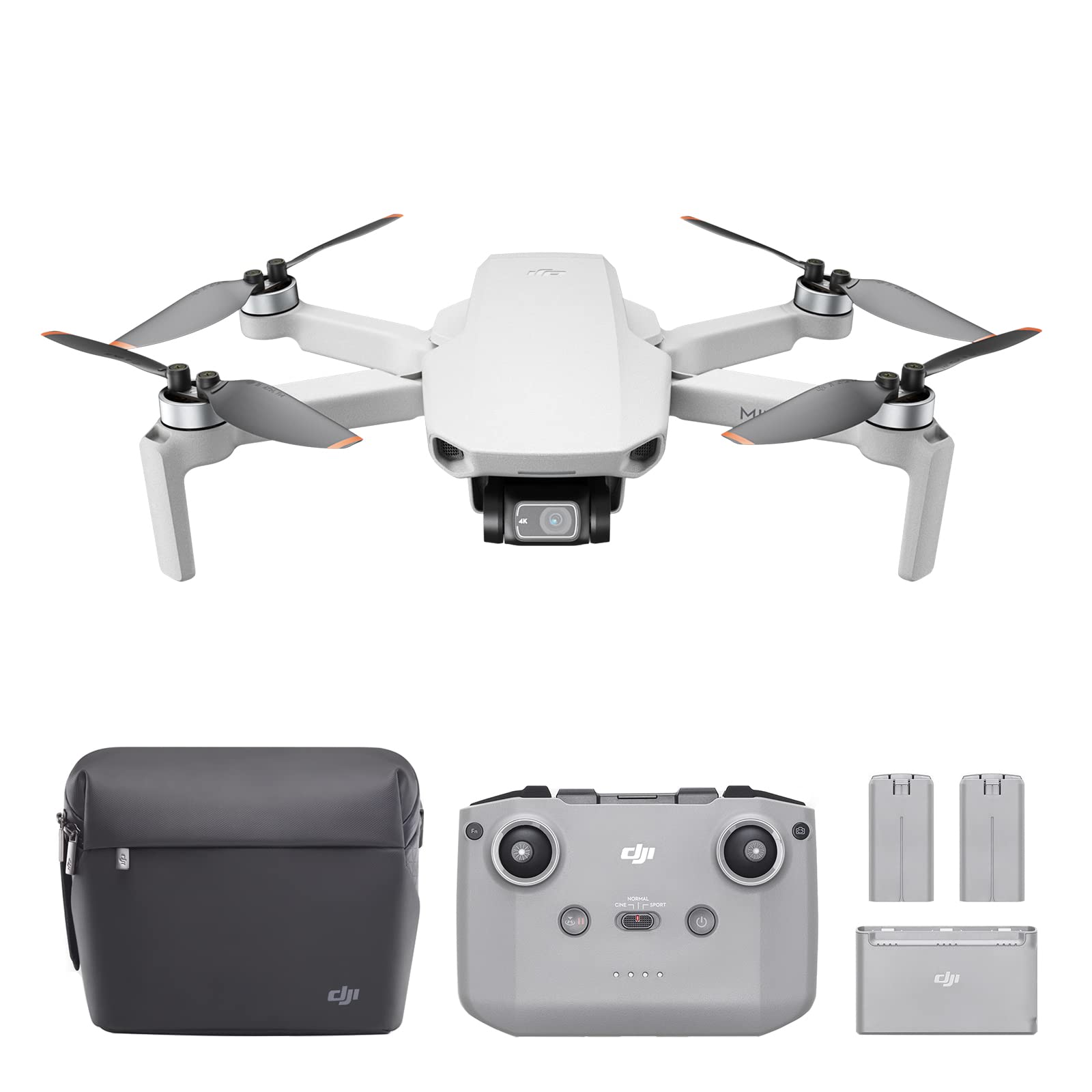
Industry leader for beginners. Under 250g (no registration in many countries), 4K video, 3-axis gimbal, and rock-solid GPS stability. Fly More Combo includes extra batteries and bag.
✓ Beginner Pros
+Excellent 4K camera
+3-axis gimbal for ultra-smooth footage
+Long range (10km)
+Compact and lightweight
✗ Beginner Cons
-Higher price
-Requires smartphone for live view
-Propeller guards not included
👍 Best for: Beginners who can invest more and want superior camera quality without sacrificing ease.
👎 Not for: Budget-conscious or those afraid of expensive crashes.
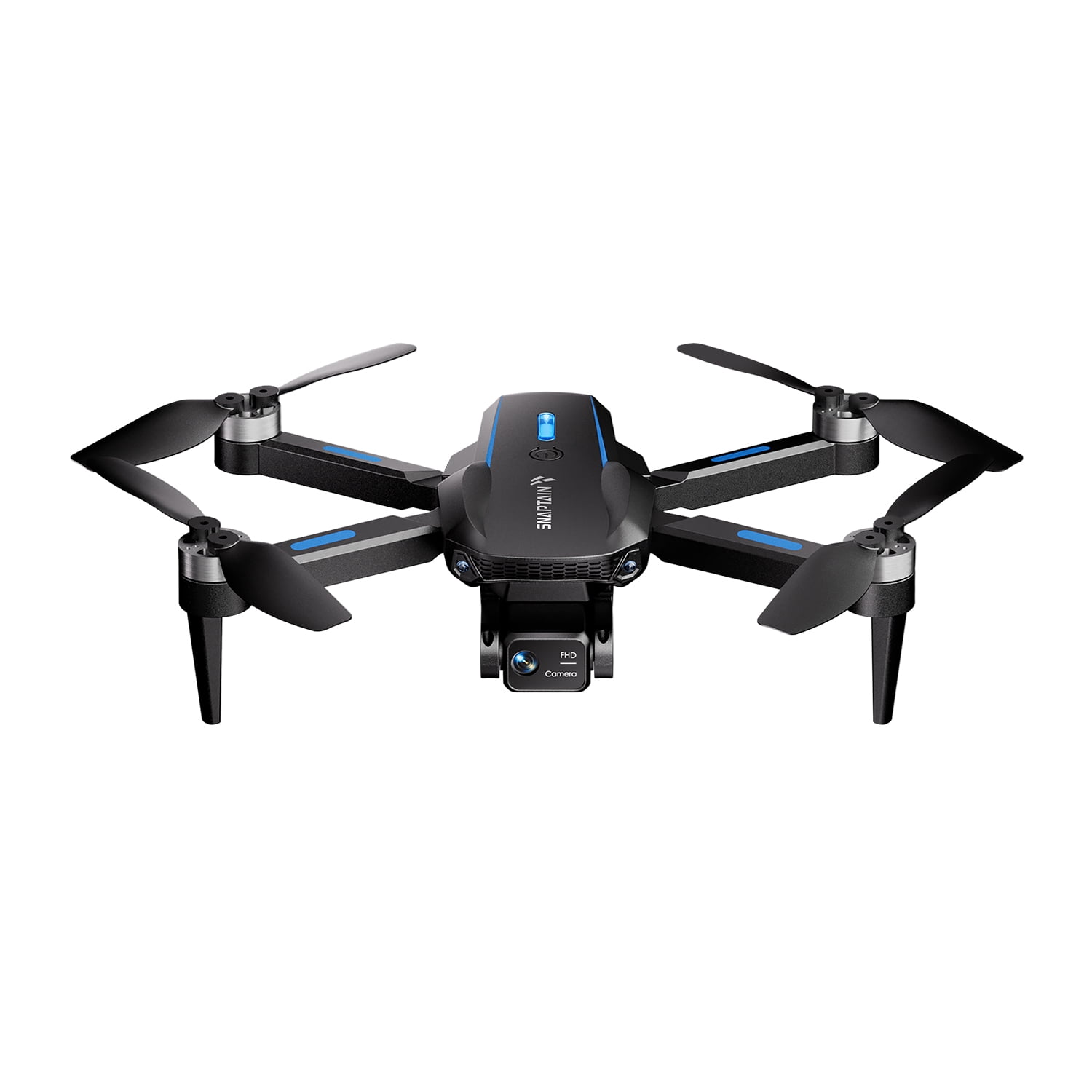
A great middle-ground between toy and serious drone. Has altitude hold, headless mode, and a 1080p camera at a budget price. Folds small for portability.
✓ Beginner Pros
+Very affordable
+1080p camera
+Folds for portability
+App enabled
✗ Beginner Cons
-No GPS
-Electronic stabilization only (soft gimbal)
-Short flight time (15 min)
👍 Best for: Beginners on a budget who still want decent camera quality and easy transport.
👎 Not for: Those wanting GPS auto-return or longer flight times.
A drone with camera is basically a quadcopter with a built-in camera for taking photos and videos from the air. The two main categories: mini drones (often under 250g, which means fewer regulations) and larger consumer drones. For beginners, a mini or mid-range foldable drone is best—they're portable, easier to fly, and less intimidating. 'Beginner-friendly' means the drone does much of the work: it hovers in place, won't drift away, and has automatic features like headless mode (no need to point the drone in a specific direction). Don't fall for marketing terms like 'long range' or '6K camera'—beginners rarely fly far or need ultra-high resolution. Focus on stability, flight time (at least 15 minutes), and safety features.
🔧 Essential Accessories for Beginners
Potensic Extra Battery for A20
⚠️ Essential
$15.99
When to buy:
Day one
Flight times are short (7-10 min per battery). An extra battery doubles your practice time. Beginners need more time to learn without interruptions.
Taking off and landing on grass kicks up dust and debris that can damage the drone. A landing pad gives a clean surface and marks a clear landing zone.
Ask yourself: What do I want to capture? If it's just for fun shots and selfies, a 1080p camera with a 2-axis gimbal is enough. What's my budget? Under $100? $200-$300? Up to $500? Beginners should avoid spending over $500 on a first drone—you can always upgrade later. Also consider where you'll fly: indoors or outdoors? Some drones are better for inside (smaller, with propeller guards). Finally, think about your tolerance for risk—buy a drone with prop guards and a durable design if you're worried about crashes.
💰 Budget Guide for Beginners
500+
Professional entry – for serious hobbyists ready to invest. Features like 4K HDR, obstacle avoidance, and superior flight performance. Not necessary for true beginners.
100 - $300
Sweet spot – good stabilization, GPS features, 1080p camera. Most beginners find everything they need here. Room to learn without breaking the bank.
300 - $500
Premium beginner – excellent cameras (2.7K or 4K), longer flight times, robust build. These drones can take you well into intermediate territory.
Under $ - $100
Entry level – great for testing if you enjoy flying. Limited features, short range, low-res camera. Best for indoor or calm outdoor flights.
⚠️ Common Beginner Mistakes to Avoid
Buying a 'toy' drone that's impossible to control, then getting frustrated and quitting. Overspending on features you don't need yet, like raw photo format or advanced obstacle avoidance. Neglecting to buy extra batteries (flight times are short!). Not checking local regulations (some drones over 250g require registration). Buying without a reliable warranty or support. Ignoring the importance of a good controller with phone mount for a live view.
×Buying a drone without altitude hold or GPS – results in constant drift and crashes.
×Skipping extra batteries – a single battery only gives ~10-20 minutes of flight time.
×Flying in windy conditions on the first day – beginners should start in calm air.
×Ignoring the controller range – some cheap drones have very short range (30-50m).
×Not reading the manual – important for understanding safety features and calibration.
×Buying a drone with no spare parts – propellers break, so order extras.
📈 Your Progression Path: Beginner to Intermediate
Start with a simple, beginner drone in a wide open area. Learn basic maneuvers: takeoff, hover, land, fly in a square pattern. Next, practice using the camera: framing shots, recording video. After a few weeks, try flying in mild wind and learn to use return-to-home. When you feel comfortable flying without crashing, consider upgrading to a drone with a better camera and longer range (intermediate level). Most beginners stay at this level for 3-6 months before feeling ready for more advanced features.
📚 Learning Resources for Beginners
📖Book: 'Drones 101: A Beginner's Guide to Flying and Photography' (Amazon).
📖YouTube channels: 'Drone U' and 'FPV Freedom' – watch before first flight.
📖Training course: Udemy 'Drone Flying for Beginners' (available on Amazon streaming).
📖Amazon Basics rechargeable battery pack – great for keeping extras charged.
📖FAA DroneZone website – learn local regulations (free).
🎯 Bottom Line: Our Recommendations
For most beginners, the best overall pick is the Holy Stone HS720E (recommended tier). It balances ease of use, safety features, and camera quality at a reasonable price. If you're on a tight budget, the Potensic A20 is a great starter that's durable and fun. For those willing to invest more, the DJI Mini 2 is premium beginner-friendly with excellent camera and flight stability. Don't forget to buy extra batteries and a carrying case from day one. Most importantly: have fun and don't be afraid to crash—it happens to everyone!
❓ Frequently Asked Questions
For most beginners, the Holy Stone HS720E offers the best balance of price, ease of use, and camera quality. If you have a smaller budget, the Potensic A20 is durable and simple. For a premium start, the DJI Mini 2 is excellent.
Aim for $100-$300. This range gives you GPS features, decent cameras (1080p), and good flight stability. Under $100 you lose GPS and get poor cameras. Over $500 is overkill for a first drone.
Must-haves: altitude hold, one-key takeoff/landing, and propeller guards. GPS and return-to-home are highly recommended. Simple headless mode also helps. Avoid drones that require manual calibration or have no auto-stabilization.
The Potensic A20 is extremely easy because it's so stable and durable. It has altitude hold and one-key controls. For GPS easiness, the Holy Stone HS720E is great.
Essential: extra batteries, propeller guards, and a microSD card. Highly recommended: a carrying case and landing pad.
First, set a budget. Then prioritize stability features (GPS, altitude hold) over camera specs. Consider where you'll fly (indoor/outdoor). Read reviews from other beginners. Start with a durable model.
Not with a modern beginner drone. Models with altitude hold and GPS make it almost self-stabilizing. Most people can fly confidently after a few practice sessions.
Common mistakes: buying too cheap (no GPS, impossible to control), ignoring extra batteries, flying in wind, not checking local laws (e.g., FAA registration for over 250g), and not using propeller guards.
In the US, drones under 250g (like DJI Mini 2) don't require registration. Drones over 250g must be registered with the FAA. Always check local regulations.
Some drones use a phone app as a controller, but dedicated controllers with joysticks are much better for beginners. Look for drones with a physical controller that has a phone mount for the live view.