Discover your perfect first bread machine with our simple guide—top picks, tips, and mistakes to avoid so you bake confidently from day one.
Choosing your first bread machine feels overwhelming with endless models, confusing features, and worries about wasting money on the wrong one. Beginners often fear complicated buttons, burnt loaves, or machines that sit unused. But it doesn't have to be hard—bread machines make fresh bread as easy as pressing start.
This guide cuts through the noise, focusing on horizontal loaf machines (which make sandwich-sized loaves like store-bought bread). We'll explain what matters for newbies, recommend real Amazon picks that are forgiving and simple, and build your confidence to bake your first loaf successfully.
By the end, you'll know exactly which machine to buy, what accessories you need, and how to avoid pitfalls so you love baking right away.
📋 In This Guide
• Why Beginners Struggle with Bread Machine
• What to Look For (Key Features)
• Top 4 Beginner-Friendly Bread Machine
• Essential Accessories for Beginners
• Common Beginner Mistakes to Avoid
• Your Progression Path
• FAQ & Learning Resources
😰 Why Beginners Struggle with Bread Machine
Bread machines seem simple, but beginners get stuck on jargon like 'cycles,' 'paddles,' and 'loaftypes.' Vertical loaves look odd and don't slice well for sandwiches, while fancy models overwhelm with 20+ settings you won't use yet.
Many fear buying something too basic that fails or too advanced with a steep learning curve. Reviews show newbies frustrated by dense loaves from poor recipes or machines without clear instructions. Over 50 options on Amazon alone make decisions paralyzing.
Common pains from forums: dough overflow, paddle stuck inside loaves, confusing manuals, and not knowing if horizontal vs vertical matters (hint: horizontal is best for beginners).
🔍 What to Look For: Key Beginner-Friendly Features
Focus on ease: Look for 10-15 pre-programmed cycles (like basic white bread, whole wheat) that handle everything automatically—no tweaking needed. Horizontal loaf pans (not tall vertical ones) for pretty, sliceable bread.
Must-haves: Viewing window, 1-2 lb capacity, dishwasher-safe parts, and clear LCD with simple buttons. Nice-to-haves: Audible alerts, crust color options (light/medium/dark). Skip: Gluten-free or artisan cycles, dual heaters, or app controls—they add complexity.
Beginner-friendly means forgiving: Even if you measure wrong slightly, it still makes decent bread. Good support like video tutorials and 1-year warranty reduces anxiety.
✅ Essential Features for Beginners
•Automatic pre-set programs (10+ for basic breads)
•Horizontal loaf pan (1-2 lb for sandwiches)
•Easy-clean non-stick pan and removable paddle
•Viewing window to check progress
•Simple LCD display with crust settings
•Quick-start beep and auto shut-off
•Recipe booklet included
•Compact size for counter space
🏆 Top 4 Best Bread Machine for Beginners
#1
💰 Budget
Hamilton Beach Programmable Breadmaker, 2 Pound Horizontal Loaf
Learning Curve: Easy
$69.99
Difficulty: 1/5
Why Great for Beginners:
This affordable horizontal machine has 12 cycles and a simple interface, perfect for first-timers intimidated by prices. It makes nice sandwich loaves without complexity, and the recipe book guides your first bake.
✓ Beginner Pros
+Super cheap to start
+12 easy programs including gluten-free
+Compact and lightweight
+Alerts for adding fruit/nuts
✗ Beginner Cons
-Single paddle can leave hole in bread
-Basic build may wear faster
👍 Best for: Budget-conscious absolute beginners testing baking
👎 Not for: Daily heavy users wanting premium results
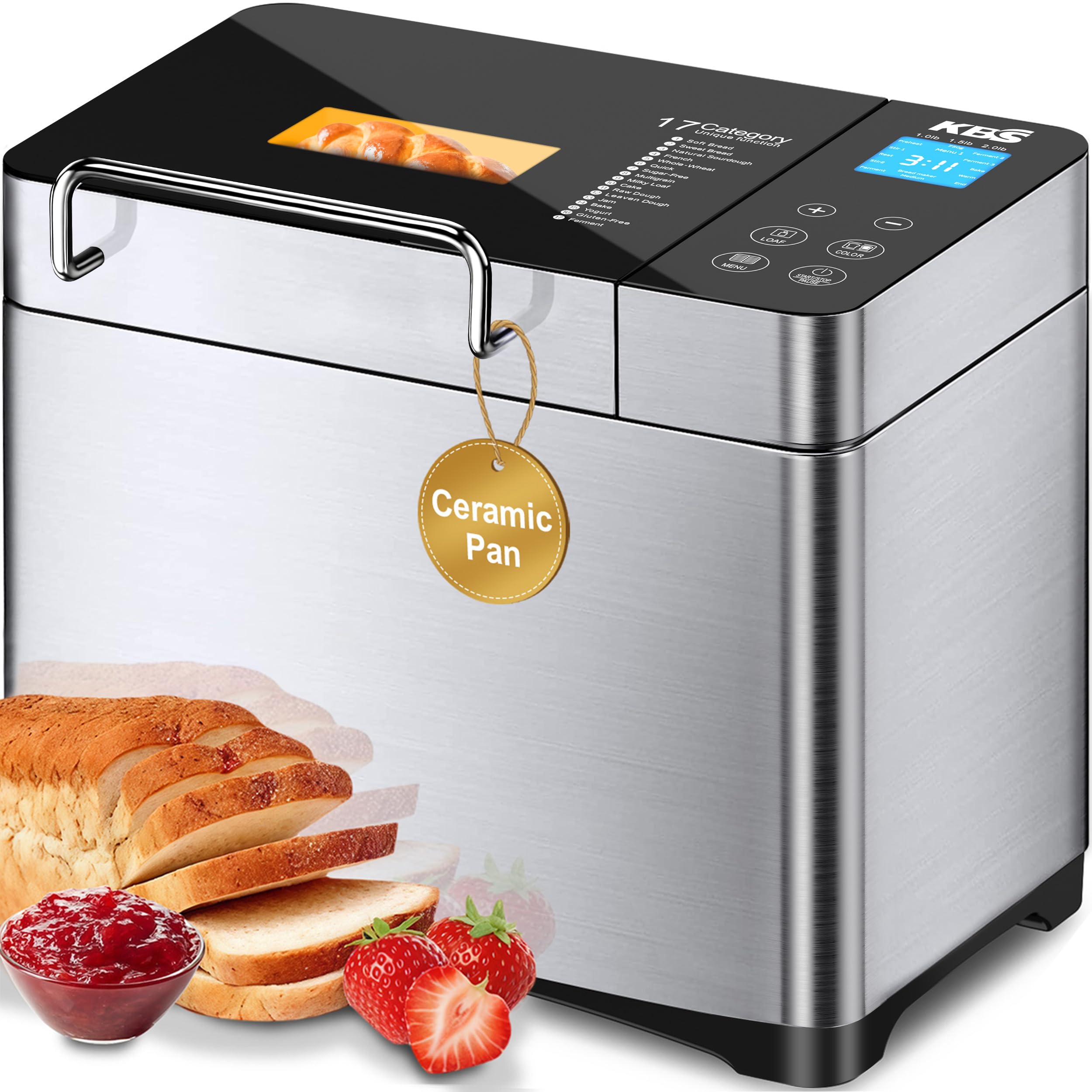
Sweet spot with 17 intuitive programs and fruit/nut dispenser—add-ins without stopping the machine. Horizontal loaves are perfect, and it's forgiving with even kneading for newbie mistakes.
✓ Beginner Pros
+Auto fruit dispenser
+Homemade jam cycle
+Easy-clean pan
+Touch panel simple
✗ Beginner Cons
-Slightly larger footprint
👍 Best for: Most beginners wanting versatility without overwhelm
Zojirushi Home Bakery Supreme 2-Pound-Loaf Breadmaker
Learning Curve: Moderate
$288.49
Difficulty: 2/5
Why Great for Beginners:
Dual kneading paddles eliminate loaf holes, and 13 programs with perfect results make it feel foolproof. Excellent for beginners who want pro loaves from day one.
A bread machine mixes, kneads, rises, and bakes dough in one pan—add ingredients, pick a setting, done in 3-4 hours. Horizontal loaf types are beginner gold: They make wide, flat-topped loaves perfect for toast and sandwiches, unlike vertical 'bullet' loaves.
Best for beginners: Mid-range horizontals with 12-17 programs. Start with 'basic' or 'white bread' mode. Expect soft homemade loaves better than store-bought, but first tries may be dense—practice fixes it.
'Easy-dispense' means beginner-friendly: Less mess, intuitive. Avoid cheap verticals (ugly slices) or pro models (too many buttons). Realistic: You'll bake 2-3 loaves/week easily.
Marketing traps: '17-in-1' sounds great but most beginners use 3-4. Check real-user photos for loaf shape.
🔧 Essential Accessories for Beginners
Etekcity Food Kitchen Scale
⚠️ Essential
$11.99
When to buy:
Day one
Precise measuring prevents dense or flat loaves—cups are inaccurate for flour. Beginners mess up volumes, but grams make success easy.
Ask: What's your budget? Family size (1 lb for 1-2 people, 2 lb for family)? Counter space? Will you bake weekly?
Under $100: Try it out. $100-200: Best balance. $200+: Invest if baking daily. Go budget if unsure, recommended for confidence, premium for perfection.
Red flags: No viewing window, vertical pan only, poor reviews on stuck paddles. Test growth: Pick one with room for whole wheat later. Match to use—daily sandwiches? Horizontal 2 lb.
💰 Budget Guide for Beginners
400+
Pro-level: Overkill for beginners, skip unless huge budget.
100 - $200
Sweet spot: Reliable horizontals with auto programs, forgiving for most beginners, great results without fuss.
200 - $400
Premium: Superior kneading, dual paddles, lasts years—ideal for serious newbies.
Under $ - $100
Entry-level: Basic vertical or simple horizontal to test the waters, but may lack durability or nice loaves.
⚠️ Common Beginner Mistakes to Avoid
Beginners grab $50 verticals thinking 'cheap entry,' but end up with holey, tall loaves that don't slice well—frustrating for sandwiches. Avoid by sticking to horizontal under $200.
Many skip scales, packing flour loosely for flat bread; buy one day one. Forums rant about stuck paddles from no oil—lube lightly. Experienced say: Start with mixes, read manual thrice.
Too fancy? Unused jam cycles collect dust. Instead, master 3 settings first.
×Buying vertical loaf machines (ugly slices)
×Skipping a scale—measuring flour wrong
×Overloading with too many add-ins first time
×Ignoring recipe book, using internet fails
×Buying cheapest without reviews (breaks fast)
×Not using instant yeast
×Choosing too many programs (overwhelm)
×Forgetting to remove paddle before slicing
📈 Your Progression Path: Beginner to Intermediate
Start with basic white bread cycle 5-10 times—learn ingredient order (liquids first). Experiment with crust colors, then whole wheat.
Outgrow when you want custom recipes or gluten-free; upgrade to dual-paddle premium. Signs: Boring results, need bigger loaves. Most stay beginner 3-6 months, then intermediate (manual tweaks).
Next: Stand mixer for dough, or oven baking. Build: Week 1 mixes, month 1 recipes, quarter 1 experiments.